




Tool ID: 4.4
Tool ID: 4.4
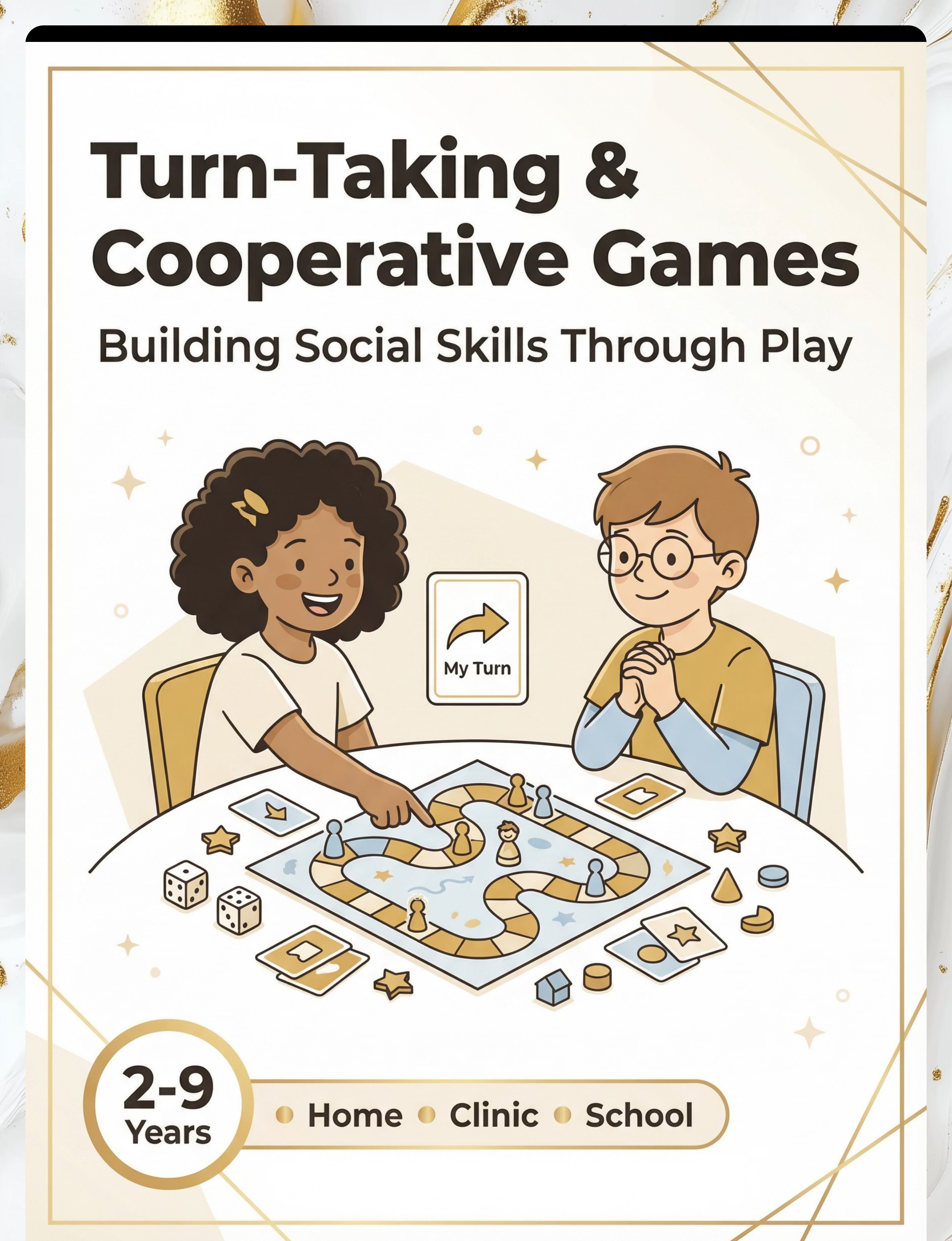
Turn-Taking / Cooperative Games
Social reciprocity and cooperation development system
SpEd + OT
Strong Evidence
Rank #1
Daily Use
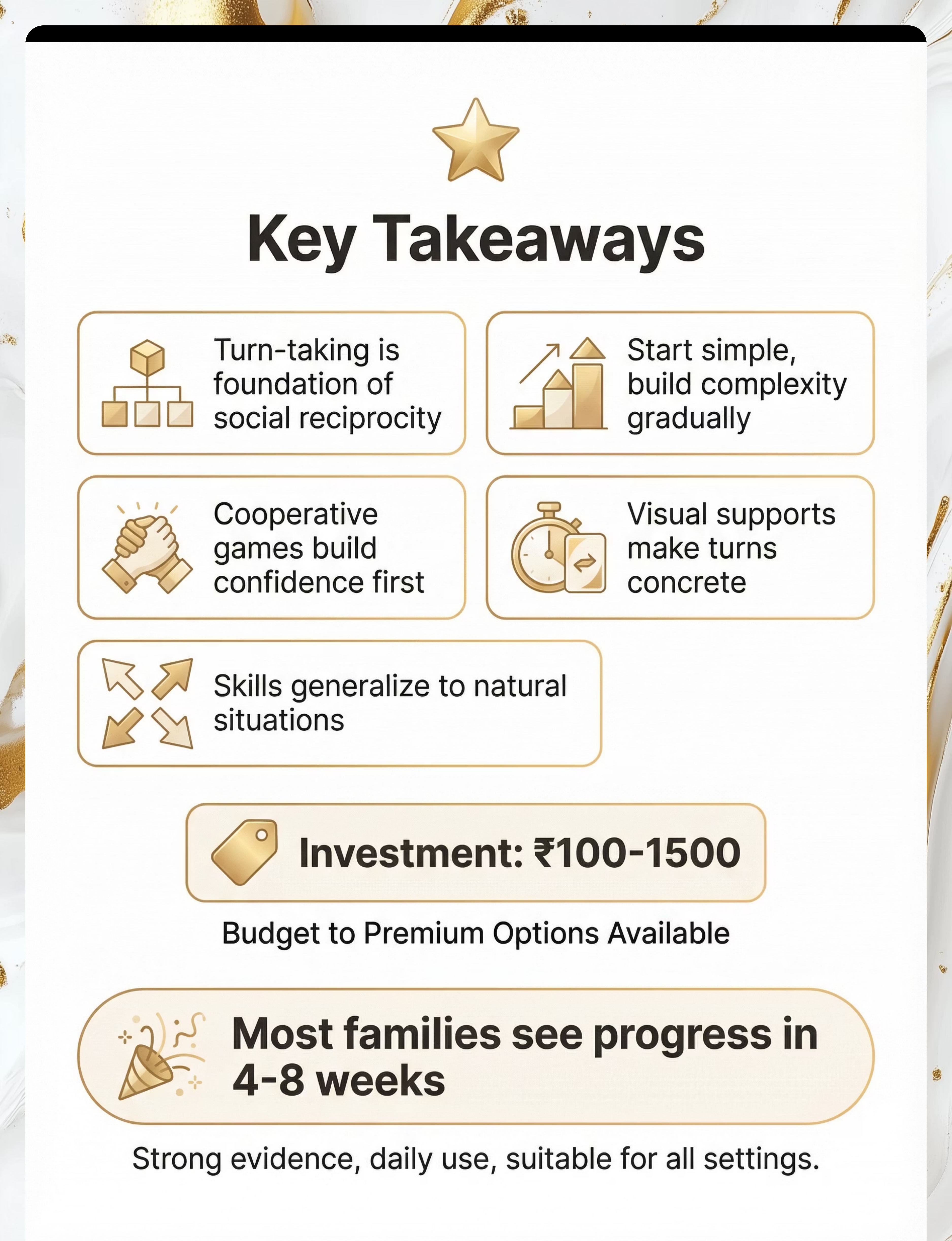
₹100–1,500
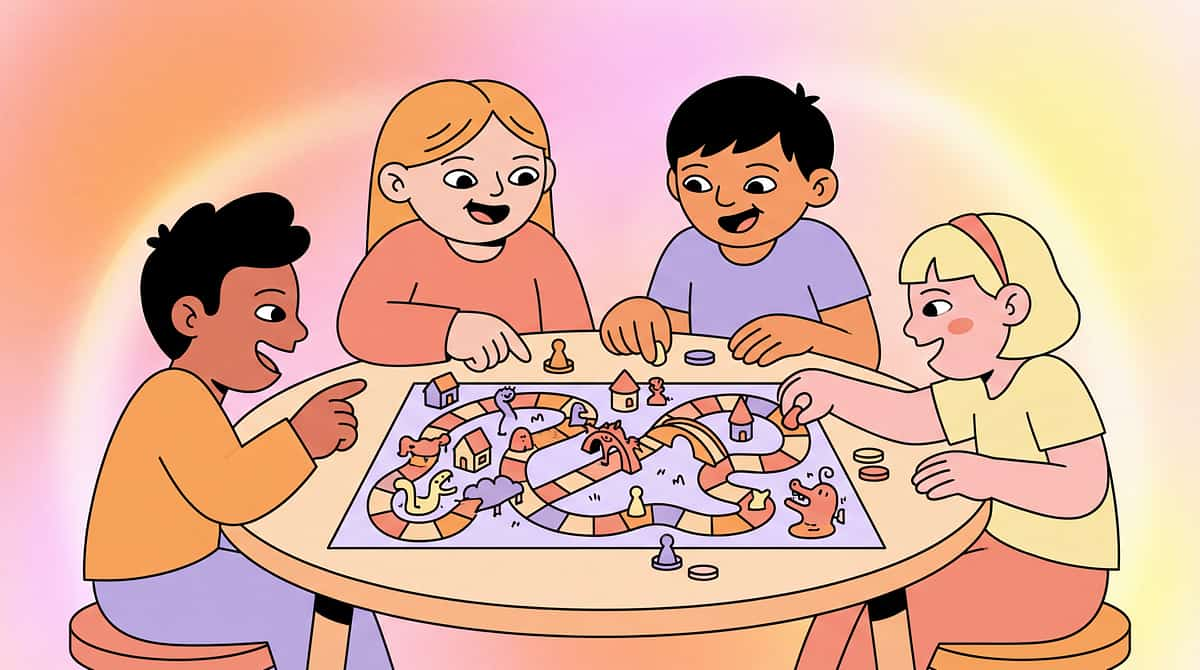
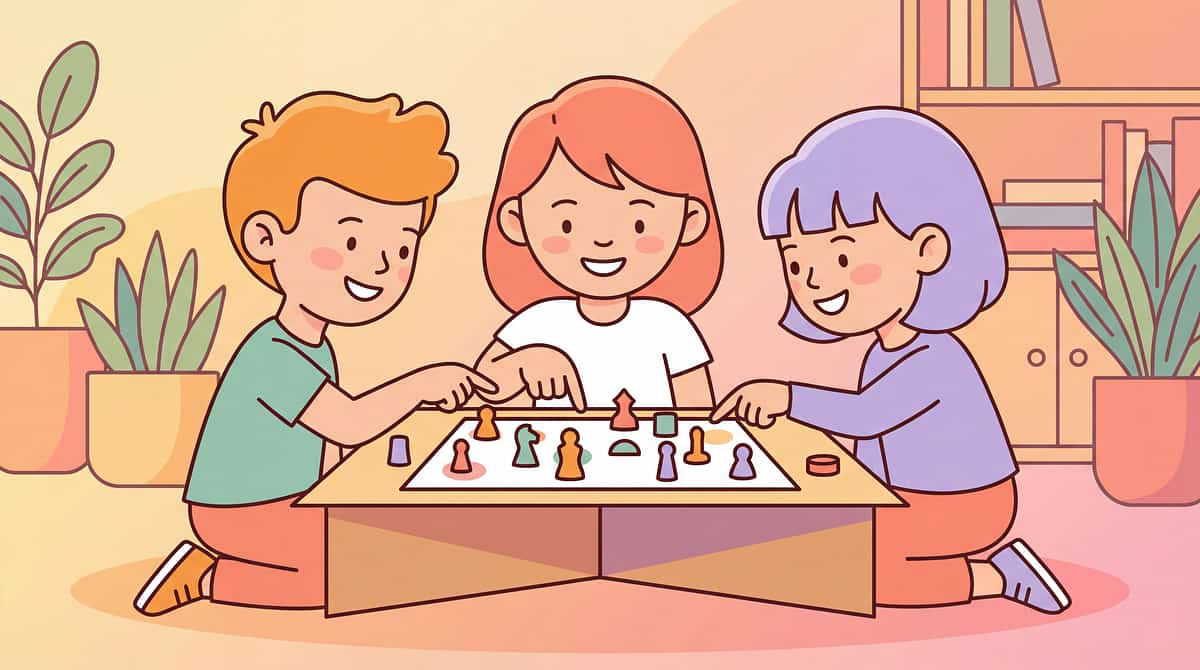
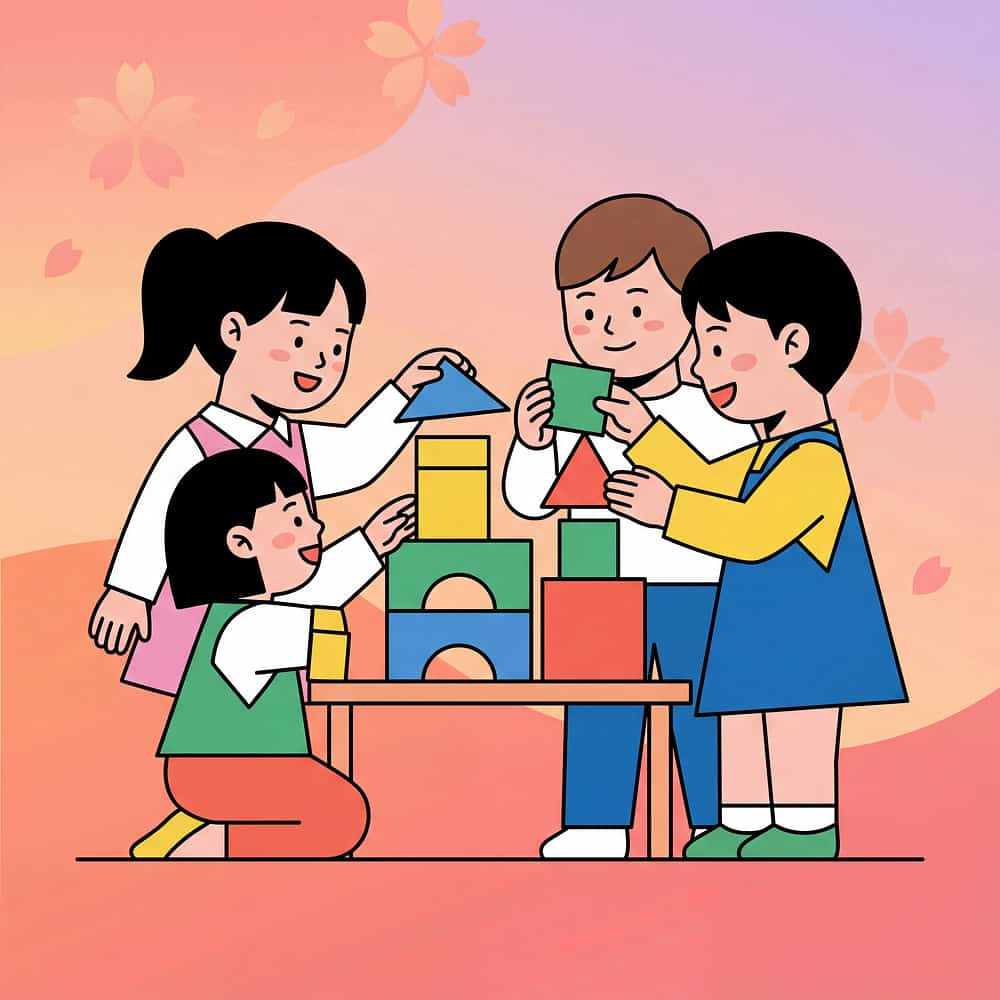
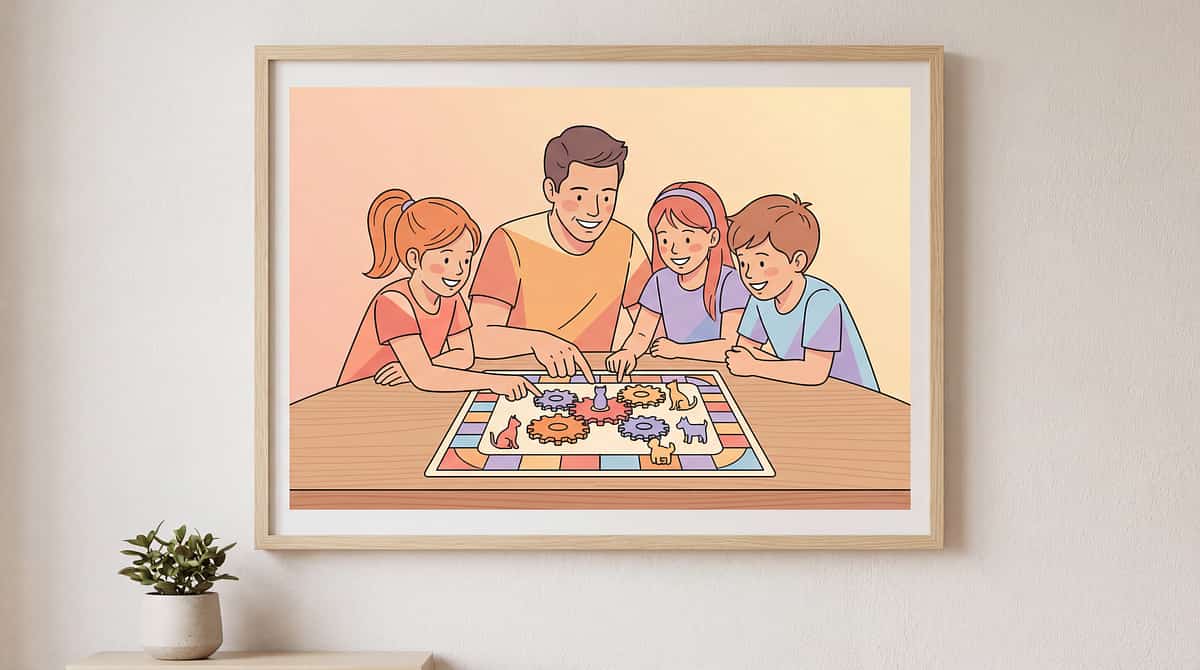
Turn-taking games create the foundation for social reciprocity—the essential back-and-forth rhythm that makes friendships, family connections, and classroom participation possible. Through structured play, children learn to wait, share, cooperate, and experience the joy of playing together. These aren't just games; they're carefully designed social skill builders that transform challenging moments into opportunities for connection and growth.
Who This Helps
Develop Core Social Skills
Builds turn-taking, waiting, and cooperation skills through structured play that naturally fosters social reciprocity.
Supports Turn-Taking Challenges
Provides clear structure and visual cues to make the abstract concept of "your turn" concrete and manageable for children.
Teaches Patience & Waiting
Utilizes short, supported turn sequences with optional timers and markers to gradually build waiting tolerance.
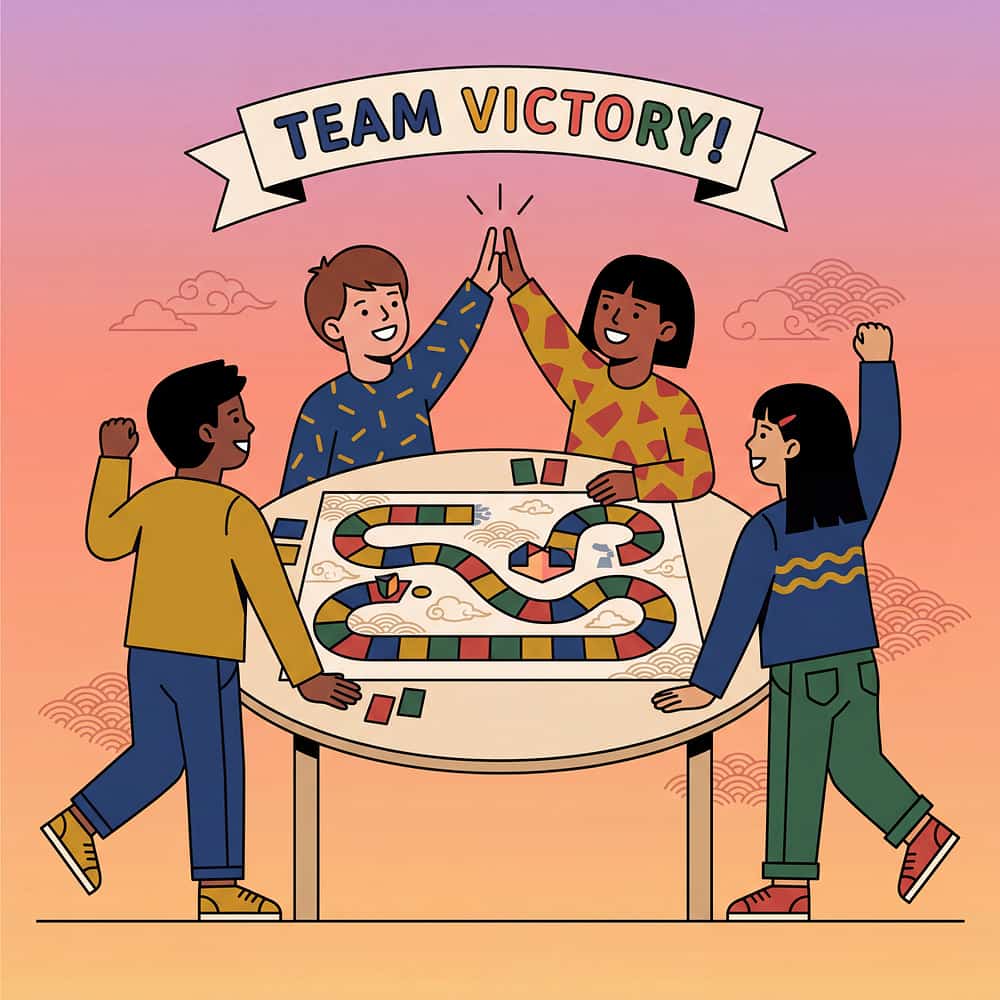
Encourages Positive Play
Cooperative games minimize competitive stress, promoting teamwork and positive associations with playing together.
Turn-Taking
Waiting
Cooperation
Sharing
Joint Attention
Sportsmanship
Ages 2-9 years
Home
Clinic
School
Outdoors
Does This Sound Familiar?
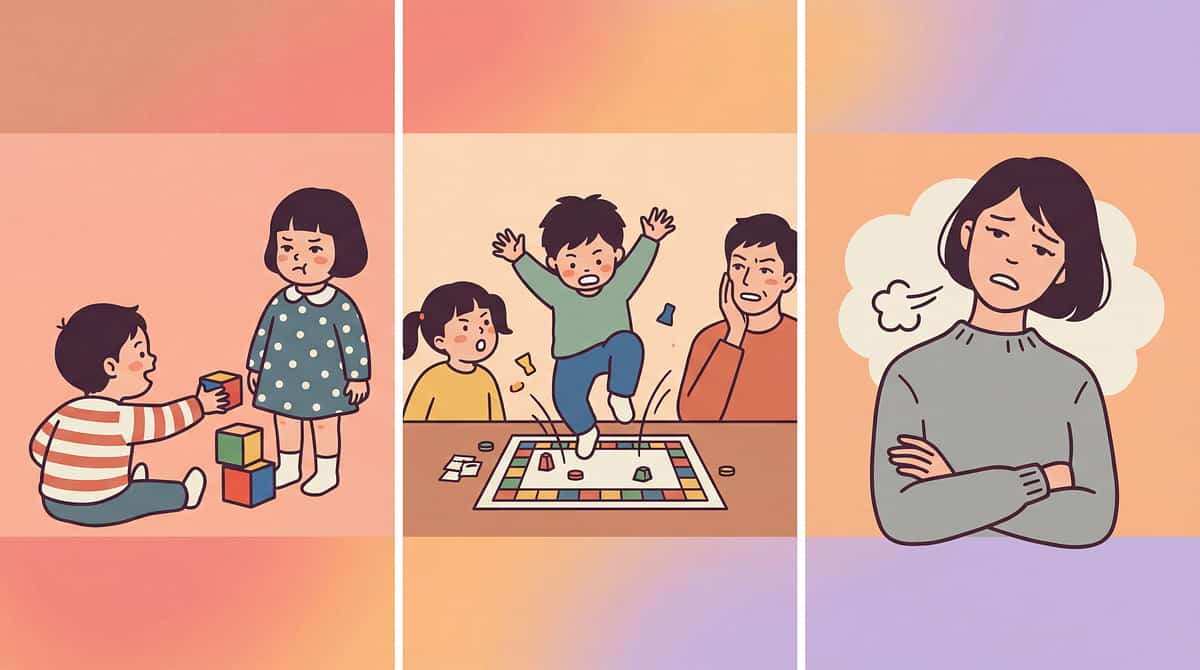
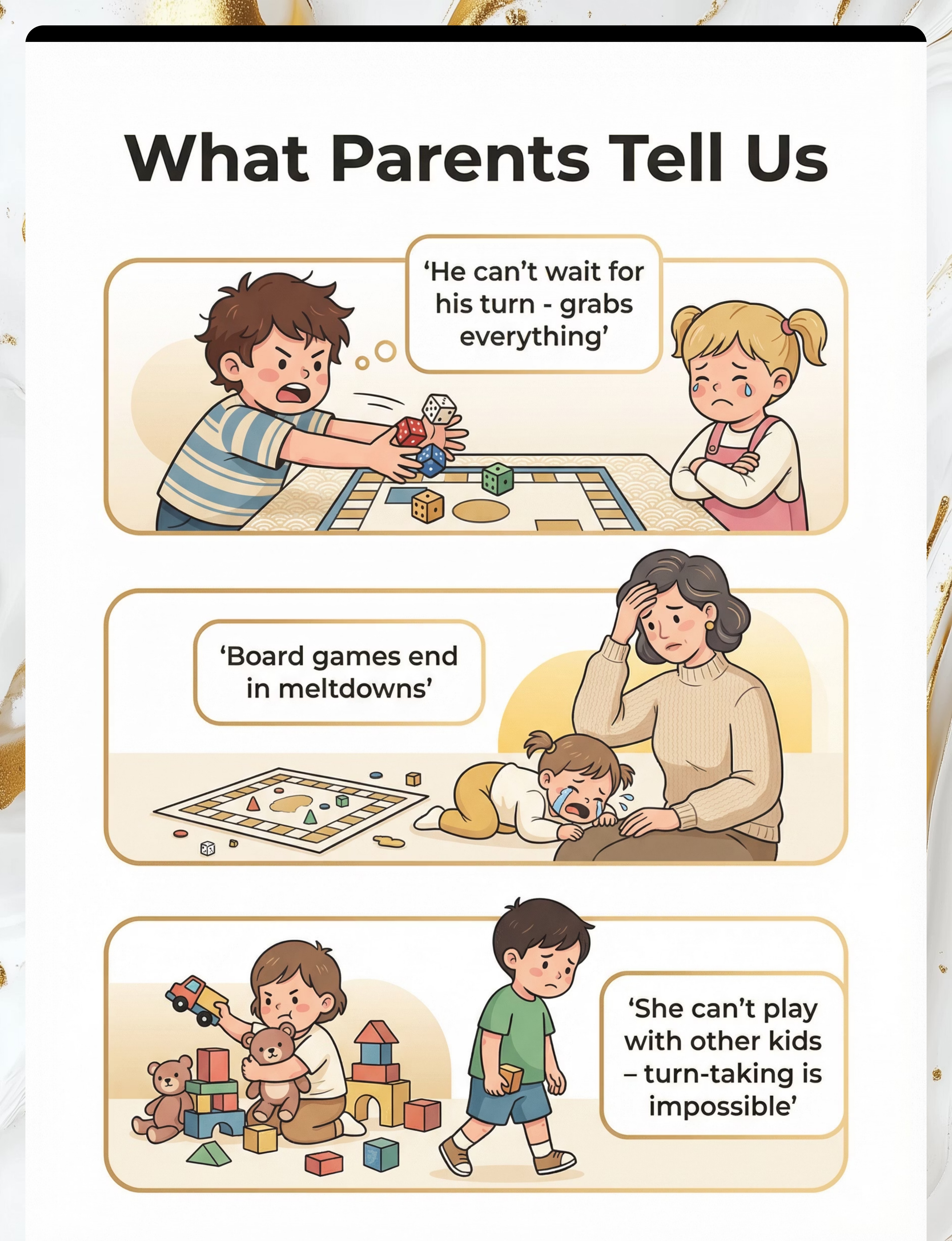
"He can't wait for his turn—he grabs everything before anyone else gets a chance. Game time always ends in tears."
"She doesn't understand the concept of taking turns. It's like the idea just doesn't register for her at all."
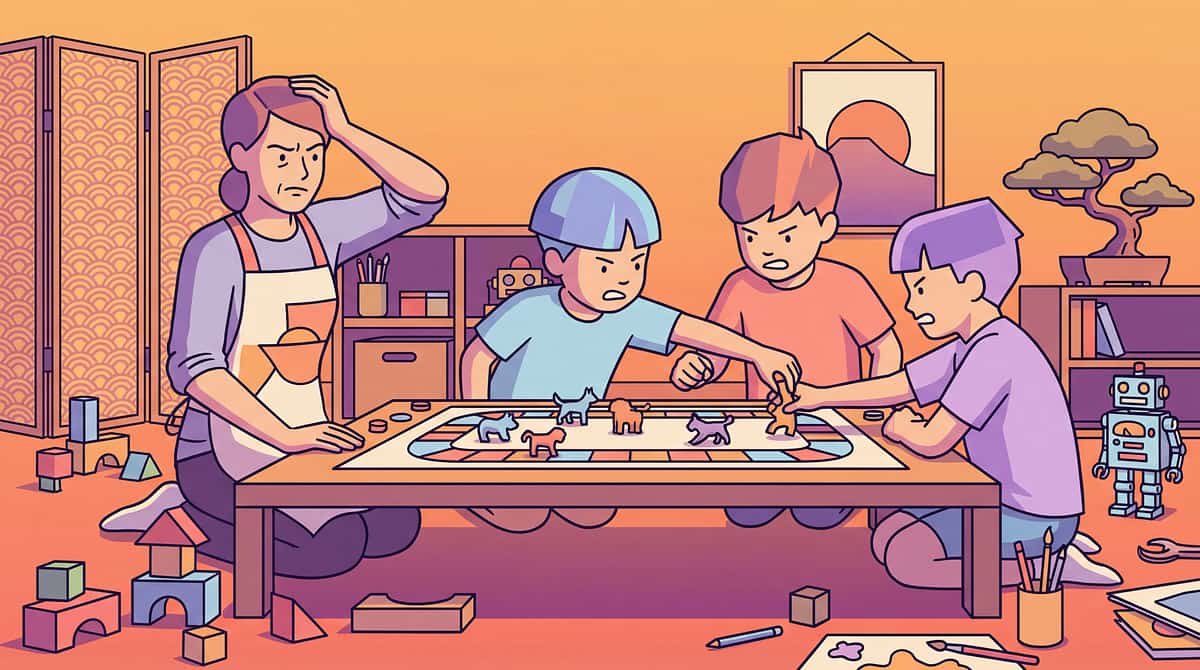
"Board games end in meltdowns every single time. We've given up on family game nights completely."
"He always has to go first and always has to win. If he doesn't, the entire activity falls apart."
"She can't play with other kids—turn-taking is impossible. Playdates never work out."
"Any kind of competition leads to absolute disaster. We avoid all games now."
You're not alone. These are among the most common challenges parents face. Turn-taking is a complex social skill that doesn't come naturally to every child, but it can absolutely be learned through the right approach, structure, and support.
A Day Without the Right Support
Morning Routine
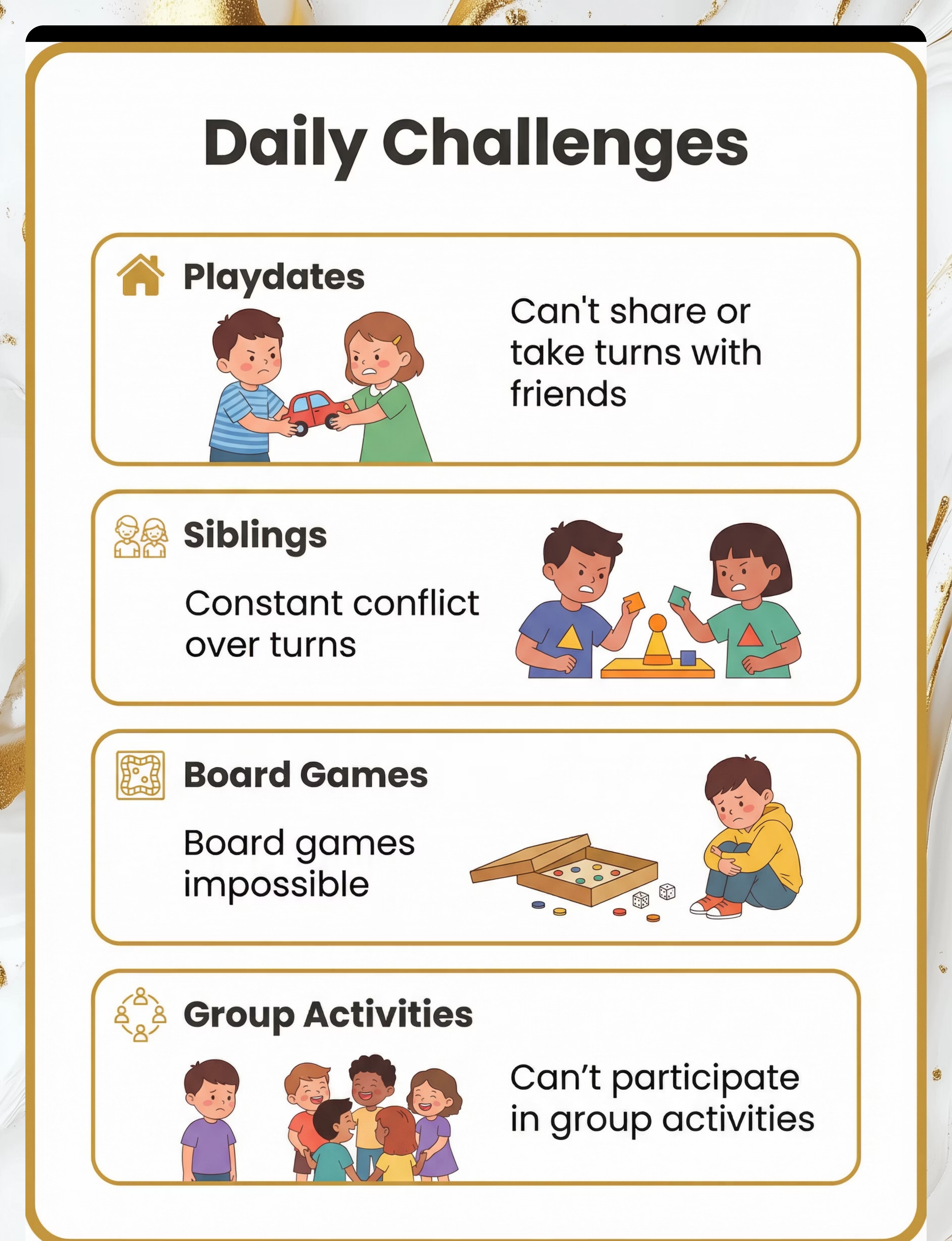
Child wants the toy sibling is using. Can't wait. Grabs it. Sibling cries. Morning starts with conflict and frustration for everyone.
Transitions
At school, group activity requires taking turns with materials. Child doesn't understand whose turn it is. Takes materials during others' turns. Gets redirected repeatedly.
Therapy/School Time
Therapy session includes turn-taking game. Child can't wait for therapist's turn. Disrupts activity. Misses learning opportunity. Feels frustrated and defeated.
Bedtime
Parent tries bedtime story where they take turns reading pages. Child wants to hold book entire time. Bedtime routine becomes a battle instead of connection time.
Without structured support, turn-taking challenges pervade the entire day—from sibling interactions to classroom participation to family connection time. Every social situation becomes harder than it needs to be.
The Science Behind It
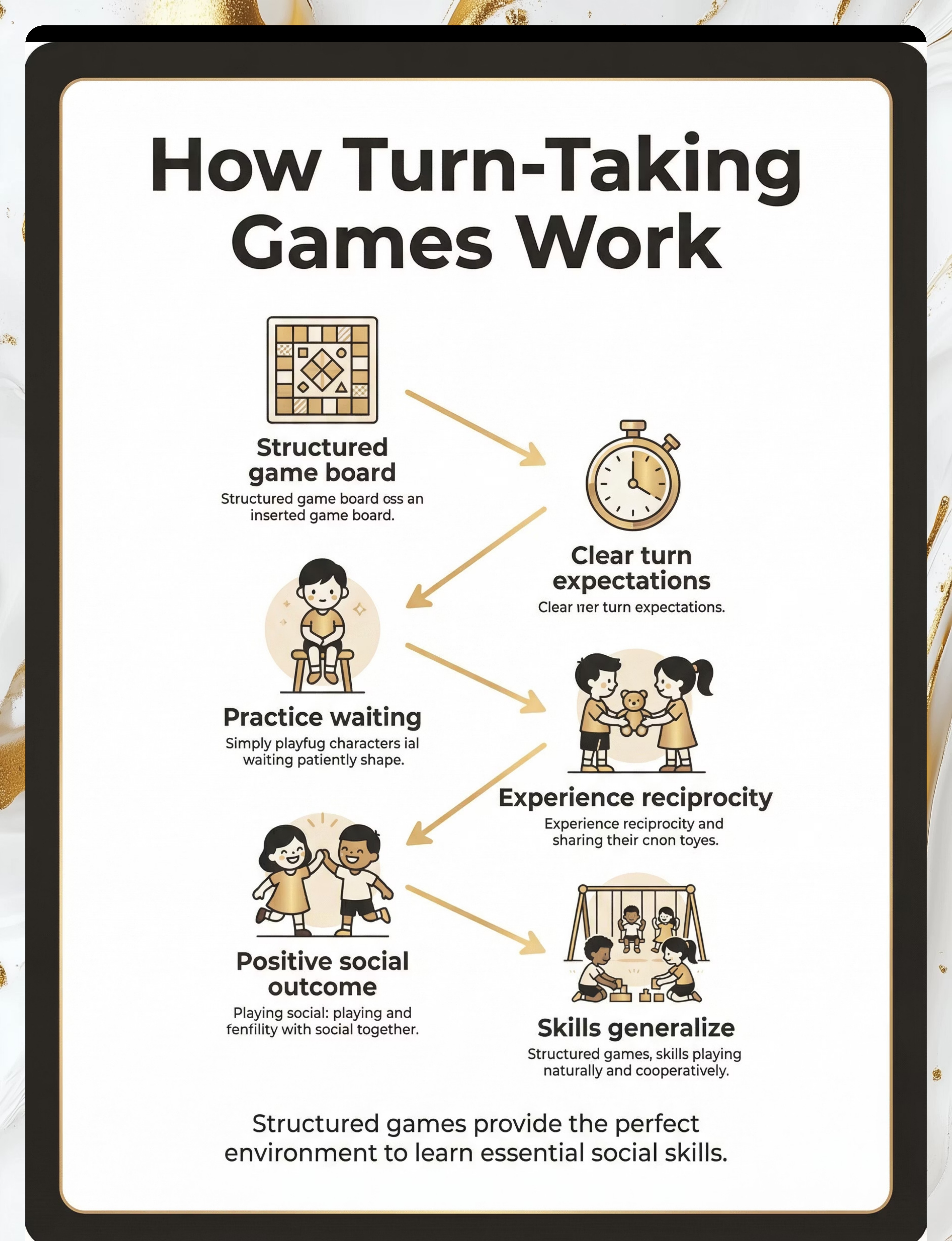
Structured Game
Game provides clear beginning, middle, end with defined turn structure
Clear Turn Expectations
Visual supports make abstract concept concrete and predictable
Practice Waiting
Repeated short waits build tolerance and self-regulation capacity
Experience Reciprocity
Child experiences natural back-and-forth rhythm of interaction
Positive Social Outcome
Successful game completion creates positive association with turn-taking
Skills Generalize
Turn-taking transfers to natural social situations throughout day
Turn-Taking
Waiting
Cooperation
Sharing
Joint Attention
Sportsmanship
How to Use It Right
Start with short, simple turn sequences
Begin with 2-person games where turns are very brief. Build tolerance gradually as success builds confidence.
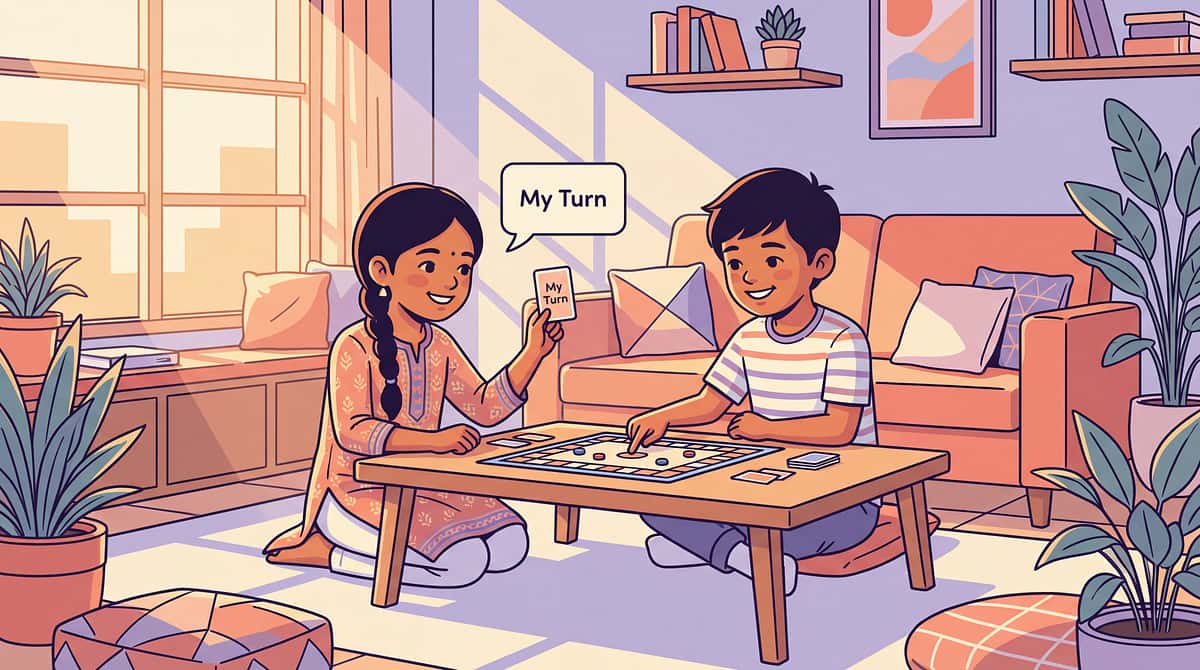
Use visual turn markers like 'My turn' card
Make the abstract concept of turns concrete with a physical marker that moves between players. Visual clarity prevents confusion.
Pair with timer for turn duration
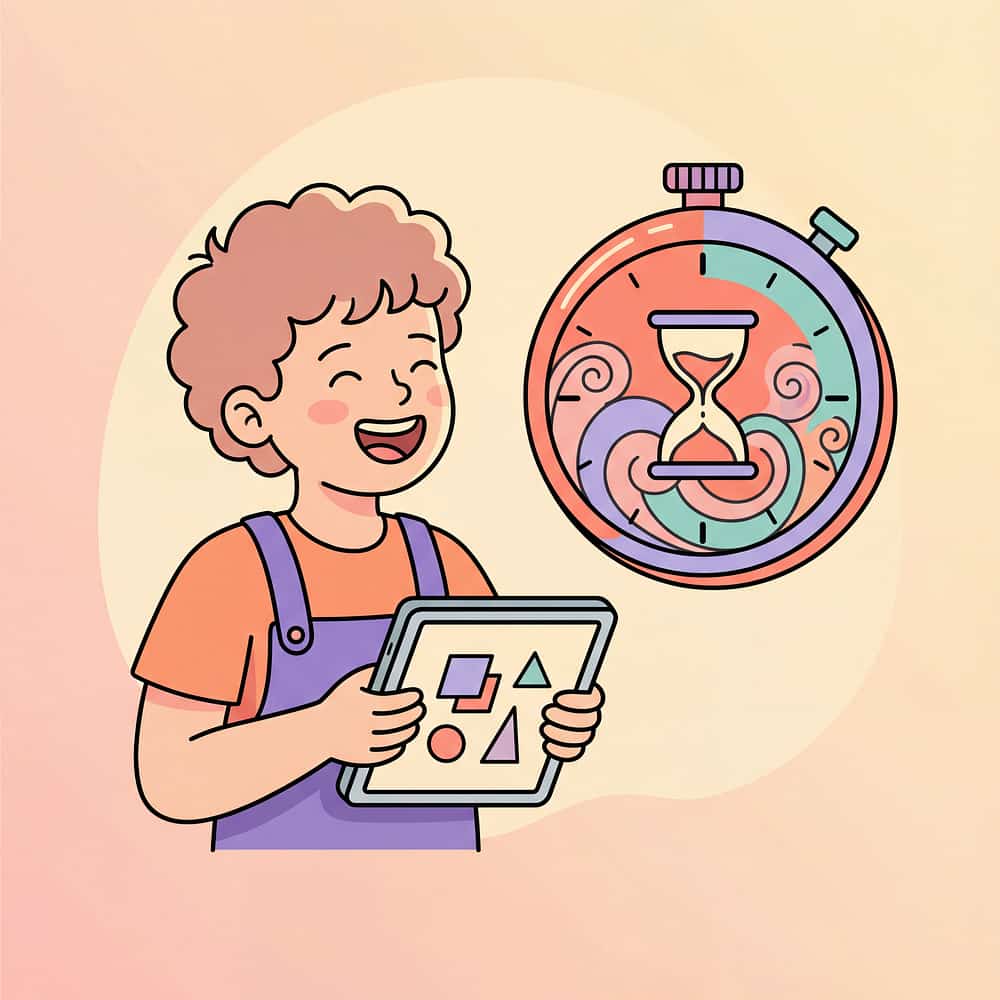
Visual timers show how long each turn lasts, making waiting time finite and predictable. Use phone timers or dedicated visual timers.
Celebrate waiting, not just taking turn
Reinforce the waiting behavior specifically: "Great waiting!" This builds the exact skill that's most challenging.
Start with cooperative before competitive
Build positive game associations with everyone-wins-together games before introducing winner/loser dynamics.
Gradually increase turn length and number of players
As skills solidify, slowly extend turn duration and add players. Build complexity on foundation of success.

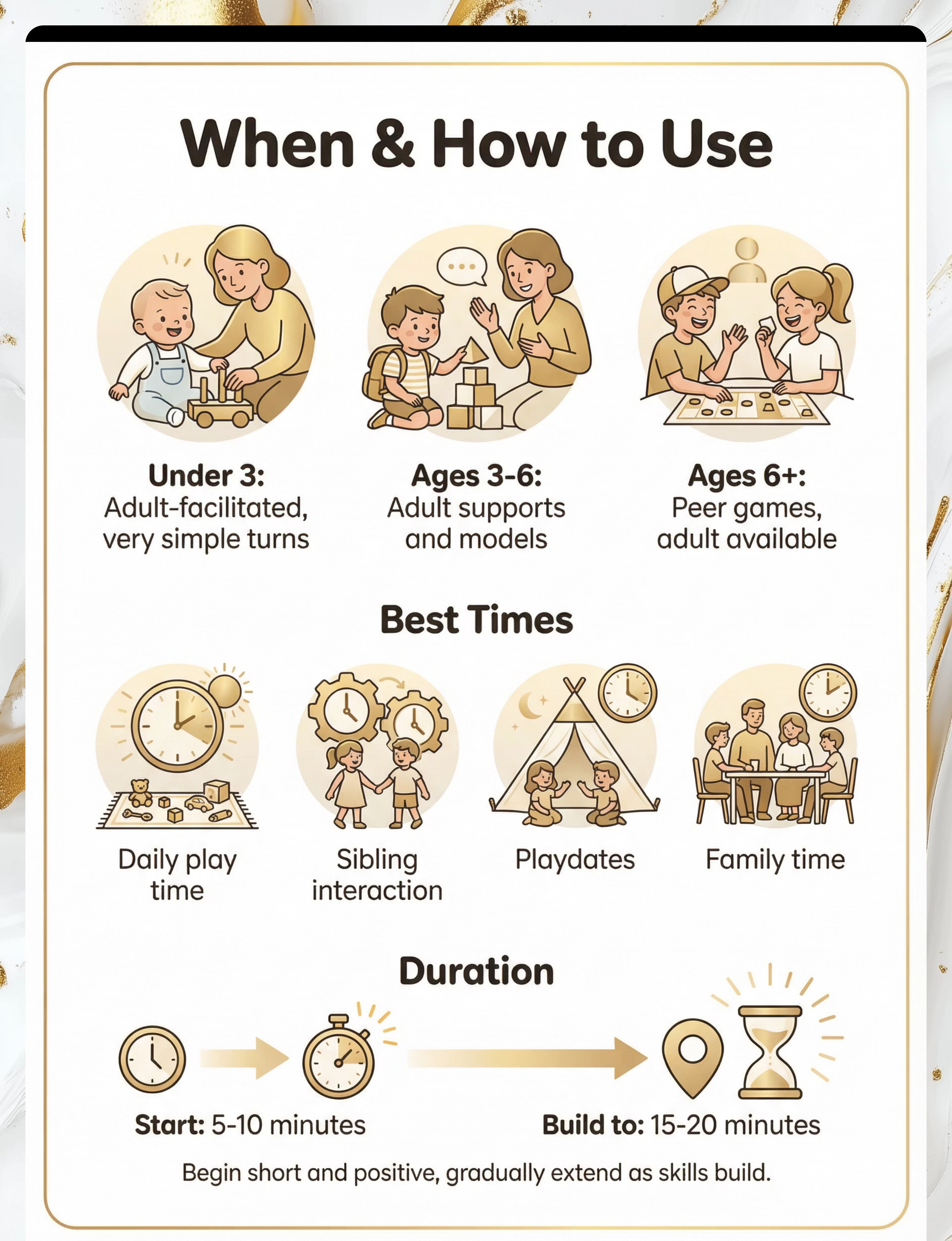
Recommended duration: Start with 5-10 minute game sessions. As attention and turn-taking skills improve, gradually extend to 15-20 minutes. Keep it fun—always end on a positive note.
Expert Endorsement
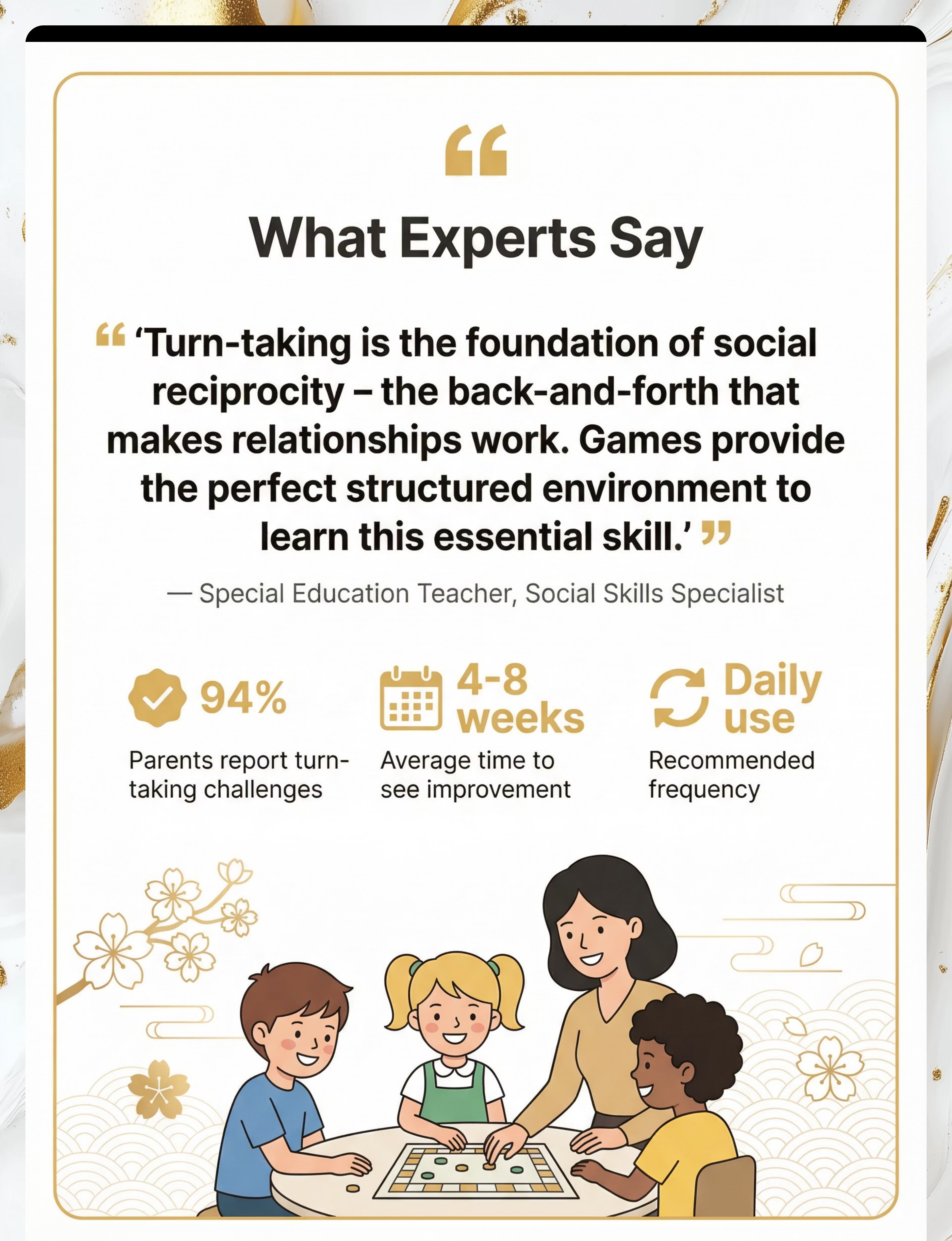
"Turn-taking is the foundation of social reciprocity—the back-and-forth that makes relationships work. Games provide the perfect structured environment to learn this essential skill."
— Special Education Teacher, Social Skills Specialist
SpEd + OT Recommended
Strong Evidence
Rank #1 in Category
Daily Use Recommended
This isn't just expert opinion—it's backed by decades of research showing that structured turn-taking practice generalizes to natural social situations. The games aren't the goal; social reciprocity is. Games are simply the most effective, engaging vehicle to get there.
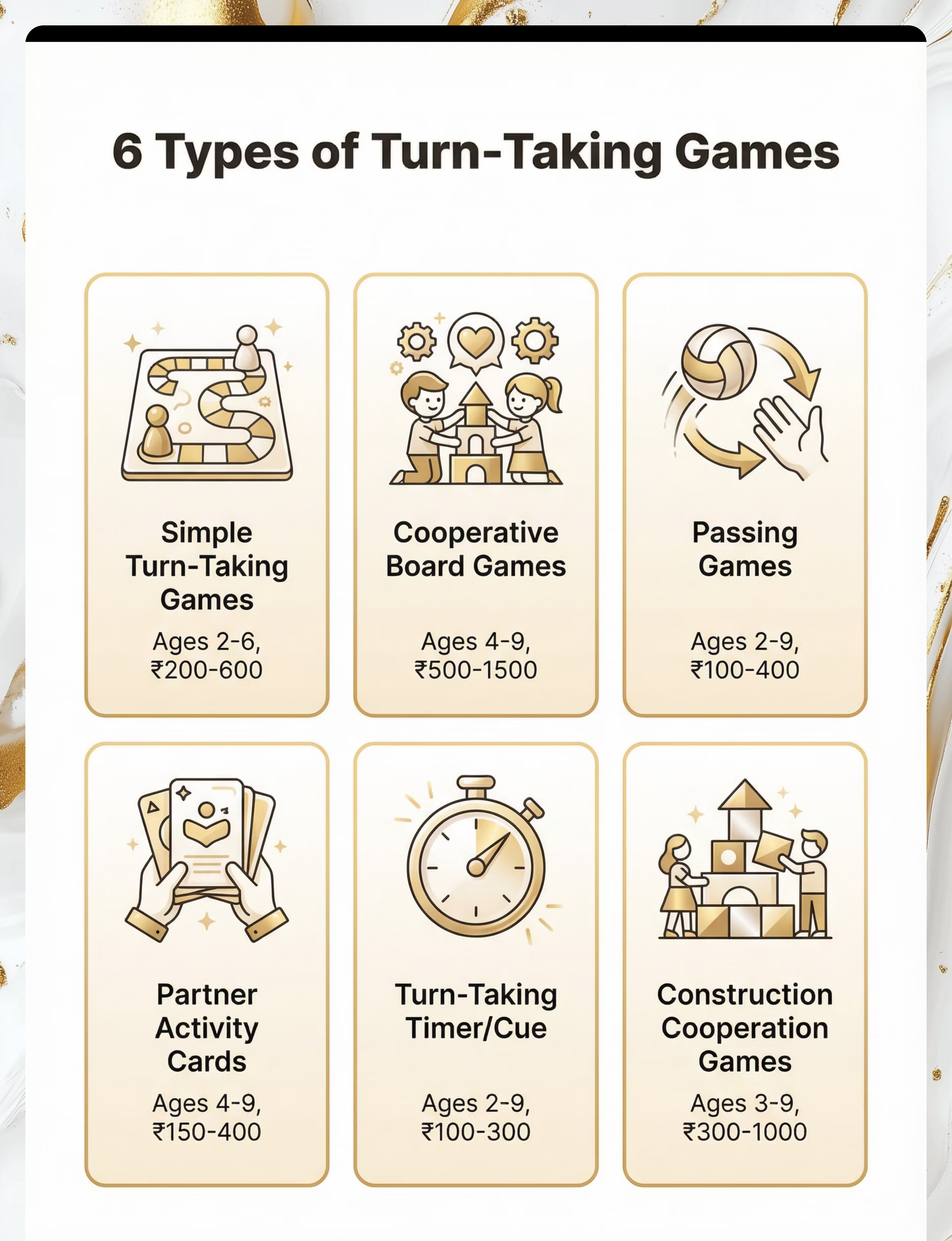
Choose Your Option (6 Variants)
Each variant supports turn-taking in different ways. Choose based on your child's current skills, interests, and the social situations you want to target. You don't need all variants—start with one that fits your child's developmental level and preferences.
Simple Turn-Taking Games
Basic 'my turn, your turn' structure
Cooperative Board Games
Building collaboration, reducing competition stress
Passing Games
Active children, combining gross motor with social skills
Partner Activity Cards
Practicing cooperation skills, peer work
Turn-Taking Timer/Cue
Clarifying whose turn it is and how long
Construction Cooperation Games
Building joint attention and shared goals
Detailed Options:
  • Simple Turn-Taking Games
    Best for: Learning basic turn-taking, young children (ages 2-6)
    Format: Basic board/card games with "my turn, your turn" structure
    Settings: Home, Clinic, School
    Portability: High
    Price: ₹200–600
  • Cooperative Board Games (All Win Together)
    Best for: Building collaboration, reducing competition stress (ages 4-9)
    Format: Board games where team works together toward common goal
    Settings: Home, Clinic, School
    Portability: Medium
    Price: ₹500–1,500
  • Passing Games (Ball, Object)
    Best for: Active children, combining gross motor with social skills (ages 2-9)
    Format: Physical turn-taking with ball or passing object
    Settings: All settings including outdoors
    Portability: High
    Price: ₹100–400
  • Partner Activity Cards
    Best for: Practicing cooperation skills, peer work (ages 4-9)
    Format: Cards requiring two-person cooperation to complete
    Settings: School, Clinic
    Portability: High
    Price: ₹150–400
  • Turn-Taking Timer/Cue
    Best for: Clarifying whose turn it is and how long (ages 2-9)
    Format: Visual timer plus turn marker system
    Settings: All settings
    Portability: High
    Price: ₹100–300
  • Construction Cooperation Games
    Best for: Building joint attention and shared goals (ages 3-9)
    Format: Shared building projects requiring cooperation
    Settings: Home, Clinic, School
    Portability: Medium
    Price: ₹300–1,000

How to Choose
  • By goal: Cooperation skills → Cooperative games | Basic turn-taking → Simple games | Active play → Passing games
  • By setting: Home family time → Cooperative board games | Outdoors → Passing games | School/clinic → Partner cards
  • By portability: Need travel-friendly → Timers, cards, simple games | Home-based → Board games, construction
Specifications & Game Types
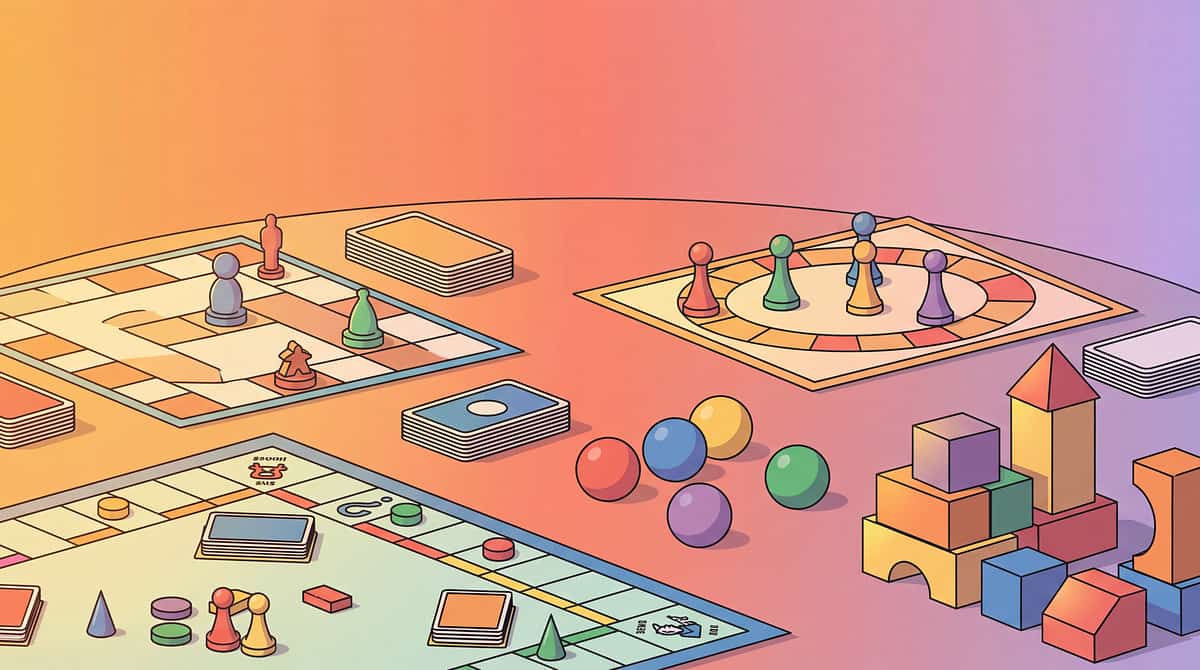
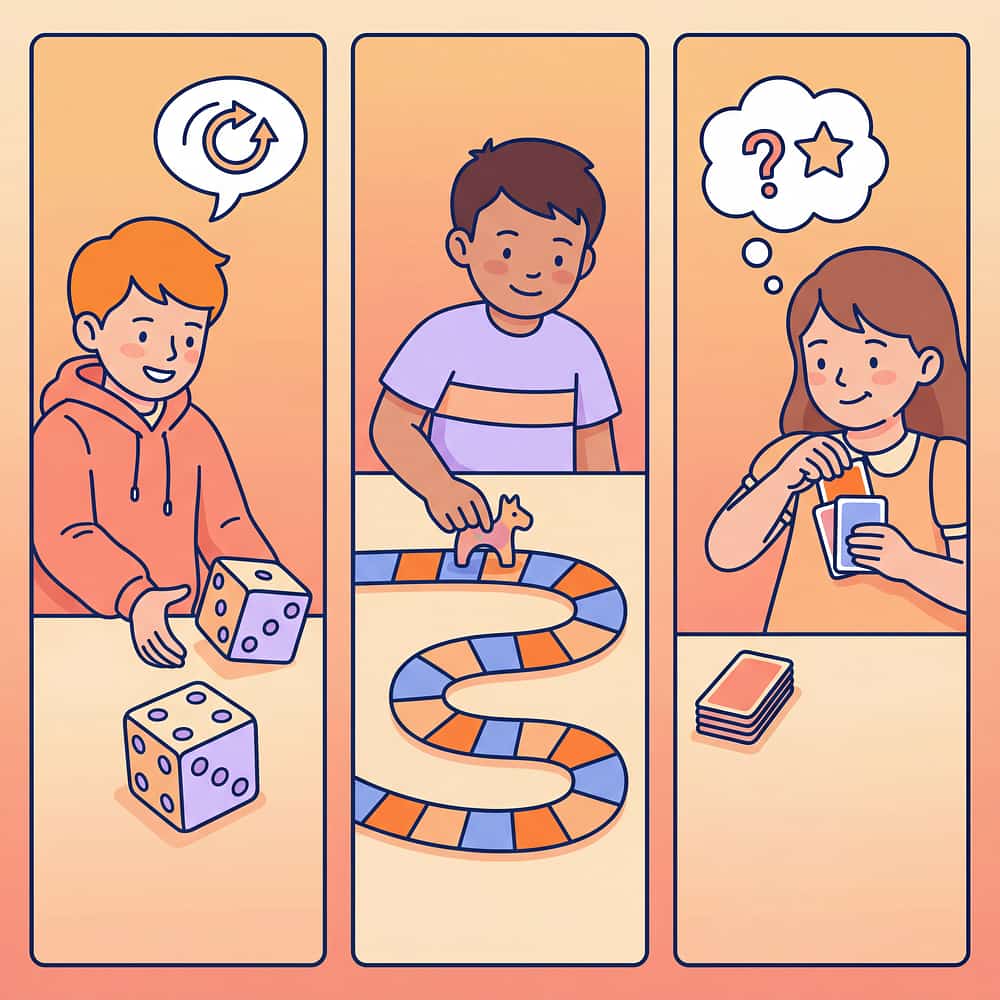
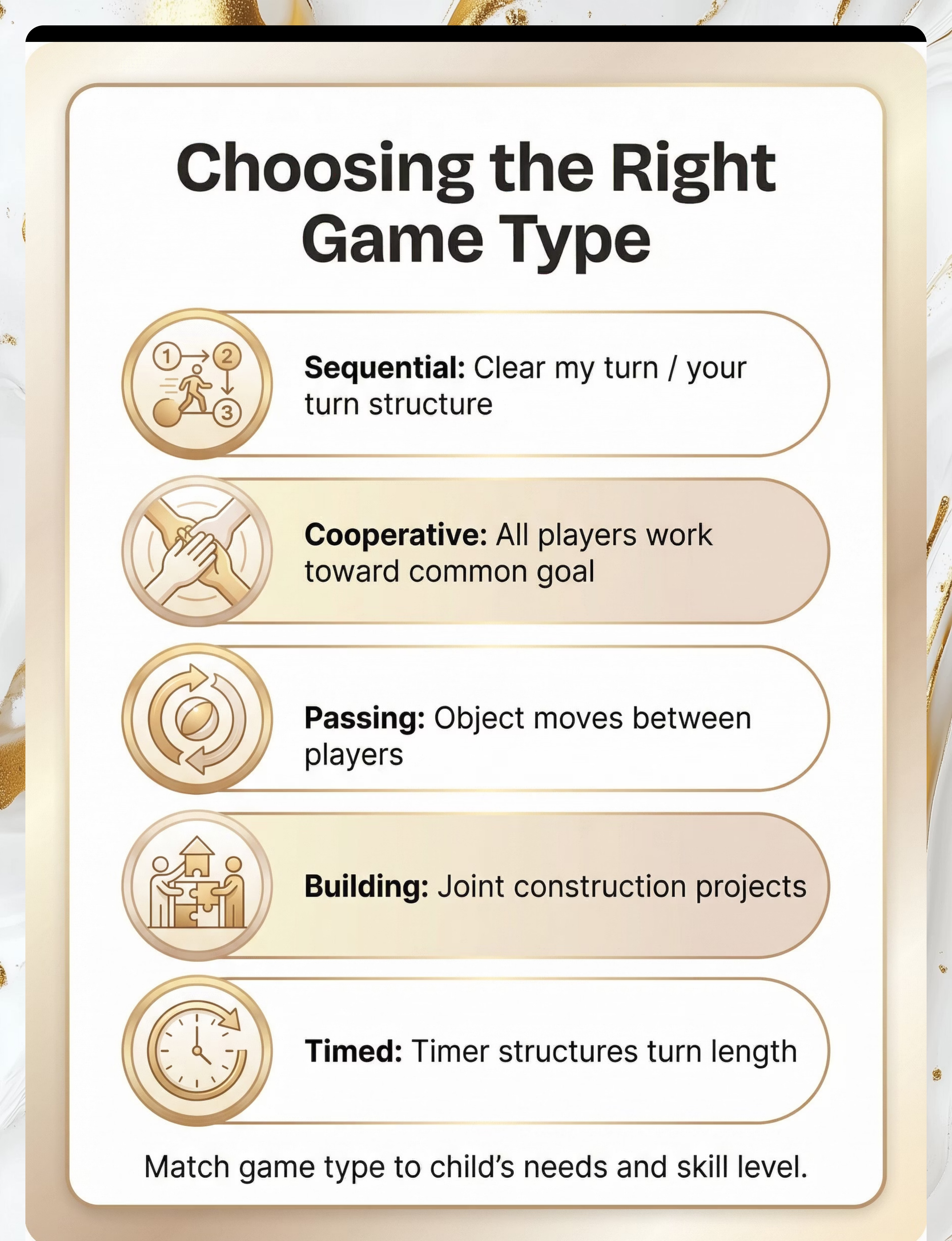
Game Types
Sequential
Clear "my turn / your turn" structure with defined sequence
Cooperative
All players work toward common goal—everyone wins together
Passing
Object moves between players creating physical turn-taking
Building
Joint construction projects requiring coordinated cooperation
Timed
Timer structures turn length, making waiting predictable and fair
Materials & Key Features
Common Materials
  • Board games with clear turn structure
  • Card games (matching, simple strategy)
  • Balls or passing objects
  • Visual timers (sand, digital, phone)
  • Turn markers ("My Turn" cards)
Essential Features to Look For
  • Clear, visible turn structure
  • Visual supports available or easy to add
  • Appropriate game length for attention span
  • Engaging enough to motivate participation
  • Simple rules that don't overwhelm
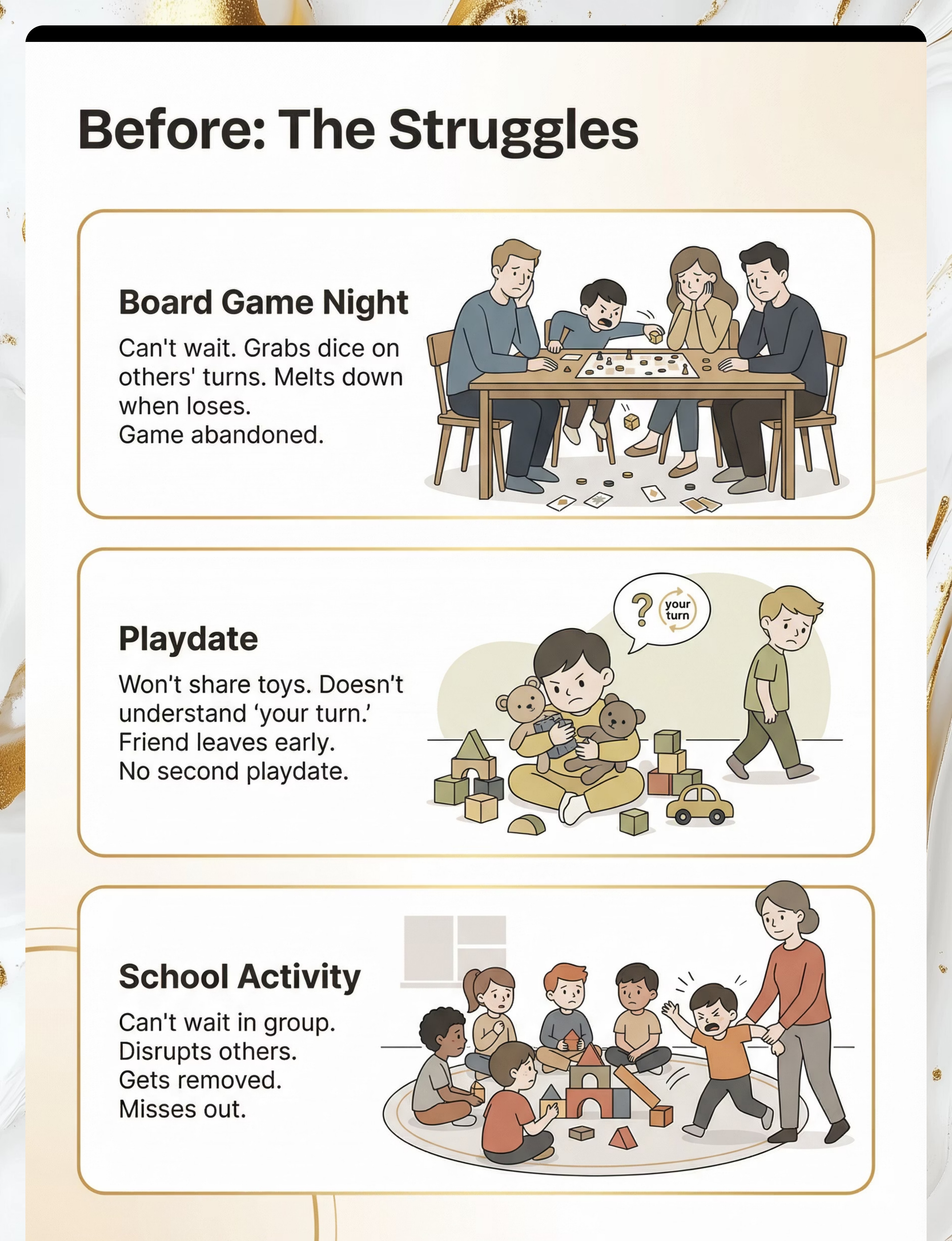
The Struggle (Before)
Board Game
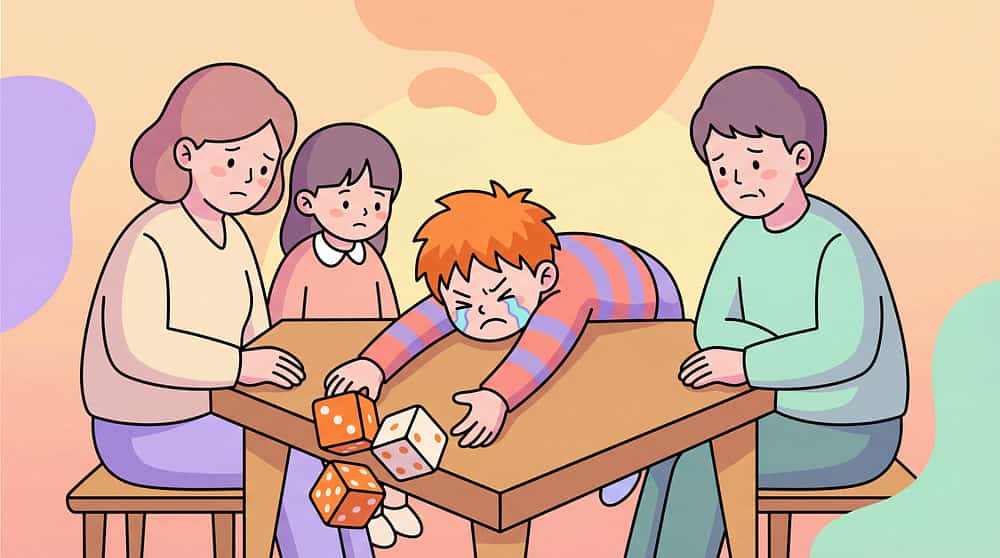
Situation: Family tries game night. Child can't wait for others' turns. Grabs dice when it's not their turn. Melts down when they don't win. Game gets abandoned halfway through. Family never tries board games again.
Experience: Constant redirection, tension, ultimate failure
Emotion: Avoidance, disappointment, isolation from family activity
Playdate
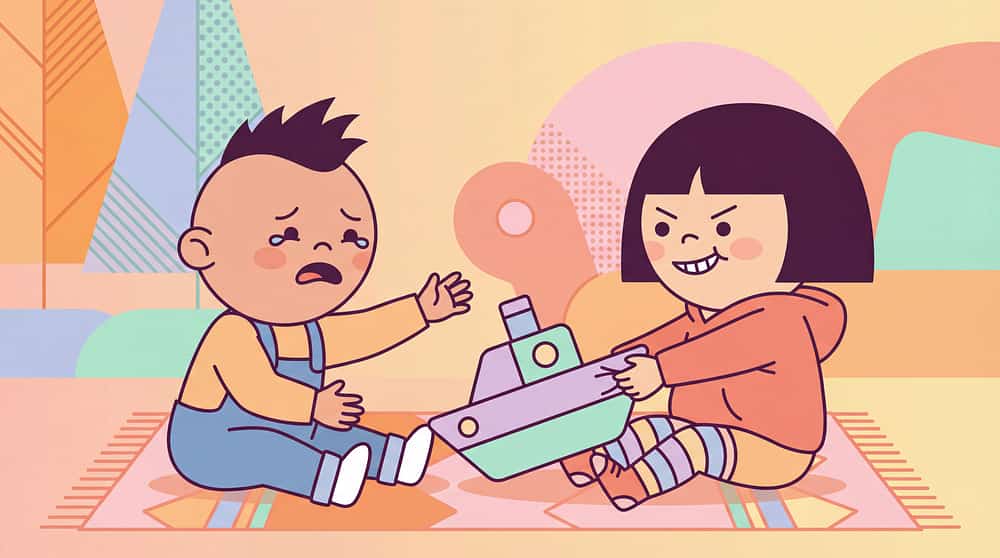
Situation: Friend comes over to play. Child won't share toys or take turns. Doesn't understand "it's your turn now." Takes toys during friend's turn. Friend gets upset and parent picks them up early. No second playdate gets scheduled.
Experience: Social failure, confusion, missed connection
Emotion: Social failure, increasing isolation from peers
Group Activity
Situation: School activity requires taking turns with materials. Child can't wait for their turn. Disrupts other children. Teacher has to remove child from activity. Child misses out on learning and social participation.
Experience: Exclusion, behavioral issues, lost learning
Emotion: Exclusion, frustration, feeling different from peers
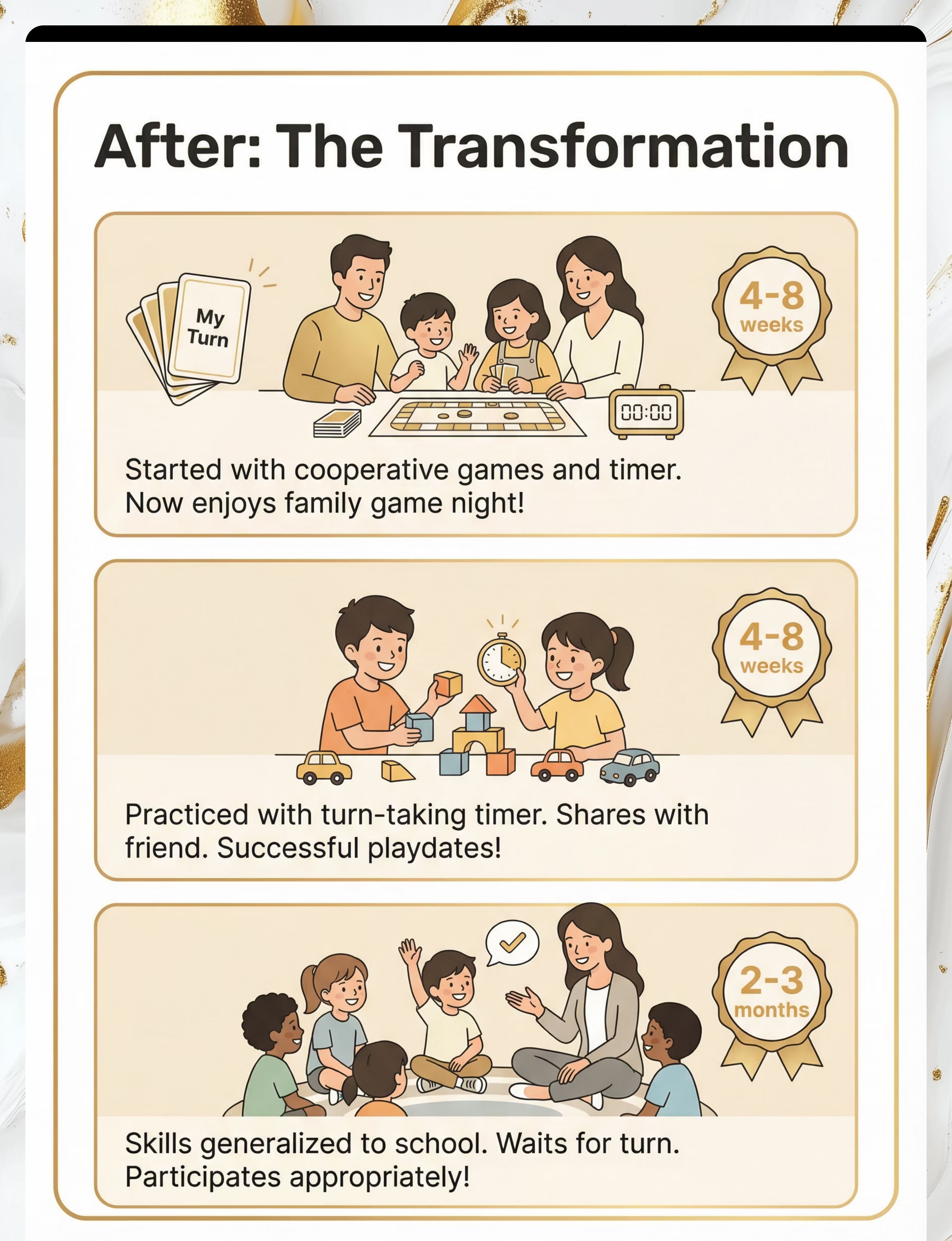
The Breakthrough (After)
Board Game
Situation: Started with simple cooperative game where everyone works together. Used "My Turn" card and visual timer. Child learned to wait because they could see when turn would come. Now family enjoys weekly game night.
Experience: Success, connection, enjoyment
Emotion: Joy, pride, family connection
4-8 weeks
Playdate
Situation: Practiced turn-taking at home with timer. Child now understands: "When timer goes, your turn." Applied skill during playdate. Shared with friend successfully. Friend had fun and wants to come back. Playdate success!
Experience: Social success, friendship building
Emotion: Success, friendship, social confidence
4-8 weeks
Group Activity
Situation: Skills practiced at home with games generalized to classroom. Child now waits for turn in class activities. Participates appropriately. Included in group work. Teacher notices improvement and comments positively.
Experience: Inclusion, competence, positive recognition
Emotion: Inclusion, competence, belonging with peers
2-3 months
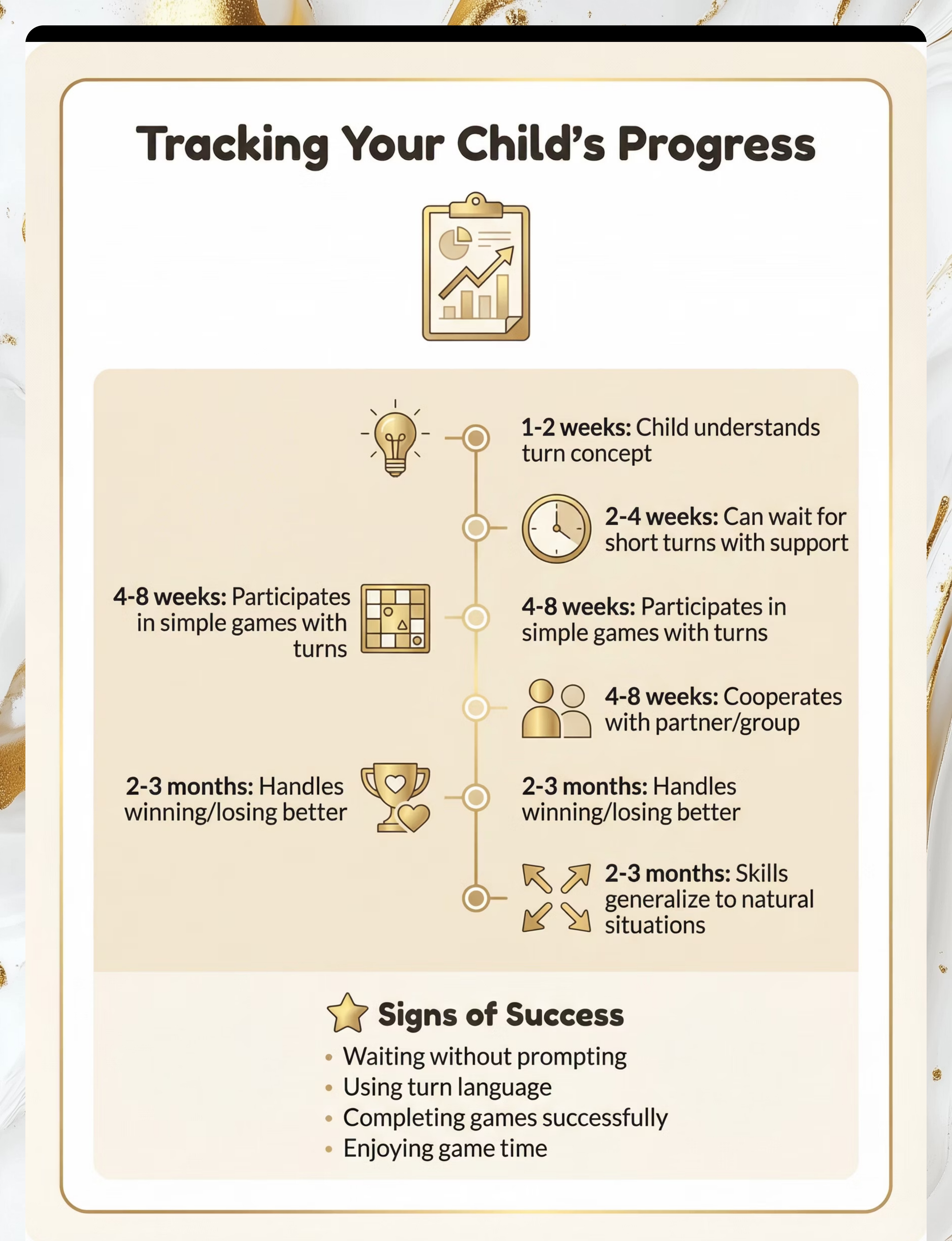
What to Expect (Realistic Timelines)
Child understands turn concept
With visual supports and consistent language, child grasps what "taking turns" means. Abstract becomes concrete.
1-2 weeks
Can wait for short turns with support
Using timer and turn markers, child successfully waits through brief turn sequences. Building tolerance.
2-4 weeks
Participates in simple games with turns
Completes short turn-taking games successfully. Positive associations with game time forming.
4-8 weeks
Cooperates with partner/group
Turn-taking skills enable cooperative play. Can work with others toward shared goals.
4-8 weeks
Handles winning and losing better
Frustration tolerance improves. Can complete competitive games without major upset (with support).
2-3 months
Turn-taking generalizes to natural situations
Skills practiced in games transfer to daily life: conversations, classroom, sibling play, peer interaction.
2-3 months
Remember: Every child progresses at their own pace. These timelines assume consistent practice and appropriate supports. Celebrate each small step—they all matter.
Is This Right for My Child? (2-Minute Check)
"Does your child struggle with taking turns?"
If yes, this indicates: Turn-taking games with visual supports are needed to build this foundational skill
"Does your child have difficulty waiting?"
If yes, this indicates: Structured turn practice with timers will help build waiting tolerance gradually
"Do board games typically end in meltdowns?"
If yes, this indicates: Cooperative games and turn supports (markers, timers) are essential starting points
"Does your child struggle to cooperate with others?"
If yes, this indicates: Cooperative games that build teamwork skills will be highly beneficial

Scoring guidance: 3 or more "yes" answers indicate a strong fit. Even 1-2 "yes" answers suggest turn-taking games would be beneficial. These games support development even for children without significant challenges—they're universally valuable social skills builders.
Usage Guide
When to Use ✓
Daily play time for structured practice
Sibling interaction and conflict reduction
Playdates with adult support present
Therapy sessions focused on social skills
Family connection time and bonding
Classroom activities and group work
When NOT to Use ✗
When child is already dysregulated or upset
Competitive games before cooperation is solid
Games too long for child's attention span
Without visual/timer supports when needed
Supervision by Age
Age Range
Supervision Level
Notes
Under 3 years
Adult-facilitated
Adult leads game, models turn-taking, provides hand-over-hand support. Very simple turn sequences only.
3-6 years
Adult actively supports
Adult present, models behavior, reinforces waiting, provides visual supports. Gradually fades support as skills build.
6+ years
Adult available nearby
Children can play peer games with adult supervision available for check-ins and conflict resolution as needed.

Duration guidance: Start with 5-10 minute sessions. As attention span and turn-taking skills improve, gradually extend to 15-20 minutes. Always end on a positive note before frustration builds.
Safety First
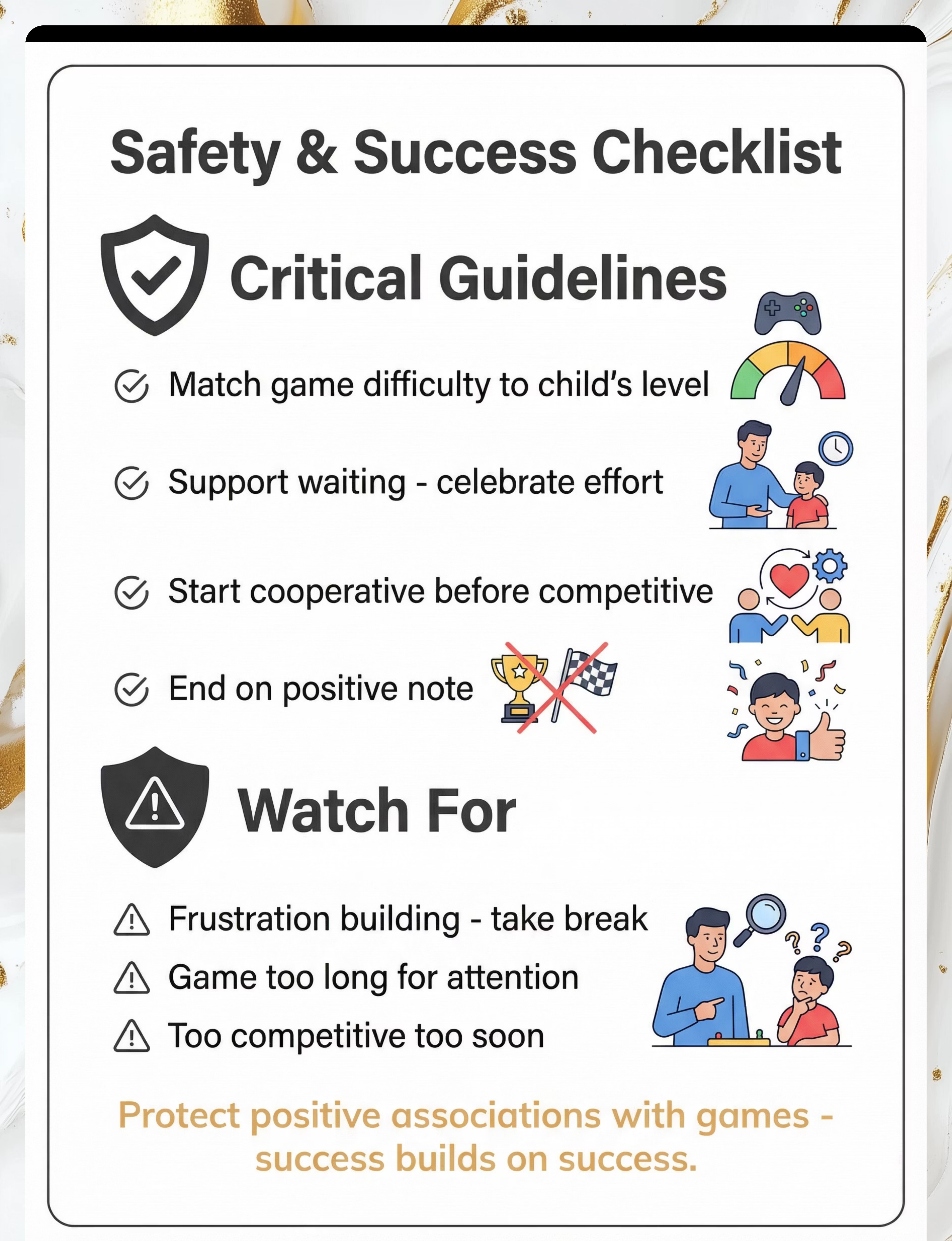
Critical Safety Considerations
  • Match game difficulty to child's current developmental level, not chronological age
  • Provide active support for waiting—don't let child fail repeatedly
  • Start with cooperative games before introducing competitive dynamics
  • Celebrate effort and participation, not just winning
Important Warnings
  • Watch for frustration building—intervene early before meltdown
  • End games on positive note even if you have to shorten the activity
  • Don't force losing experiences before child has frustration tolerance
  • Protect positive associations with games—avoid repeated negative experiences
Contraindicated Situations
  • Games that are too difficult for child's current skill level
  • Forced losing without adequate emotional support and preparation
  • Unsupported waiting that leads to repeated failure
  • Games that consistently end in meltdowns despite modifications
Safety Checklist
Before Use
  • Game matches child's skill level
  • Visual supports ready (timer, turn card)
  • Game short enough for attention span
  • Cooperative or appropriately competitive
During Use
  • Celebrating waiting behavior
  • Using visual supports consistently
  • Keeping atmosphere fun and positive
  • Watching for early frustration signs
Signs of Success
  • Child waits for turn without prompting
  • Child enjoys and looks forward to game time
  • Turn-taking skills improving over time
  • Child cooperates with others during play
Common Questions (Honest Answers)
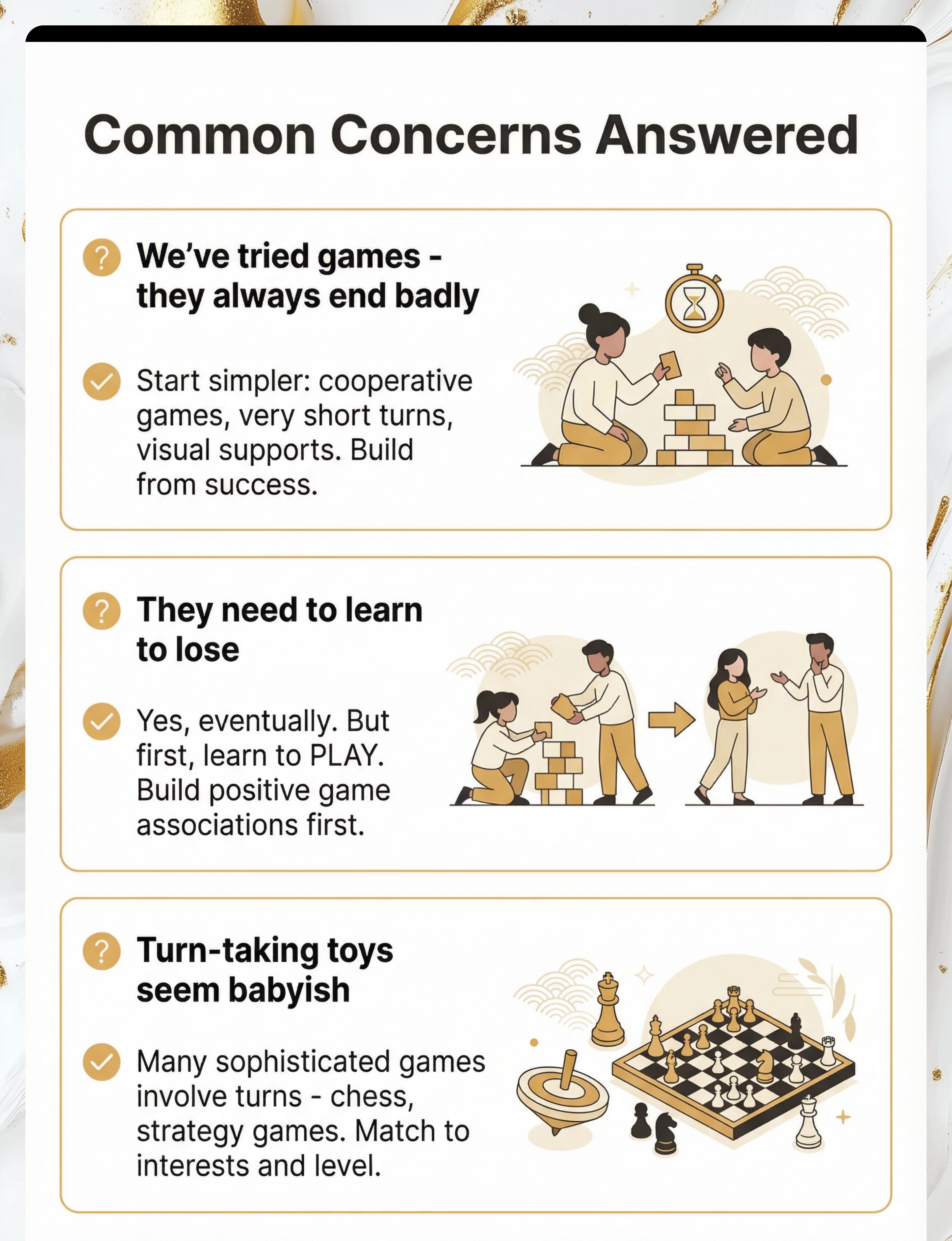
"We've tried games—they always end badly"
Response: Start simpler than you think necessary. Use cooperative games where there's no winner or loser. Make turns very short initially. Add visual supports like timers and "My Turn" cards. Build from success, not failure. Competitive games come much later, after turn-taking is solid and positive game associations are established.
Try this instead: Begin with cooperative games where everyone wins together. Peaceable Kingdom makes excellent options for this.
"They need to learn to lose"
Response: Yes, eventually—but first, they need to learn to PLAY. Build positive associations with games through cooperative play. Then introduce "sometimes you win, sometimes you don't" gradually. Build frustration tolerance step by step. Losing is an advanced skill that requires significant emotional regulation capacity.
Try this instead: Think of it as a sequence: playing → enjoying → cooperating → competing → handling competition → accepting loss. Losing tolerance is step 5 or 6, not step 1.
"Turn-taking toys seem babyish for my child"
Response: Many sophisticated games involve turn-taking. Chess and strategy games are turn-based. Collaborative video games require turns. Even adult card games involve turn structure. Match the game to your child's interests and developmental level, not just chronological age. There are age-appropriate options at every level.
Try this instead: Find games that match your child's interests—sports themes, building, strategy, adventure—with turn structure built in.
"They only want to play alone"
Response: Start with very short, highly motivating joint activities. Begin with parallel play (playing alongside, not with). Then introduce brief turn interactions. Pair activities with your child's special interests. Social play can be built gradually—it doesn't have to be all-or-nothing.
Try this instead: Build progression: solitary play → parallel play (near each other) → simple turn interactions → cooperative play.
Investment Guide
Investing in suitable games and play resources can significantly impact a child's developmental progress, particularly in areas like turn-taking, cooperation, and emotional regulation. This guide outlines various investment levels, from budget-friendly starting points to comprehensive collections, ensuring there's an option for every family.
Price Comparison: Play Resources
Budget-Friendly Starting Point
₹100-300
Simple card games (UNO, Go Fish) + DIY turn marker and phone timer.
Testing approach, tight budgets, starting simple.
Mid-Range Package
₹500-800
One high-quality cooperative game (e.g., from Peaceable Kingdom) + DIY turn supports.
Structured skill-building with reduced competition stress, immediate use.
Premium Investment Option
₹800-2,000
Multiple high-quality cooperative games from brands like Peaceable Kingdom, Haba, and Gamewright.
Building a comprehensive game library, long-term family investment.
Choosing the right resources depends on your child's needs and your family's situation. Regardless of the budget, the focus should always be on fostering positive play experiences that support development.
Key Benefits of Strategic Play Investment
Flexible Budgeting
Options range from DIY solutions for minimal cost to premium sets for deeper engagement.
Targeted Skill Development
Enhances crucial skills like turn-taking, cooperation, and emotional regulation in a fun environment.
Enhanced Family Engagement
Creates opportunities for positive family interactions and shared joyful experiences.
Customizable Approach
Allows matching game complexity and themes to your child's interests and developmental stage.
Investment Progression for Game-Based Learning
Assess Needs: Identify specific developmental goals and your child's current interests.
Start Simple (₹100-300): Utilize basic card games and homemade turn-taking aids to test engagement.
Introduce Cooperative Play (₹500-800): Invest in a single, high-quality cooperative game to build positive associations.
Expand & Diversify (₹800-2,000): Gradually build a library of varied cooperative and turn-based games.
Integrate Competitive Games: Introduce competitive play only after strong foundational skills are established.

Overall investment range: ₹100–2,000 ($1-24 USD)
Best starting point: One cooperative game (₹500-800) plus DIY turn supports (timer, turn card). This combination provides structure, reduces competition stress, and can be used immediately with minimal preparation.
Where to Buy in India
Availability: Widely Available through online platforms and local toy stores
Amazon.in
Search Terms: "cooperative games kids"
Typical Price Range: ₹500-1,500
Amazon.in
Search Terms: "turn taking games autism"
Typical Price Range: ₹300-800
Amazon.in
Search Terms: "simple board games kids"
Typical Price Range: ₹200-600
Local toy stores
Search Terms: "children's board games"
Typical Price Range: ₹300-1,000
Buying Tips
  • Start with cooperative games from brands like Peaceable Kingdom—excellent for reducing competition stress
  • Simple card games like UNO or matching games work remarkably well for basic turn-taking
  • Pair any game with a visual timer to structure turn length and make waiting predictable
  • Create or purchase a "My Turn" card to make the abstract concept of turns concrete
  • Choose games that can be completed in 10-15 minutes initially—attention span is key
  • Look for games that match your child's interests (animals, vehicles, building, etc.)
Red Flags to Avoid
  • Games that are too competitive for your child's current frustration tolerance level
  • Turn sequences that are too long—child can't maintain attention/patience
  • Starting with too many players—begin with 2 people, expand gradually
  • Games that are too complex for current developmental level—complexity adds frustration
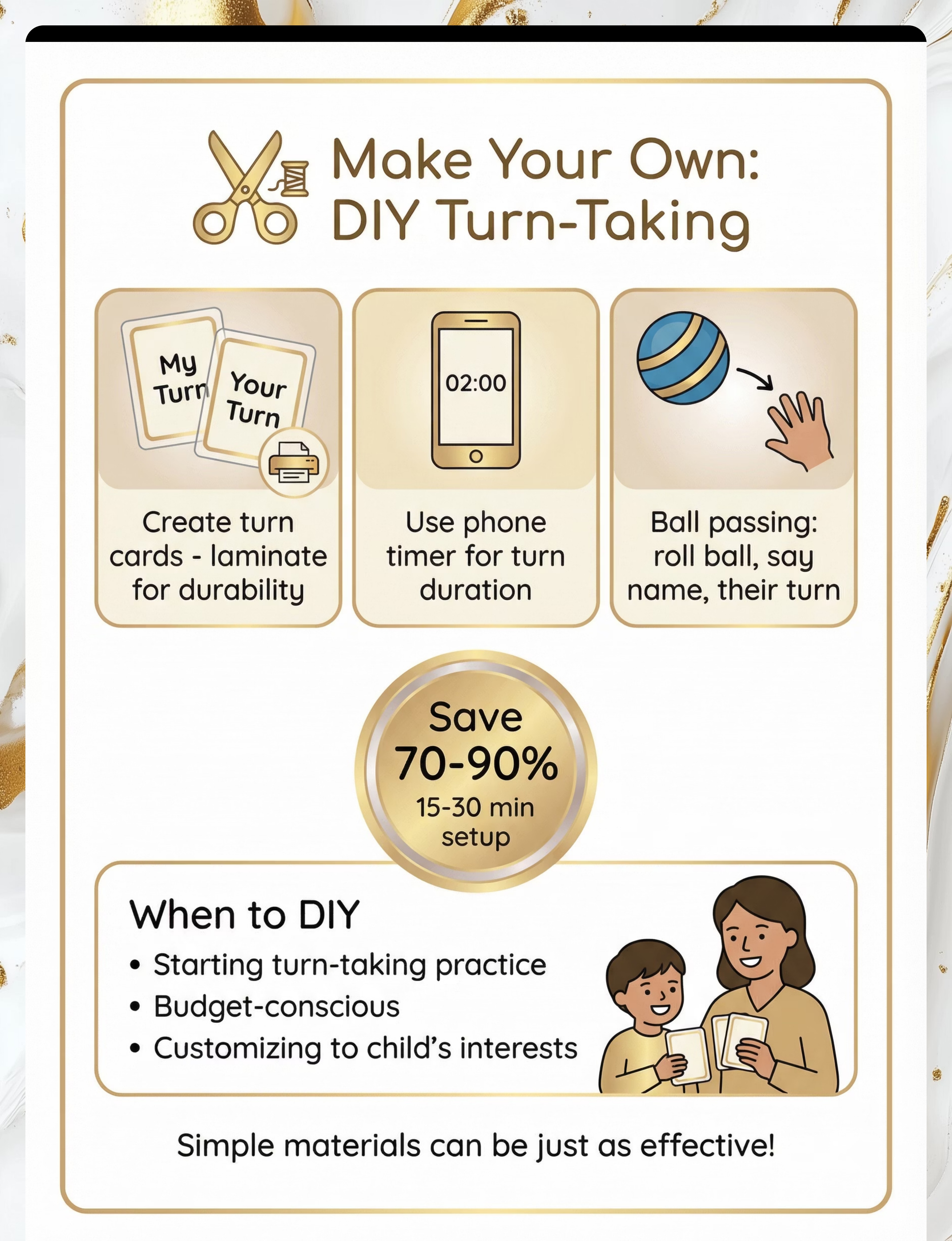
DIY Alternative (Save 70-90%)
Feasibility: High | Time Required: 15-30 minutes | Cost Savings: 70-90%
1
Materials Needed
  • Cardstock or sturdy paper for "My Turn" / "Your Turn" cards
  • Laminating sheets (optional for durability)
  • Phone or kitchen timer
  • Ball, stuffed animal, or object for passing games
  • Basic art supplies for homemade game boards
  • Existing toys (blocks, cars, dolls)
2
Simple DIY Activities
  1. Create "My Turn" / "Your Turn" cards.
  1. Set a phone timer for turn duration (30-60 seconds).
  1. Ball passing game: roll to child, say name, their turn.
  1. Simple card matching with turns: "You flip one, I flip one..."
  1. Joint building project: "You add one block, I add one block."
  1. Add turn structure to existing play: "Your turn with the red car."
3
Choose DIY When...
  • Just starting turn-taking practice
  • Budget is limited
  • Want to customize to child's interests
  • Adding turn structure to existing play
  • Need an immediate solution
4
Choose Commercial When...
  • Want engaging, professionally designed games
  • Need specific cooperative games
  • Building a long-term family game collection
  • Gift giving or special purchases
  • Want variety and replayability
5
Key Trade-offs
DIY is great for affordability and testing the approach with existing play. Commercial games offer professional design and variety for long-term engagement. Many families use a combination of both for best results.

Preview of turn taking cooperative games Therapy Material

Below is a visual preview of turn taking cooperative games therapy material. The pages shown help educators, therapists, and caregivers understand the structure and content of the resource before use. Materials should be used under appropriate professional guidance.

Page 1
Page 2
Page 3
Page 4
Page 5
Page 6
Page 7
Page 8
Page 9
Page 10
Page 11
Page 12
Page 13
Page 14
Page 15
Page 16
Page 17
Page 18
Page 19
Page 20
Link copied!
Complete Support System
Measuring Success
Baseline (Measure First)
  • Current turn-taking ability in structured games
  • How long child can wait for turn (seconds/minutes)
  • Behavior during game time (compliance, frustration level)
  • Ability to cooperate with others during play
Goals to Work Toward
  • Child will take turns in 2-person game with visual support
  • Child will wait specified duration for turn without prompting
  • Child will complete cooperative game without meltdown
  • Child will engage in turn-taking game with peer successfully
Success Indicators
  • Waiting for turn without adult prompting
  • Using "my turn / your turn" language spontaneously
  • Completing games successfully and enjoyably
  • Positive affect during game time—looking forward to it
  • Turn-taking generalizing to daily situations beyond games

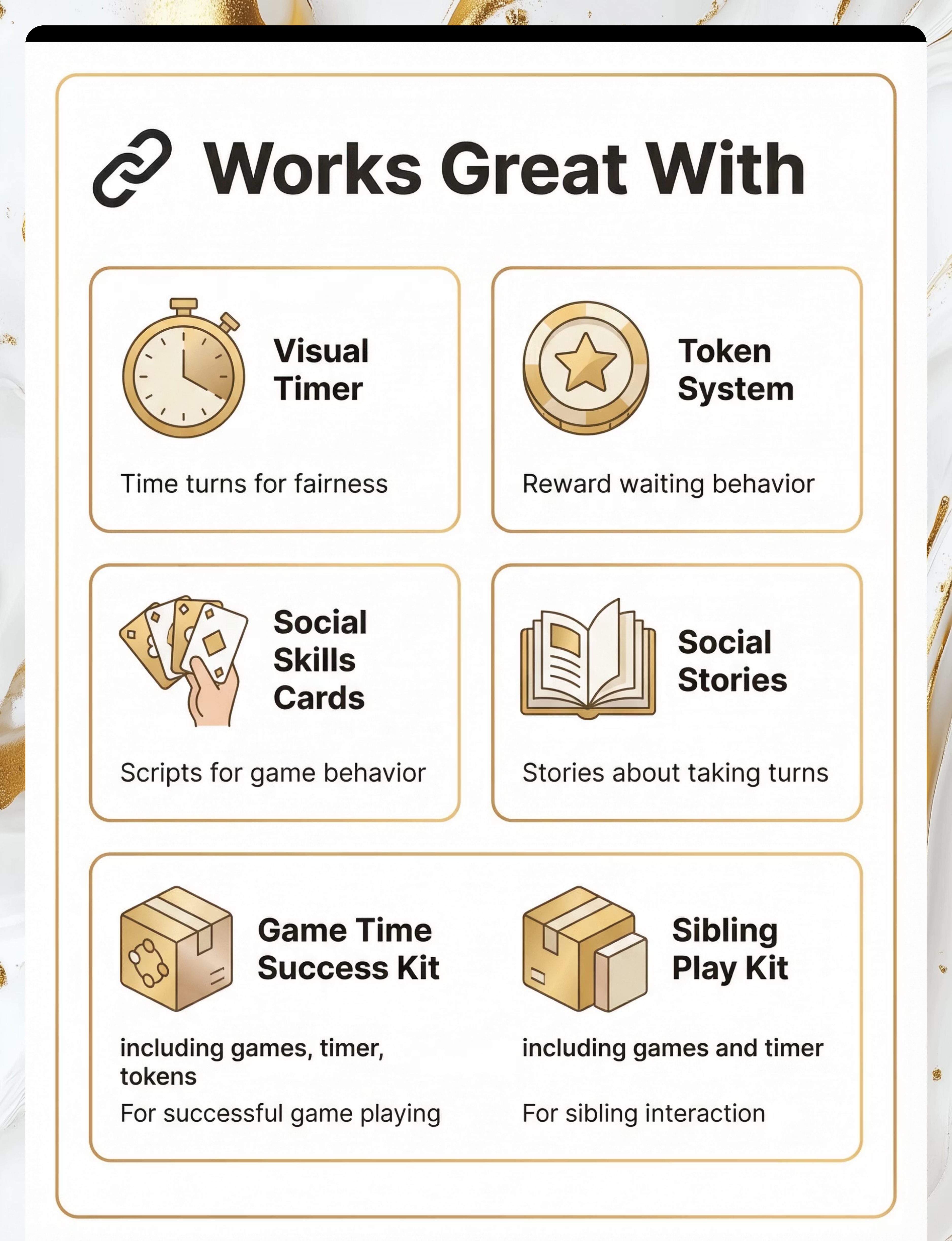
Pair It With... (Complete the Kit)
Turn-taking games work even better when combined with complementary tools:
Visual Timer (ID: 3.3)
Essential companion—times turns for fairness and makes waiting predictable. Reduces "when is it my turn?" anxiety.
Token System (ID: 2.7)
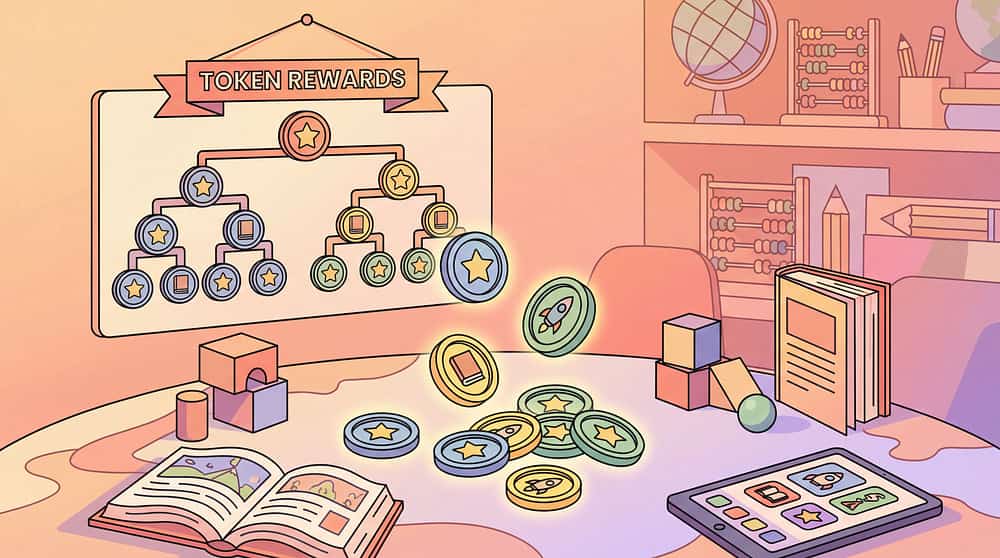
Rewards waiting behavior specifically. Builds motivation for this challenging skill through positive reinforcement.
Social Skills Cards (ID: 4.1)
Provides scripts and visual supports for appropriate game behavior like "good sport" language and waiting phrases.
Social Stories (ID: 2.2)
Stories about taking turns prepare child cognitively and emotionally for what turn-taking looks and feels like.
Recommended Bundles
Game Time Success Kit
Includes: Turn-Taking Games (4.4) + Visual Timer (3.3) + Token System (2.7)
Use case: Complete system for successful game playing with all necessary supports
Sibling Play Kit
Includes: Turn-Taking Games (4.4) + Sharing Tools (4.3) + Visual Timer (3.3)
Use case: Reduces sibling conflict through structured turn-taking and sharing practice

Quick Summary
Turn-taking and cooperative games build fundamental social reciprocity skills through structured, supported play. This is a Core Kit tool with Rank #1 status and strong evidence base—essential for social development.
turn-taking
cooperative
games
sharing
waiting
reciprocity
SpEd
OT
core-kit
Common Search Terms
turn taking games autism, cooperative games autism, sharing games autism, waiting games kids, social games autism, board games autism, team games autism

Get Support
FREE National Autism Helpline
Phone: 9100 181 181
Languages: 16+ Indian languages supported
Website: pinnacleblooms.org
Platform Integration
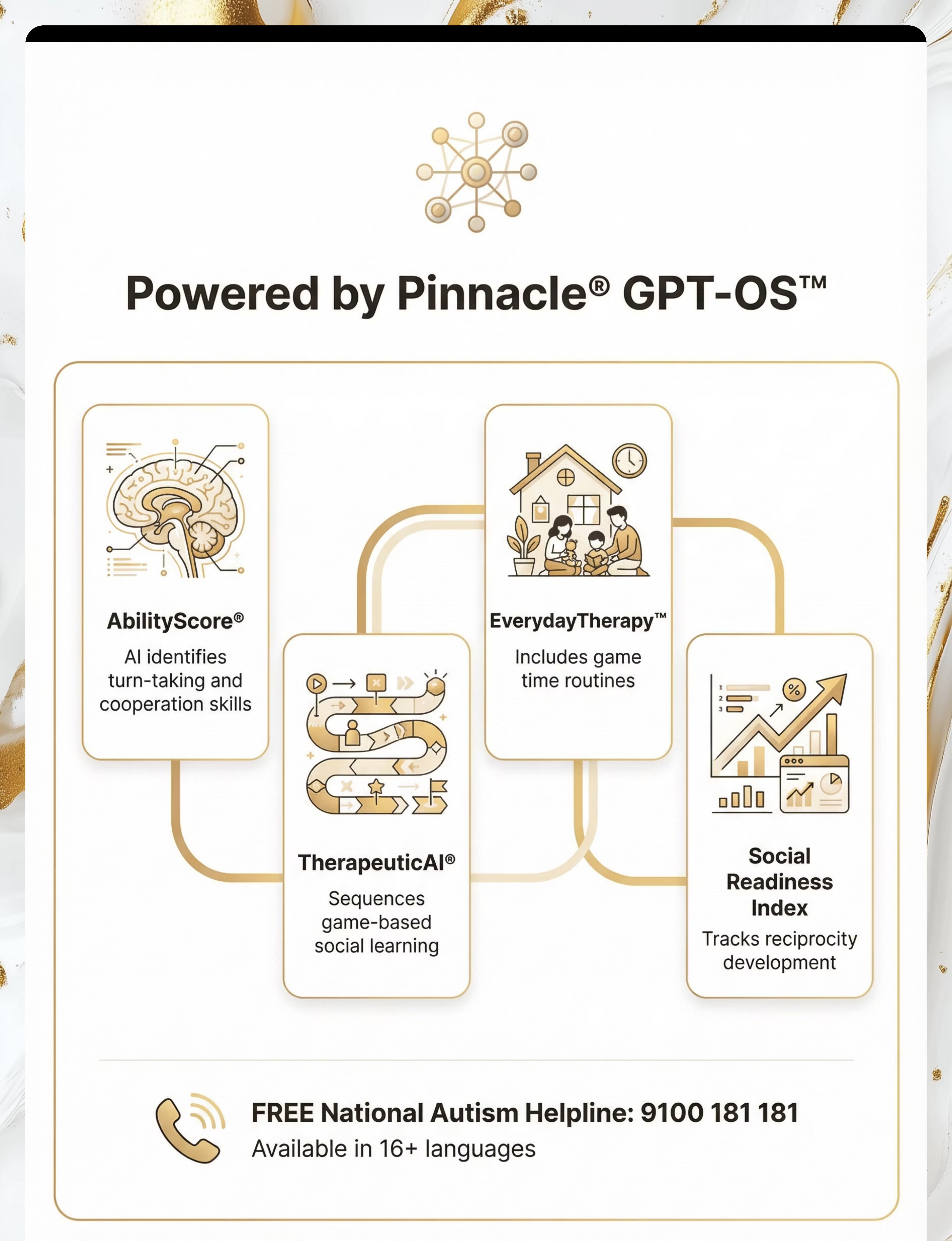
This tool integrates seamlessly with Pinnacle Blooms Network's comprehensive platform:
  • AbilityScore® identifies specific turn-taking and cooperation skill levels, showing exactly where your child is and what to work on next
  • TherapeuticAI® sequences game-based social learning activities tailored to your child's developmental level
  • EverydayTherapyProgramme™ includes structured game time routines that fit naturally into daily schedules
  • Social Readiness Index tracks reciprocity development over time, showing progress in turn-taking and cooperation

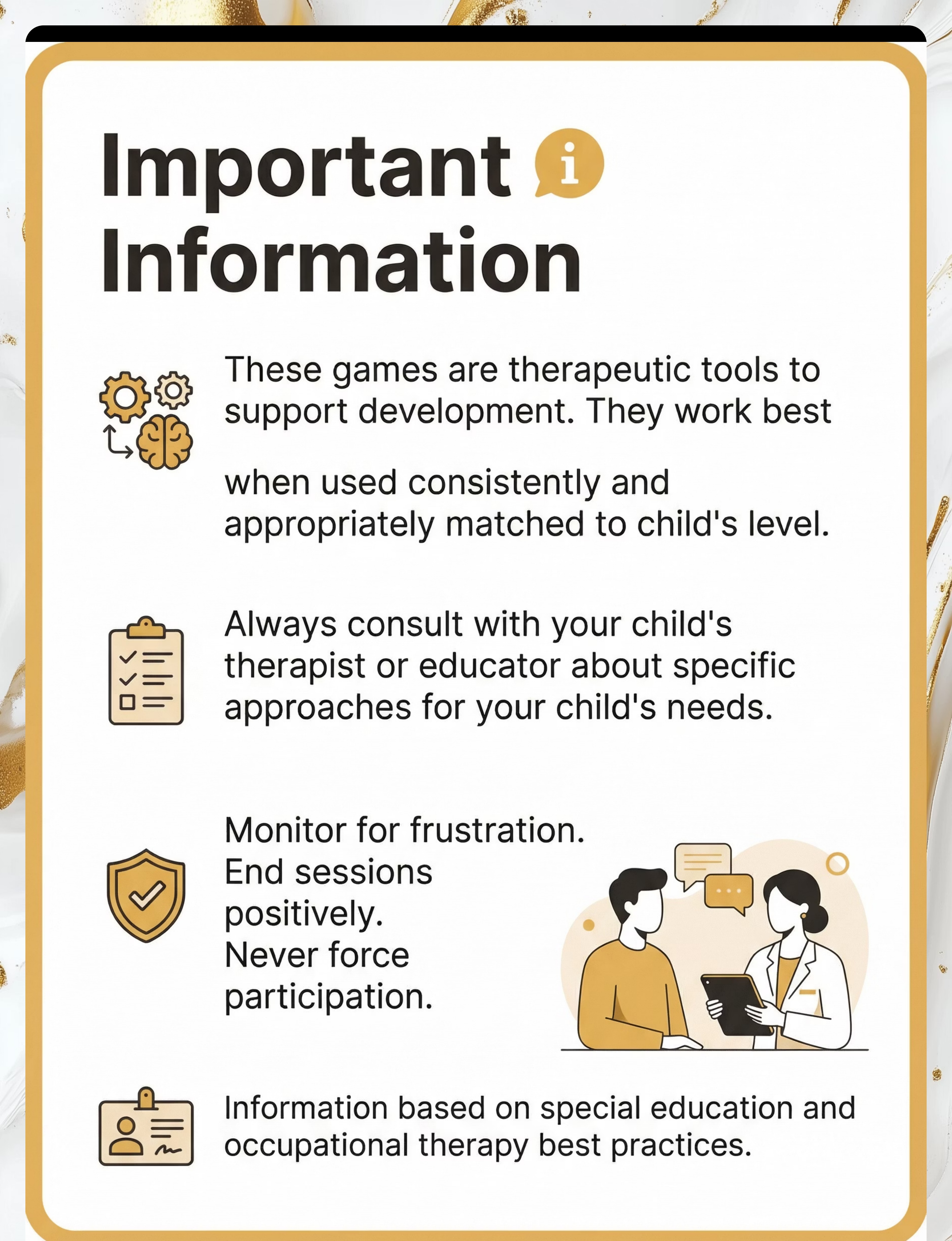
Disclaimer: This is educational information designed to support families and therapists. Always consult qualified occupational therapists, speech-language pathologists, special educators, or pediatricians for individualized assessment and treatment planning. Individual results vary. Turn-taking skills develop at different rates for different children, and this is normal and expected.