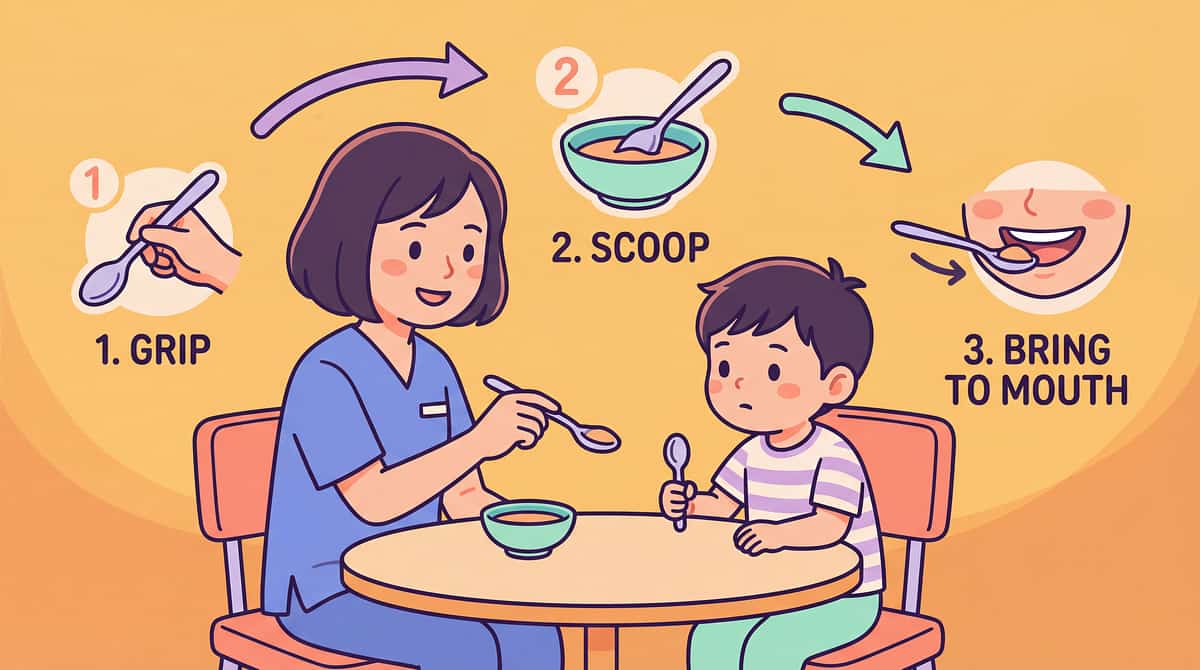
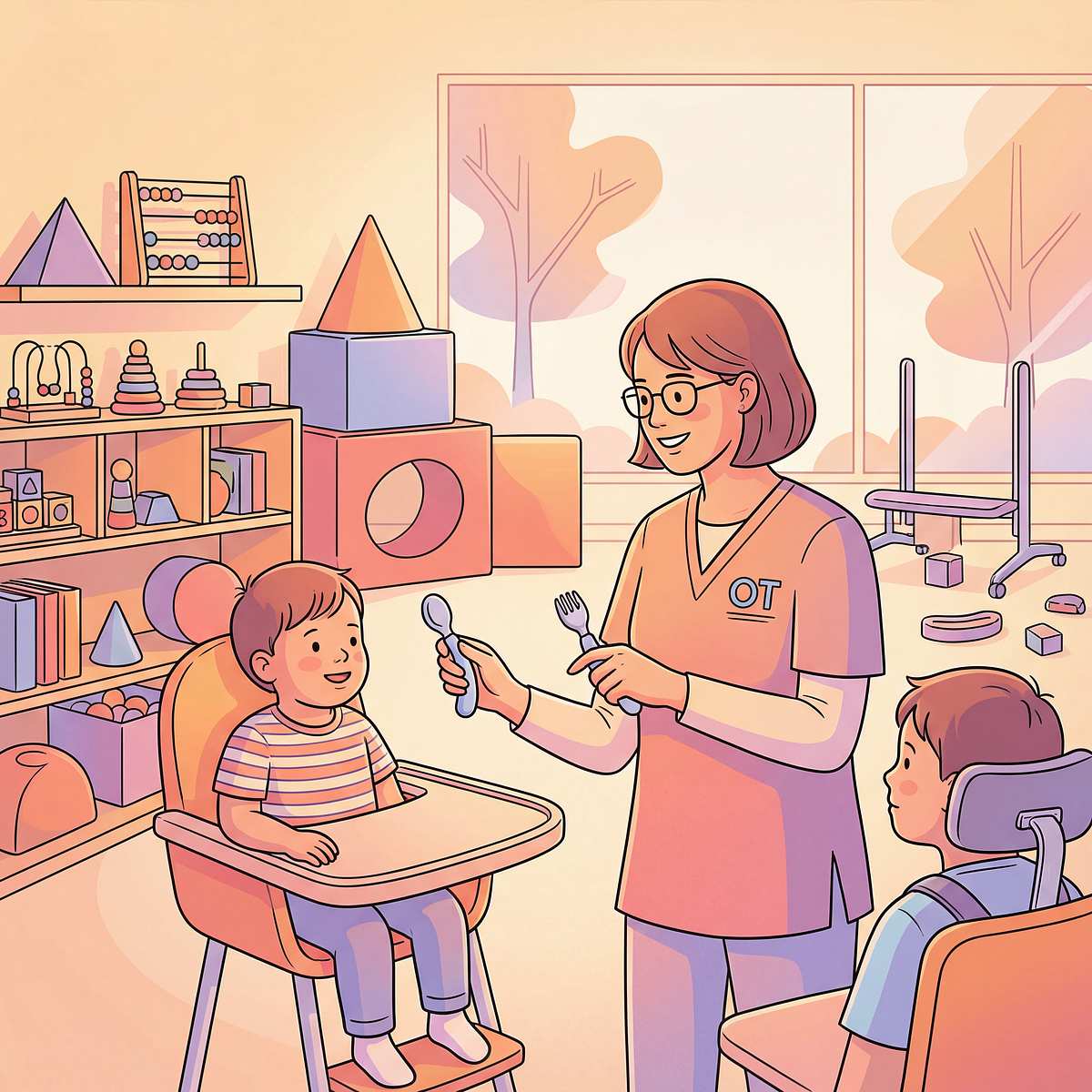
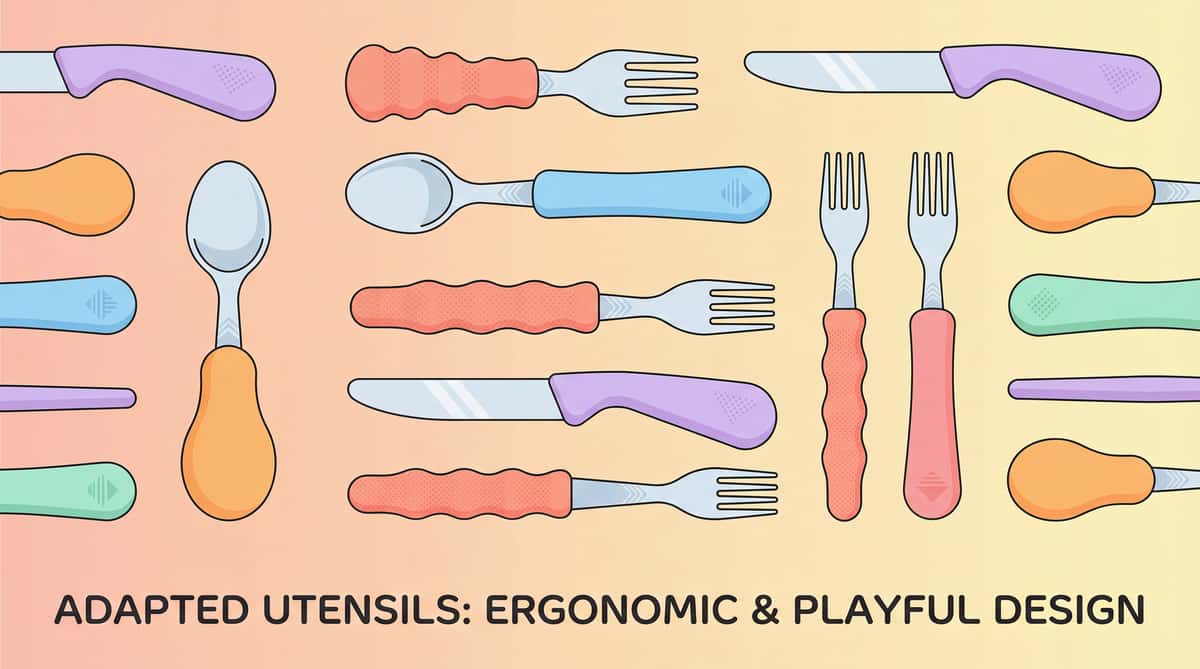





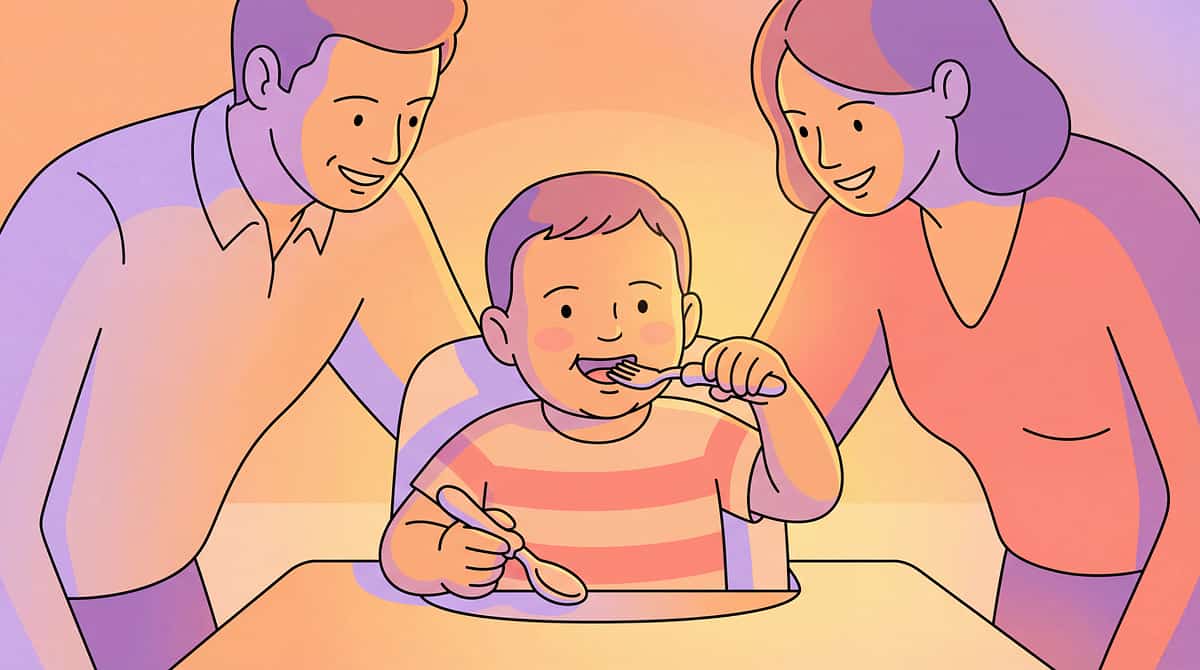


Tool ID: 9.3
Tool ID: 9.3
OT + SLP
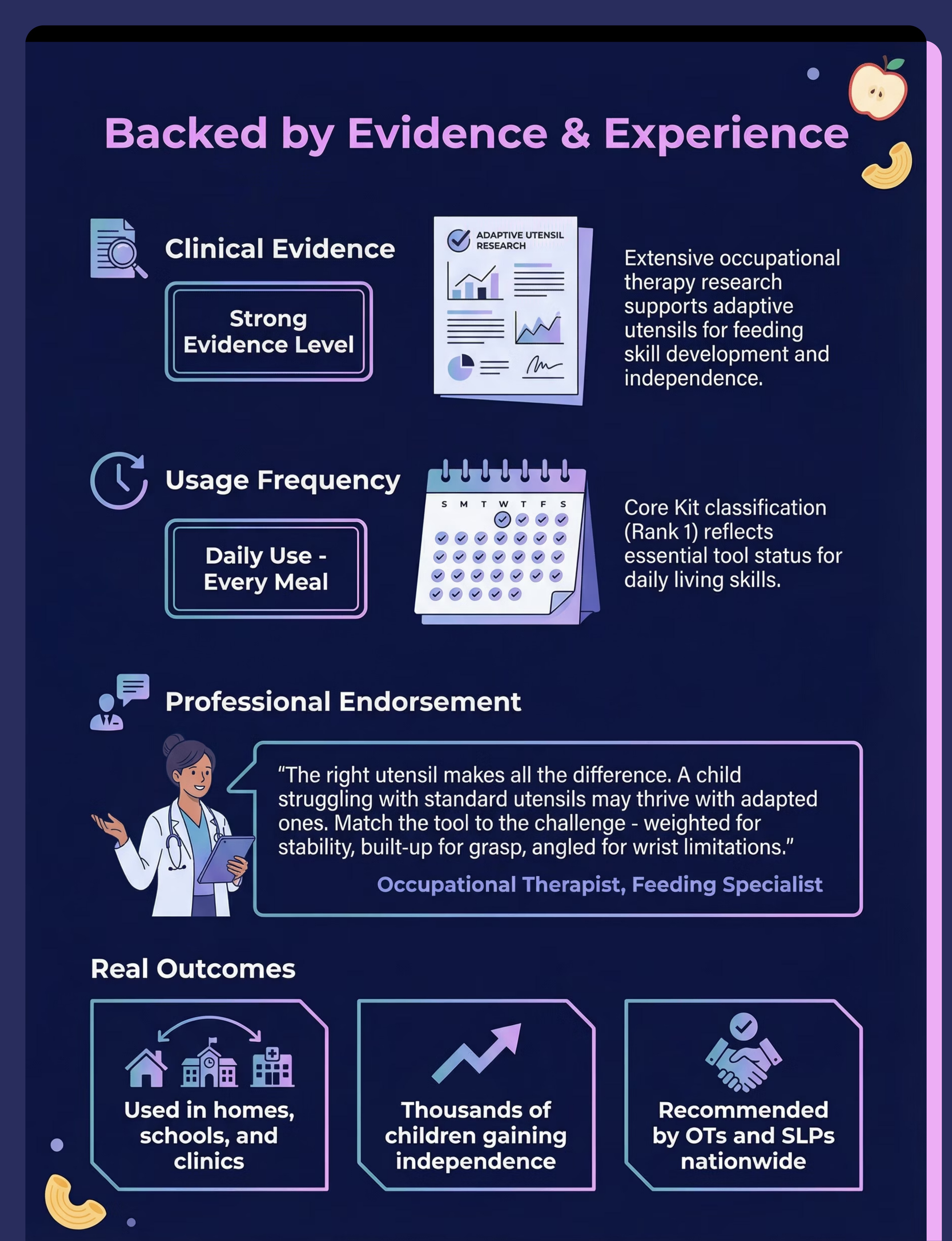
Strong Evidence
Rank #1
Daily Use
₹100–800
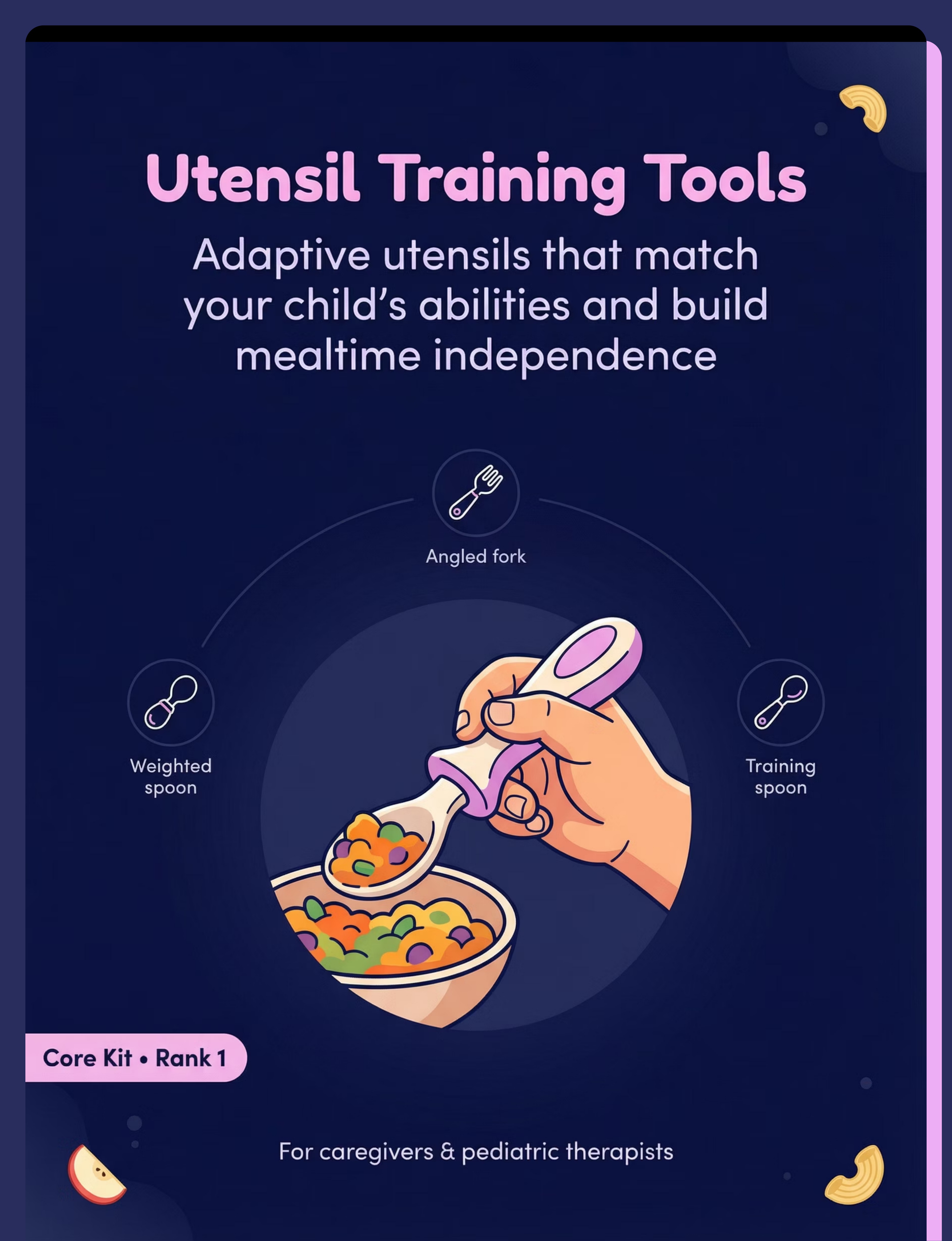
Utensil Training Tools
Self-feeding and mealtime independence system
Who This Helps
Mealtime Independence
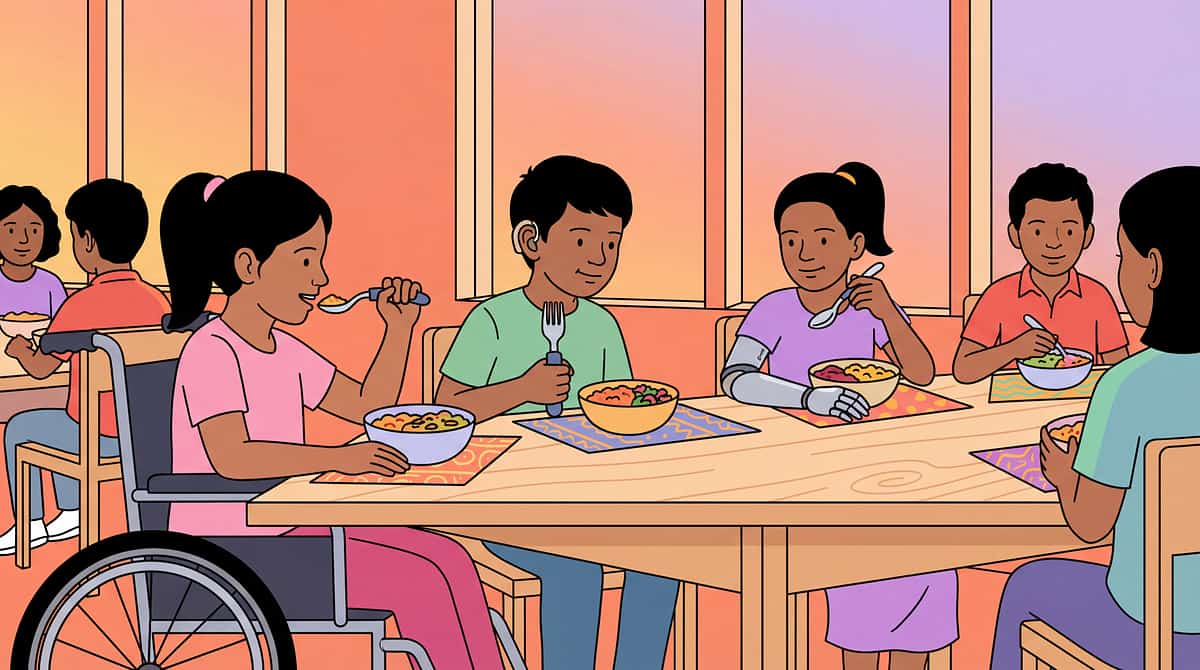
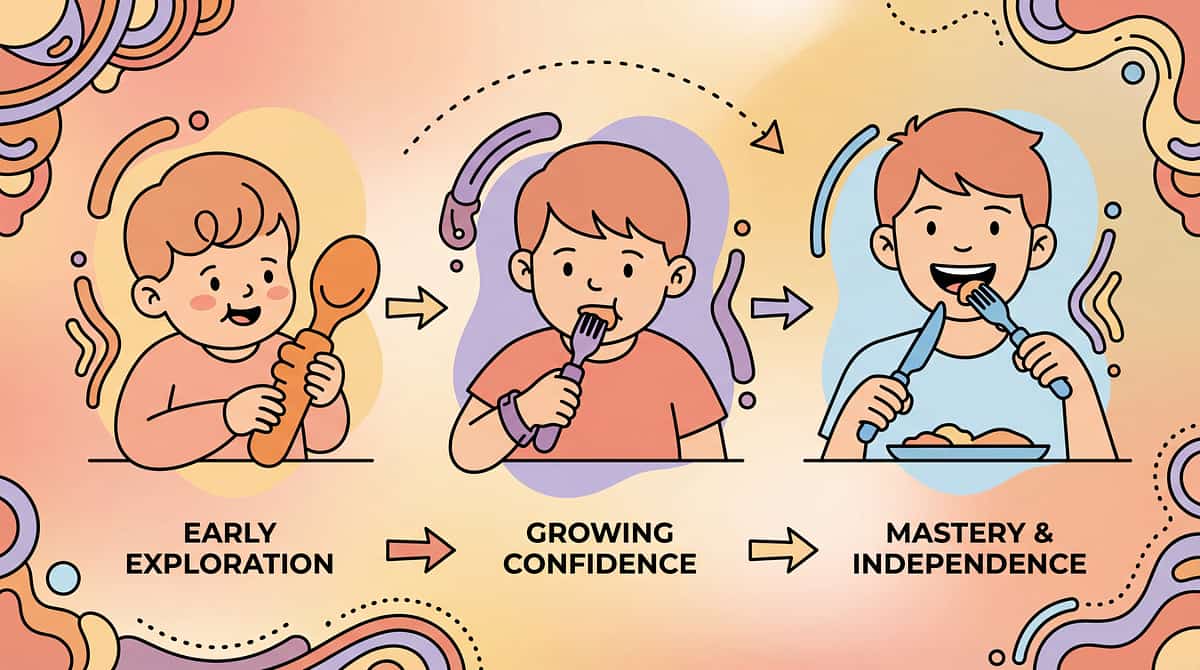
Empowers children to develop independent self-feeding skills, transforming meals from frustration to joyful autonomy.
Enhanced Motor Skills
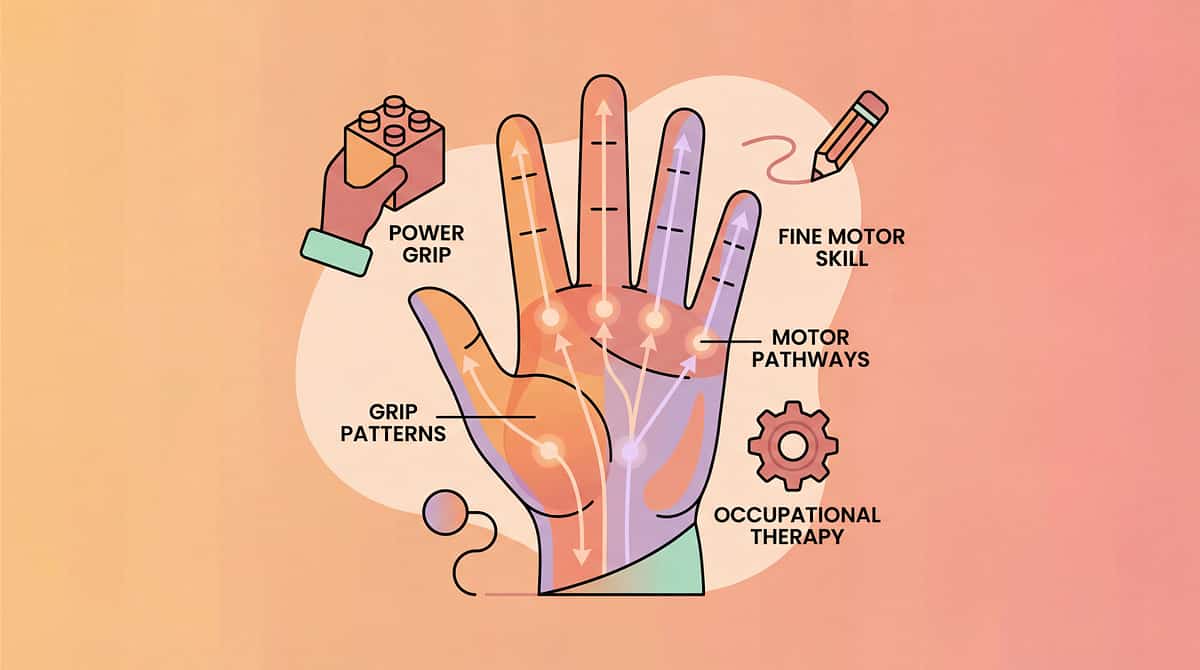
Supports the development of grasp, wrist control, eye-hand coordination, and motor planning tailored to individual abilities.
Adaptive & Inclusive
Designed for diverse motor abilities, helping children with tremors, weak grasp, or coordination challenges, from first attempts through school years.
Use Anywhere
Perfect for home, school, therapy, and restaurants, providing portable independence wherever food is served.
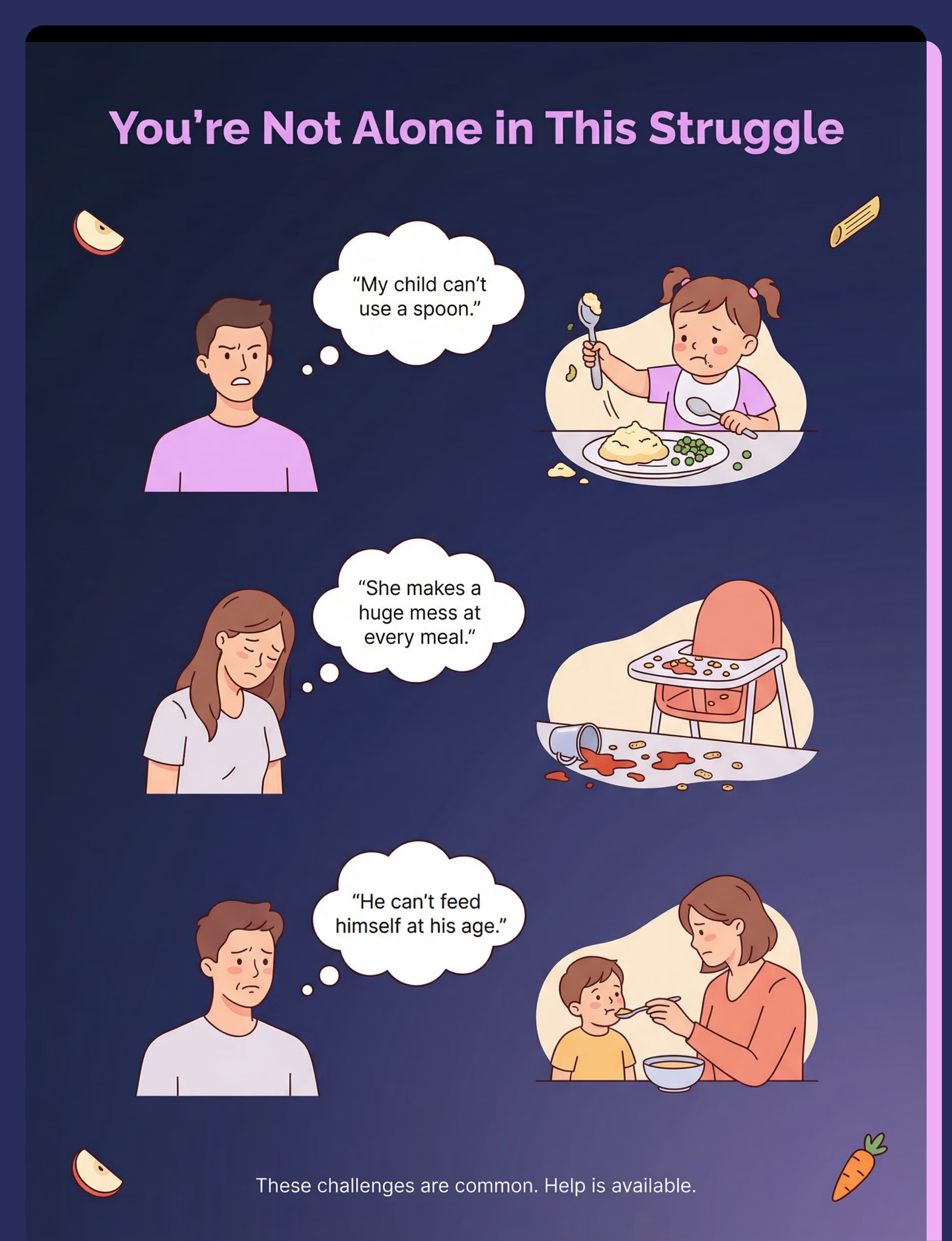
Does This Sound Familiar?
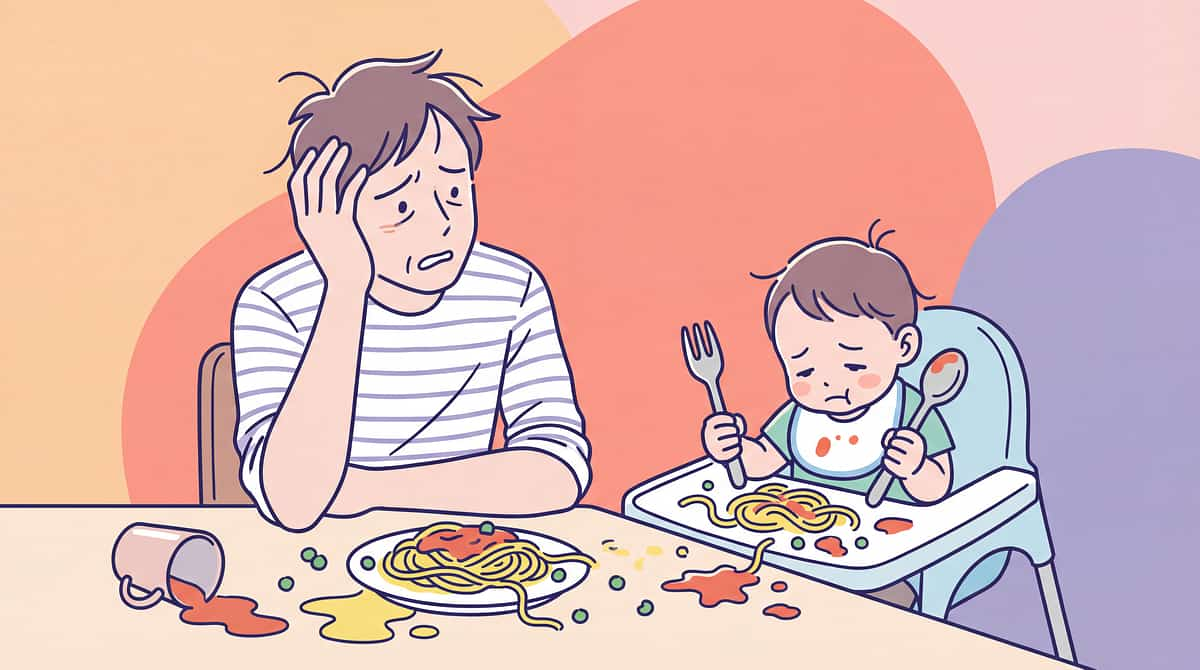
"My child can't use a spoon. She makes a huge mess at every meal and gets so frustrated trying to eat."
"He can't feed himself at his age. He still needs to be fed, and mealtime is a battle every single day."
"She gets so frustrated trying to eat independently. The food keeps falling off, and she just gives up."
"Every meal is stressful. I dread mealtimes because I know it will end in tears and mess."
You're not alone. These are common challenges faced by thousands of families. The right utensil adaptation can transform these daily struggles into opportunities for independence and pride.
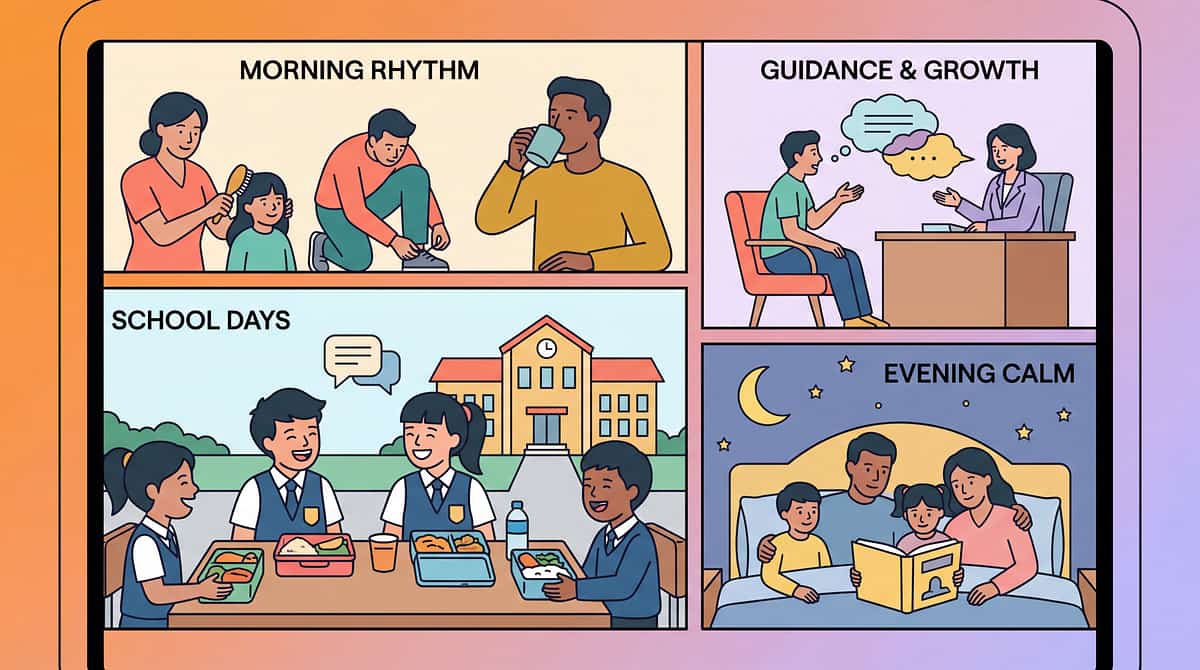
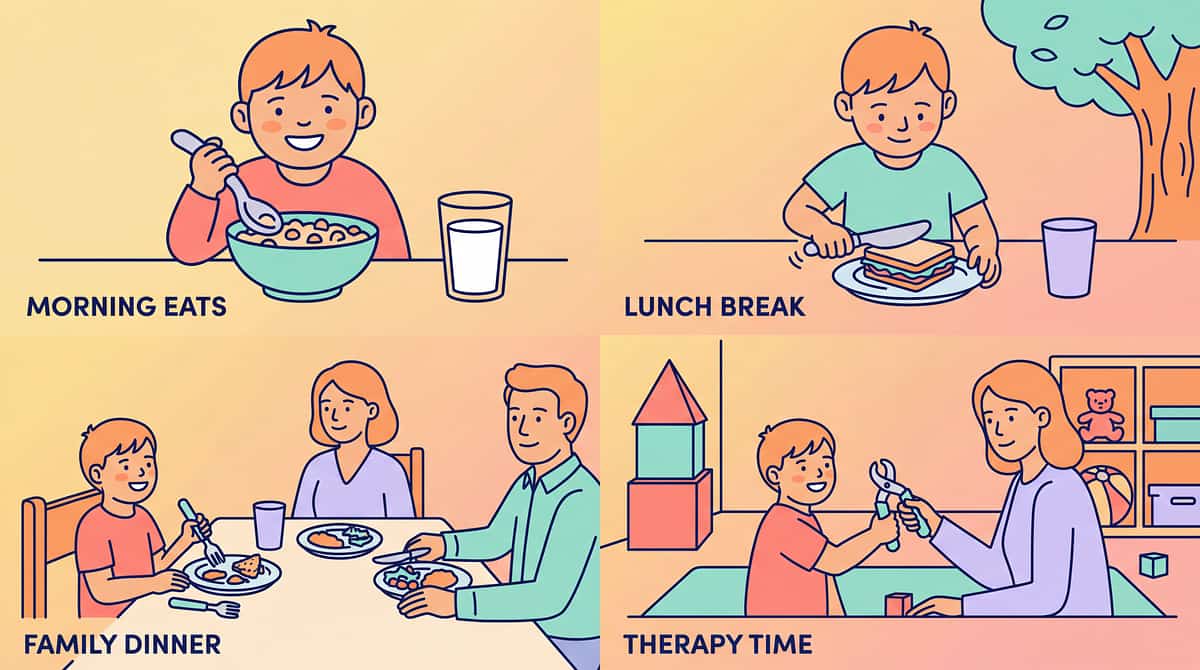
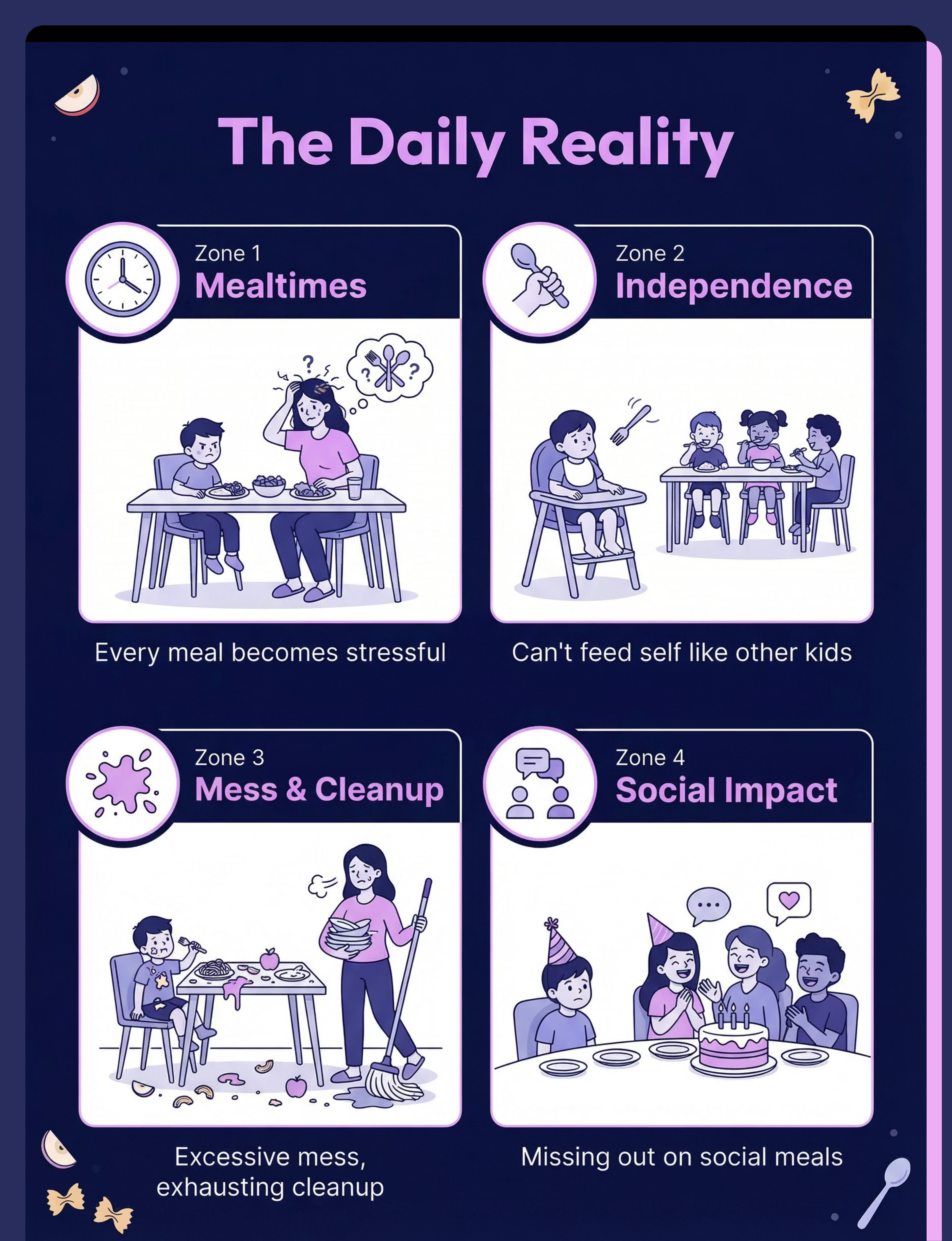
A Day Without the Right Support
Morning
Breakfast becomes a battle. Child tries to scoop cereal but spoon shakes or food falls off. Parent must feed them while getting ready for the day. Independence feels impossible.
School Lunch
Child can't eat independently with peers. Needs aide assistance or goes hungry. Social isolation grows as other children eat together independently.
Therapy Session
Feeding therapy focuses on basic skills but progress is slow. Standard utensils demand motor control the child doesn't yet have. Frustration builds instead of skills.
Dinner Time
Family meal is stressful. Child exhausted from trying all day. Mess is overwhelming. Parent feeds child while their own food gets cold. Everyone is tired and frustrated.
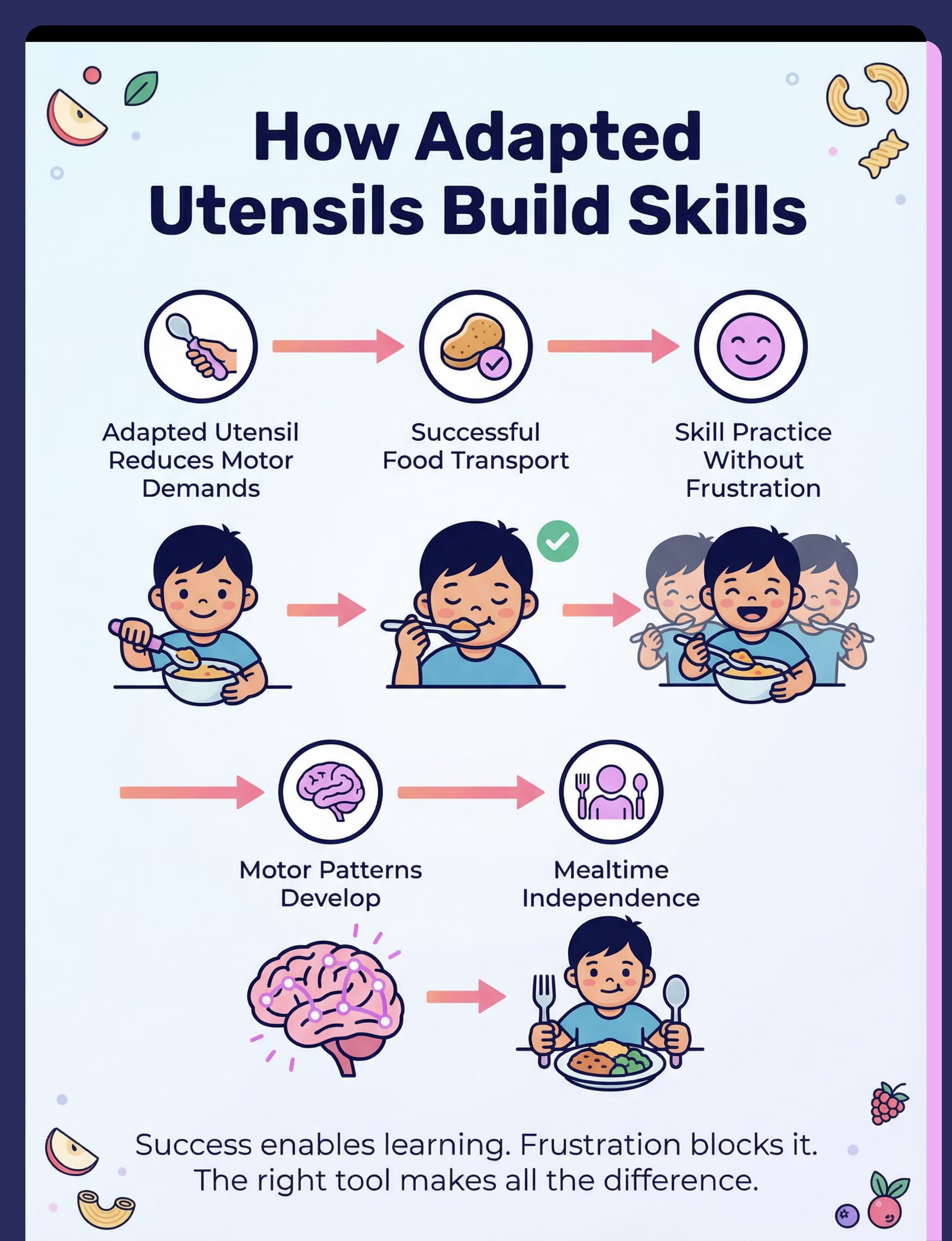
The Science Behind It
Adapted Utensil
Reduces motor demands by matching the tool to the child's current abilities
Successful Transport
Food reaches mouth consistently, enabling successful eating experiences
Practice Without Frustration
Child practices motor patterns repeatedly with success instead of struggle
Motor Patterns Develop
Neural pathways strengthen through successful repetition
Gradual Transition
Possible move to standard utensils as skills develop, or continued independence with adapted tools
Mealtime Independence
Child feeds self with dignity and autonomy at every meal
Self-Feeding
Grasp
Wrist Control
Eye-Hand Coordination
Motor Planning
Mealtime Independence
How to Use It Right
Evidence-based best practices from occupational therapy and feeding specialists ensure success and skill development at every meal.
1
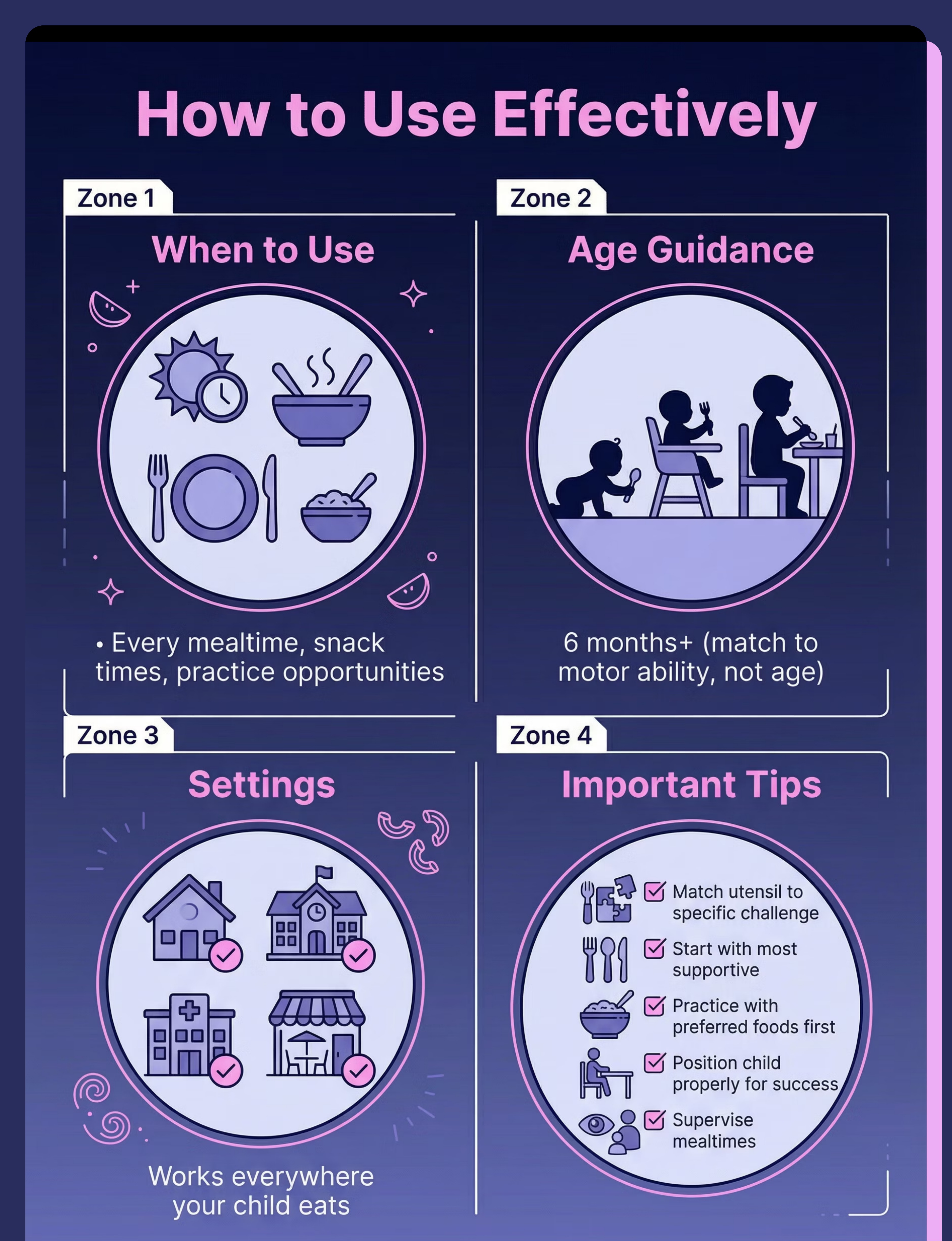
Match utensil to child's specific motor challenges
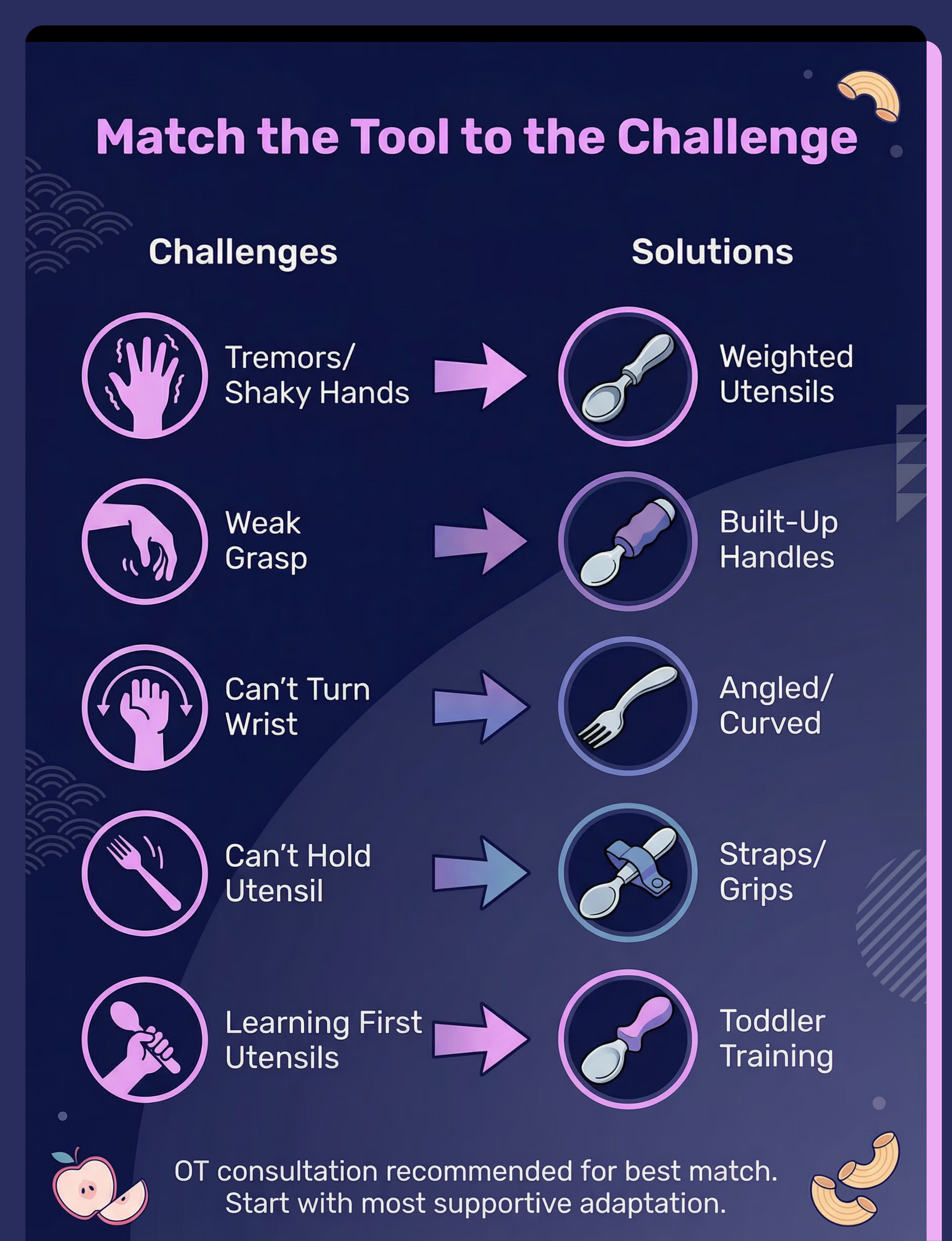
Assessment is key. Weighted utensils for tremors or proprioceptive seekers, built-up handles for grasp challenges, angled designs for limited wrist rotation. The right match enables immediate success.
2
Start with most supportive, fade as skills develop
Begin with maximum adaptation. As motor patterns strengthen, gradually reduce support. Some children transition to standard utensils; others maintain independence with adapted tools. Both are success.
3
Practice with preferred foods first
Motivation matters. Use favorite foods during initial practice. Success with preferred items builds confidence and motor memory before introducing challenging textures or new foods.
4
Position child properly for success
Seating position impacts feeding. Feet supported, hips at 90 degrees, table at appropriate height. Proper positioning enables optimal motor control and successful utensil use.
Duration: Every meal. Self-feeding skills develop through consistent daily practice over weeks and months. Each successful meal builds motor memory and independence.
"The right utensil makes all the difference. A child struggling with standard utensils may thrive with adapted ones. Match the tool to the challenge—weighted for stability, built-up for grasp, angled for wrist limitations."
— Occupational Therapist, Feeding Specialist
OT + SLP Recommended
Strong Evidence
Rank #1 in Category
Daily Use Essential
Core Kit Level
utensil-training-tools therapy material
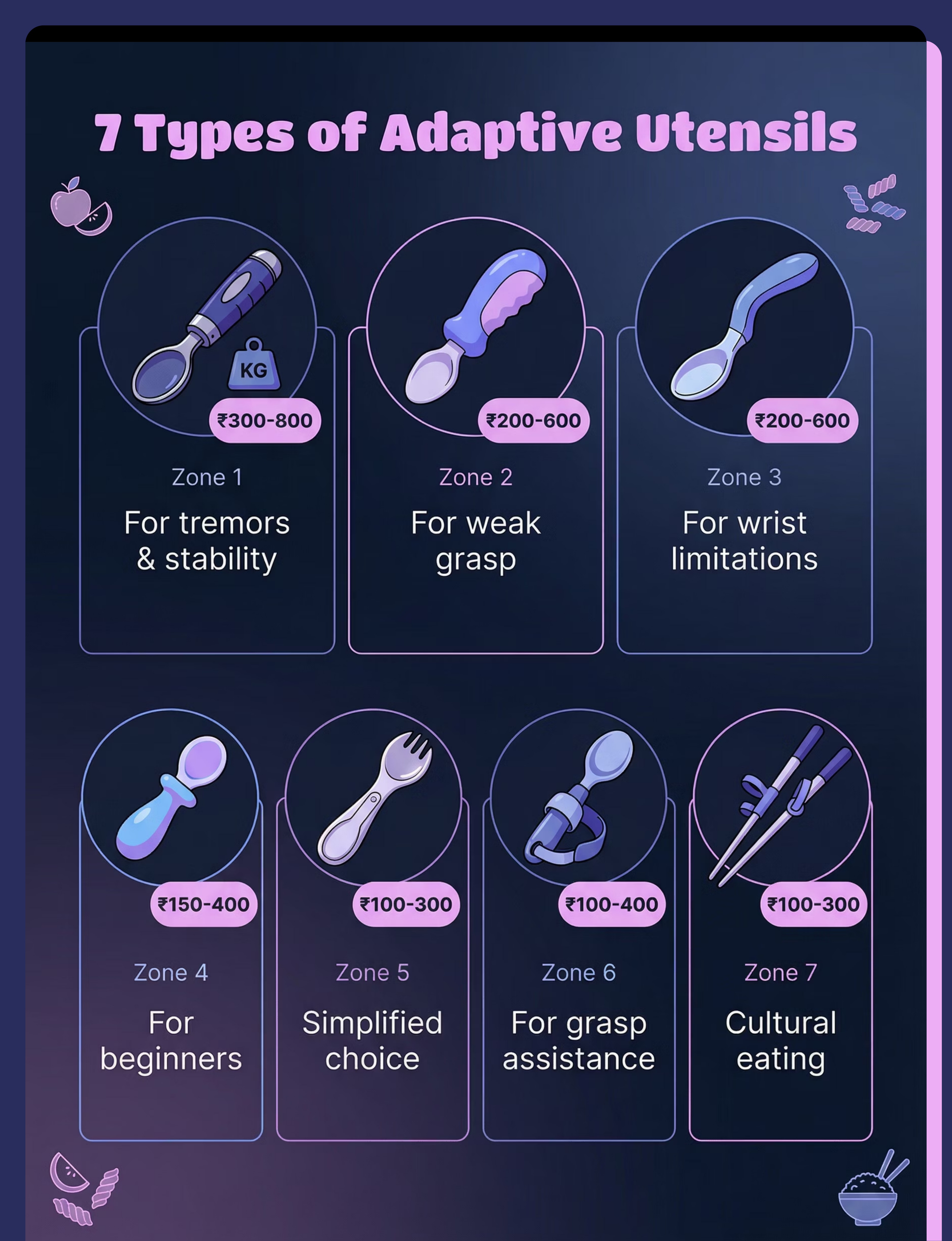
Choose Your Option (7 Variants)
Weighted Utensils
Heavier spoons/forks for stability. Best for tremors, coordination challenges, sensory seekers. Ages 2+ years. Settings: Home, School, Clinic. High portability. Price: ₹300–800.
Built-Up Handle Utensils
Thick, easy-grip handles. Best for weak grasp, motor planning challenges. Ages 2+ years. Settings: All. High portability. Price: ₹200–600.
Curved/Angled Utensils
Bent handles for easier mouth access. Best for limited wrist rotation, motor planning. Ages 2+ years. Settings: All. High portability. Price: ₹200–600.
Toddler Training Utensils
Short-handled, chubby utensils. Best for beginning self-feeders, small hands. Ages 6 months–3 years. Settings: Home, Clinic. High portability. Price: ₹150–400.
Spork / Combination Utensils
Combined spoon-fork. Best for reducing decisions, beginners. Ages 2+ years. Settings: All. Very high portability. Price: ₹100–300.
Utensil Straps / Grips
Straps that attach utensil to hand. Best for cannot maintain grasp, motor challenges. All ages. Settings: All. Very high portability. Price: ₹100–400.
Chopstick Trainers
Connected chopsticks for learning. Best for cultural eating practices, fine motor. Ages 3+ years. Settings: Home. High portability. Price: ₹100–300.
Each variant addresses specific motor challenges. Select based on your child's unique needs, or consult with an occupational therapist for personalized recommendations.

How to Choose
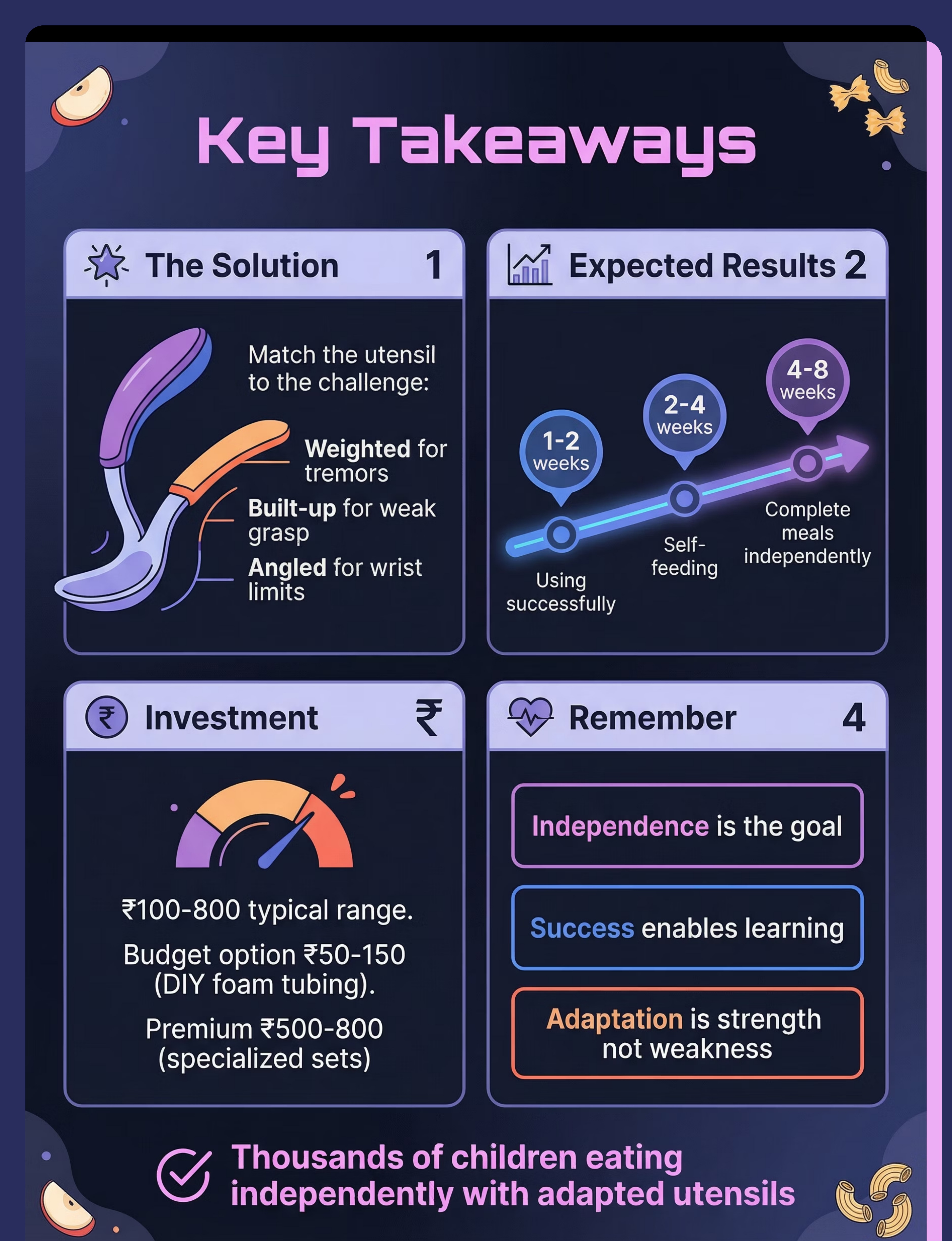
By Challenge: Shaky/tremors = weighted; Weak grasp = built-up; Limited wrist rotation = angled; Can't maintain grasp = strapped
By Setting: All variants highly portable; Chopstick trainers best at home
By Age: Toddler utensils for under 3; Others appropriate for developmental level
Specifications & Types Guide
Adaptation Types
Weighted
Added weight for proprioceptive feedback and stability. Counteracts tremors and provides sensory input.
Built-Up
Thicker handles for easier grasp. Reduces grip strength needed for successful hold.
Angled
Curved handles to compensate for limited wrist rotation. Brings food to mouth with less movement.
Strapped
Attached to hand for those who can't maintain grasp. Enables feeding despite severe motor limitations.
Shortened
Smaller for young children or limited movement. Reduces range needed for successful eating.
Materials & Features
Safe Materials (Food-Grade):
  • Stainless steel (durable, heat-safe)
  • Silicone (soft, flexible, safe)
  • BPA-free plastic (lightweight)
  • Rubber grips (textured hold)
Key Features to Look For:
  • Appropriate adaptation type for challenge
  • Food-safe, non-toxic materials
  • Appropriate size for child's hand
  • Durable construction for daily use
  • Dishwasher safe (easier hygiene)
  • Comfortable grip texture
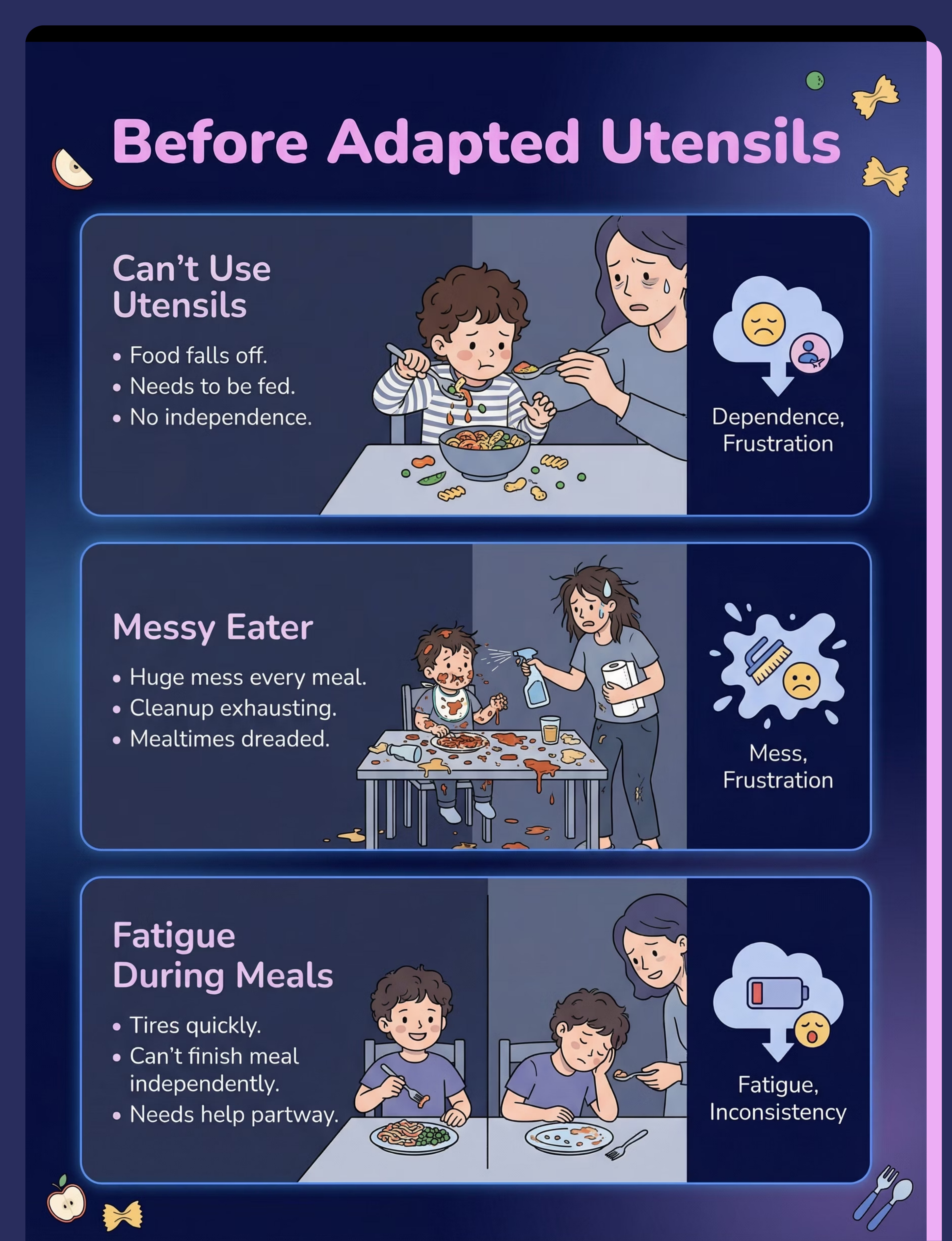
The Struggle (Before)
Can't Use Utensils
Situation: Child can't manage spoon or fork. Food falls off repeatedly. Needs to be fed by parent or caregiver. No mealtime independence at an age when peers are self-feeding.
Experience: Every meal requires full assistance. Child watches others eat independently while waiting to be fed. Dependence feels permanent.
Emotion: Dependence, frustration, embarrassment
Messy Eater
Situation: Child tries to self-feed but makes enormous mess. Food everywhere—table, floor, clothes, hair. Cleanup exhausting after every meal. Mealtimes dreaded by entire family.
Experience: Parent spends more time cleaning than eating. Child's efforts result in chaos instead of nutrition. Trying feels pointless when results are so messy.
Emotion: Overwhelm, exhaustion, defeat
Fatigue During Meals
Situation: Child starts eating independently but tires quickly. Can't finish meal with utensil. Needs help partway through. Inconsistent independence is frustrating.
Experience: Beginning of meal shows promise, but effort is too demanding. Child switches to hands or gives up. Never completes a full meal independently.
Emotion: Fatigue, inconsistency, giving up
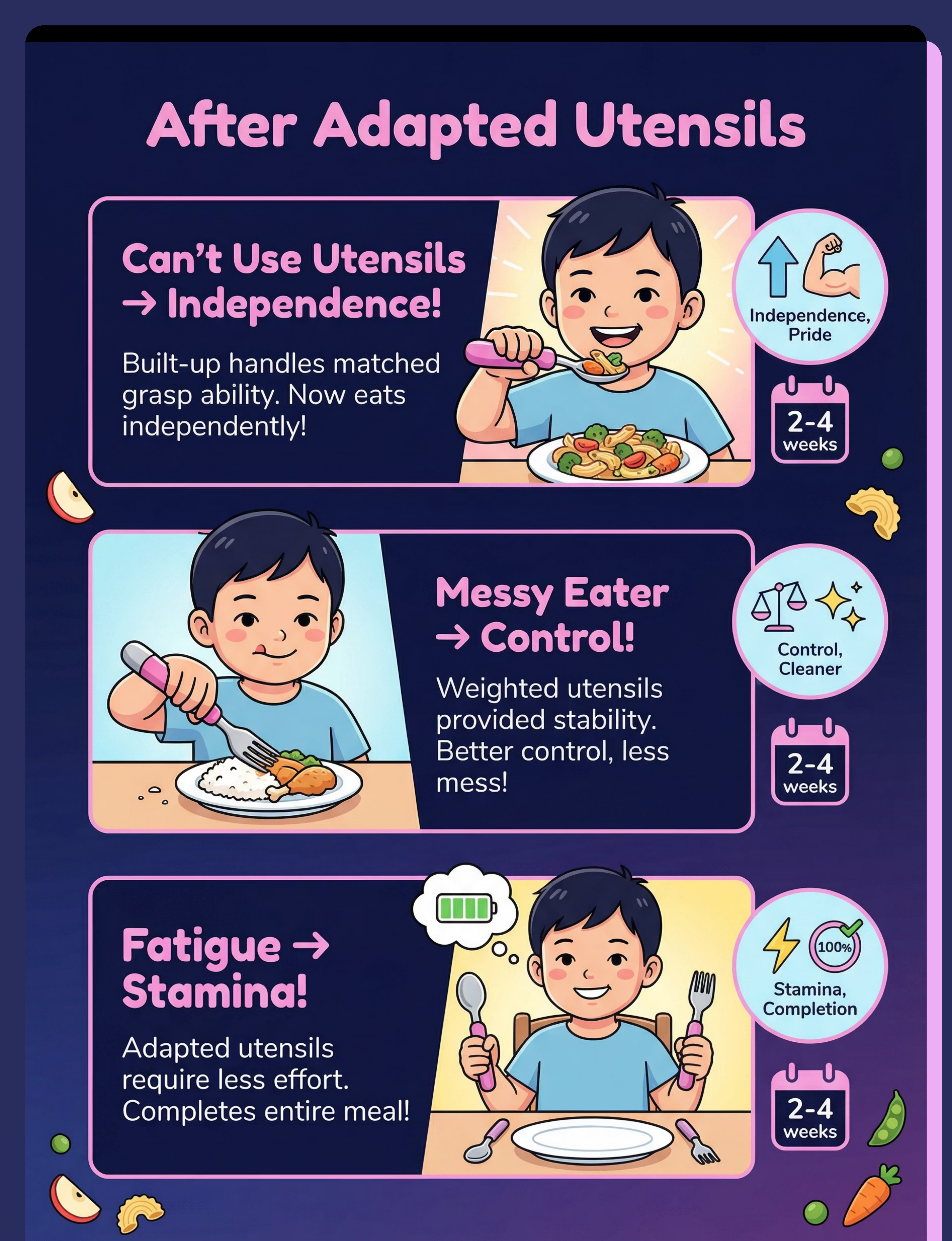
The Breakthrough (After)
Can't Use Utensils → Independence!
Situation: Built-up handle utensils matched child's grasp ability perfectly. Now scoops food successfully and eats entire meal independently. Mealtime independence achieved!
Experience: First successful scoop brought tears of joy. Skills built quickly with the right tool. Now feeds self at home, school, and restaurants. No longer needs feeding assistance.
Emotion: Independence, pride, dignity
2–4 weeks
Messy Eater → Control!
Situation: Weighted utensils provided stability child's hand lacked. Better control means significantly less spilling. Mess dramatically reduced to age-appropriate levels.
Experience: Mealtimes became peaceful instead of chaotic. Parent can eat their own meal while child eats successfully. Cleanup takes minutes instead of half an hour. Everyone enjoys meals now.
Emotion: Control, cleanliness, peace
2–4 weeks
Fatigue During Meals → Completion!
Situation: Adapted utensils require less motor effort. Child can complete entire meal without assistance. Less tired, more food eaten, better nutrition achieved.
Experience: Consistent independence from first bite to last. No more giving up halfway through. Child finishes meals with energy to spare. Weight and nutrition improved.
Emotion: Stamina, completion, satisfaction
2–4 weeks
What to Expect (Realistic Timelines)
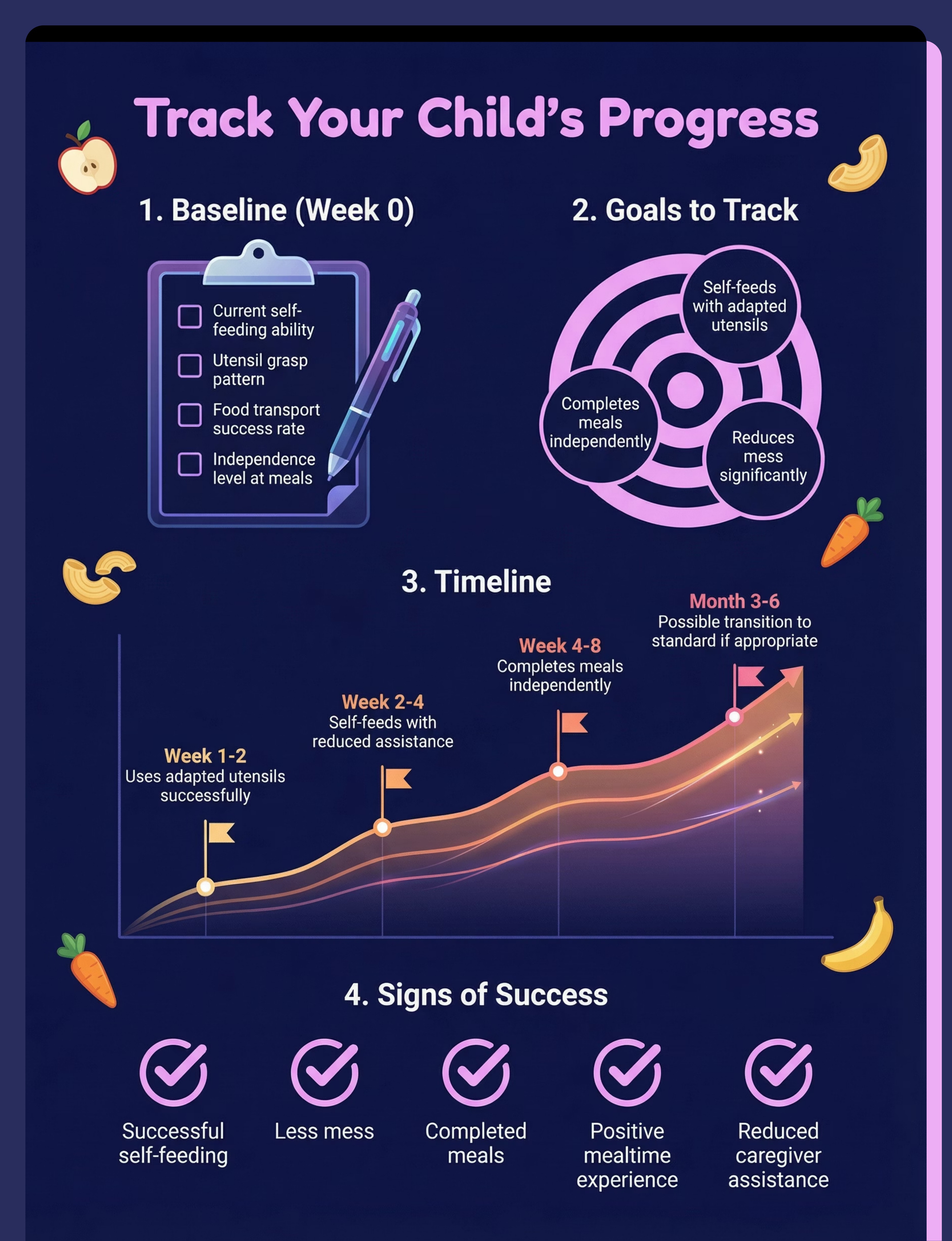
Uses adapted utensils successfully
Child can pick up food with adapted utensil and bring to mouth consistently. Immediate improvement in success rate compared to standard utensils.
1–2 weeks
Self-feeds with adapted utensils
Complete meal eaten independently using adapted tools. May be slower than peers but achieves full independence without assistance or mess.
2–4 weeks
Reduces mess significantly
Spilling and dropping decrease dramatically. Mealtime cleanup becomes manageable. Child can eat at others' homes or restaurants without extreme mess.
2–4 weeks
Completes meals independently
Entire meal from start to finish without adult help. Appropriate amount eaten. Nutrition improves. Child experiences full autonomy at mealtimes.
4–8 weeks
Possible transition to standard utensils
Some children develop skills to use regular utensils. Others maintain independence with adapted tools. Both outcomes are success—independence is the goal.
3–6 months if appropriate
Is This Right for My Child? (2-Minute Check)
Answer these questions to determine if adapted utensils would benefit your child. Three or more "yes" answers indicate a strong fit.
Can your child self-feed with a spoon?
If yes: Basic self-feeding present; may need refinement
If no: Assess for adapted utensils—likely to help significantly
Fit: 95%
Does your child have difficulty grasping utensils?
If yes: Built-up handles may help immediately—increases grip surface and reduces strength needed
Fit: 92%
Does food frequently fall off the utensil?
If yes: Weighted or angled utensils may help—provides stability and better positioning for food transport
Fit: 88%
Does your child tire during meals?
If yes: Adapted utensils may reduce effort—less motor demand means more stamina for complete meals
Fit: 85%

Scoring: 3+ "yes" answers = strong fit for adapted utensils. Consult occupational therapist to identify which adaptation type matches your child's specific challenges.
Usage Guide
When to Use
When NOT to Use
  • Every mealtime (breakfast, lunch, dinner)
  • Snack times when utensil is needed
  • Feeding therapy sessions
  • Practice opportunities throughout day
  • When child is dysregulated (eating will be difficult anyway)
  • If adaptation type is wrong for challenge (makes problem worse)
Settings
Home
School
Clinic
Restaurant
Duration: Every meal; skill develops over time with consistent daily practice across all eating situations.
Age Note: Match to motor ability, not chronological age. A 6-year-old may need toddler utensils; a 2-year-old may use standard size.
Supervision by Age
Stage
Supervision Level
Notes
Learning Phase
Supervised mealtimes
Adult present to ensure safety, proper technique, and provide encouragement during skill acquisition
Developing Skills
Decreasing supervision
Adult nearby but not constantly watching. Check-ins during meal to ensure success and safety
Independent Eating
Check-ins as appropriate
Child eats independently. Adult checks occasionally but child demonstrates consistent safe, successful eating
Safety First
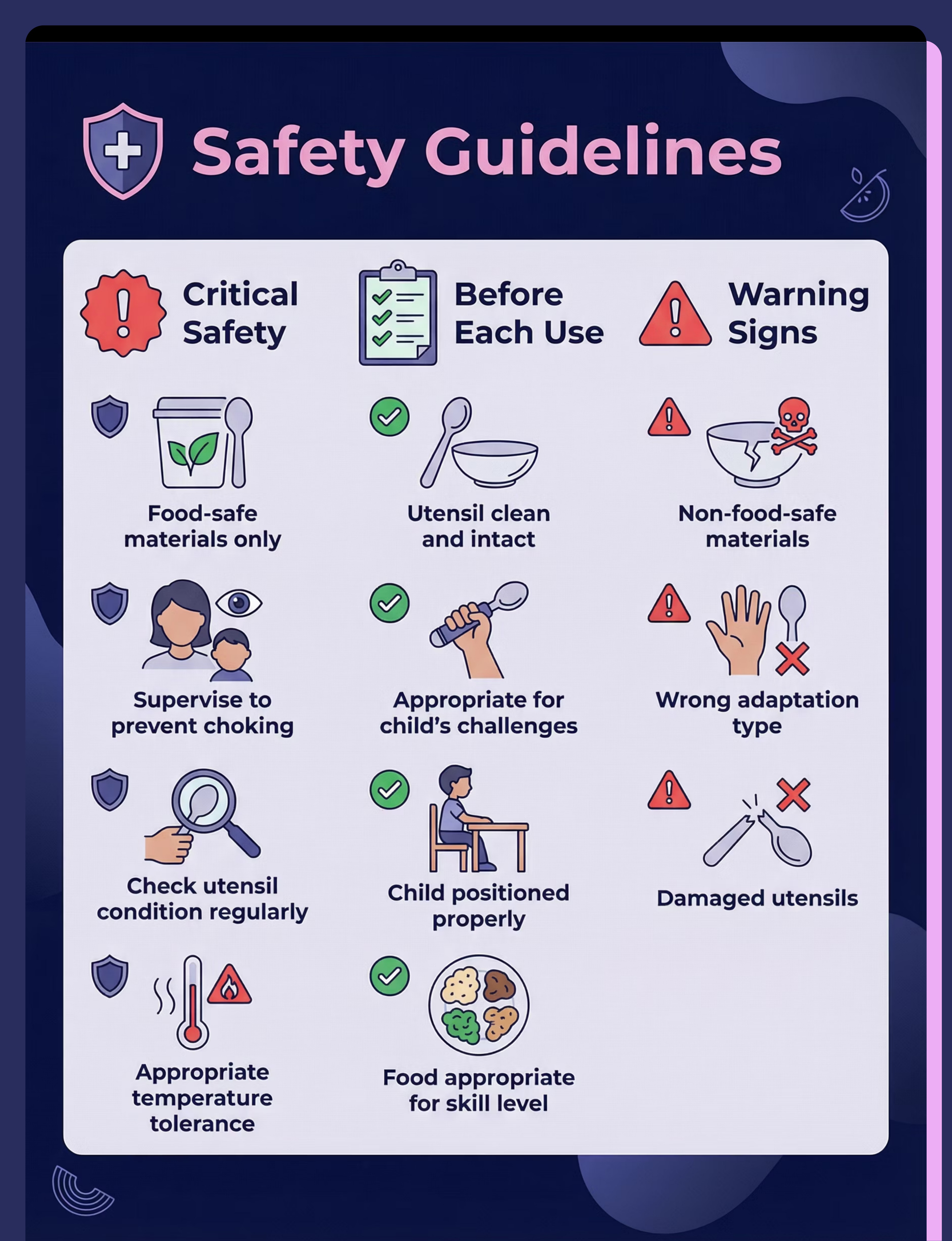
Critical Safety Requirements
  • Food-safe materials only (BPA-free, non-toxic, food-grade)
  • Supervise to prevent choking (appropriate food textures)
  • Check utensil condition regularly (cracks, loose parts, wear)
  • Appropriate temperature tolerance (know material limits)
Warnings
  • Metal utensils conduct heat (test temperature before giving child)
  • Check for loose parts (especially on built-up handles or straps)
  • Supervise young children with pointed forks (stabbing risk)
Never Use
  • Non-food-safe materials
  • Wrong adaptation type (makes challenge worse)
  • Damaged or broken utensils
Safety Checklist
Before Use
  • Utensil clean and intact
  • Appropriate for child's challenges
  • Child positioned properly
  • Food appropriate for skill level
During Use
  • Child using correctly
  • Successful food transport
  • Minimal frustration
  • Appropriate assistance level
Signs of Success
  • Independent self-feeding
  • Reduced mess
  • Completed meals
  • Child enjoys eating
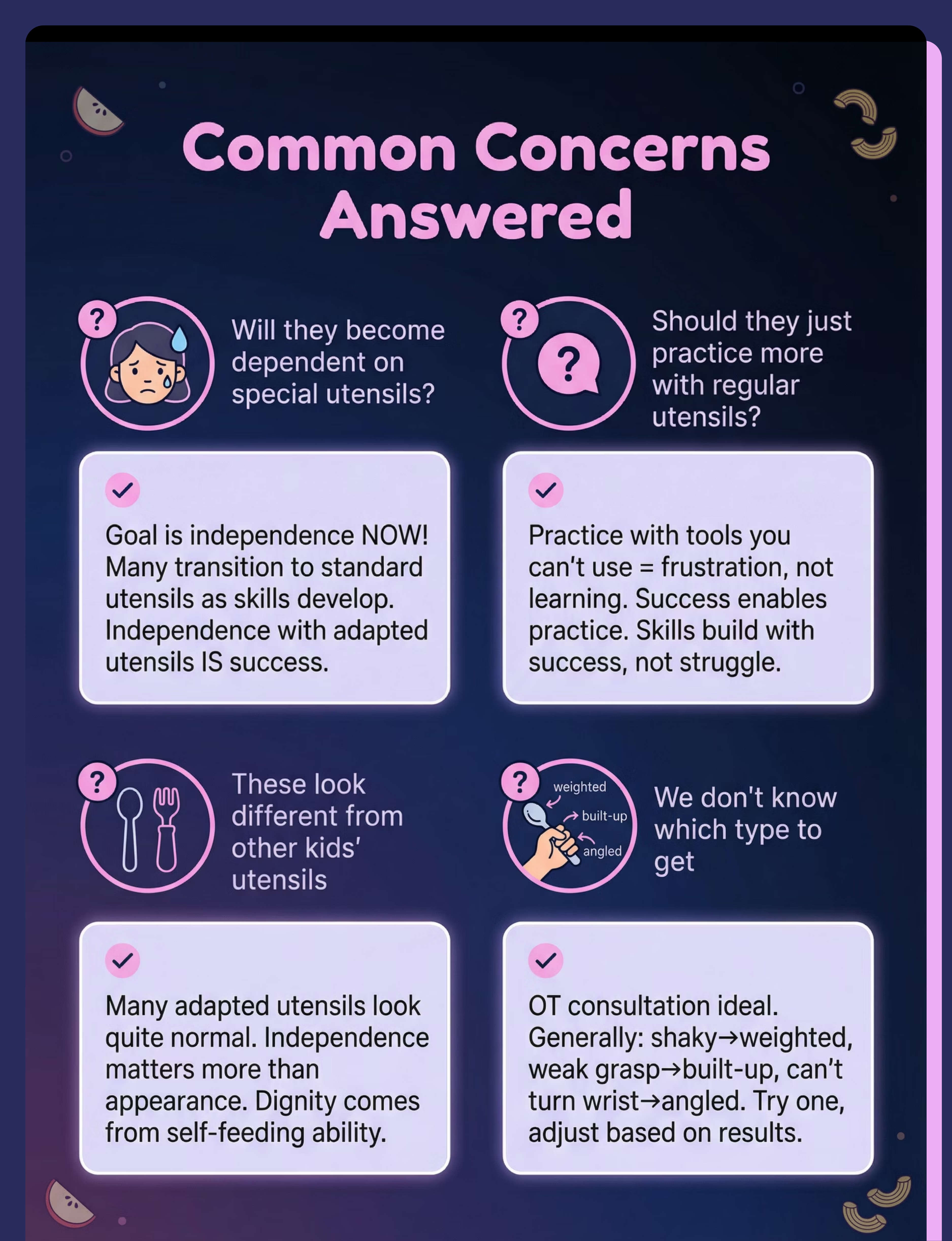
Common Questions (Honest Answers)
Will they become dependent on special utensils?
Honest answer: Goal is independence now! Many children transition to standard utensils as skills develop through successful practice. Even if they don't transition, independent eating with adapted utensils is complete success. Dignity and autonomy matter more than the tool used.
Try this: Focus on current independence; transition if and when appropriate. Success is self-feeding, not the utensil type.
They should just practice more with regular utensils
Honest answer: Practice with tools you can't successfully use equals frustration, not learning. Adapted utensils allow successful practice. Skills build through success, not struggle. Repeated failure doesn't build skills—it builds avoidance and defeat.
Try this: Ensure success first with adapted tools; transition to standard utensils later if skills develop. Success enables practice.
These look different from other kids' utensils
Honest answer: Many adapted utensils look quite normal now—especially built-up handles and toddler training types. And independence matters infinitely more than appearance. A child eating independently with dignity has autonomy regardless of utensil design.
Try this: Modern adapted utensils are discreet; prioritize child's independence over others' perceptions.
We don't know which type to get
Honest answer: OT consultation is ideal for assessment. Generally: shaky/tremors = weighted, weak grasp = built-up, can't turn wrist = angled, can't maintain grasp = strapped. Try one type based on primary challenge; adjust based on results.
Try this: Start with the adaptation that matches the most obvious challenge. Observe results. Consult OT for personalized guidance.
Investment Guide
Adapted utensils are surprisingly affordable. Most families find effective options well within budget, with DIY alternatives for even lower cost.
Option Type
Description
Cost (INR)
Key Details
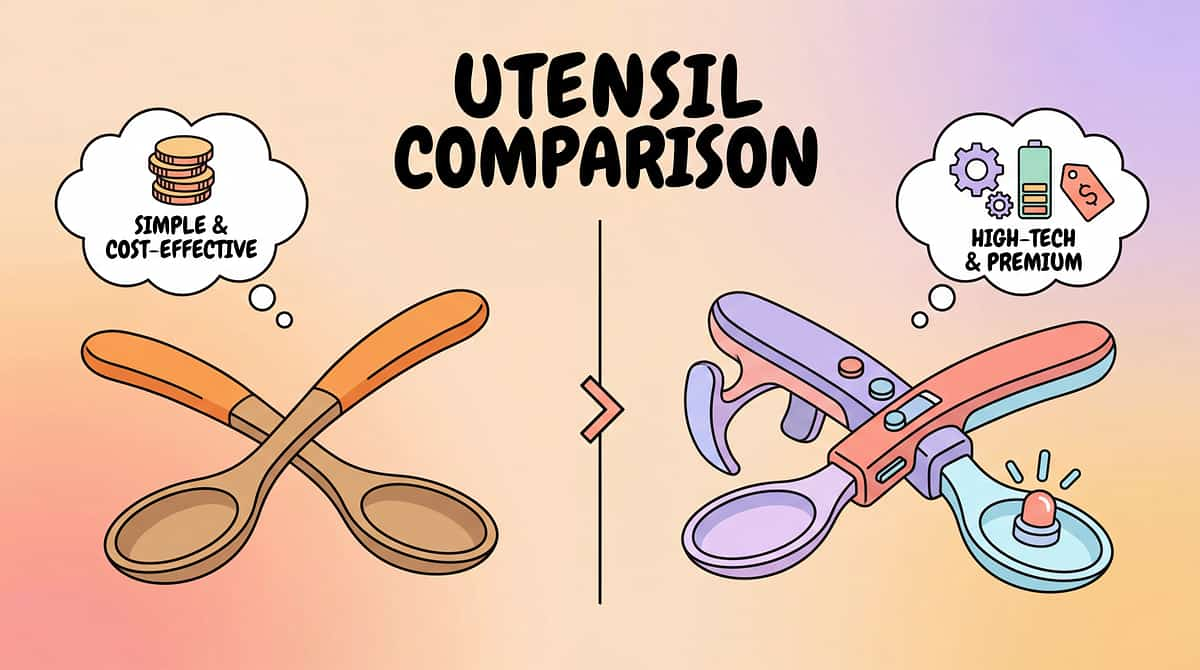
Budget Option
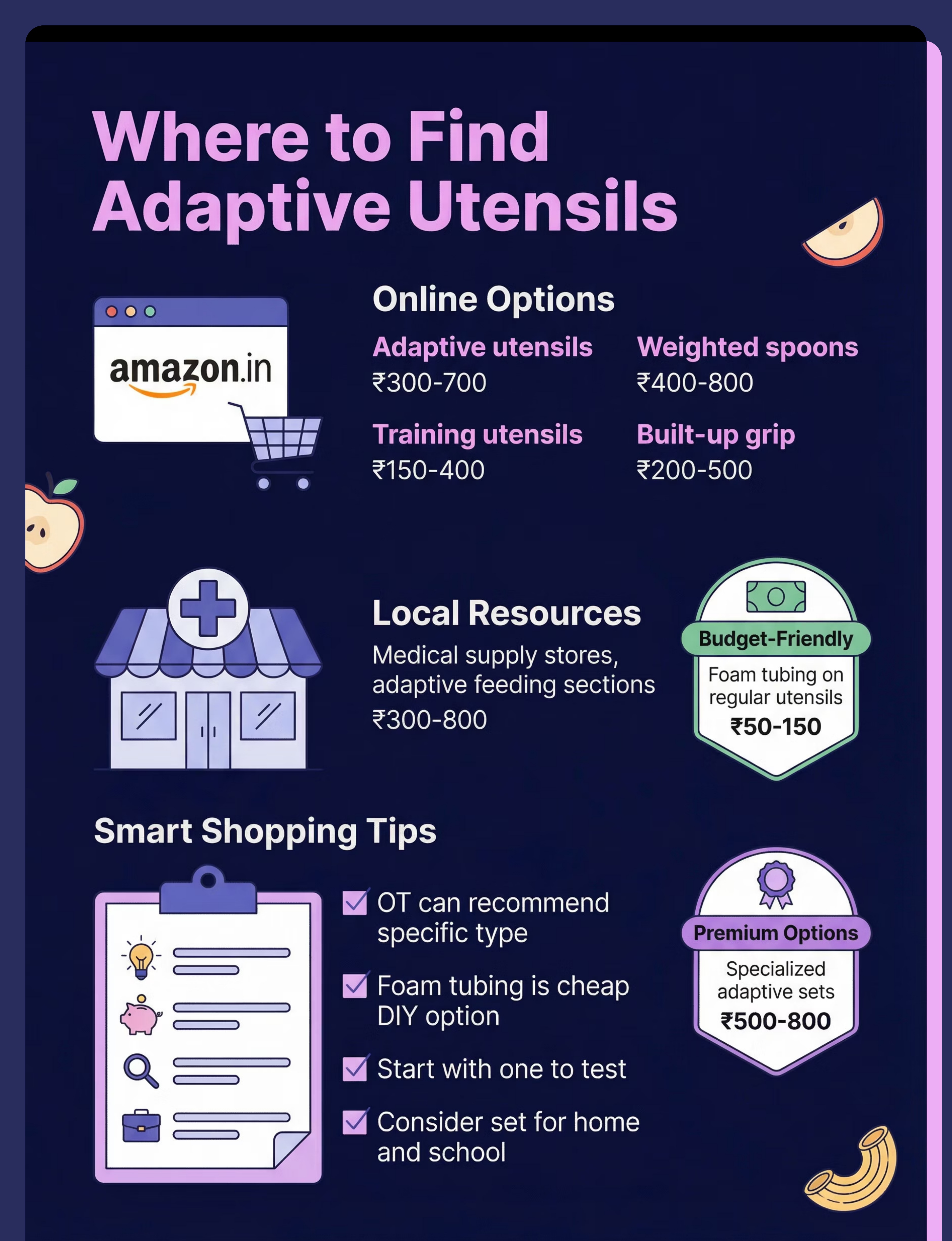
Foam tubing on regular utensils (DIY built-up)
₹50–150
Effective for grasp adaptation, easy DIY solution using foam pipe insulation.
Premium Option
Weighted utensil set or specialized adaptive set
₹500–800
Professional-grade, durable, offers multiple adaptation types in coordinated sets from brands like Homecraft, Sammons Preston, Special Supplies.
Key Features & Benefits
DIY Solutions
Economical and easily customizable for basic grasp adaptations, utilizing common materials like foam tubing.
Enhanced Grasp
Built-up handles significantly improve grip for users with weak or limited dexterity, fostering independence.
Stability & Control
Weighted utensils are crucial for individuals experiencing tremors, providing increased control and reducing spillage.
Specialized Adaptations
Advanced sets cater to specific challenges like wrist limitations (angled designs) or maintaining grip (strapped options).
Investment Progression
Starting Point: ₹50–150
Begin with DIY foam tubing for grasp challenges, a low-cost entry into adaptive solutions.
Initial Investment: ₹200–400
Acquire a quality single adapted utensil, matched to the child's most pressing challenge (e.g., built-up handle).
Expanded Options: ₹300–800
For tremors or stability issues, invest in weighted utensils. This range also covers professional sets for home and school use.
Expert Guidance: Priceless
Consult an Occupational Therapist (OT) for personalized assessment before purchasing premium sets to ensure optimal fit and function.

Best Starting Point: If grasp is the challenge, start with built-up handles (₹200–400) or DIY foam tubing (₹50–150). If tremors/stability, invest in weighted utensils (₹300–800). Consult OT for assessment before purchasing premium sets.
Where to Buy in India
Availability: Moderately Available. Adaptive utensils increasingly available through online platforms and medical supply stores in major Indian cities.
Recommended Platforms
Amazon.in
Search Terms: "adaptive utensils"
Price Range: ₹300–700
Amazon.in
Search Terms: "weighted spoon"
Price Range: ₹400–800
Amazon.in
Search Terms: "toddler training utensils"
Price Range: ₹150–400
Amazon.in
Search Terms: "built up grip utensils"
Price Range: ₹200–500
Medical Supply Stores
Search Terms: "adaptive feeding"
Price Range: ₹300–800
Buying Tips
  • OT can recommend specific type needed for your child
  • Foam tubing is cheap DIY option for built-up handles
  • Start with one adapted utensil to test before buying sets
  • Consider purchasing set for use at home and school
  • Toddler utensils work well for many children regardless of age
  • Check materials are food-safe and non-toxic
Red Flags
  • Wrong adaptation type for your child's challenge
  • Non-food-safe materials or unknown origin
  • Too heavy for child to lift comfortably
  • Doesn't fit child's hand size appropriately
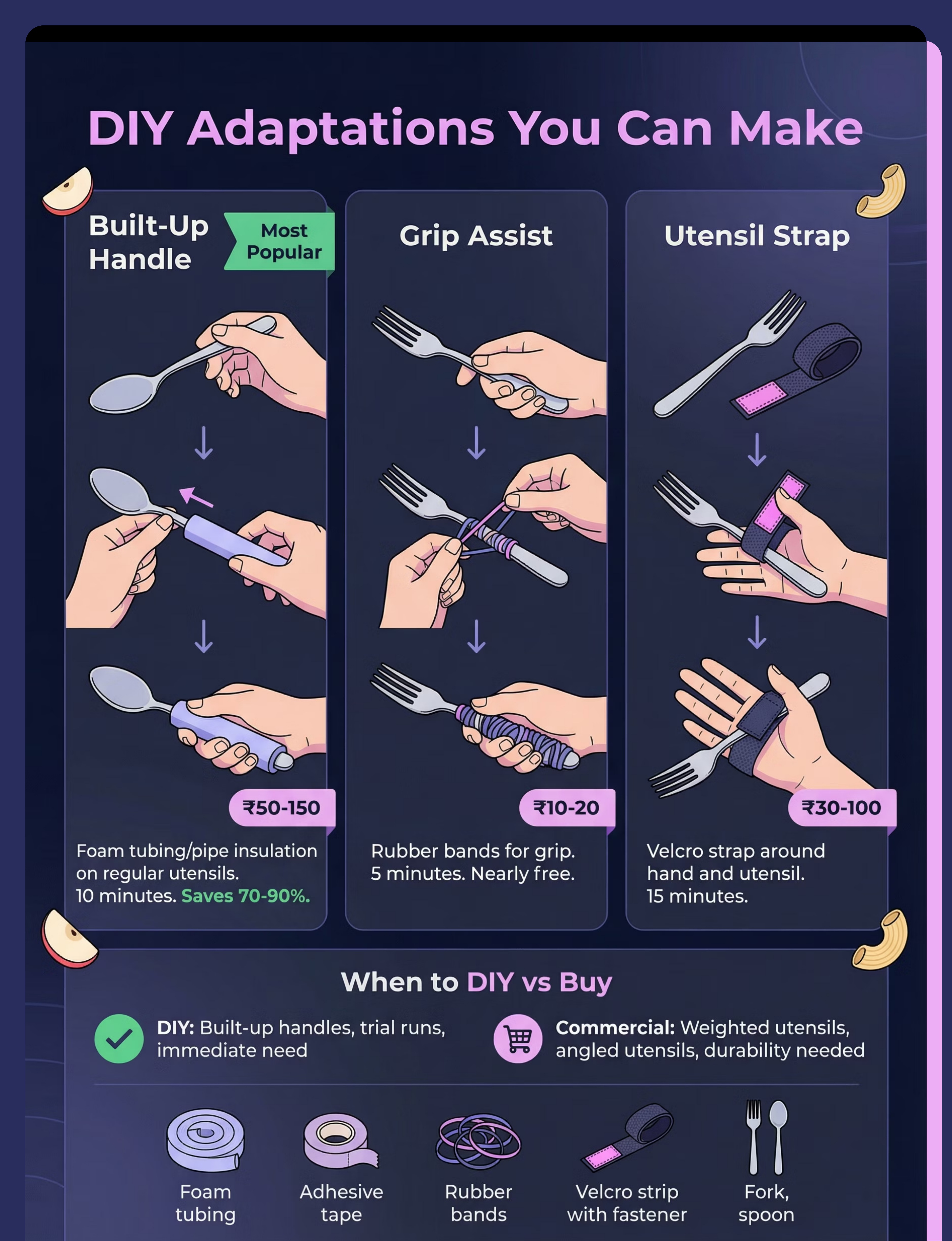
DIY Alternative (Save 70–90%)
Feasibility: High (for some adaptations) | Time: 10–15 minutes | Cost Savings: 70–90%
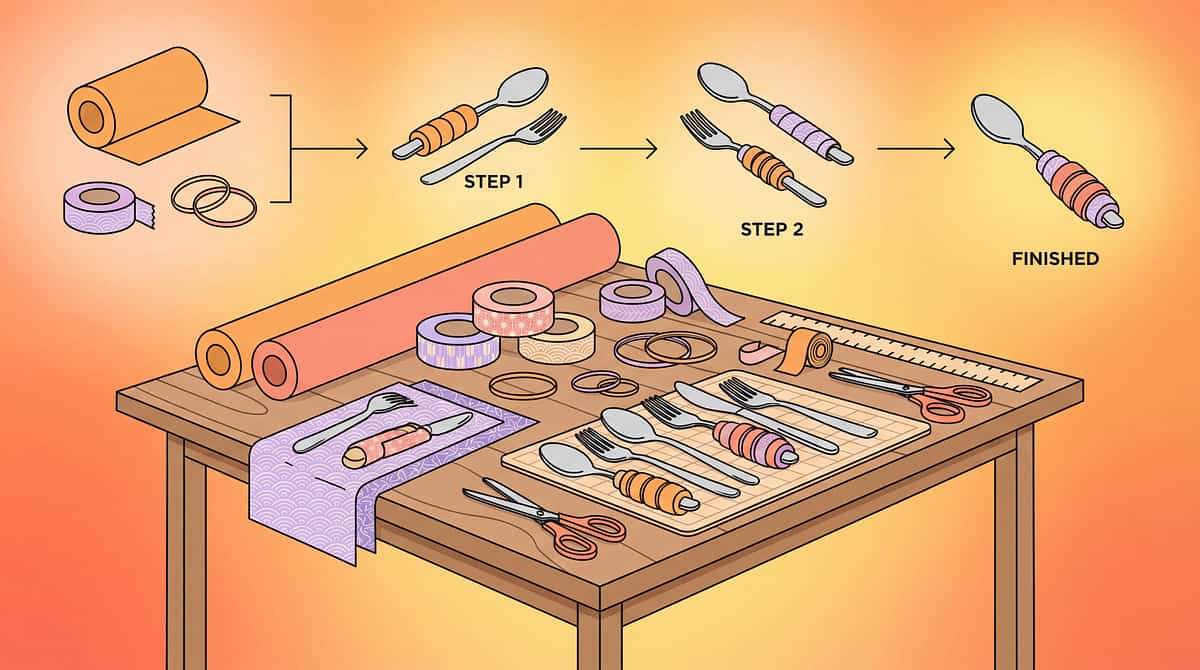
Materials Needed
  • Foam tubing or pipe insulation
  • Tape (electrical or duct tape)
  • Rubber bands
  • Regular utensils from your kitchen
DIY Instructions
Built-up handle
Slide foam tubing (from hardware store) over utensil handle. Creates thicker grip instantly. Most effective and easiest DIY adaptation.
Grip assist
Wrap rubber band around handle section where child holds. Creates textured surface for better grip without changing size.
Strap
Secure Velcro strap around hand and utensil to attach utensil to palm. Enables feeding even without ability to maintain grasp.
Shortened handle
Carefully cut metal or plastic handle to appropriate length. Smooth any sharp edges thoroughly before use.

Not easily DIY: Weighted utensils (weight distribution is complex), angled utensils (requires professional bend), durable long-term solutions. For these, commercial products recommended.
DIY vs Commercial
When to DIY
  • Built-up handles (foam tubing works great)
  • Trial before buying commercial version
  • Budget-conscious families
  • Immediate need (can't wait for shipping)
When to Buy Commercial
  • Weighted utensils (DIY is difficult and unsafe)
  • Angled utensils (professional design needed)
  • Durability needed for daily long-term use
  • Multiple settings (need set for home + school)
Tradeoffs: DIY may not be as durable as commercial products. Foam tubing wears out faster than molded handles. However, DIY enables immediate trial before investing in professional products.

Preview of utensil training tools Therapy Material

Below is a visual preview of utensil training tools therapy material. The pages shown help educators, therapists, and caregivers understand the structure and content of the resource before use. Materials should be used under appropriate professional guidance.

Page 1
Page 2
Page 3
Page 4
Page 5
Page 6
Page 7
Page 8
Page 9
Page 10
Page 11
Page 12
Page 13
Page 14
Page 15
Page 16
Page 17
Page 18
Page 19
Page 20
Link copied!
Measuring Success & Next Steps
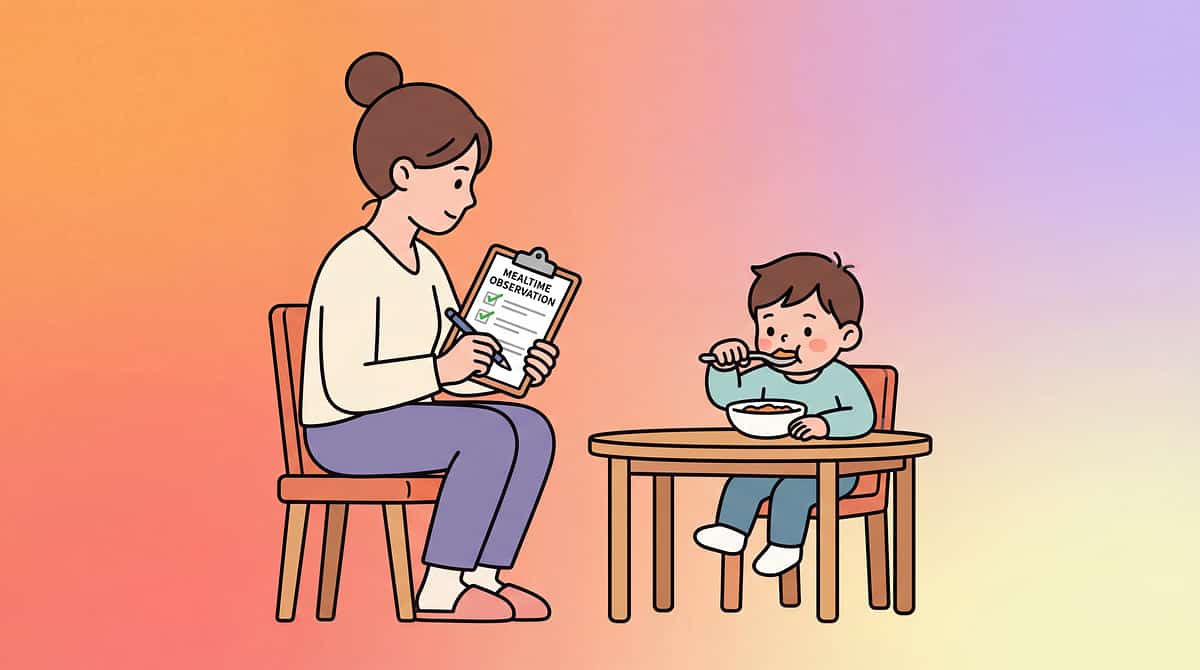
Track Progress
Baseline (Measure First)
  • Current self-feeding ability
  • Utensil grasp pattern observed
  • Food transport success rate
  • Independence level at meals
Goals
  • Self-feed with adapted utensils
  • Complete meals independently
  • Age-appropriate mess levels
  • Transition to standard if appropriate
Success Indicators
  • Successful self-feeding daily
  • Reduced assistance needed
  • Appropriate mess for age
  • Completed meals consistently
  • Positive mealtime experience

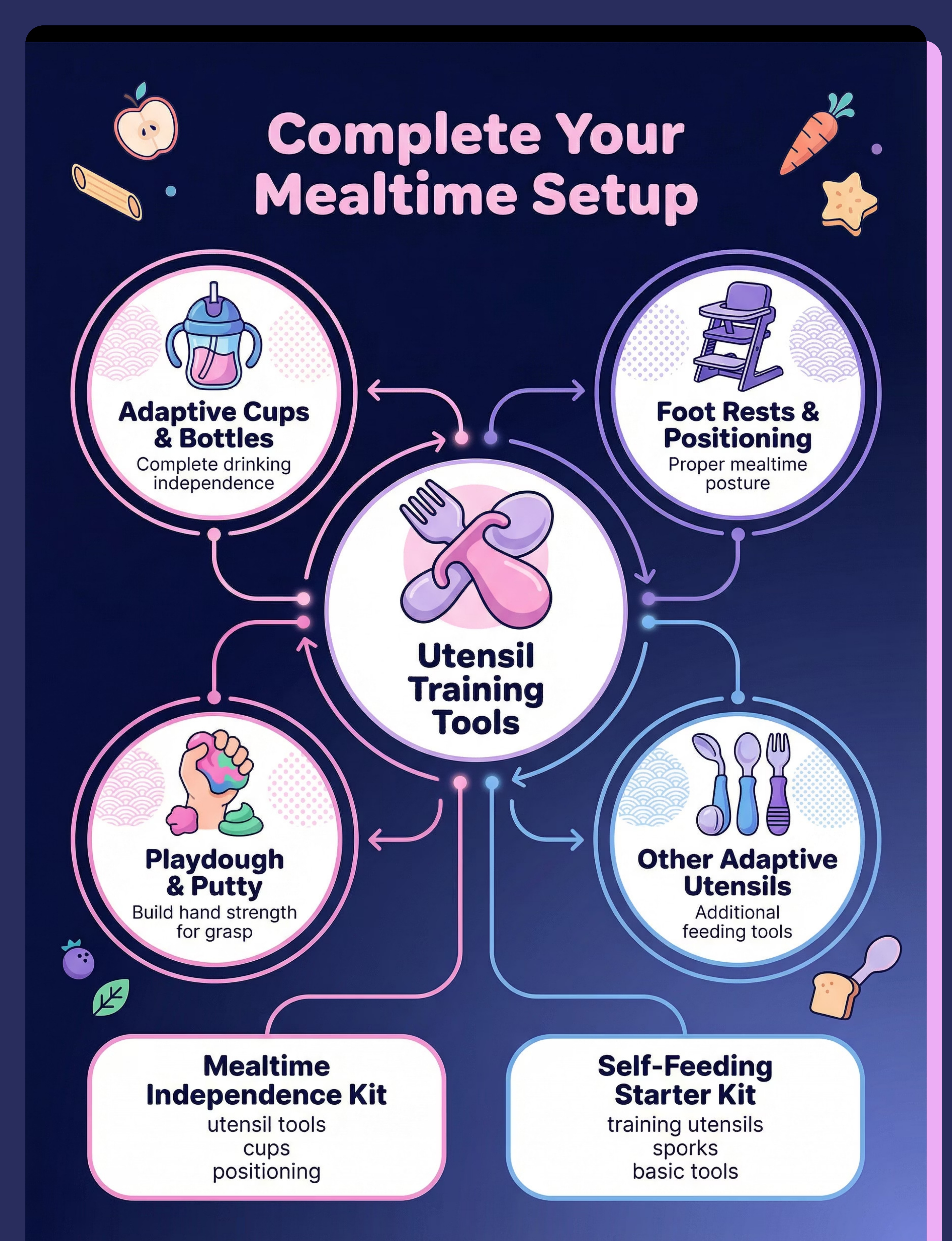
Complete the Kit
Pair utensil training tools with complementary items for comprehensive mealtime independence:
Adaptive Utensils (Feeding)
ID: 11.5 — Related feeding tools including specialized plates, bowls, and other mealtime adaptations
Cup/Bottle Adaptations
ID: 11.6 — Complete feeding independence with appropriate drinking vessel adaptations
Foot Rests/Positioning
ID: 12.3 — Mealtime positioning supports for optimal motor control during eating
Playdough/Putty
ID: 7.1 — Hand strength building for improved grasp on utensils
Suggested Bundles
Mealtime Independence Kit
Items: Utensil Training Tools (9.3) + Adaptive Utensils (11.5) + Cup/Bottle Adaptations (11.6)
Use Case: Complete feeding support system for total mealtime autonomy
Self-Feeding Starter Kit
Items: Utensil Training Tools (9.3) + Toddler Training Utensils (9.3.4) + Spork (9.3.5)
Use Case: Beginning self-feeding with simplified tool choices

Quick Summary
Utensil training tools enable self-feeding independence by matching adaptations (weighted, built-up, angled) to specific motor challenges. Core Kit (Rank 1), strong evidence, essential daily living skill.
utensils
feeding
self-feeding
adaptive
mealtime
independence
ADL
OT
SLP
core-kit
Common Searches: adaptive utensils autism, weighted spoon kids, self feeding tools, built up handles, feeding therapy utensils, toddler training spoon, adaptive eating tools

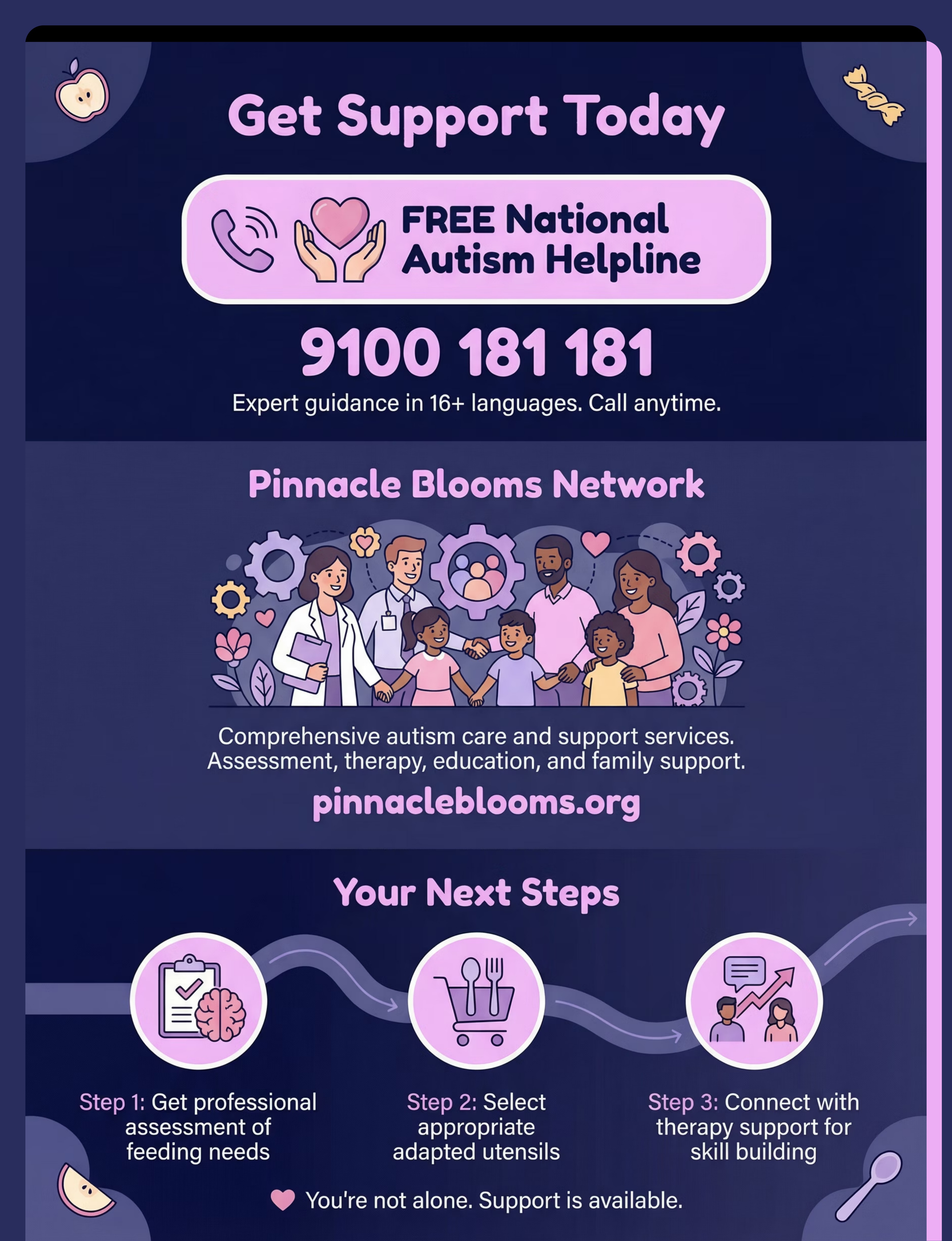
Get Support
FREE National Autism Helpline
Phone: 9100 181 181
Languages: 16+ Indian languages
Website: pinnacleblooms.org
Platform Integration: AbilityScore® identifies feeding patterns and assesses motor challenges. TherapeuticAI® prescribes evidence-based feeding activities matched to your child's abilities. EverydayTherapyProgramme™ includes structured mealtime goals and progress tracking. ADL Index tracks feeding independence over time.

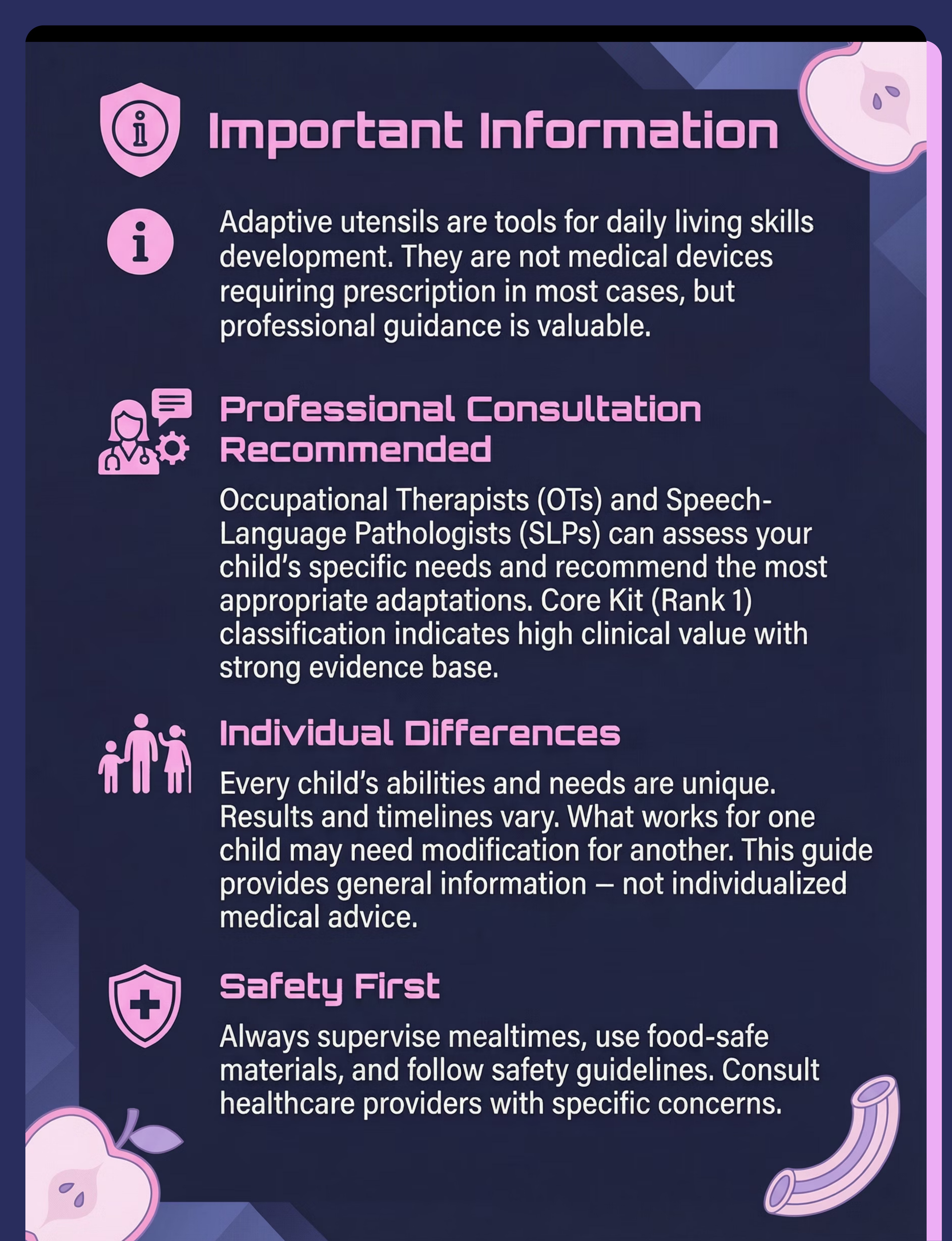
Important Disclaimer: This is educational information designed to support families in understanding adaptive feeding tools. Always consult qualified occupational therapists, speech-language pathologists, or pediatricians for personalized assessment and recommendations. Individual results vary based on each child's unique needs, abilities, and circumstances.