




Tool ID: 11.3
Tool ID: 11.3
OT + SLP
Moderate Evidence
Rank #2
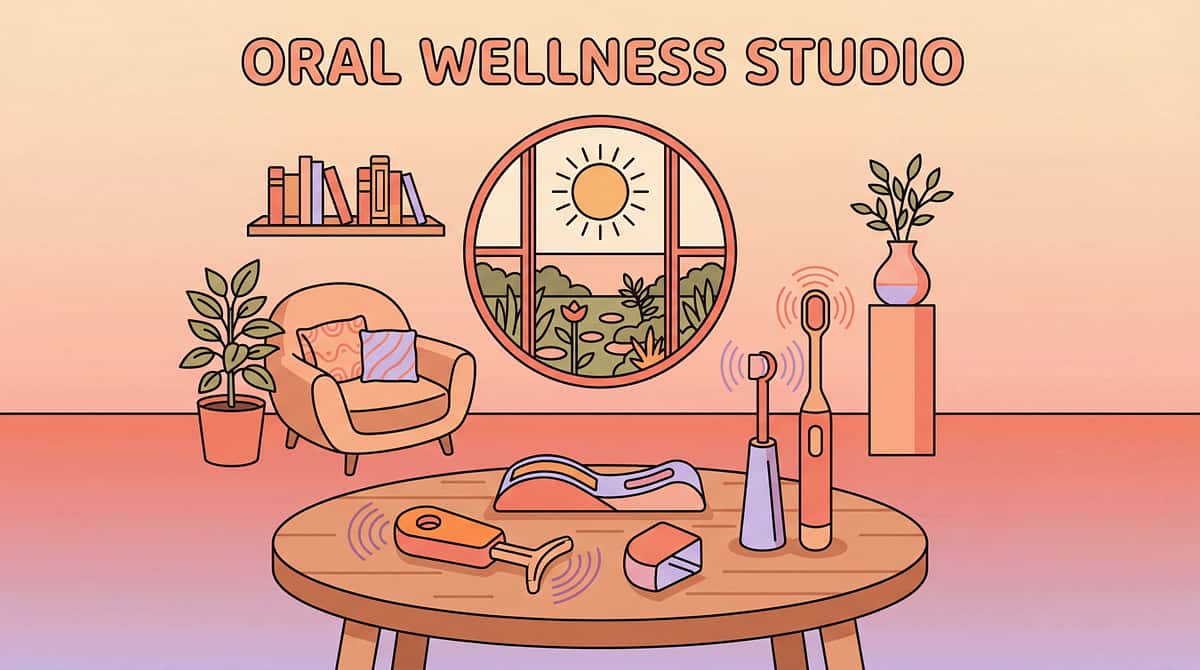
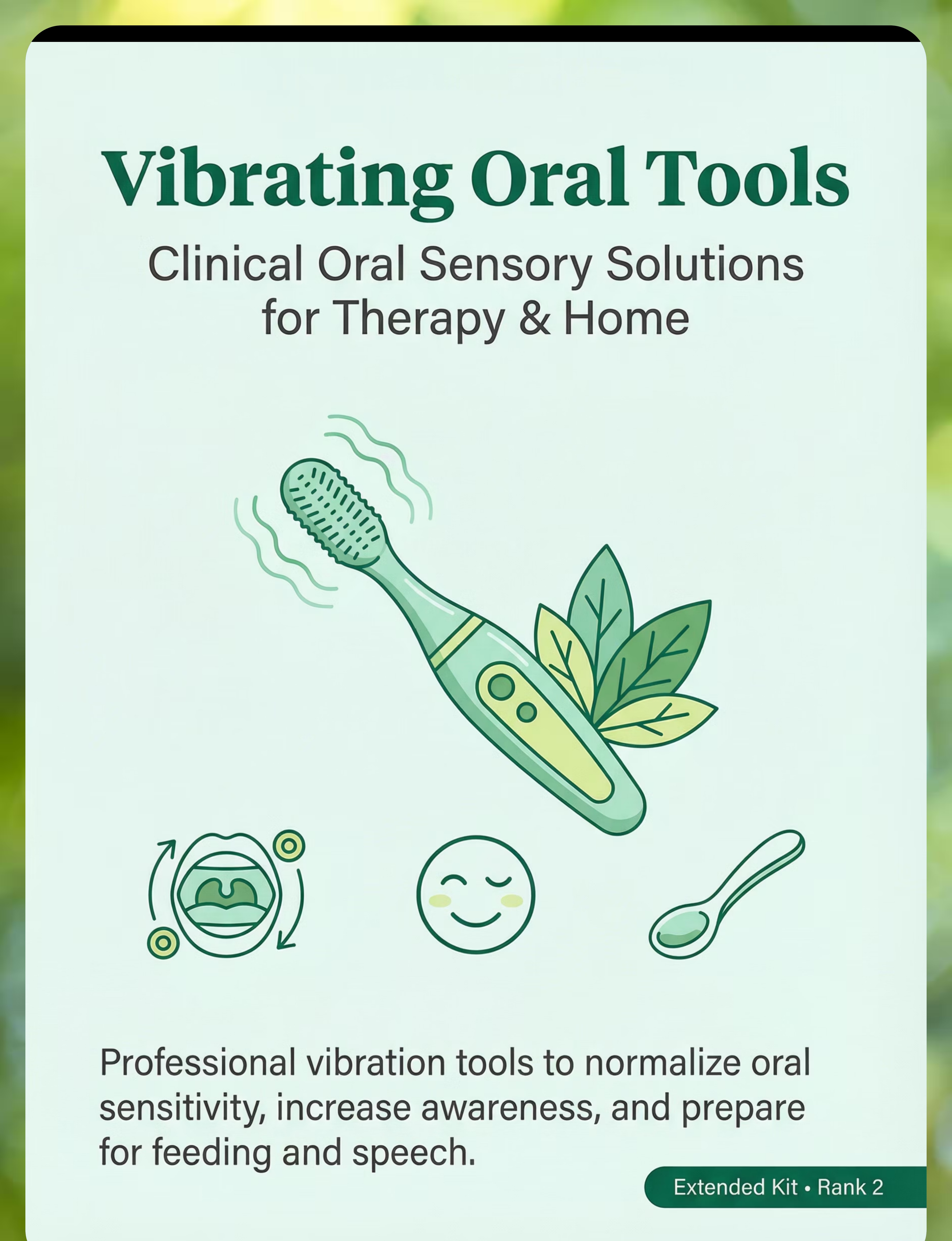
Vibrating Oral Tools
Oral sensory modulation and awareness system
Several times weekly
Clinic-Home
₹200–3,500
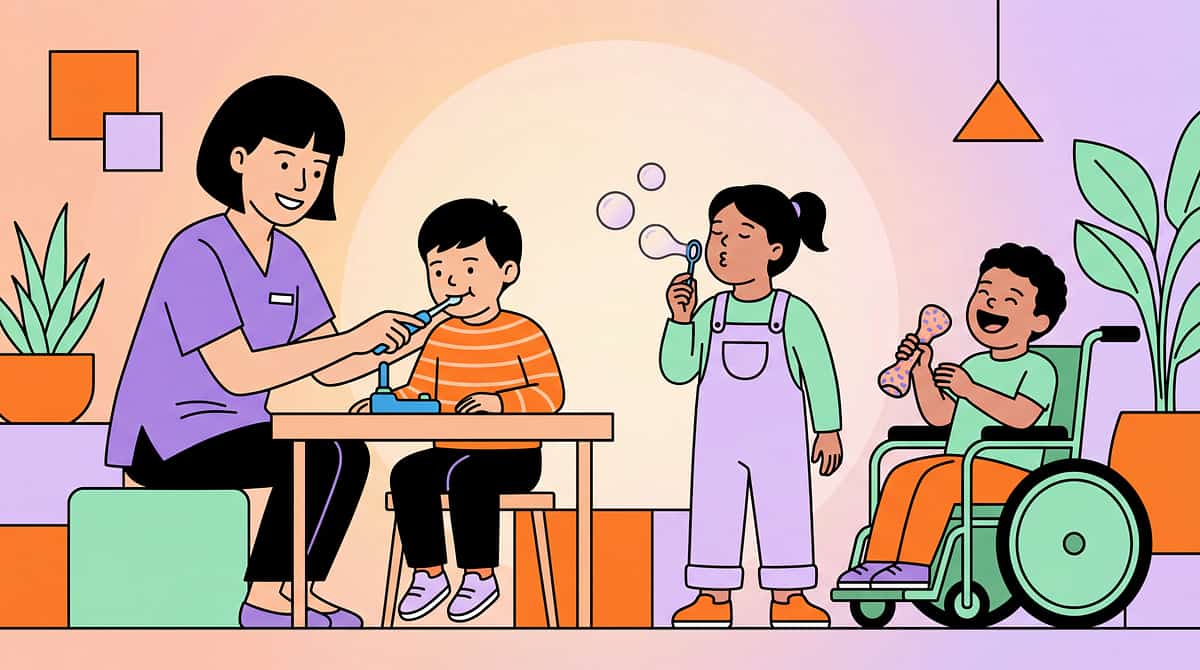
Who This Helps
Oral Sensitivity
Oral Awareness
Muscle Activation
Desensitization
Feeding Preparation
Speech Preparation
Sensory Input
Provide essential sensory input through therapeutic vibration.
Oral Sensitivity
Normalize oral sensitivity to touch and textures.
Oral Awareness
Increase awareness of the mouth and face area.
Feeding Skills
Prepare developing muscles for crucial feeding activities.
Speech Development
Prepare developing muscles for crucial speech activities.
Age Range
Suitable for all ages, from infants to adults, with approaches adapted based on individual needs and tolerance levels
Perfect Settings
Ideal for clinic-based therapy sessions and home practice programs, with guidance from qualified professionals
Best For
Children with oral hypersensitivity, low oral awareness, feeding difficulties, or oral motor weakness affecting eating and speech
Does This Sound Familiar?
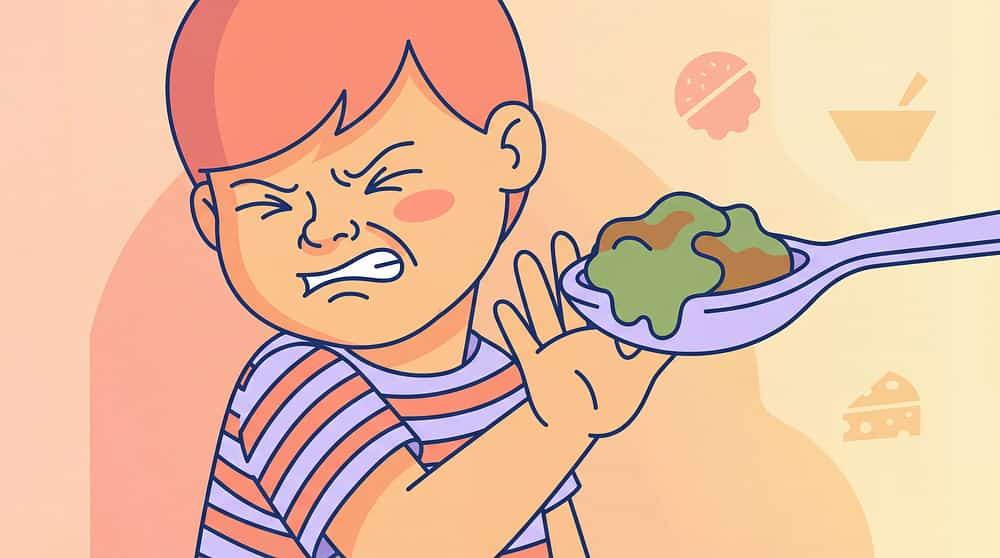
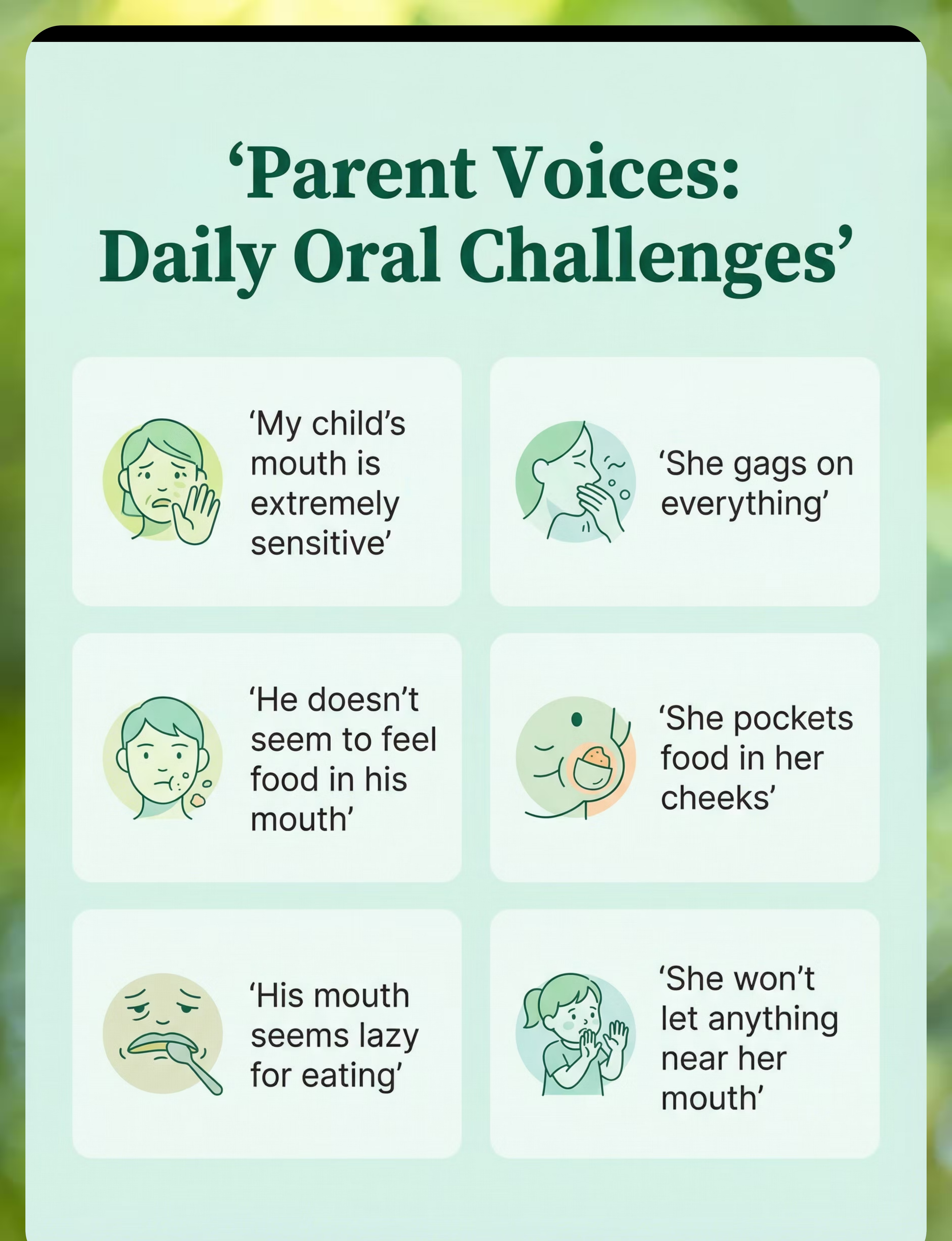
"My child's mouth is extremely sensitive. She gags on everything, even foods she used to eat. Mealtimes have become a battle."
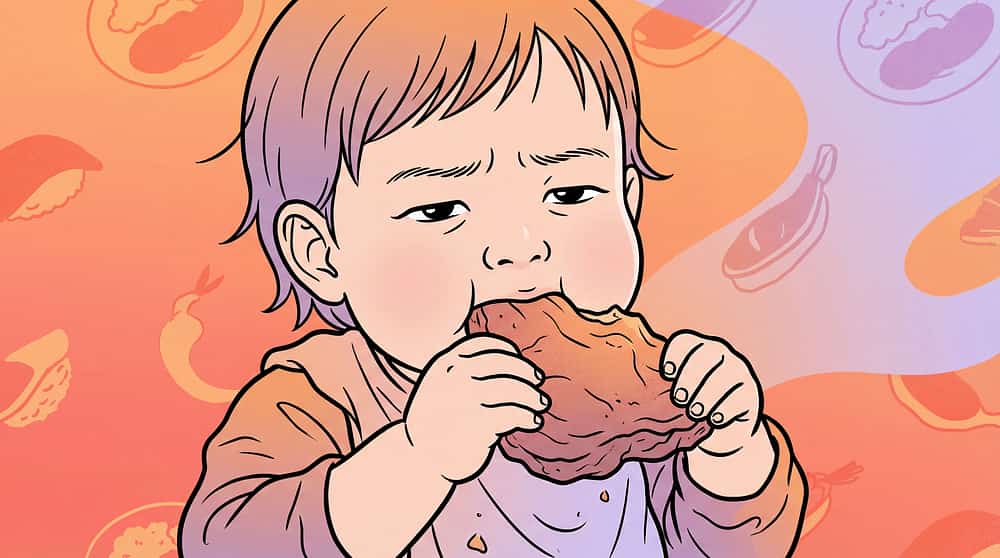
"He doesn't seem to feel food in his mouth at all. He pockets food in his cheeks and doesn't realize it's there."
"His mouth seems 'lazy' for eating. Chewing takes forever, and his speech is unclear because his muscles don't work right."
"She won't let anything near her mouth—not a toothbrush, not new foods, nothing. Even face washing is a struggle."

You're not alone. These are common challenges faced by families navigating oral sensory differences. Vibrating oral tools offer a gentle, evidence-based pathway to help.
A Day Without the Right Support
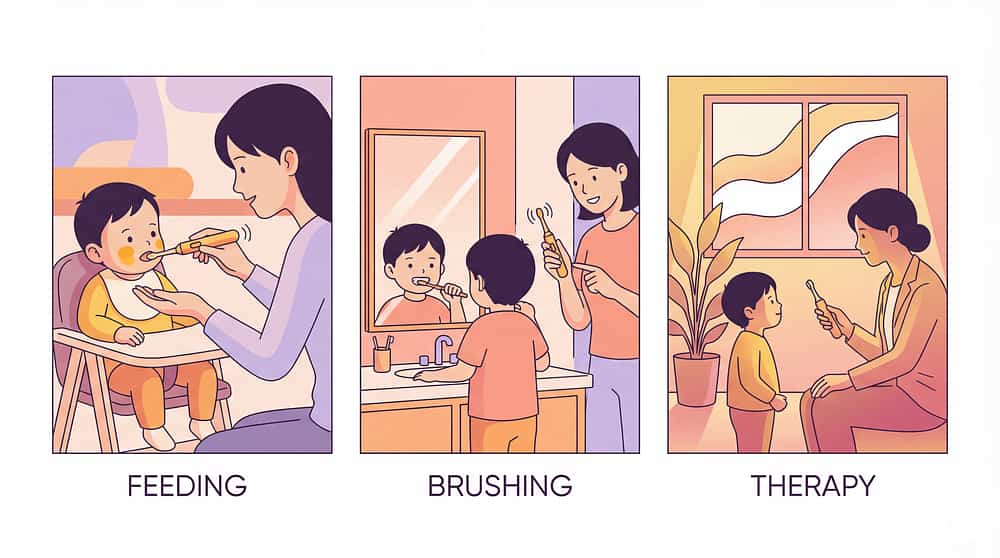
Morning Feeding
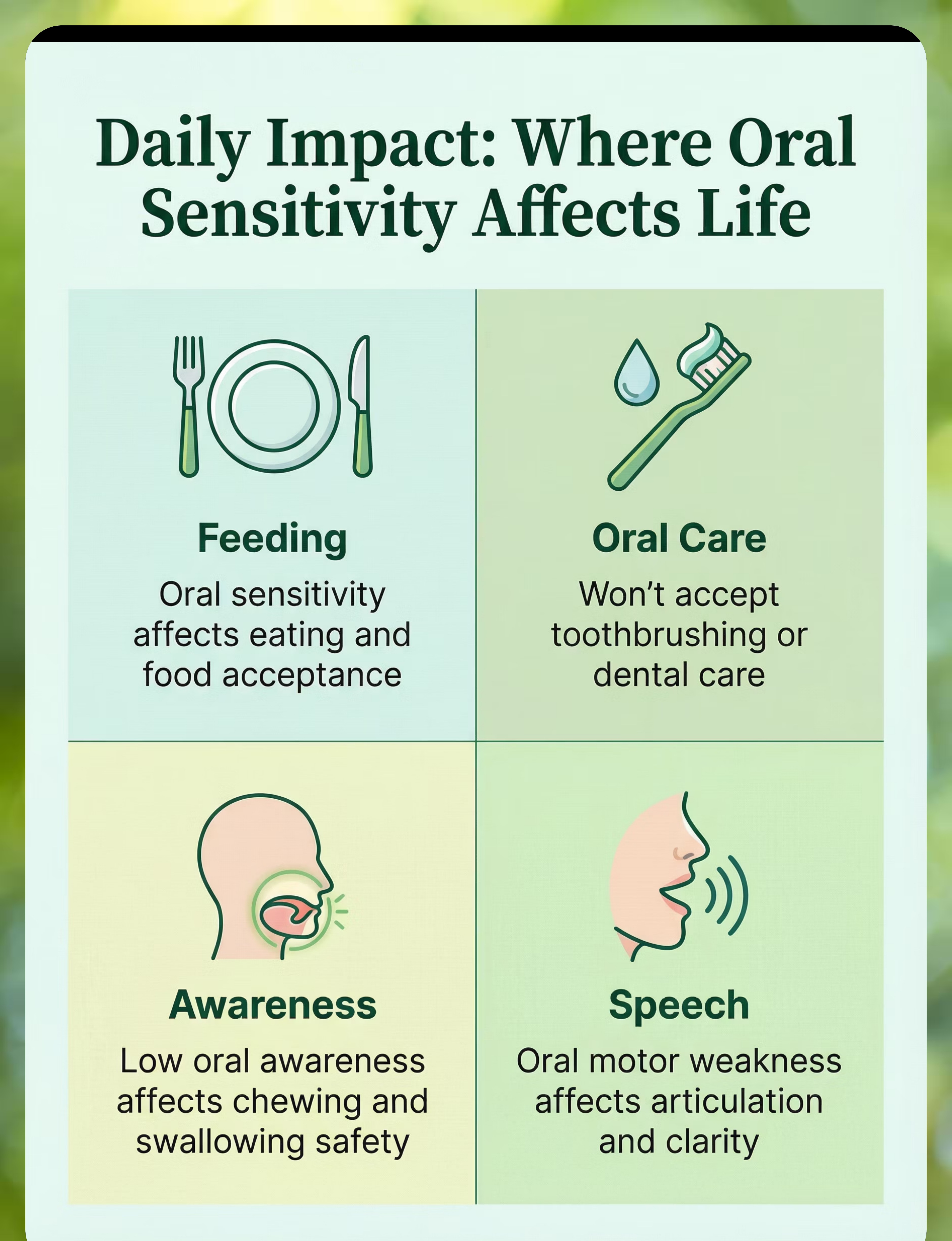
Breakfast becomes stressful as oral sensitivity affects eating. Gagging on textures. Limited foods accepted. Family tension rises before the day even begins.
Transitions
Oral defensiveness makes routine care nearly impossible. Won't accept toothbrushing. Dental hygiene becomes a battle. Face washing triggers distress.
Therapy & School
Low oral awareness impacts speech clarity and social communication. Messy eating affects confidence during lunch. Oral motor weakness visible during activities.
Evening Routine
Dinner repeats morning struggles. Limited diet affects nutrition. Bedtime oral care remains challenging. Parents feel exhausted and worried about long-term impact.
The Science Behind It
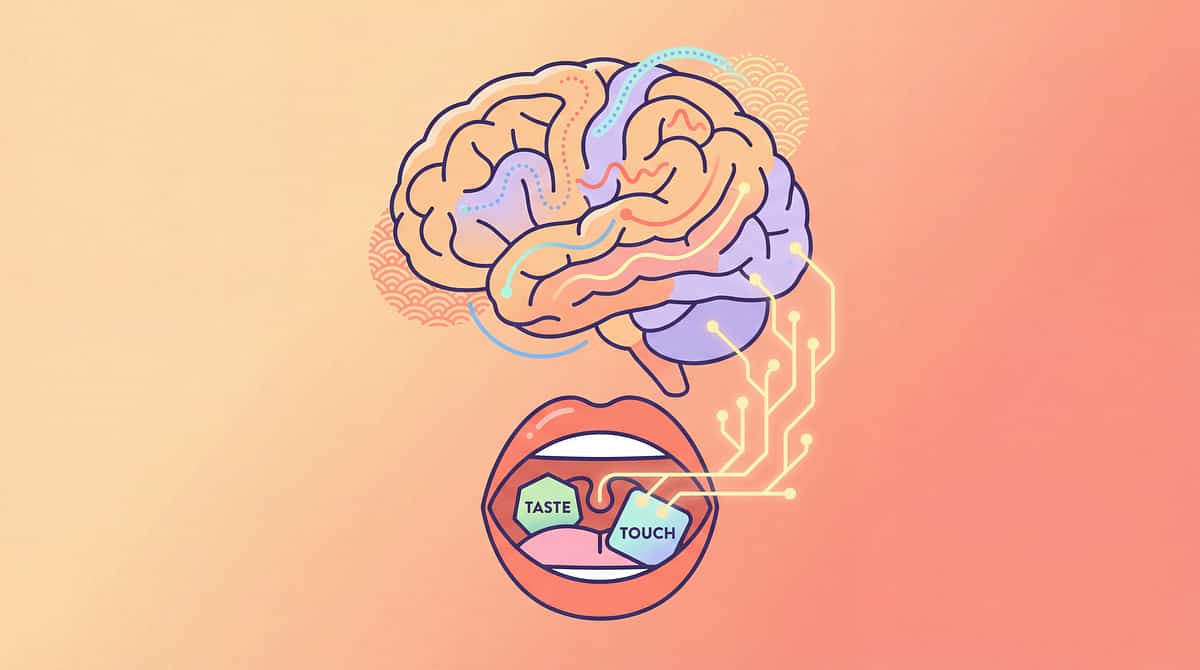
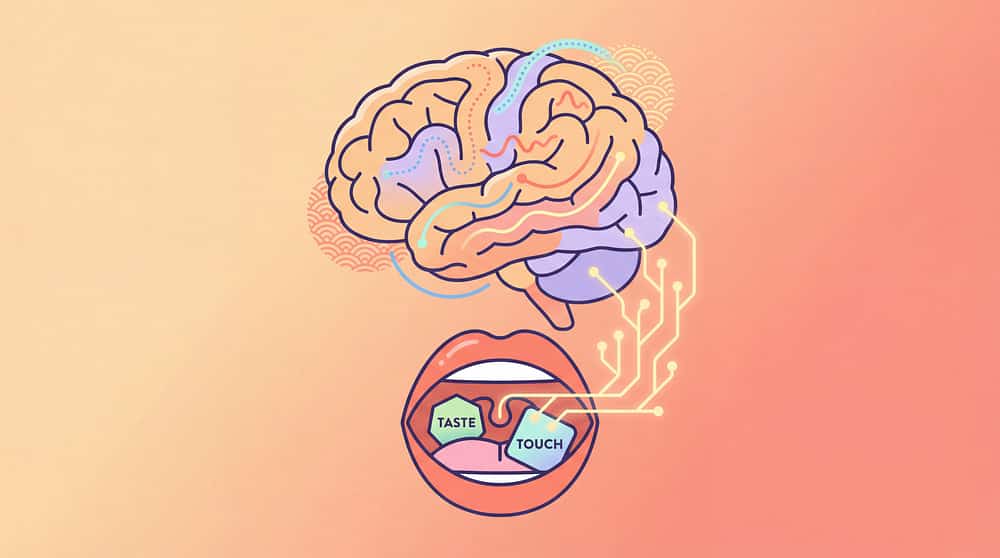
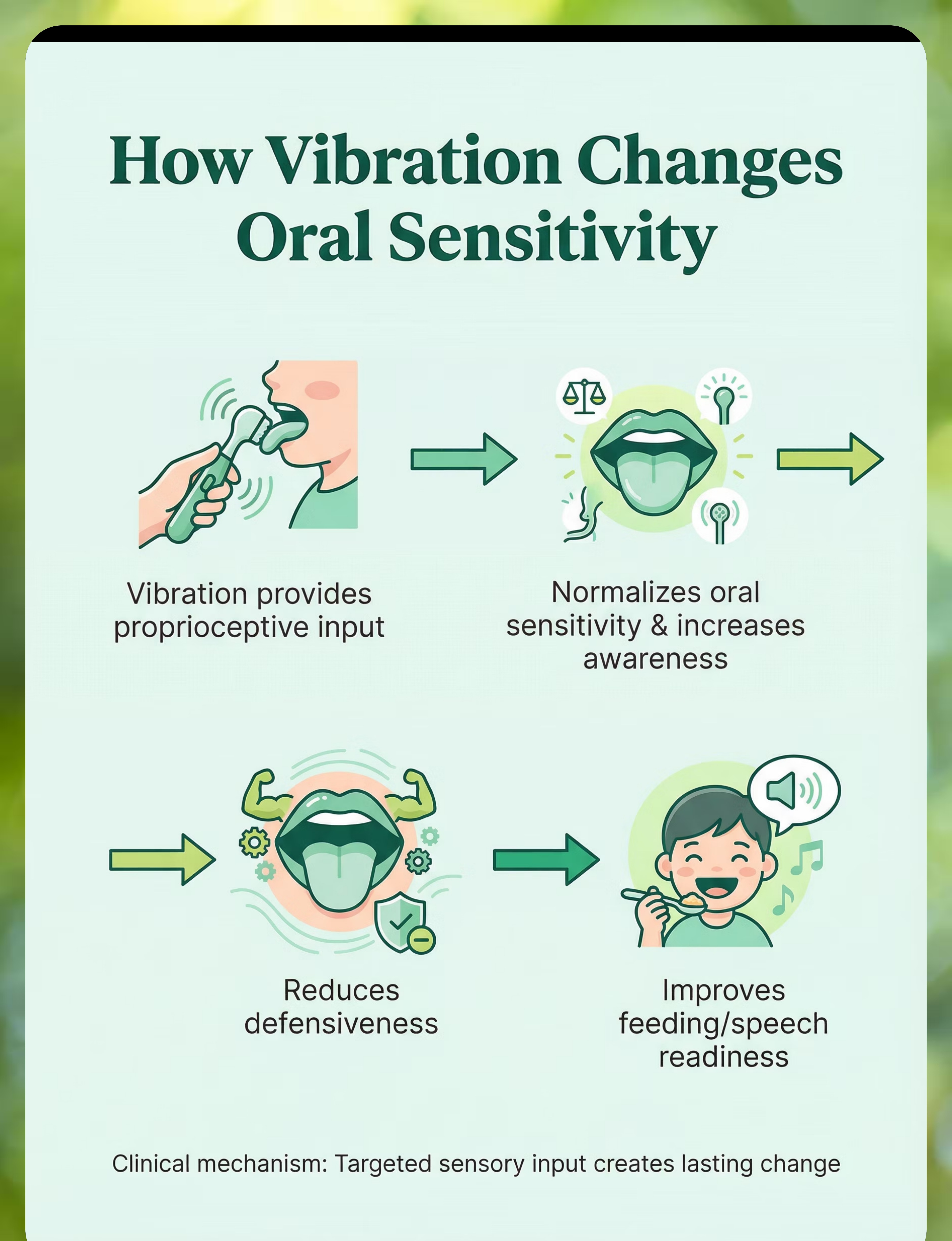
Vibrating oral tools work through a sophisticated sensory mechanism that addresses the root causes of oral sensitivity and awareness challenges. Understanding this science helps you see why these tools are so effective.
Vibration Input
Therapeutic vibration provides powerful proprioceptive input directly to oral tissues and muscles
Sensitivity Normalization
Consistent sensory input helps the nervous system normalize oral sensitivity responses over time
Awareness Increases
Enhanced proprioception increases conscious awareness of the mouth, lips, tongue, and cheeks
Muscle Preparation
Vibration activates and prepares oral muscles for coordinated movement needed for eating and speech
Defensiveness Reduces
As the system normalizes, oral defensiveness decreases and acceptance of oral activities improves
Function Improves
Prepared muscles and normalized sensitivity enhance feeding skill development and speech readiness
Backed by Moderate Evidence
Extended Kit Essential
How to Use It Right
Proper technique ensures effectiveness and builds positive associations. These evidence-based best practices, developed by oral motor specialists, guide successful implementation.
Start Away from the Mouth
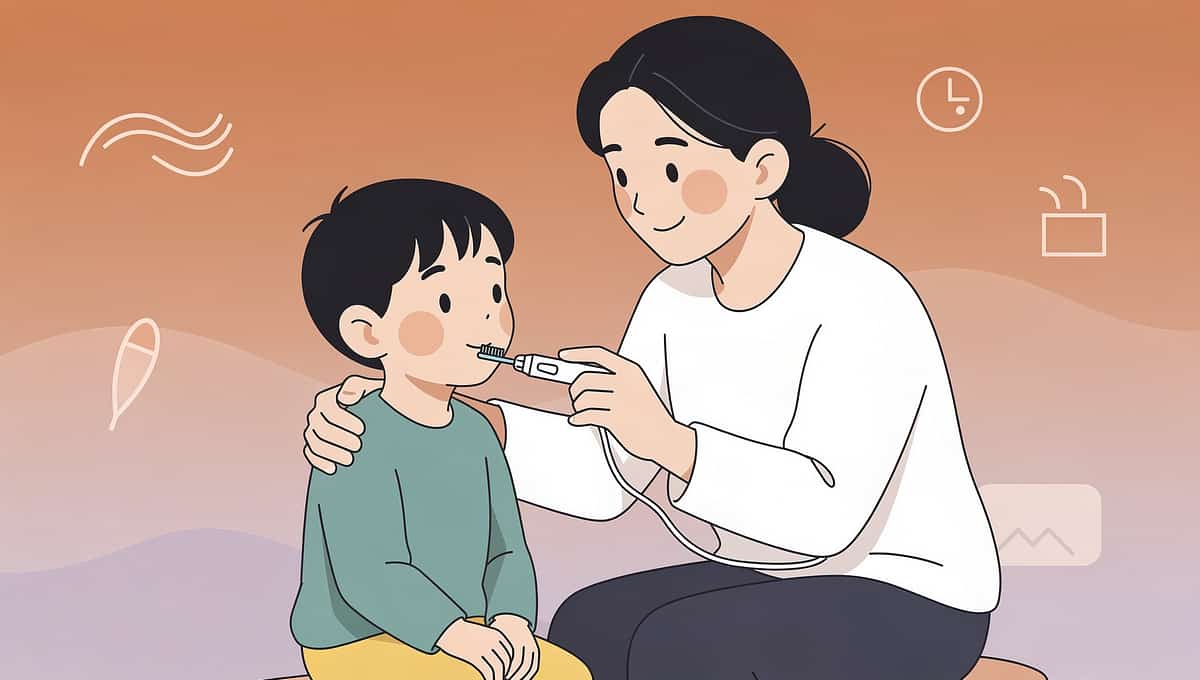
Begin with less sensitive areas like hands, arms, and shoulders. Work gradually toward the face, then mouth. This builds tolerance and trust.
Follow the Child's Lead
Let your child control the intensity and duration. Watch their responses carefully. Positive experiences create lasting acceptance.
Pre-Feeding Preparation
Use vibrating tools 5-10 minutes before meals to prepare oral muscles. This "wakes up" the mouth and improves feeding readiness.
Consistent Application
Use vibration predictably and consistently. Regular sessions (several times weekly) create neural pathways that support lasting change.
Seek SLP Guidance
Speech-Language Pathologist guidance is recommended for therapeutic oral motor programs. Professional input maximizes benefit and ensures proper technique.
Gradual Introduction
For children with oral defensiveness, introduce vibration very gradually. Patience during early sessions prevents negative associations.

Duration Note: Brief sessions of 5-10 minutes are typical for home use. Your SLP may prescribe specific protocols with different timing based on individual goals.
Expert Perspective
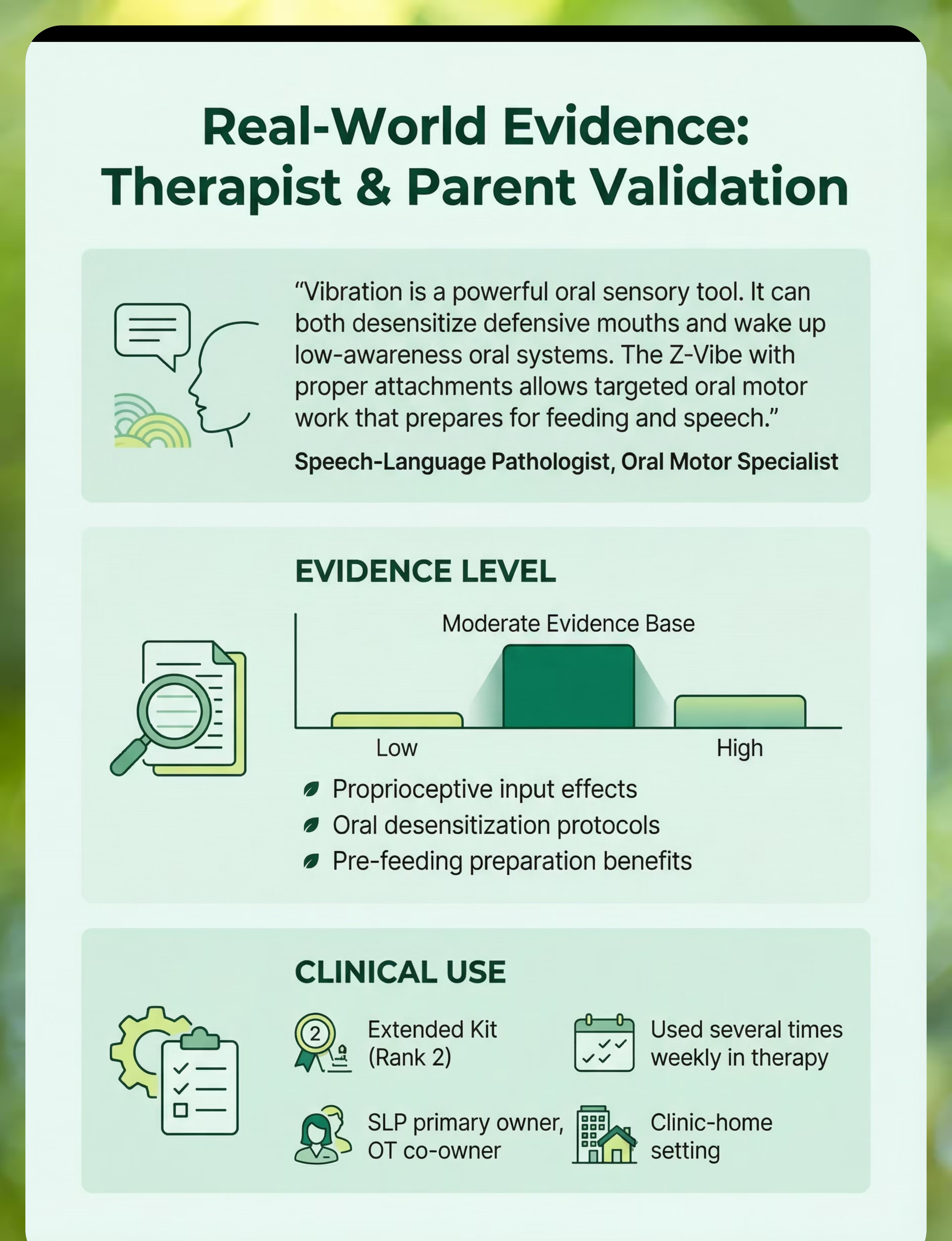
"Vibration is a powerful oral sensory tool. It can both desensitize defensive mouths and 'wake up' low-awareness oral systems. The Z-Vibe with proper attachments allows targeted oral motor work that prepares for feeding and speech."
Speech-Language Pathologist, Oral Motor Specialist
OT + SLP Recommended
Co-owned by both Occupational Therapy and Speech-Language Pathology disciplines
Moderate Evidence
Supported by clinical research and extensive practical application
Rank #2 in Category
Among the most effective oral motor and feeding tools available
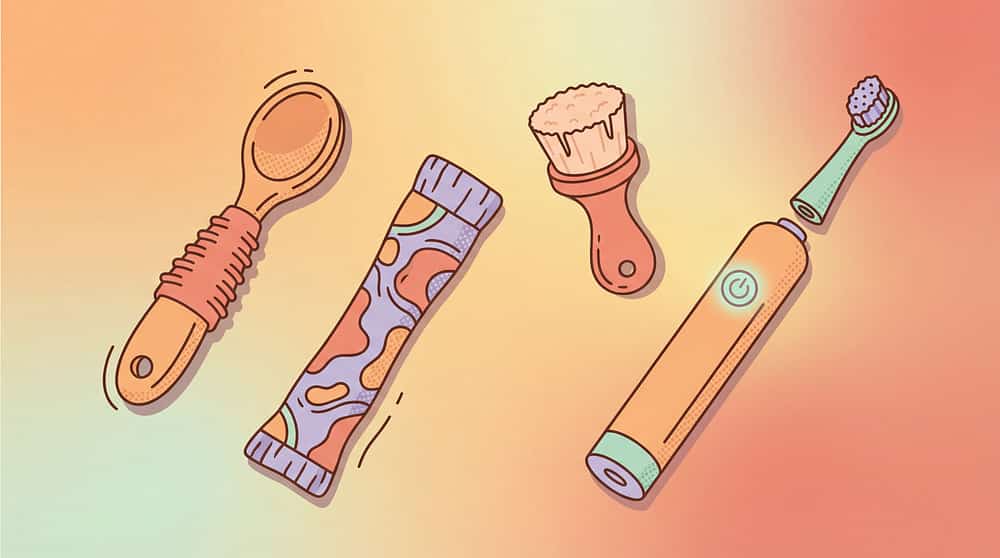
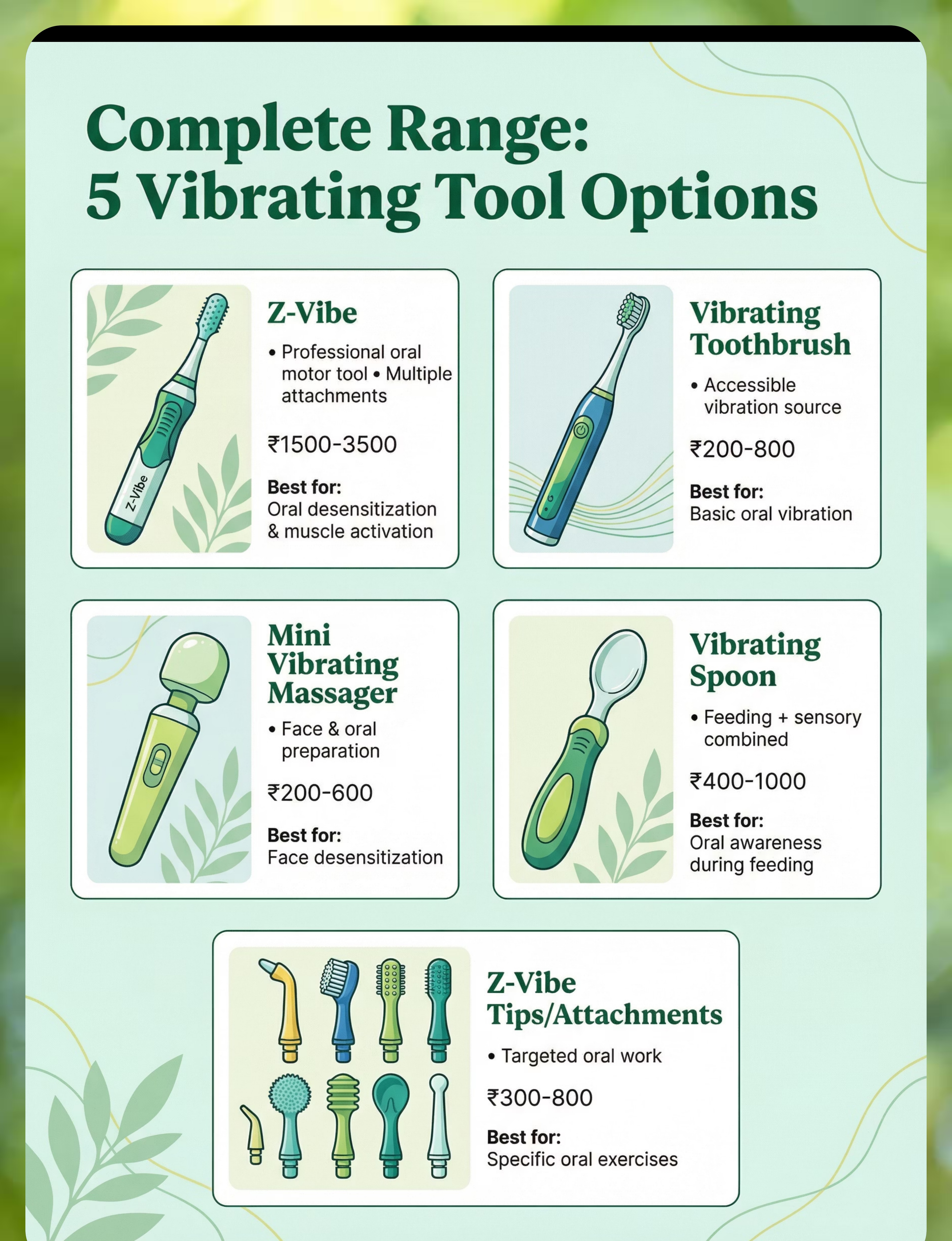
Choose Your Option (5 Variants)
Each variant serves specific therapeutic purposes. Choose based on your child's needs, setting requirements, and budget. All options provide valuable oral sensory input when used appropriately.
1
Z-Vibe
Professional vibrating oral motor tool with attachments
Best for: Oral desensitization, stimulation, muscle activation
Ages: All ages | Settings: Clinic Home
Portability: High | Price: ₹1,500–3,500
2
Vibrating Toothbrush (Oral Motor Use)
Electric toothbrush for oral stimulation
Best for: Basic oral vibration, desensitization
Ages: 2+ years | Settings: Home
Portability: High | Price: ₹200–800
3
Mini Vibrating Massager
Small handheld vibrator for face/oral area
Best for: Face desensitization, oral preparation
Ages: All ages | Settings: All settings
Portability: Very High | Price: ₹200–600
4
Vibrating Spoon
Spoon with vibration feature
Best for: Oral awareness during feeding, sensory seekers
Ages: 6 months+ | Settings: Home Clinic
Portability: High | Price: ₹400–1,000
5
Z-Vibe Tips/Attachments
Various tips for different oral areas
Best for: Tongue, lips, cheeks specific exercises
Ages: All ages | Settings: Clinic Home
Portability: Very High | Price: ₹300–800

How to Choose
By Goal
  • Desensitization: Z-Vibe or toothbrush
  • Stimulation: Z-Vibe with tips
  • Feeding support: Vibrating spoon
  • Face work: Mini massager
By Setting
  • Professional therapy: Z-Vibe
  • Home program: Toothbrush
  • Travel: Mini massager
  • Mealtime: Vibrating spoon
By Budget
  • Starting out: Toothbrush (₹200-800)
  • Comprehensive: Z-Vibe (₹1,500-3,500)
  • Targeted work: Tips (₹300-800)
Specifications & Vibration Approaches
Materials & Features
Safety & Materials
Utilizes medical-grade, BPA-free, and food-safe materials for direct oral contact, ensuring safety and hygiene.
Versatile Design
Features adjustable intensity and a variety of tips/attachments to target different oral areas and therapeutic needs.
Easy Maintenance
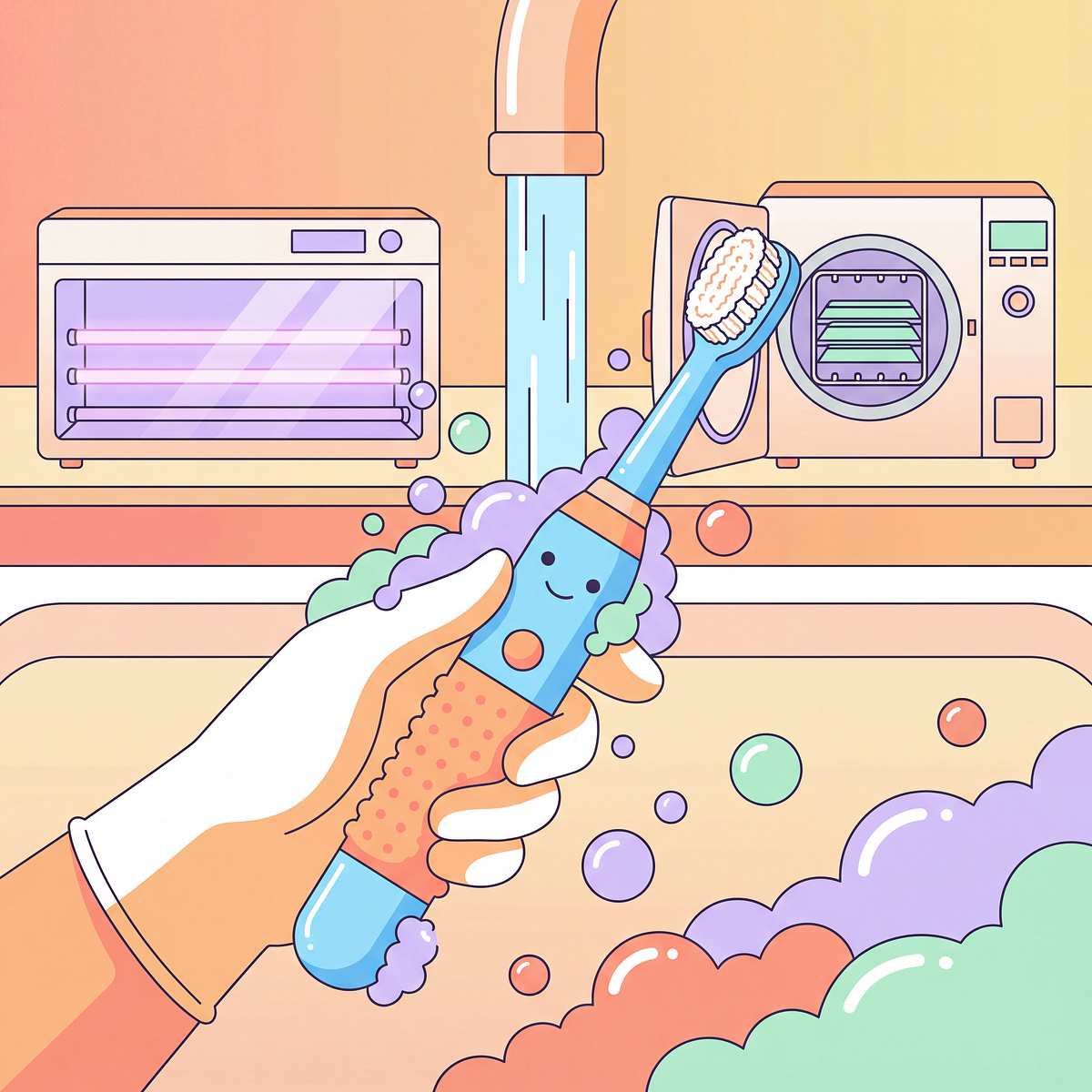
Designed for easy cleaning and thorough sanitization to maintain optimal hygiene standards for repeated use.
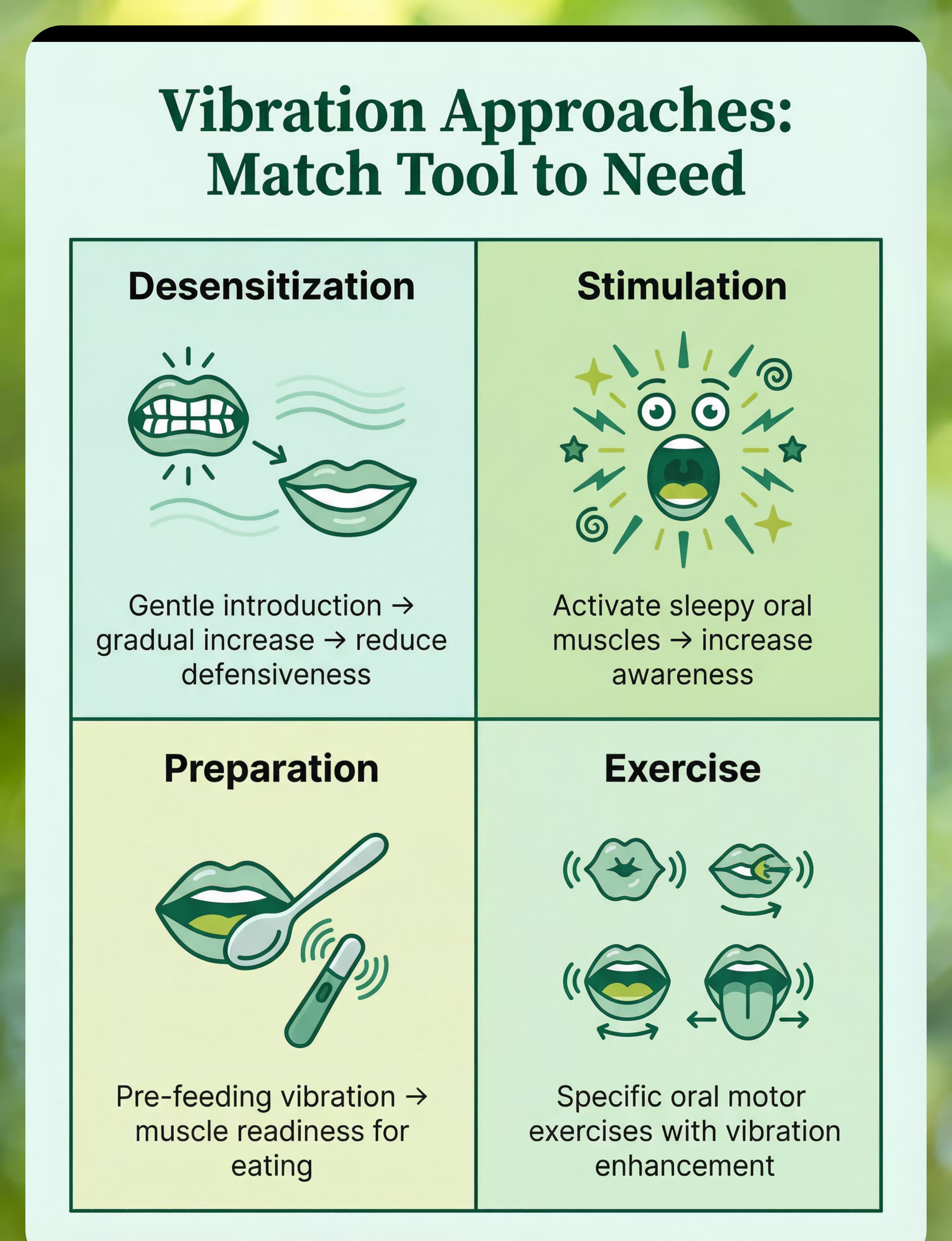
Therapeutic Approaches
1
Desensitization
Gentle introduction → gradual increase → reduce defensiveness in hypersensitive mouths
2
Stimulation
Activate 'sleepy' oral muscles → increase sensory awareness in low-tone systems
3
Preparation
Pre-feeding vibration → muscle readiness → improved oral motor control
4
Exercise
Specific oral motor exercises enhanced with vibration for targeted skill building
The Struggle (Before)
Understanding where families start helps us appreciate the transformation possible with appropriate oral sensory support. These scenarios reflect real experiences of children and families before intervention.
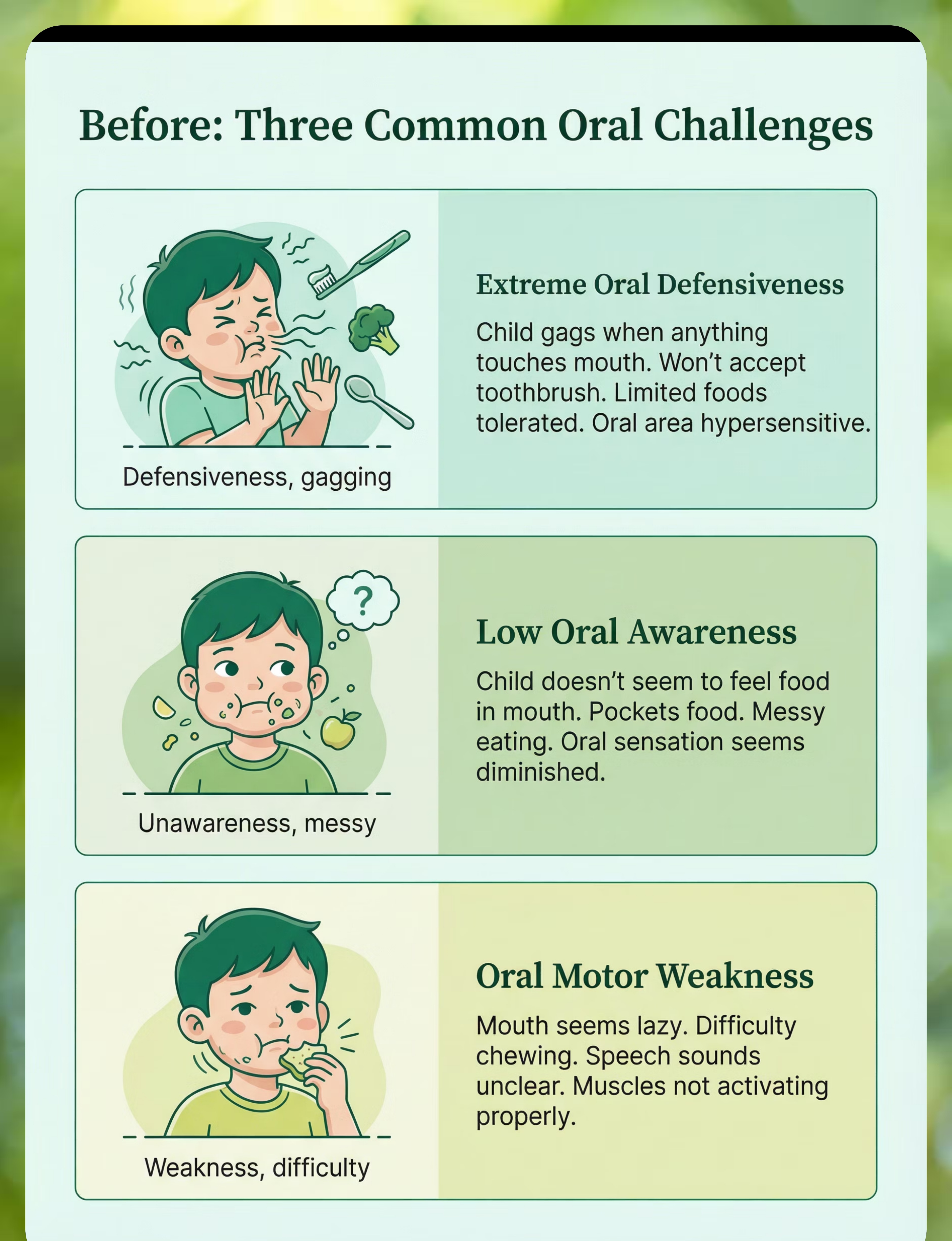
Situation: Child gags when anything touches mouth. Won't accept toothbrush. Limited foods tolerated. Oral area hypersensitive to even gentle touch.
Experience: Every meal is stressful. Dental care is impossible. Social situations with food cause anxiety. Family outings revolve around food limitations.
Emotion:Defensiveness, gagging, distress, anxiety
Situation: Child doesn't seem to feel food in mouth. Pockets food in cheeks. Messy eating. Oral sensation seems diminished or absent.
Experience: Meals take forever. Food stays in mouth unnoticed. Drooling is persistent. Choking risk due to lack of awareness. Parents constantly worried.
Emotion:Unawareness, messiness, frustration, concern
Situation: Mouth seems 'lazy.' Difficulty chewing tough foods. Speech sounds unclear and muddy. Muscles not activating properly during eating or speaking.
Experience: Limited diet to soft foods. Fatigue during meals. Speech hard to understand. Other children notice differences. Confidence affected.
Emotion:Weakness, difficulty, fatigue, self-consciousness
The Breakthrough (After)
With appropriate vibrating oral tool intervention, guided by qualified therapists and supported by committed families, meaningful progress becomes possible. These transformations reflect realistic outcomes with consistent use.
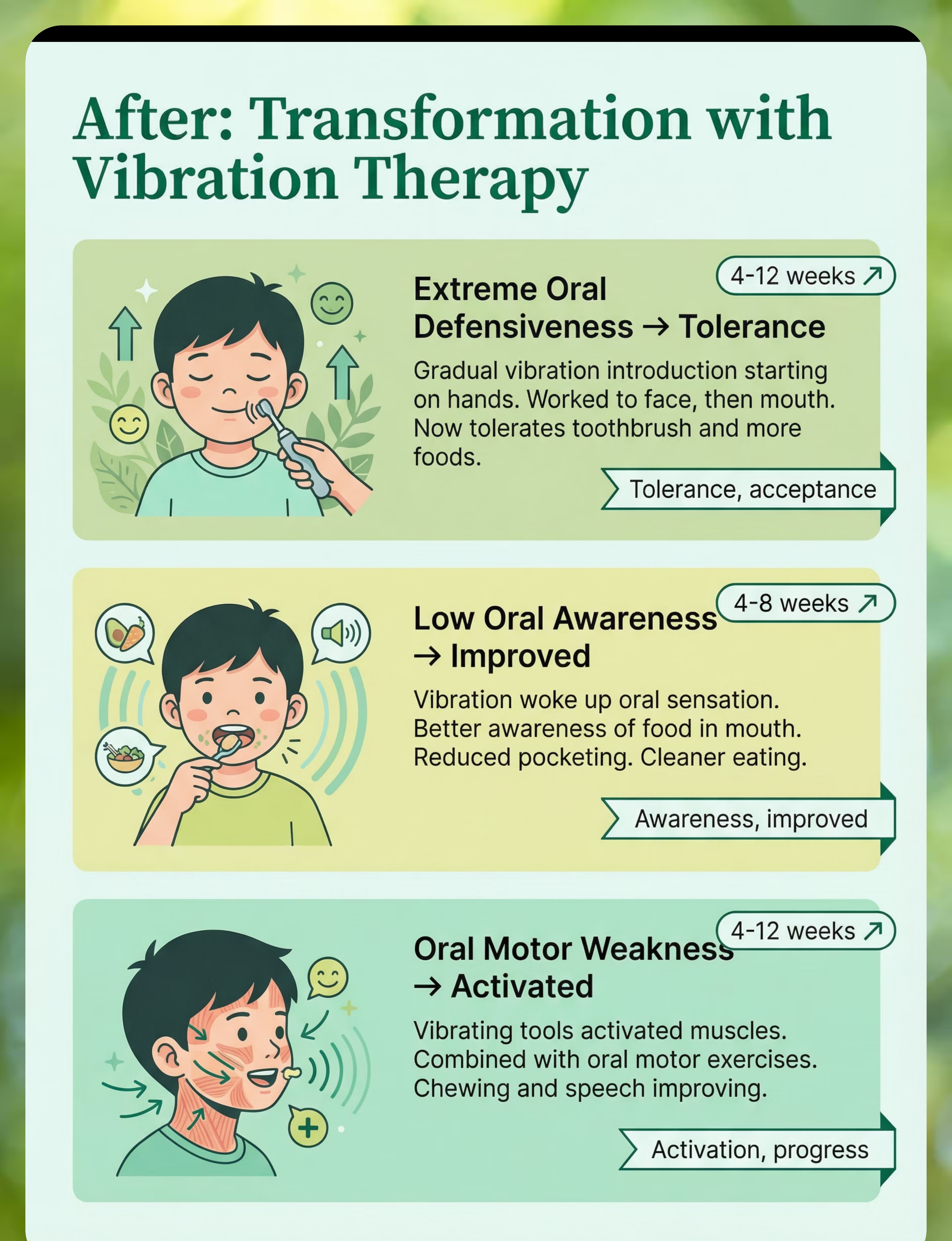
Extreme Oral Defensiveness
Situation: Gradual vibration introduction starting on hands and arms. Slowly worked to face, then around mouth. Now tolerates toothbrush and accepting more food textures.
Experience: Morning routine is calmer. Dental care is manageable. Trying new foods without intense reactions. Family meals becoming enjoyable again.
Emotion:Tolerance, acceptance, relief, hope
4-12 weeks
Low Oral Awareness
Situation: Vibration 'woke up' oral sensation systems. Better awareness of food location in mouth. Reduced pocketing behavior. Cleaner, more controlled eating.
Experience: Meals more efficient. Less food waste. Improved chewing patterns. Reduced drooling. Parents less anxious during meals.
Emotion:Awareness, improvement, control, progress
4-8 weeks
Oral Motor Weakness
Situation: Vibrating tools activated dormant muscles. Combined with targeted oral motor exercises from SLP. Chewing strength improving. Speech clarity increasing.
Experience: Expanding food variety. Less mealtime fatigue. People understand speech better. Confidence growing in social situations.
Emotion:Activation, strength, progress, confidence
4-12 weeks
What to Expect (Realistic Timelines)
vibrating-oral-tools therapy material
Setting realistic expectations helps families stay motivated through the therapeutic process. These timelines reflect typical progress patterns, though individual children may progress faster or slower based on many factors.
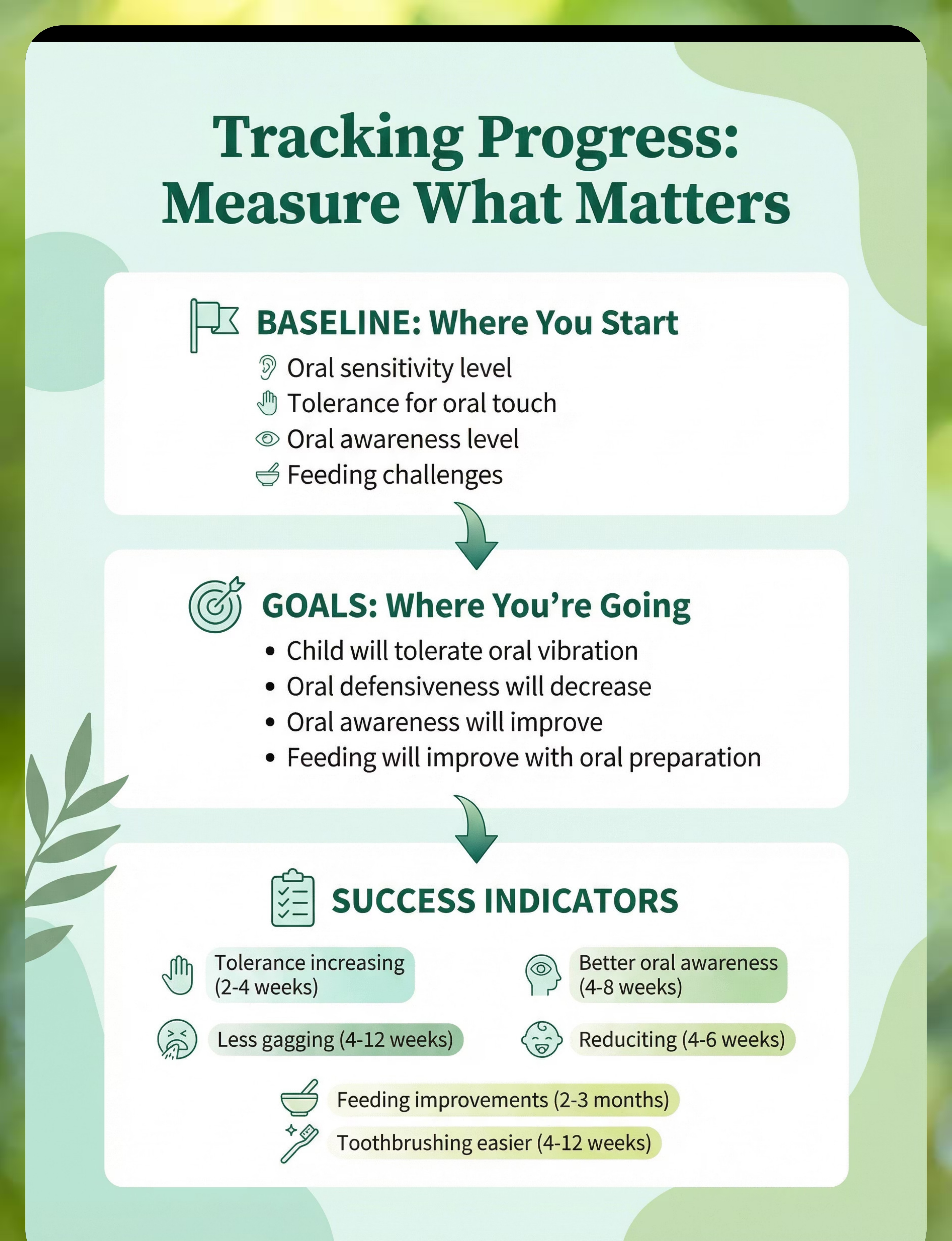
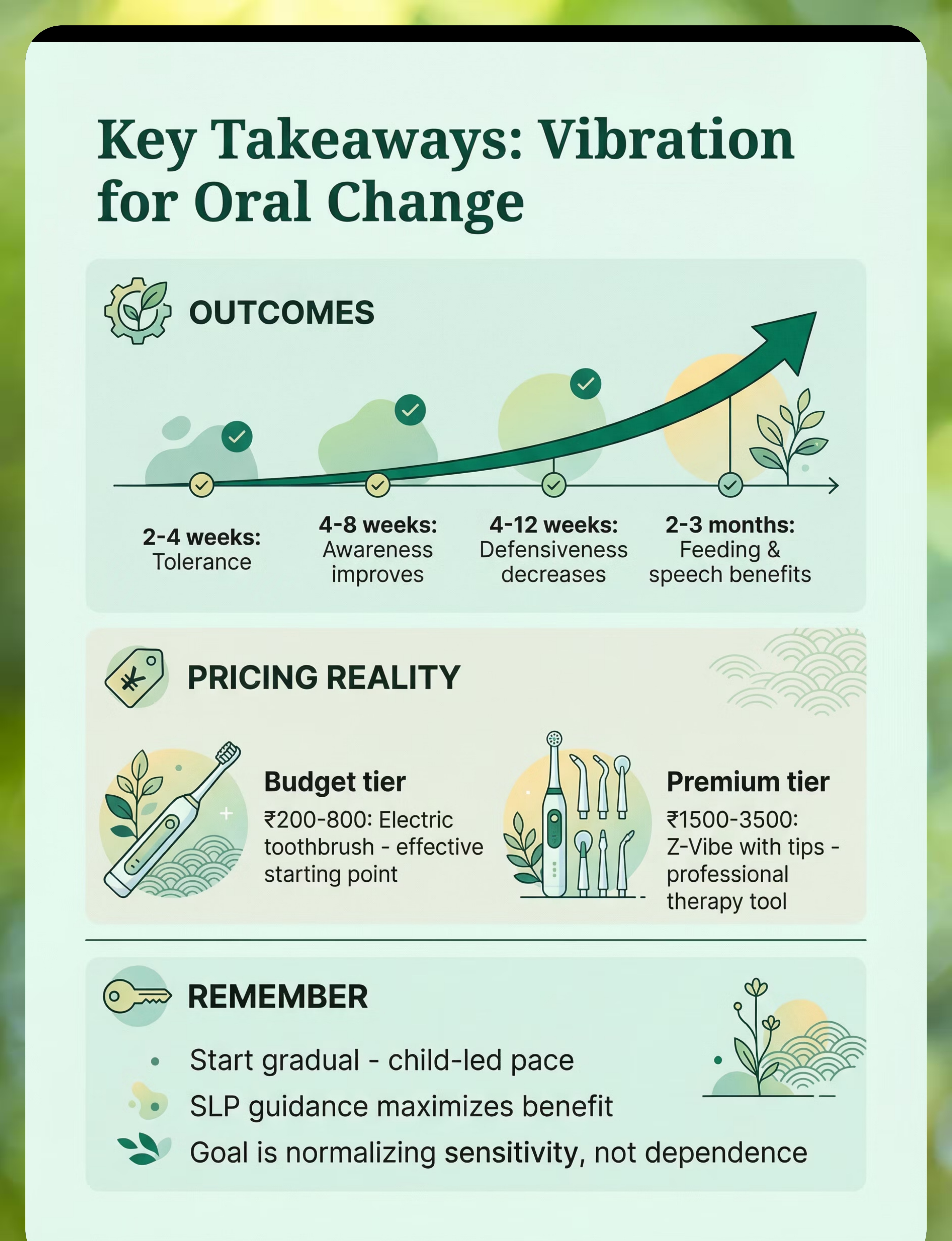
Tolerates Oral Vibration
Child accepts vibrating tool near or in mouth area with gradually decreasing resistance
2-4 weeks
Oral Defensiveness Decreases
Noticeable reduction in gagging, avoidance, and negative reactions to oral touch
4-12 weeks
Oral Awareness Improves
Better recognition of food location, reduced pocketing, improved oral control
4-8 weeks
Muscle Activation Improves
Stronger, more coordinated oral movements for eating and speaking
4-8 weeks
Feeding/Speech Benefits Seen
Functional improvements in daily eating and communication activities become evident
2-3 months

Remember: Progress is rarely linear. Some weeks show rapid gains, others plateau. Consistency matters more than perfection. Celebrate small victories along the way.
vibrating-oral-tools therapy material
Is This Right for My Child? (2-Minute Check)
These screening questions help identify whether vibrating oral tools match your child's specific needs. If you answer "yes" to 3 or more questions, this intervention likely offers strong fit for your situation.
Is your child's mouth hypersensitive (gags easily)?
If yes, this indicates: Desensitization approach with gradual vibration introduction could normalize oral sensitivity
95% confidence
Does your child seem unaware of food in their mouth?
If yes, this indicates: Stimulation approach with vibration could increase oral awareness and improve safety
90% confidence
Does your child have weak oral muscles for eating/speech?
If yes, this indicates: Vibration for muscle activation could support strength building and coordination
88% confidence
Is feeding or toothbrushing very difficult?
If yes, this indicates: Oral sensory work with vibrating tools may ease these daily care challenges
85% confidence

Assessment Note: 3+ "yes" answers = strong fit for vibrating oral tool intervention. Even one strong "yes" may warrant consultation with an SLP specializing in oral motor therapy.
Usage Guide
vibrating-oral-tools therapy material
Guidelines for Use
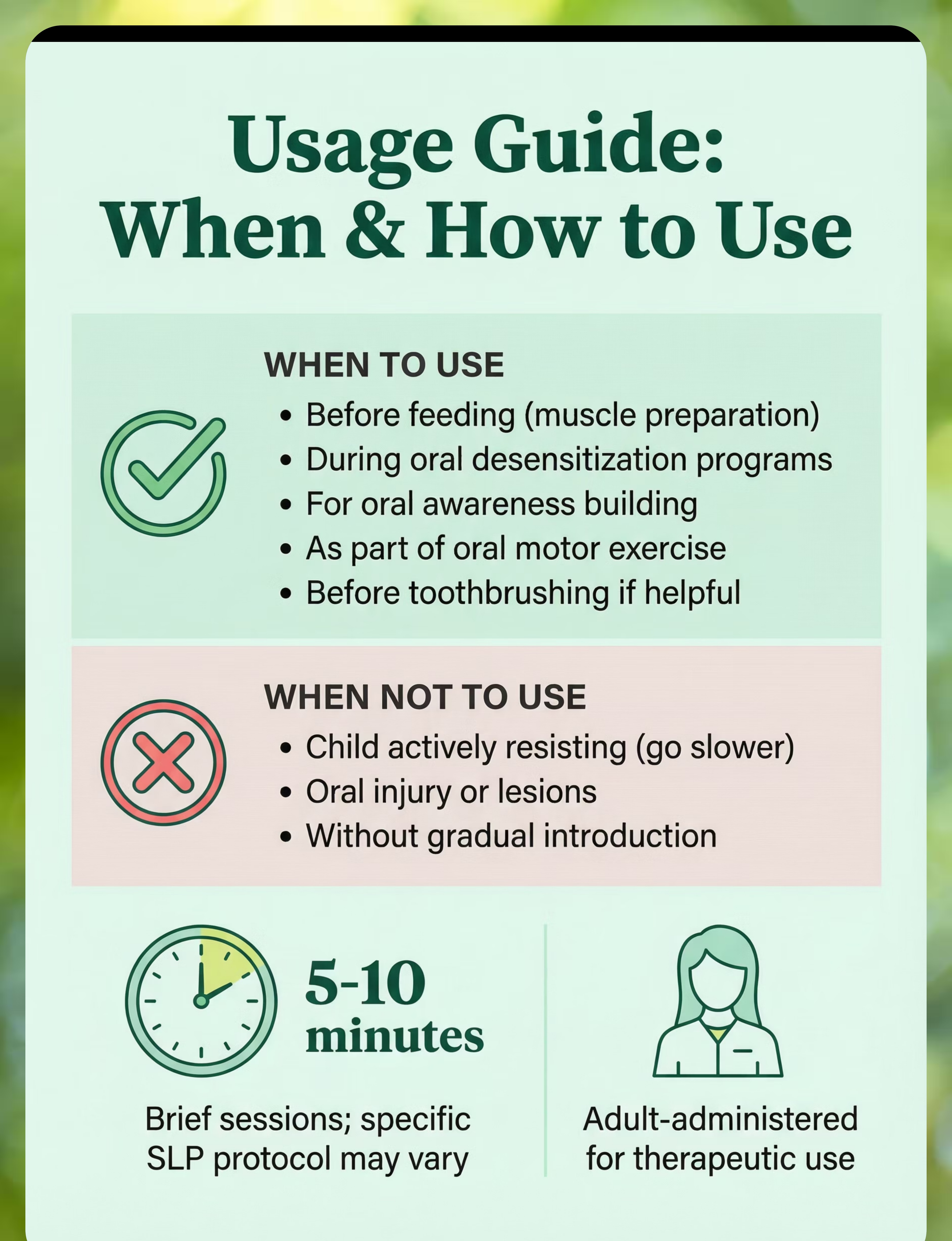
When to Use
Scenario
Guidance
Before feeding
For oral muscle preparation and readiness
Oral desensitization
During structured desensitization programs
Low oral awareness
For building oral awareness in children with low tone
SLP-prescribed routines
As part of oral motor exercise routines
Before toothbrushing
If vibration helps acceptance
When NOT to Use
Scenario
Guidance
Active resistance
Child actively resisting (go slower, build trust first)
Oral injury/sores
Presence of oral injury, sores, or lesions
Without gradual introduction
Without proper gradual introduction protocol

Supervision by Age
Age Range
Supervision Level
Notes
All ages
Adult-administered
For therapeutic oral motor use, always supervised and applied by trained adult
Older children/teens
May self-use for oral care
Only for toothbrushing purposes, not therapeutic vibration tools without guidance

Duration & Settings
Typical Duration: Brief sessions of 5-10 minutes for home use. Your Speech-Language Pathologist may prescribe specific protocols with different timing based on individual therapeutic goals and response.
Home
Clinic
Safety First
vibrating-oral-tools therapy material
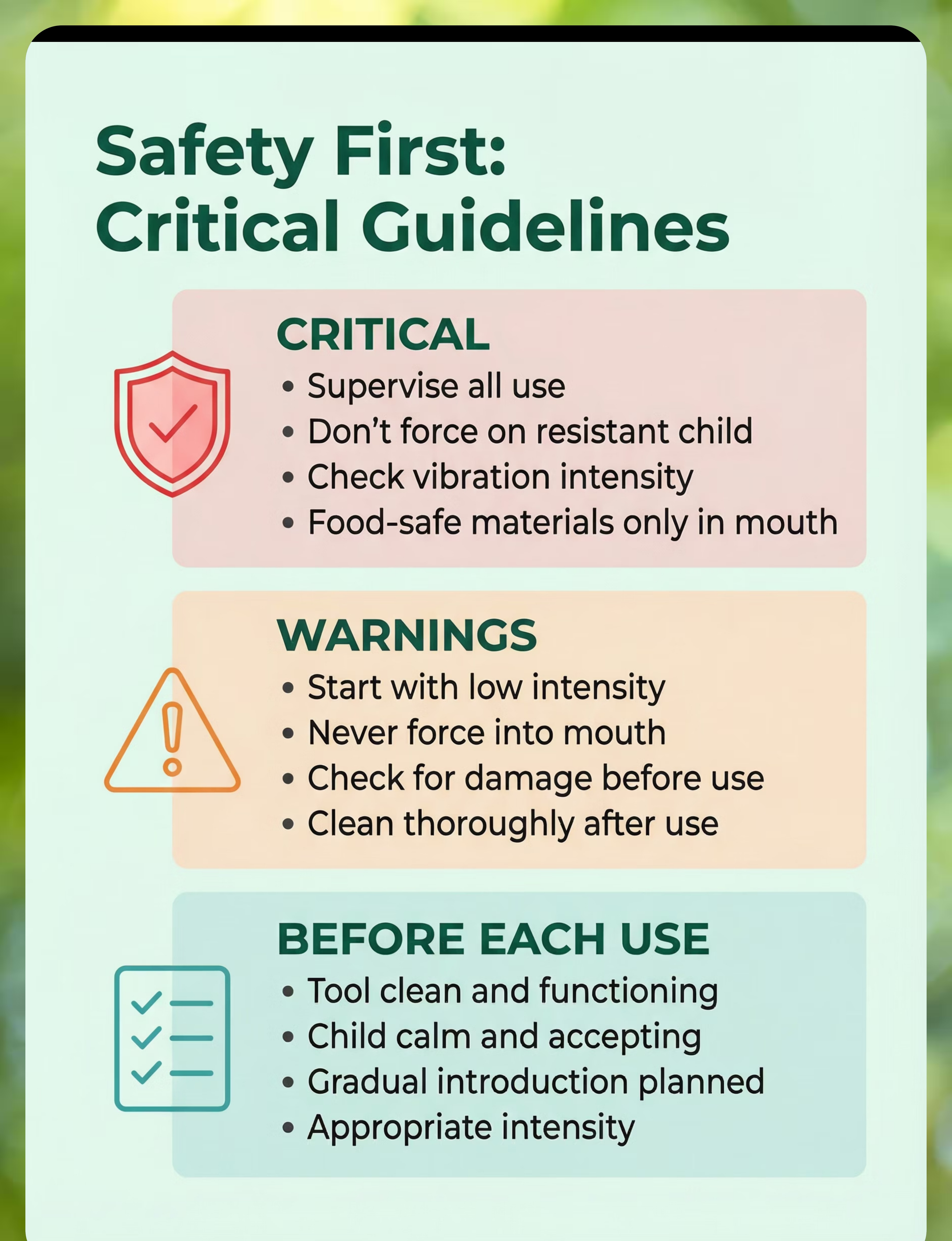
Critical Safety
  • Supervise all therapeutic use carefully
  • Never force vibration on a resistant child
  • Check vibration intensity before each use
  • Use only food-safe materials in mouth area
Important Warnings
  • Always start with low intensity settings
  • Never force any oral tool into mouth
  • Inspect tools for damage before each use
  • Clean thoroughly after every session
Contraindicated Conditions
  • Forcing vibration on actively resistant child
  • Active oral injuries, lesions, or inflammation
  • Unsupervised therapeutic use by untrained persons

Safety Checklist
Before Use
  • Tool clean and functioning properly
  • Child calm and accepting
  • Gradual introduction plan in place
  • Appropriate intensity level selected
During Use
  • Following child's cues and responses
  • Adhering to appropriate duration
  • Not forcing any contact
  • Creating positive experience
Signs of Success
  • Increasing tolerance over sessions
  • Decreased defensiveness behaviors
  • Improved oral awareness
  • Positive associations forming
Common Questions (Honest Answers)
vibrating-oral-tools therapy material
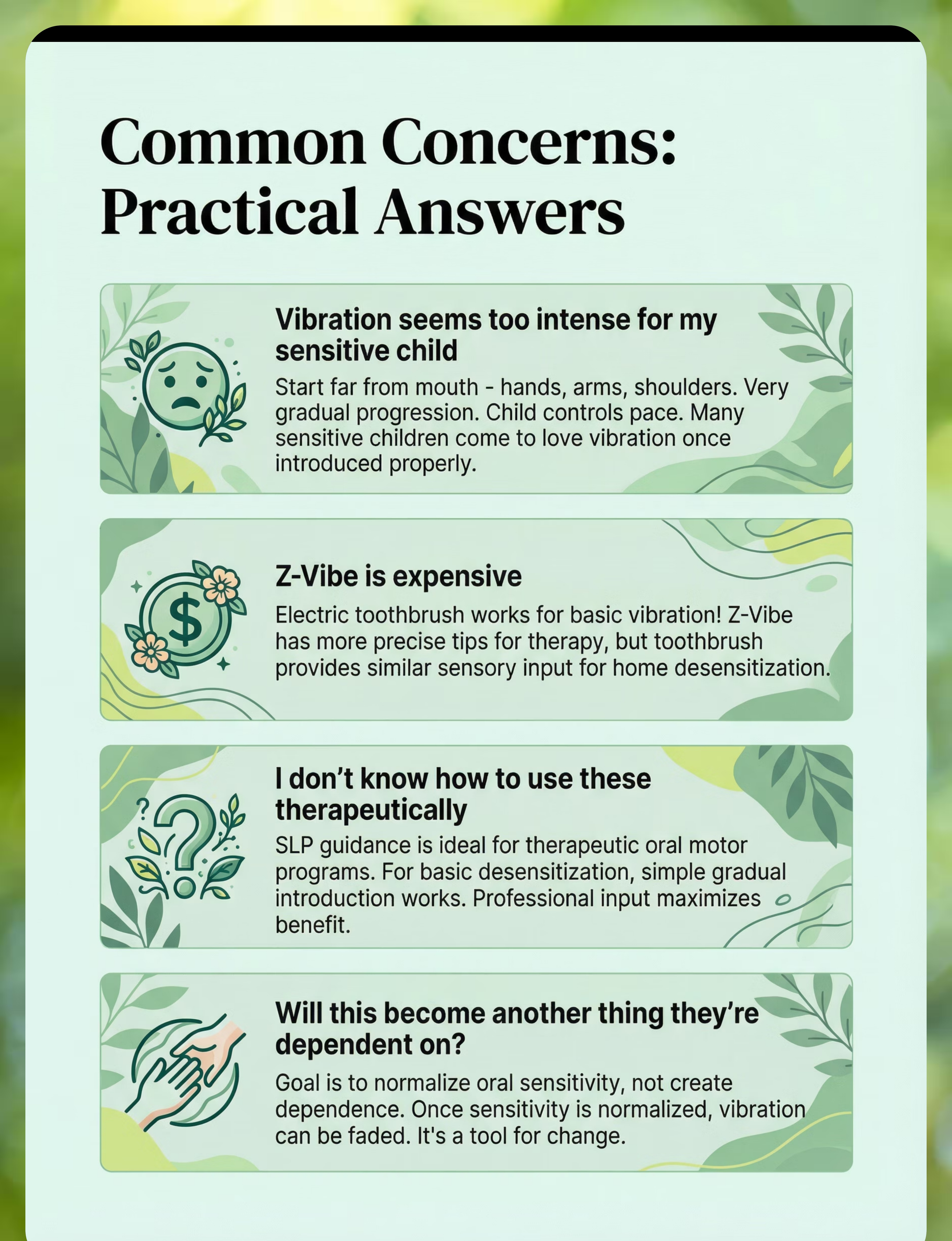
Q: Vibration seems too intense for my sensitive child
A: Start far from the mouth—on hands, arms, and shoulders. Progress very gradually over many sessions. Let your child control the pace completely. Many hypersensitive children come to love vibration once introduced properly through systematic desensitization.
Try this: Start distal; child-led pace; gradual approach over weeks, not days.
Q: Z-Vibe is expensive—is it worth it?
A: An electric toothbrush works wonderfully for basic oral vibration! The Z-Vibe has more precise tips designed for specific oral motor therapy, but a quality electric toothbrush provides similar sensory input for home desensitization at a fraction of the cost.
Try this: Start with electric toothbrush (₹200-800). Upgrade to Z-Vibe if deeper therapeutic work is needed.
Q: I don't know how to use these therapeutically
A: Speech-Language Pathologist guidance is ideal for comprehensive therapeutic oral motor programs with specific goals. For basic desensitization, simple gradual introduction following child's tolerance works well. Professional input maximizes benefit and ensures proper technique.
Try this: Consult SLP for therapeutic protocol; basic home desensitization is parent-accessible with guidance.
Q: Will this become another thing they're dependent on?
A: The goal is to normalize oral sensitivity, not create dependence on tools. Once oral sensitivity is normalized through consistent intervention, vibration use can be gradually faded. This is a tool for neurological change, not permanent compensatory support.
Try this: View as intervention tool that fades as nervous system adapts and normalizes.
vibrating-oral-tools therapy material
Investment Guide
Vibrating oral tools are available at multiple price points, making oral sensory intervention accessible to families with various budgets. Both budget and premium options provide valuable therapeutic benefit.
Budget Option
Electric toothbrush for oral sensory work
₹200-500
Widely available
Highly effective for basic desensitization. Excellent starting point. Dual purpose for oral care and sensory work.
Premium Option
Z-Vibe with multiple specialized tips
₹1,500-3,500
ARK Therapeutic Z-Vibe, TalkTools
Professional-grade precision. Targeted oral motor work. Various attachments for different therapeutic goals.
Entry Point (₹200)
Basic vibrating massager or toothbrush for initial exploration and to gauge child's initial comfort.
Recommended Start (₹500)
A quality electric toothbrush offers an excellent balance of cost-effectiveness and therapeutic value for most families.
Maximum Investment (₹3,500)
Professional Z-Vibe systems offer comprehensive tip sets for highly targeted and advanced oral motor therapy.
Step 1: Initial Assessment
Begin with an electric toothbrush (₹300-800) to carefully assess your child's initial response to oral vibration.
Step 2: Observe & Consult
If you observe a positive response and your Speech-Language Pathologist (SLP) recommends more targeted work.
Step 3: Consider Upgrade
Consider upgrading to a professional Z-Vibe system for specialized, precision-based oral motor therapy goals.
Where to Buy in India
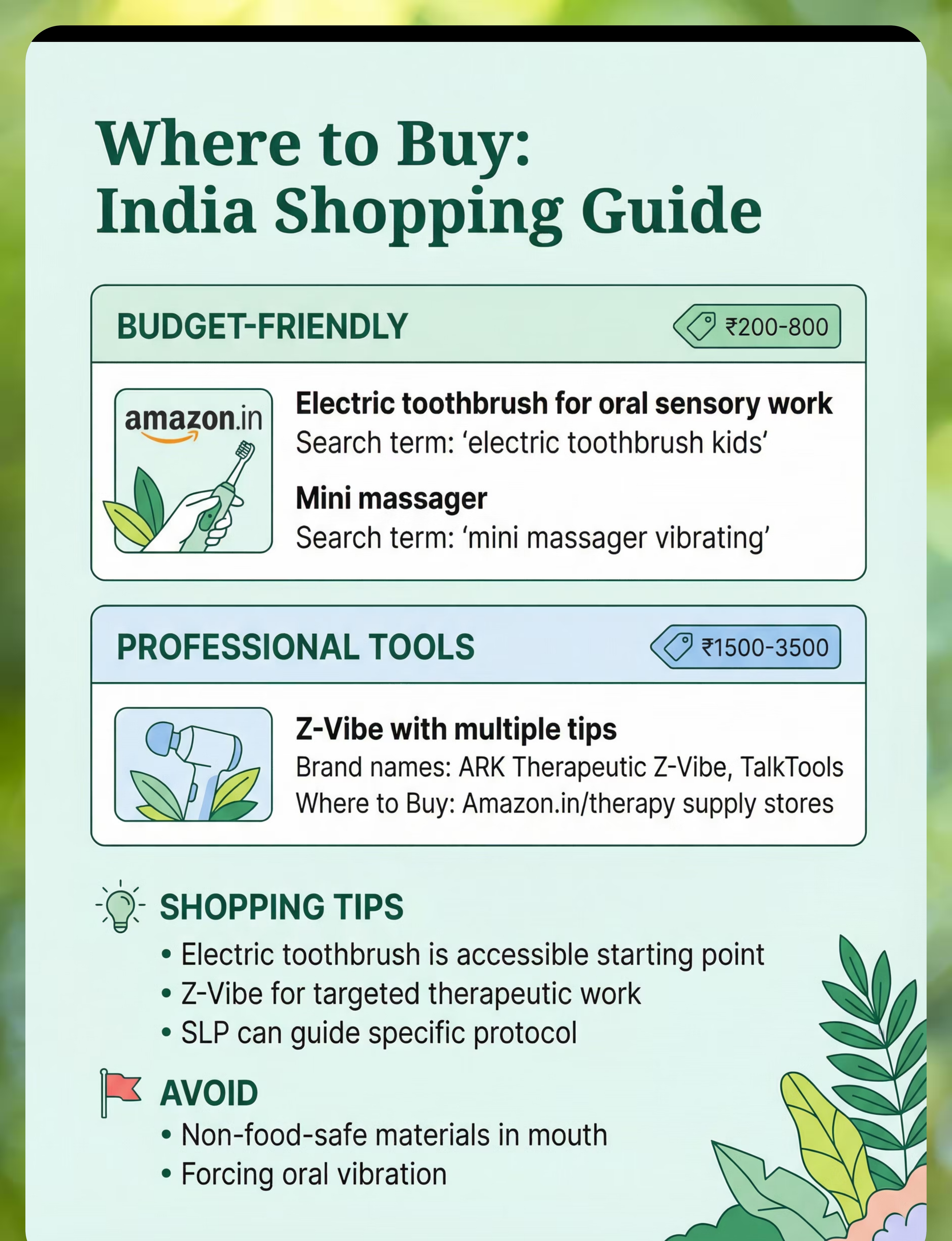
Availability: Vibrating toothbrushes and mini massagers are commonly available. Professional Z-Vibe tools have limited availability but can be sourced through specialized therapy supply channels.
Platform
Search Terms
Price Range
Amazon.in
"Z-Vibe oral motor"
₹1,500-3,000
Amazon.in
"electric toothbrush kids"
₹300-800
Therapy supply stores
"vibrating oral motor tool"
₹1,000-2,500
Amazon.in
"mini massager vibrating"
₹200-500

Buying Tips
  • Electric toothbrush is most accessible starting point
  • Z-Vibe recommended for targeted therapeutic work
  • Get varied tips for different oral areas if using Z-Vibe
  • Start with child's preferred vibration intensity
  • Consult SLP for guidance on specific protocol
Red Flags
  • Vibration intensity too strong for child's tolerance
  • Non-food-safe materials used for oral tips
  • Forcing oral vibration before readiness
  • Using without proper gradual introduction protocol
DIY Alternative
Feasibility: Low-Medium | Cost Savings: Variable depending on approach
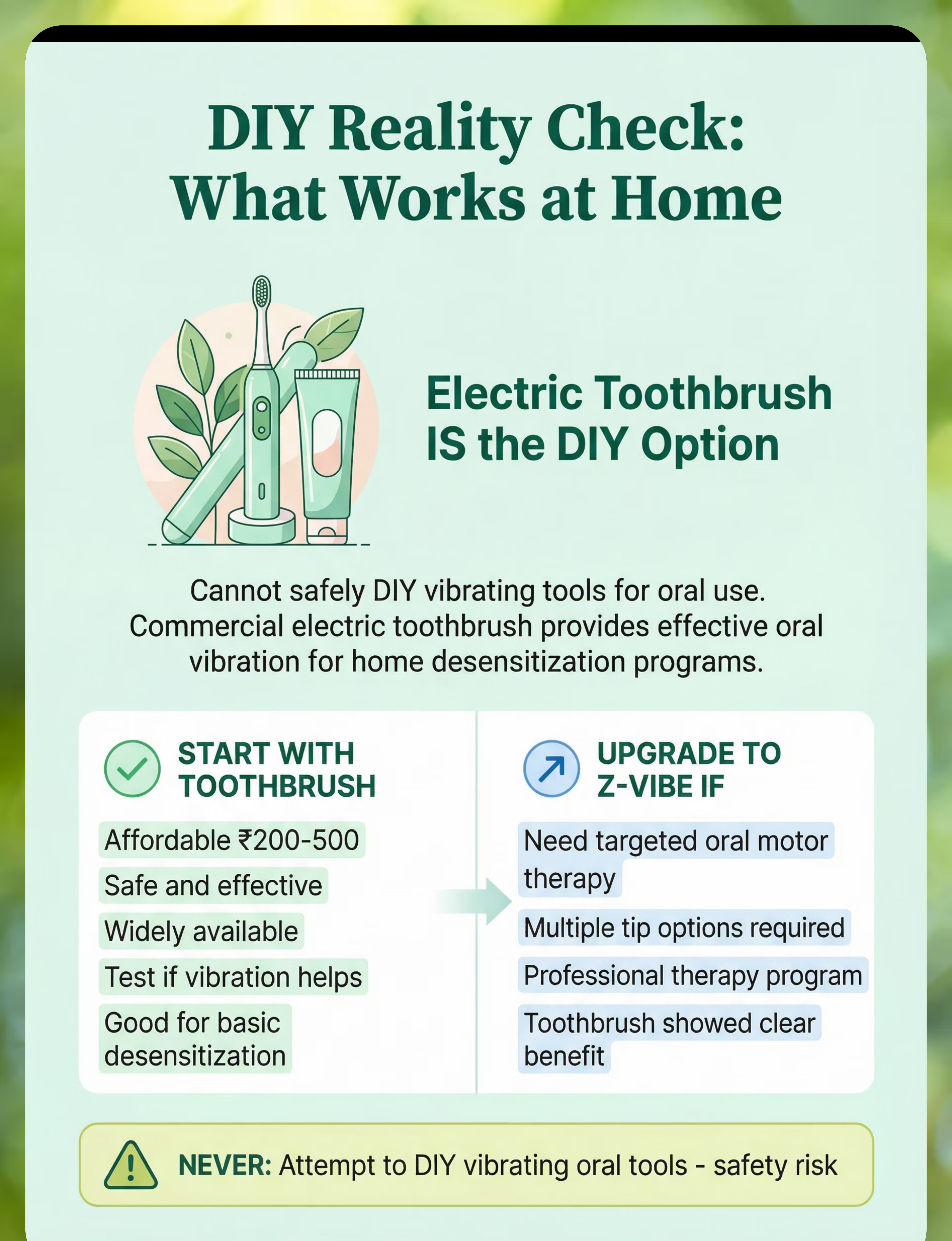
The Reality of DIY Vibrating Oral Tools
An electric toothbrush essentially is the DIY option for vibrating oral motor work. You cannot safely DIY create vibrating tools specifically for oral use—attempting this poses safety risks and won't replicate therapeutic design features.
Materials You Need
Commercial electric toothbrush (child-safe, appropriate intensity, easy to clean). This is your accessible, safe "DIY" approach to oral vibration therapy.
Simple Implementation Steps
  1. Purchase quality electric toothbrush designed for children
  1. Use toothbrush for basic oral vibration introduction
  1. Start away from mouth, gradually work closer following child's lead
  1. If toothbrush vibration helps, consider Z-Vibe for more targeted therapeutic work

DIY vs Commercial Comparison
Aspect
When to Use Electric Toothbrush
When to Invest in Z-Vibe
Best for
Basic desensitization, initial exploration, budget-conscious families
Targeted oral motor therapy, specific muscle work, professional therapy programs
Tradeoffs
Cannot replicate Z-Vibe's precise tip options for different oral areas. Less targeted than professional tools but very effective for general oral vibration input.
Higher cost but provides precision needed for comprehensive oral motor therapy protocols

Preview of vibrating oral tools Therapy Material

Below is a visual preview of vibrating oral tools therapy material. The pages shown help educators, therapists, and caregivers understand the structure and content of the resource before use. Materials should be used under appropriate professional guidance.

Page 1
Page 2
Page 3
Page 4
Page 5
Page 6
Page 7
Page 8
Page 9
Page 10
Page 11
Page 12
Page 13
Page 14
Page 15
Page 16
Page 17
Page 18
Page 19
Page 20
Link copied!
Integrated Support for Your Child's Oral Motor Journey
Navigating oral sensory challenges requires a holistic approach. Beyond the tools themselves, a robust support system — encompassing progress tracking, complementary resources, digital aids, and professional guidance — is crucial for sustainable success. This integrated strategy empowers you to optimize therapy outcomes and foster your child's development.
Track Progress Effectively
Consistent monitoring is key to understanding your child's response to oral vibration therapy. Maintain a simple journal or use a checklist to document observations: note their tolerance, changes in feeding behaviors, speech clarity, and overall comfort. Capture both positive shifts and any challenges. This data will be invaluable for your therapy team to adjust and personalize the intervention plan.
Complementary Tools & Resources
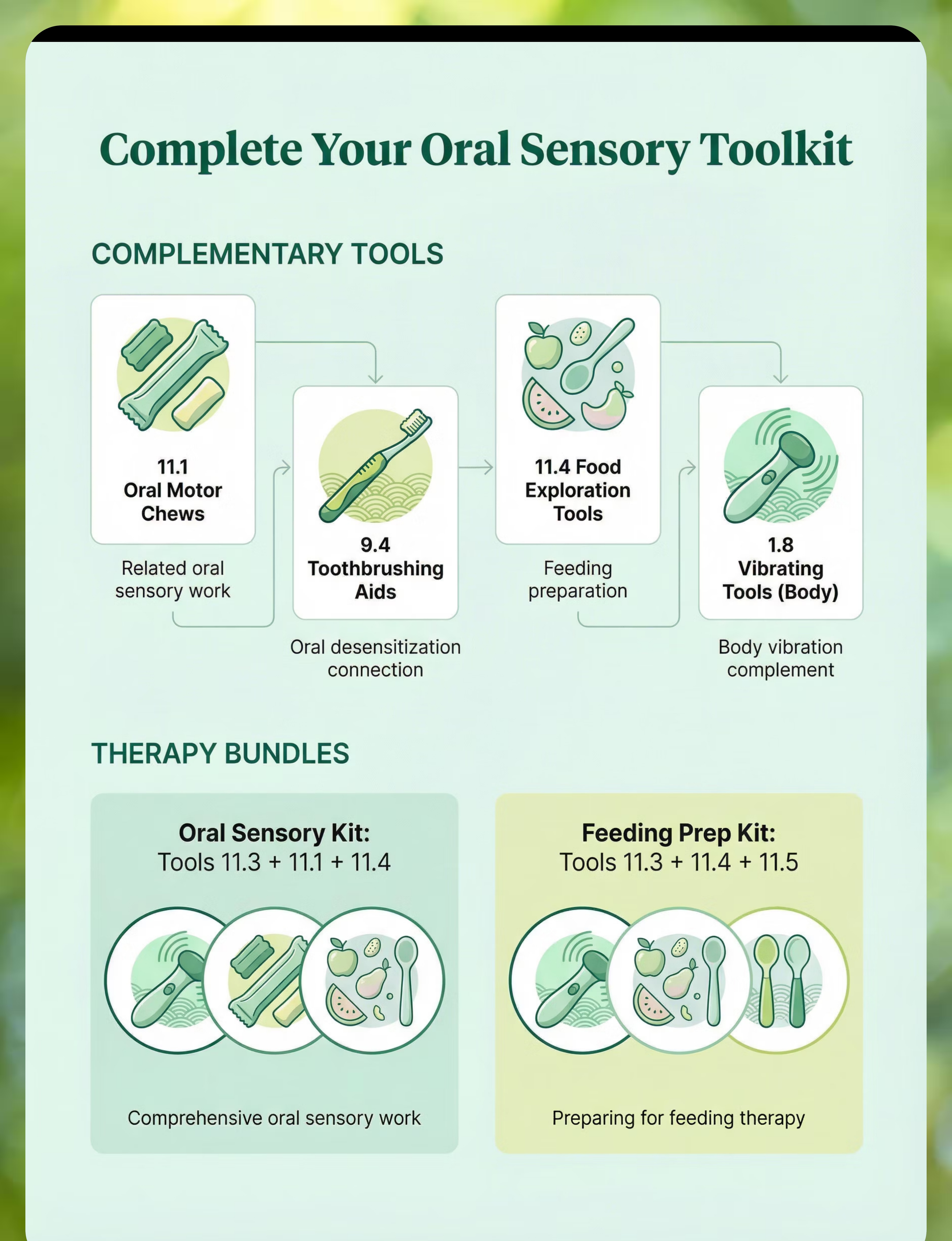
Oral motor tools often thrive when integrated into a broader sensory diet or feeding therapy program. Explore other therapeutic approaches such as oral motor exercises, structured feeding protocols, or sensory regulation strategies. Consulting with your Speech-Language Pathologist or Occupational Therapist can help identify additional tools like chewelry, textured spoons, or specific sensory brushes that complement the vibrating tools effectively.
Digital & Community Support
Leverage digital resources for information and connection. Search for reputable online communities, forums, or social media groups dedicated to oral motor challenges or sensory processing. Apps designed for developmental tracking can also be helpful. When using search engines (SEO), refine your queries with terms like "oral motor therapy India," "sensory feeding solutions," or "pediatric SLP resources" to find relevant local support and information.
Sustained Guidance & Expertise
Ongoing professional support is paramount. Maintain regular check-ins with your Speech-Language Pathologist, Occupational Therapist, or developmental pediatrician. They can provide personalized troubleshooting, adapt therapy goals, and offer continued guidance as your child progresses. Don't hesitate to seek further assessment if new concerns arise or if you feel the current approach isn't yielding the desired results.