


Waiting & Queue Supports: Wait tolerance and engagement system
SpEd + OT
Core Kit
Rank #1
Moderate-Strong Evidence
Multiple times weekly
₹0–1,000
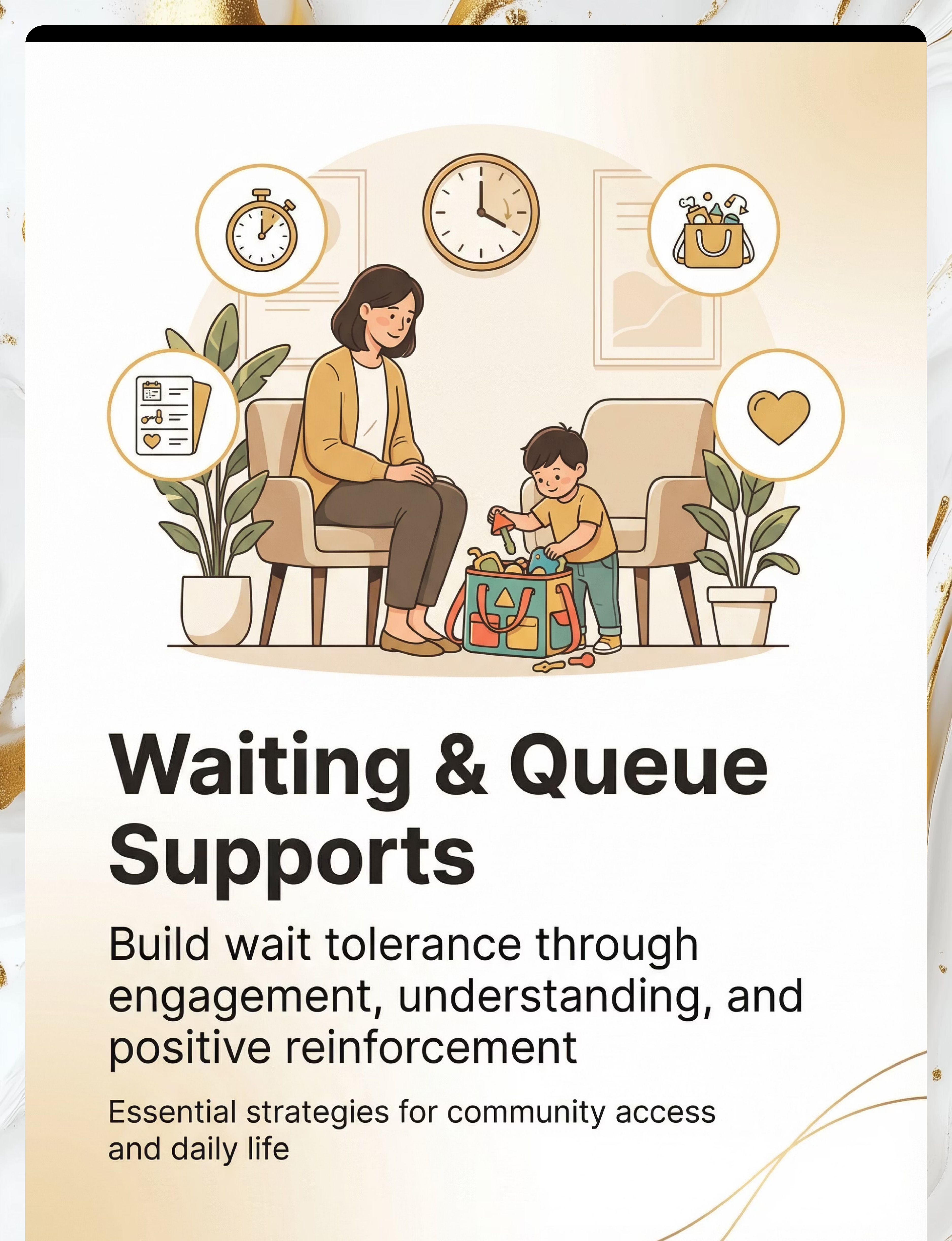
Building wait tolerance through engagement, visual time awareness, and reinforcement—opening doors to community access for children with autism and developmental differences.
Who This Helps
Wait Tolerance
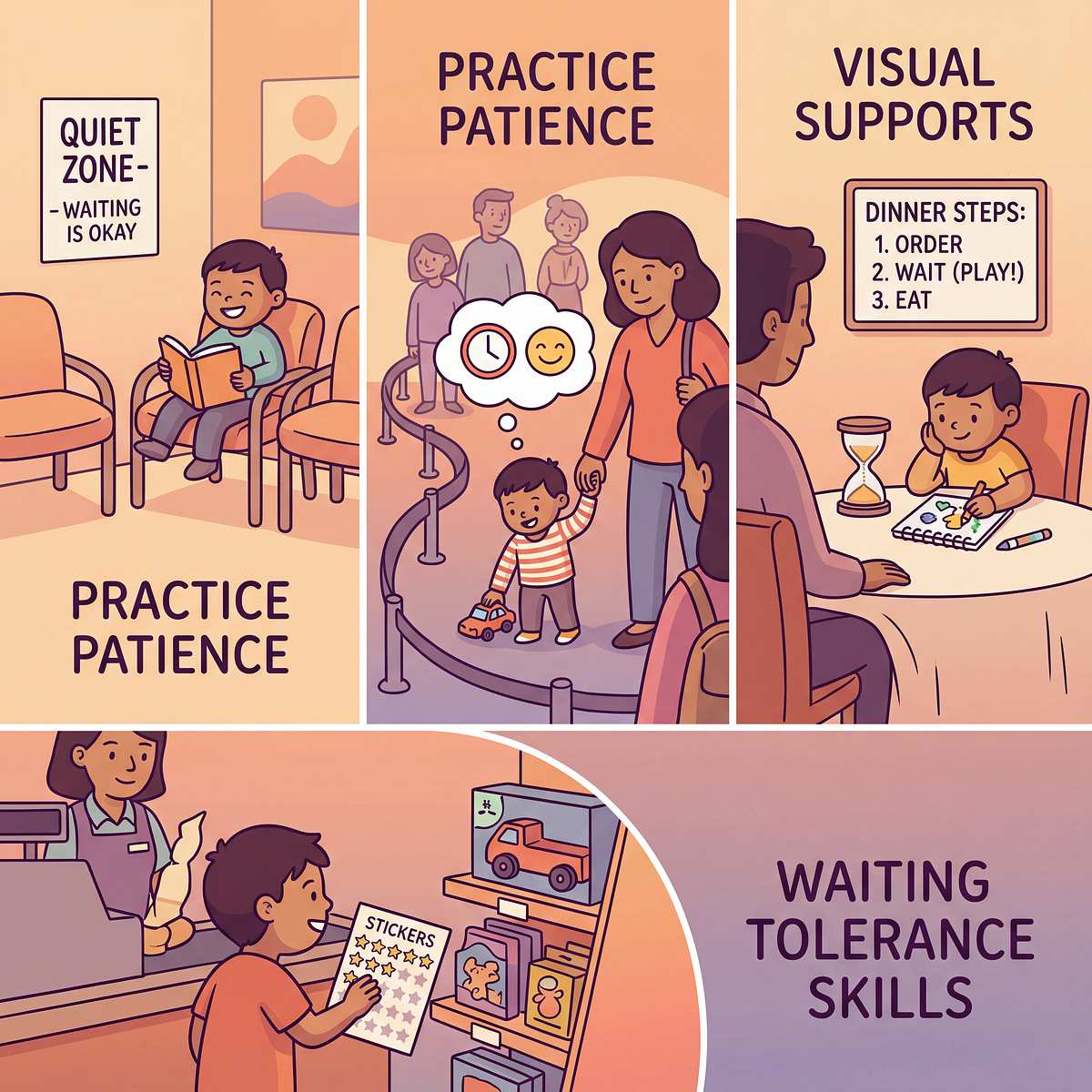
Supports successful waiting through engagement activities, visual supports, time awareness tools, and reinforcement systems that make abstract time concrete and waiting achievable.
Target Areas
Builds critical skills in wait tolerance, engagement, time awareness, self-regulation, flexibility, and community access—opening up real-world experiences.
Best For
Children ages 2+ across all settings: waiting rooms, queues, restaurants, stores, and any waiting situation. Essential for community participation and family inclusion.
Home
Clinic
School
Community
Does This Sound Familiar?
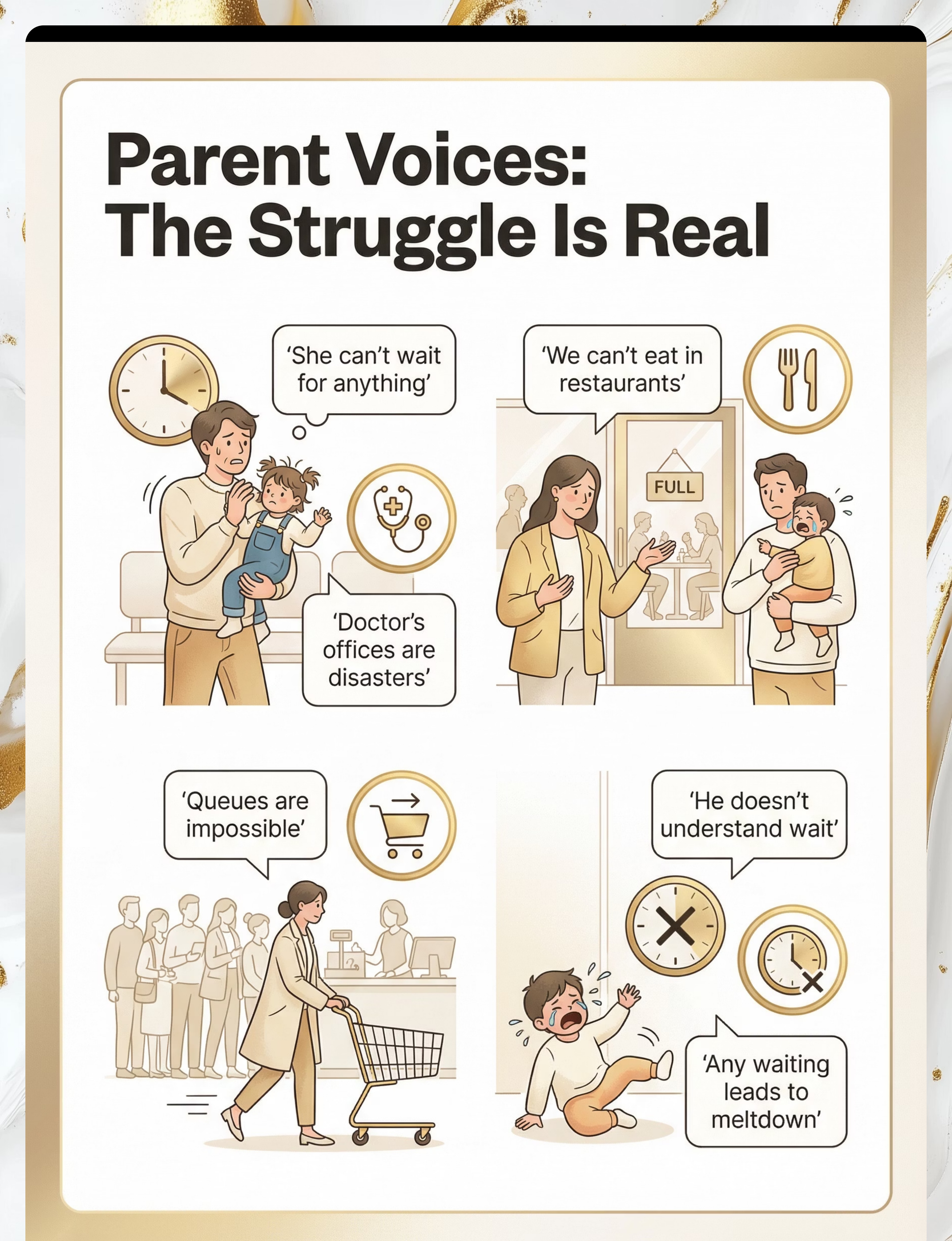
"She can't wait for anything. Every delay becomes a crisis. Doctor's offices are complete disasters. We're avoiding so many places now."
"Queues are impossible. He doesn't understand 'wait' at all. We can't eat in restaurants—he can't handle waiting for food to arrive."
"Any waiting leads to immediate meltdown. Time means nothing to him. Everything is urgent. We're becoming more isolated every day."
"I'm bored. How long? When is it my turn? I don't want to wait!"
You're not alone. These are common challenges for children with autism and developmental differences. Waiting involves abstract time concepts, unclear endpoints, and nothing to engage with—a perfect storm of difficulty. But with the right supports, waiting becomes possible.
A Day Without the Right Support
Morning Rush
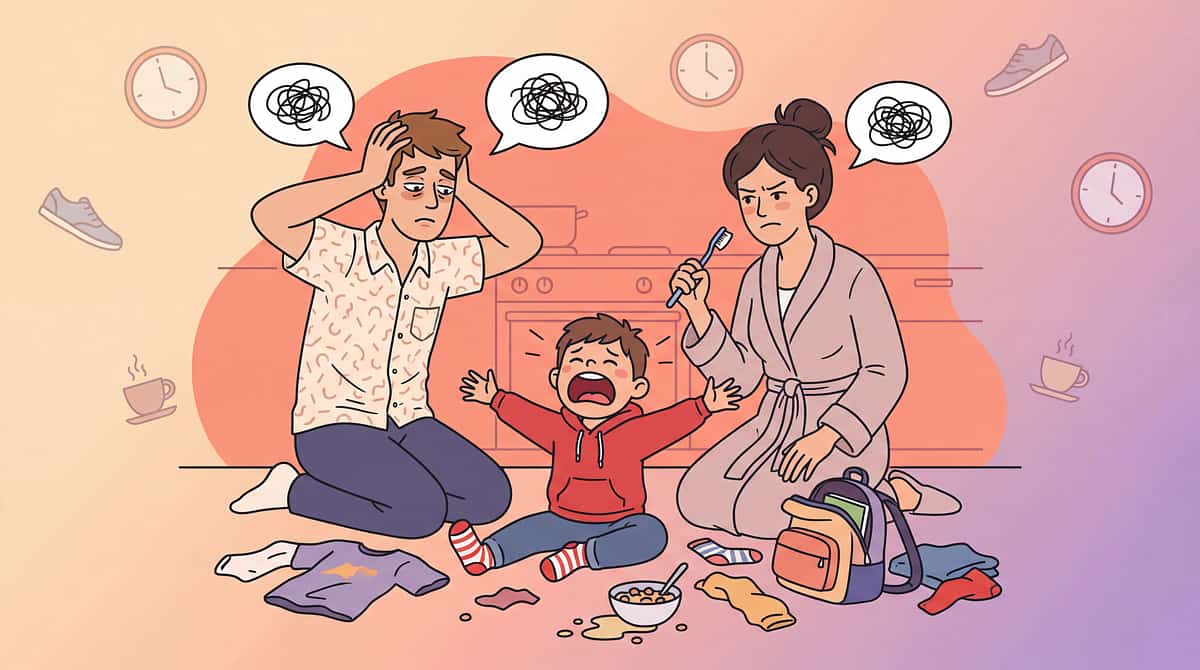
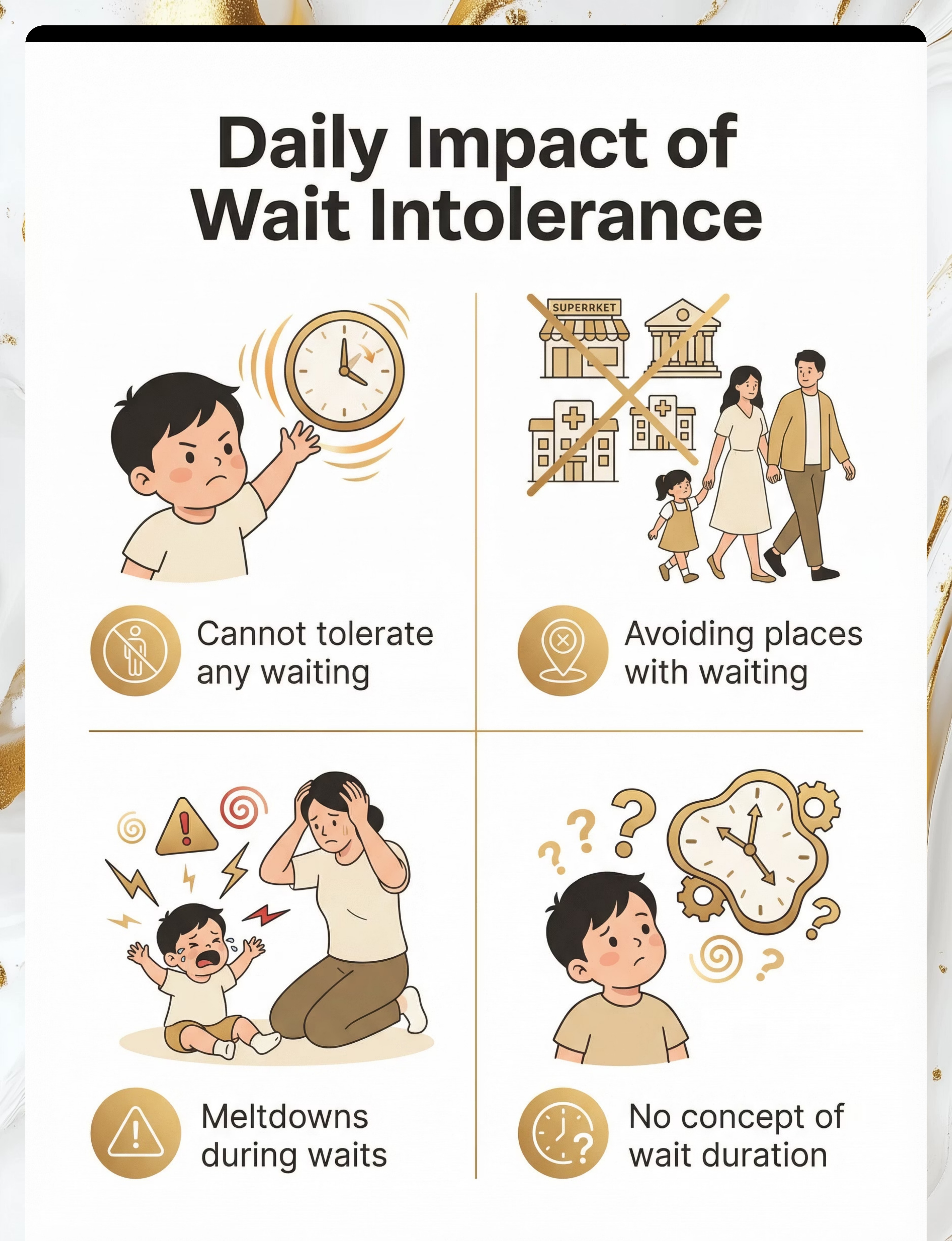
Cannot tolerate any waiting during morning routine. "Wait while I help your brother" means nothing. Immediate escalation.
Medical Appointments
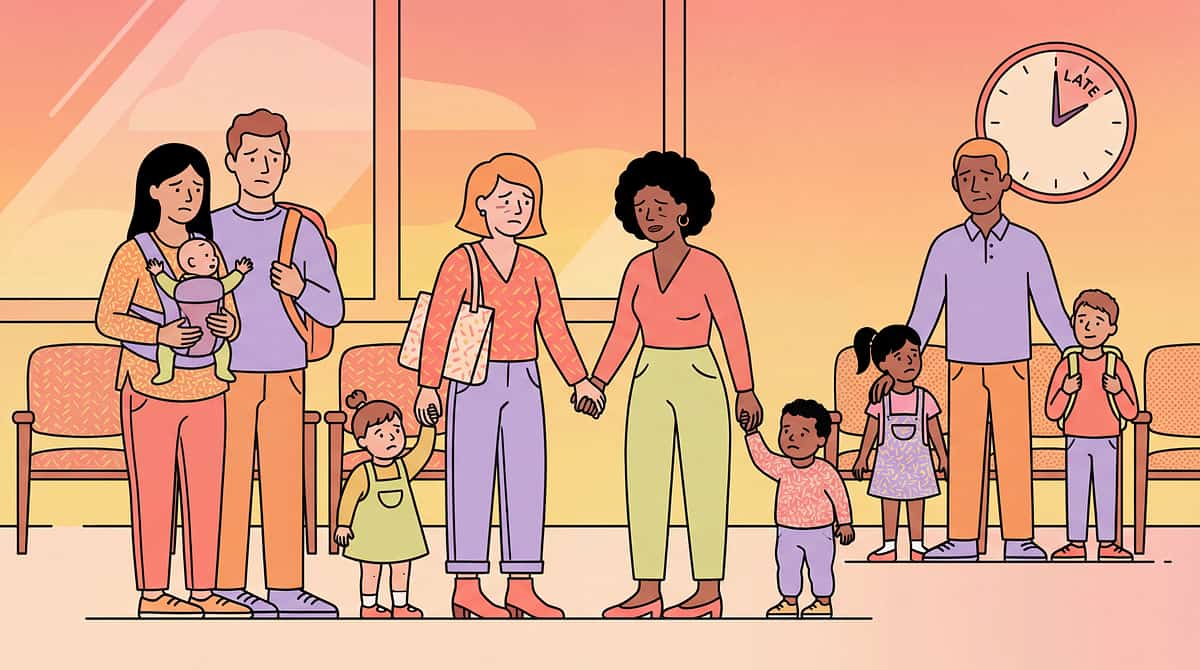
Waiting room disaster. No concept of how long. Nothing to do. Public meltdown. Family avoiding necessary medical care.
Community Outings
Queues impossible. Restaurants avoided. Can't wait for turn at playground. Social isolation growing.
Bedtime
Can't wait for parent to finish task. Every transition requires immediate attention. Exhausted family.
Without support, every waiting situation becomes a crisis. Time is abstract, endpoints unclear, engagement absent. The struggle is real, and it limits community access and family participation in everyday life.
The Science Behind It
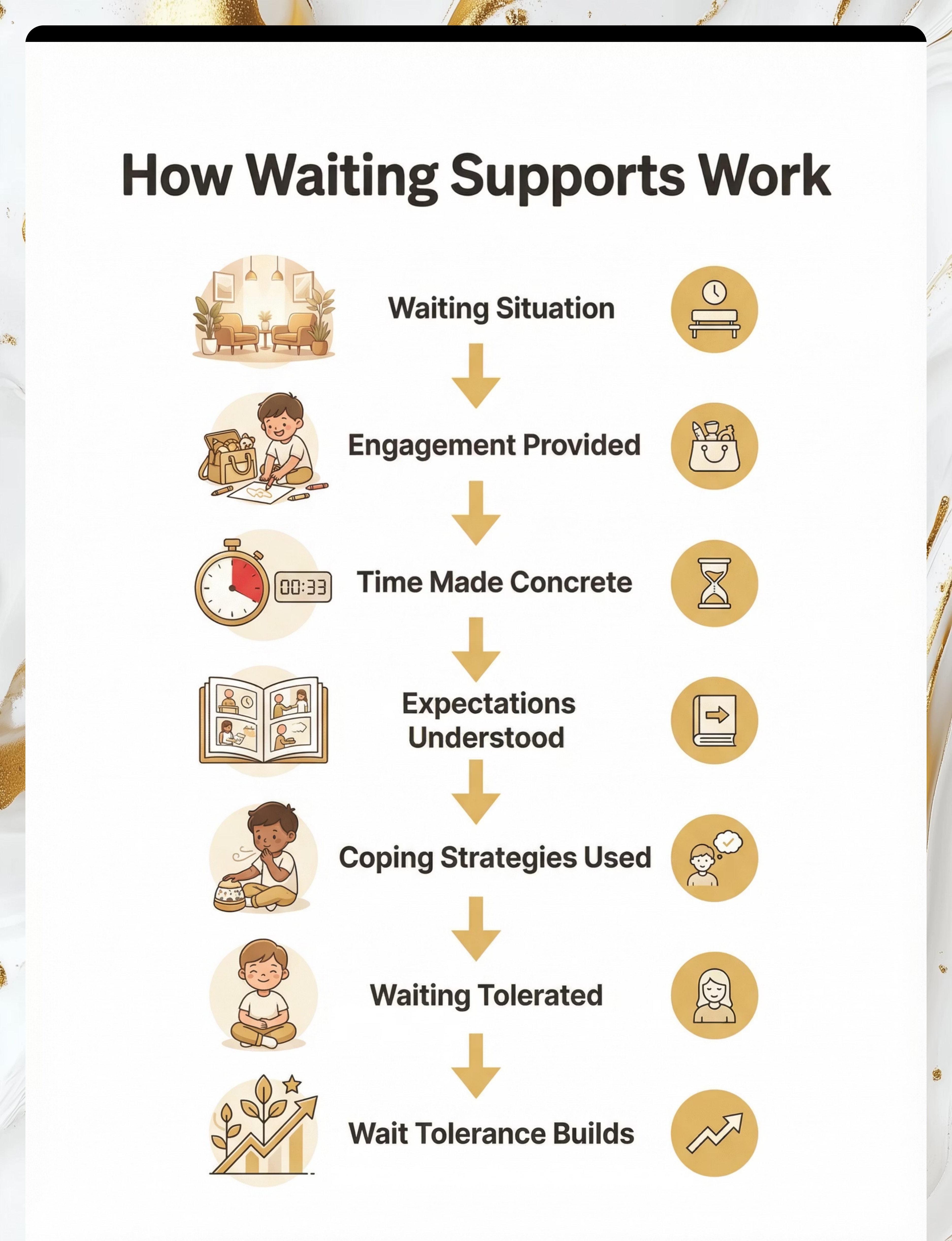
Waiting Situation Occurs
Child faces waiting period with unclear duration and nothing to do.
Engagement Provided
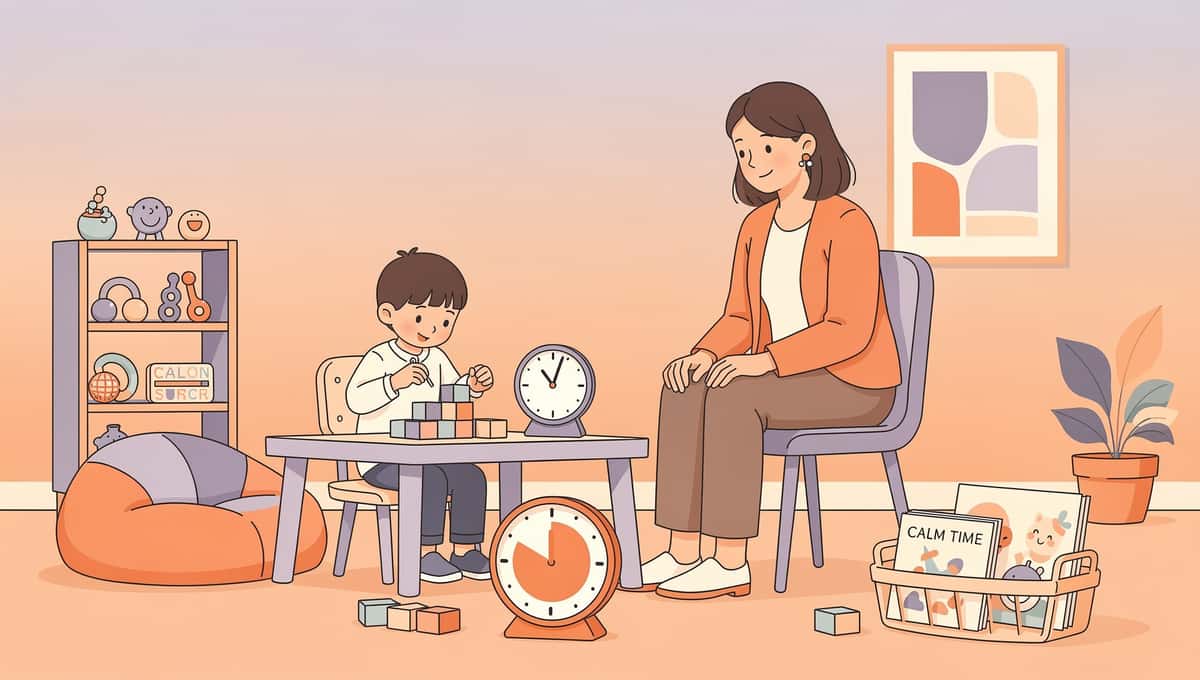
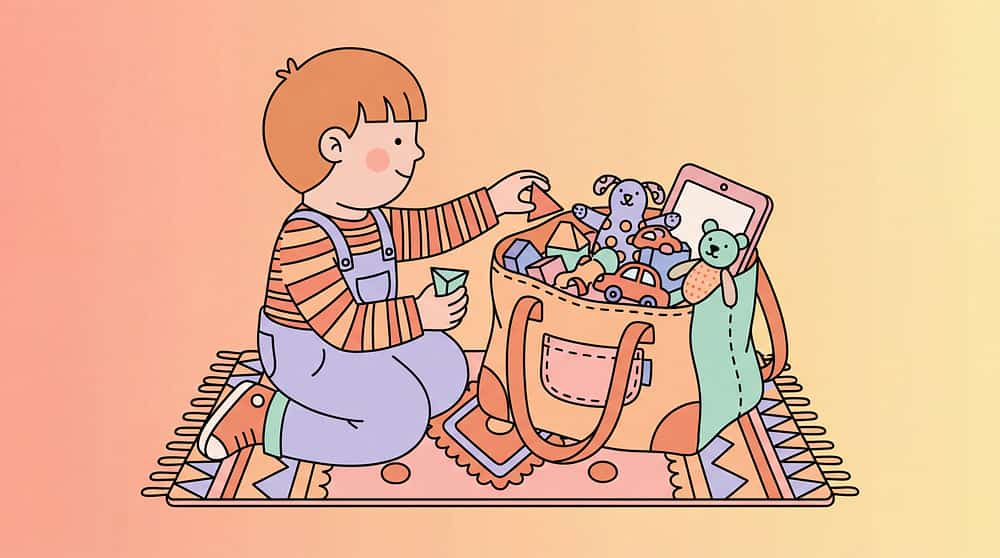
Busy bag activities engage attention and provide something meaningful to do.
Time Made Concrete
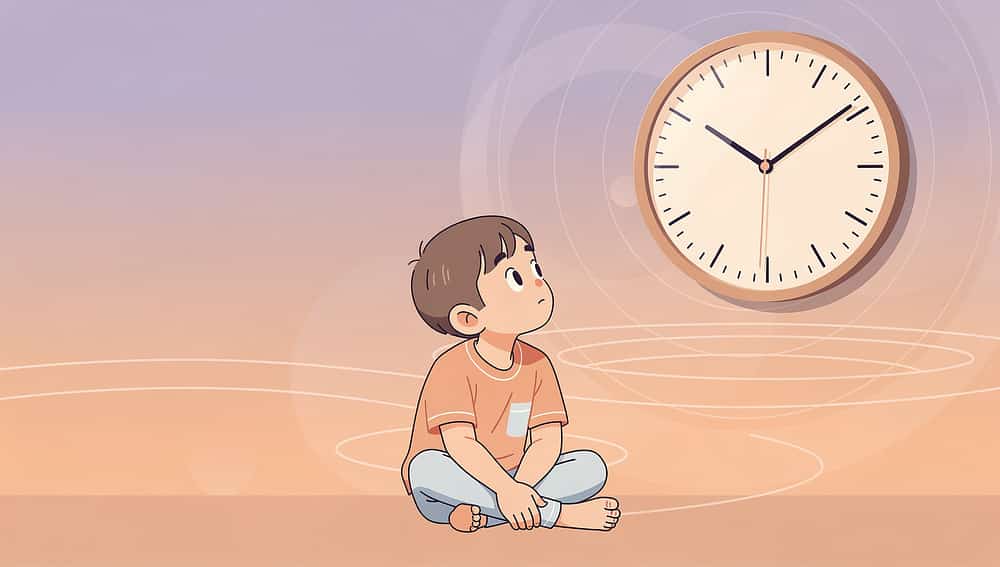
Visual timer shows time passing, making abstract concept concrete and endpoint clear.
Expectations Understood
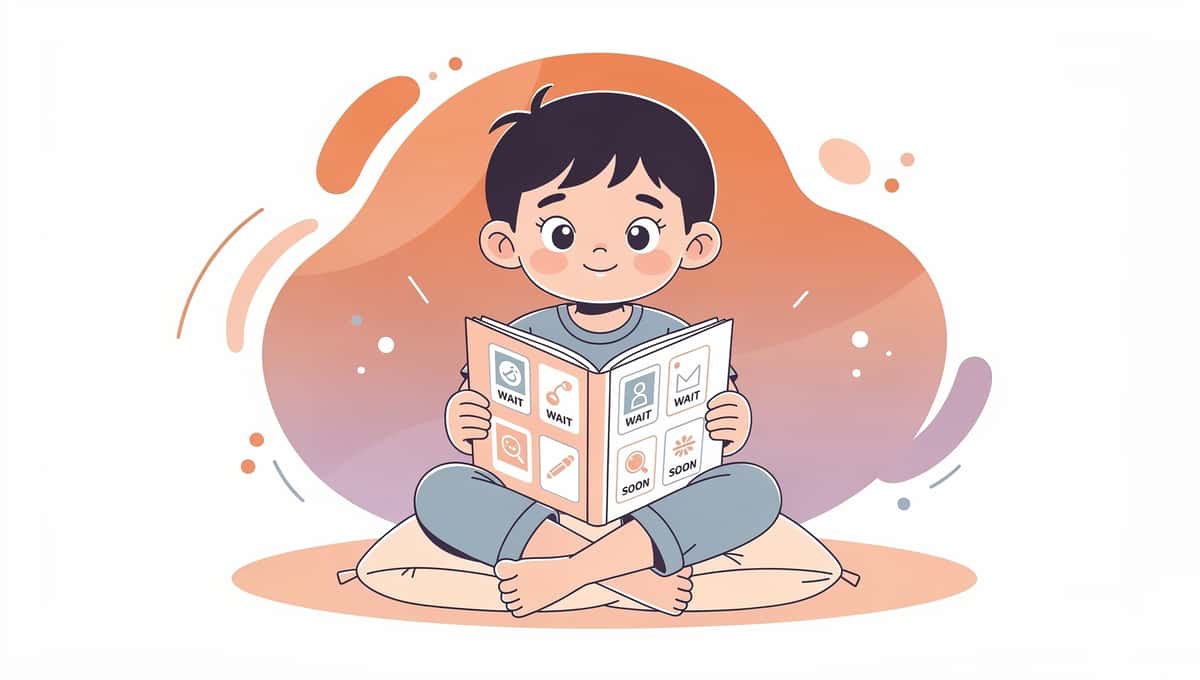
Visual supports and social stories clarify what waiting means and why.
Coping Strategies Used
Child uses activities, visuals, and regulation strategies to manage waiting.
Waiting Tolerated
Successful waiting experience with reinforcement builds confidence and skills.
Tolerance Builds Over Time
Repeated success with support gradually increases wait tolerance and independence.
Wait Tolerance
Engagement
Time Awareness
Self-Regulation
Flexibility
Community Access
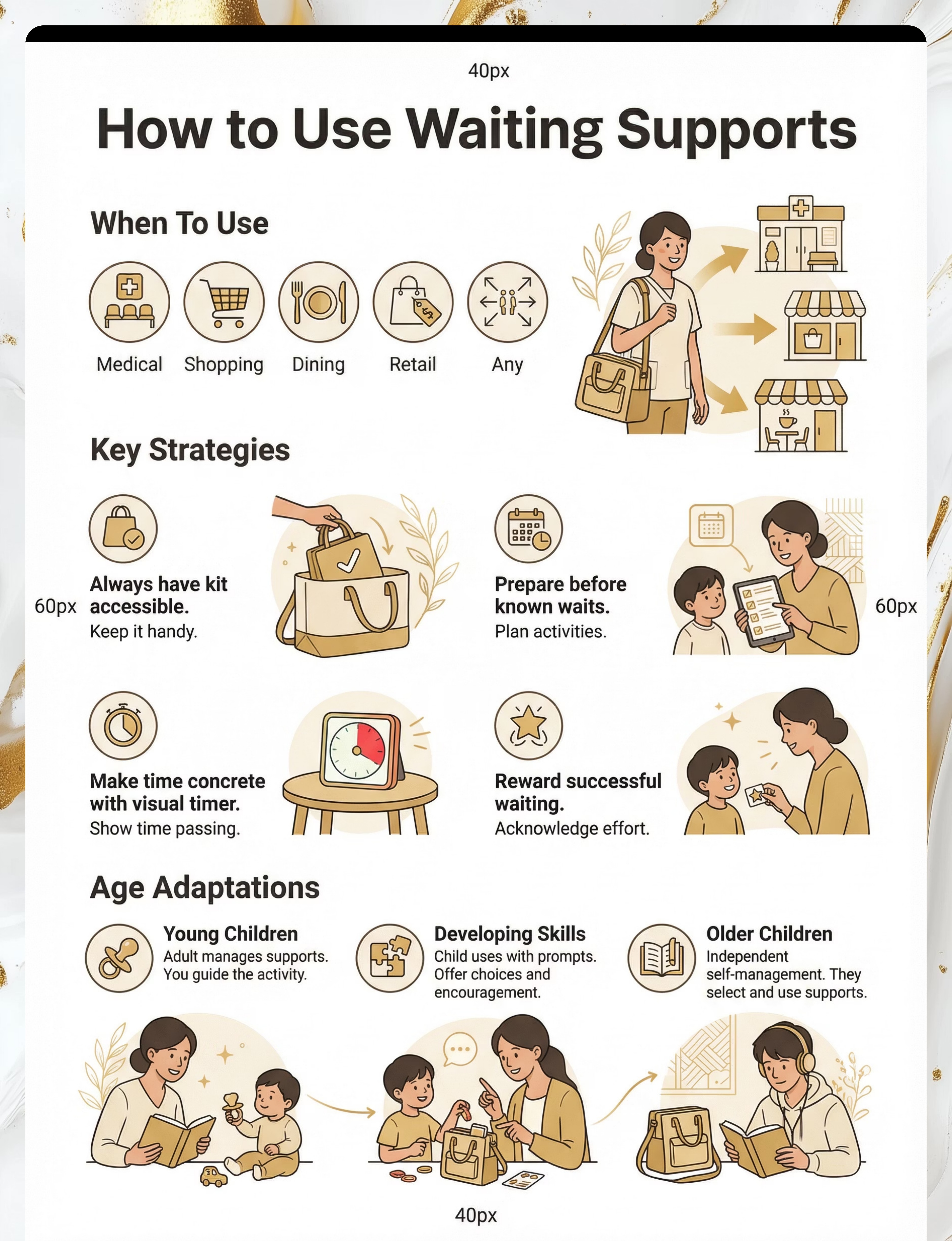
How to Use It Right
Always Have Waiting Kit Available
Keep kit packed and accessible in car or bag. Be prepared for unexpected waits. Make it part of standard outing preparation.
Prepare for Known Waits in Advance
Review social story before appointment. Prime child about upcoming wait. Set expectations clearly with visuals.
Make Time Concrete with Visual Timer
Show duration visually. Help child see time passing. Make abstract endpoint concrete and predictable.
Reward Successful Waiting
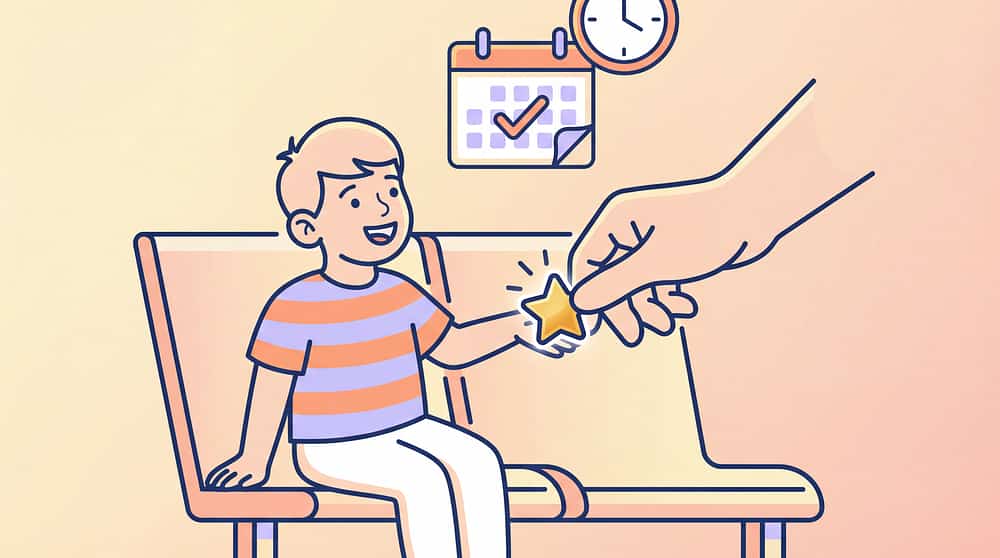
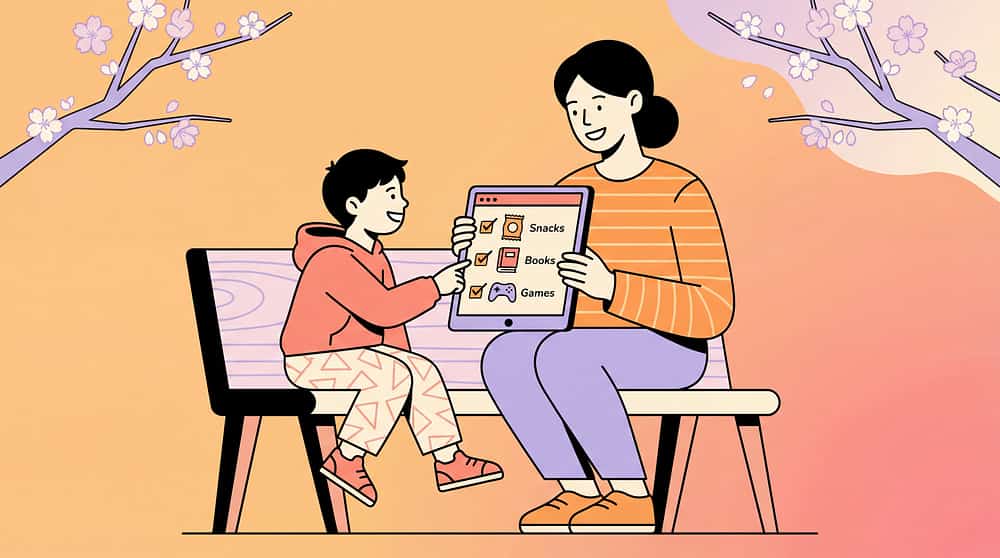
Provide immediate reinforcement after wait. Use praise, tokens, stickers, or preferred activity. Build motivation for future waiting.
Build Wait Tolerance Gradually
Start with short waits and increase duration slowly. Celebrate small successes. Don't push too fast.
Practice Waiting in Low-Stakes Situations
Practice at home before real-world waits. Build skills in safe environment. Transfer to community gradually.

Duration: Throughout waiting period. Use supports consistently every time to build reliable skills and confidence.
Expert Insight
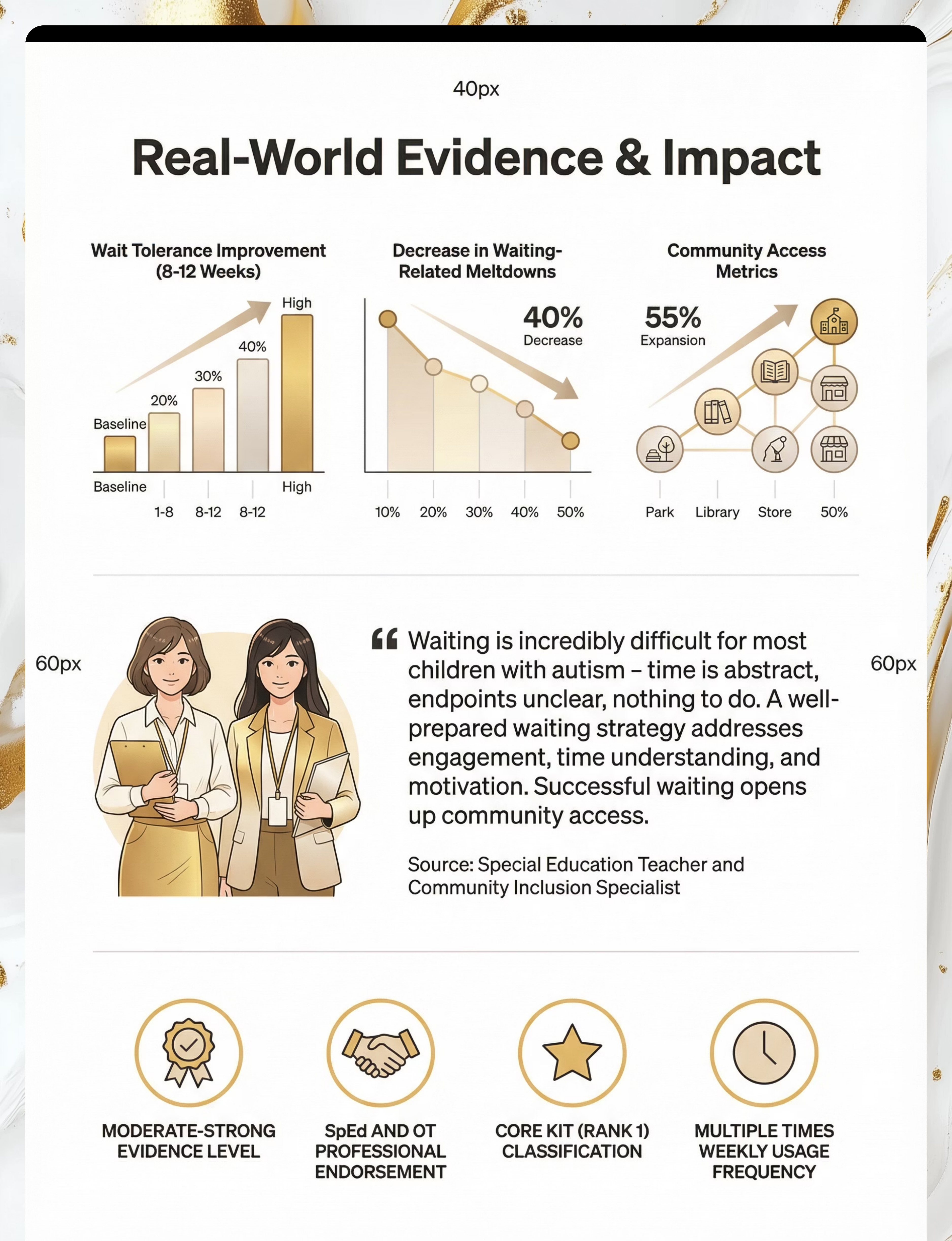
"Waiting is incredibly difficult for most children with autism—time is abstract, endpoints unclear, nothing to do. A well-prepared waiting strategy addresses engagement, time understanding, and motivation. Successful waiting opens up community access."
Special Education Teacher, Community Inclusion Specialist
waiting-queue-supports therapy material
SpEd + OT Recommended
Moderate-Strong Evidence
Rank #1 in Category
Multiple Times Weekly Use
waiting-queue-supports therapy material
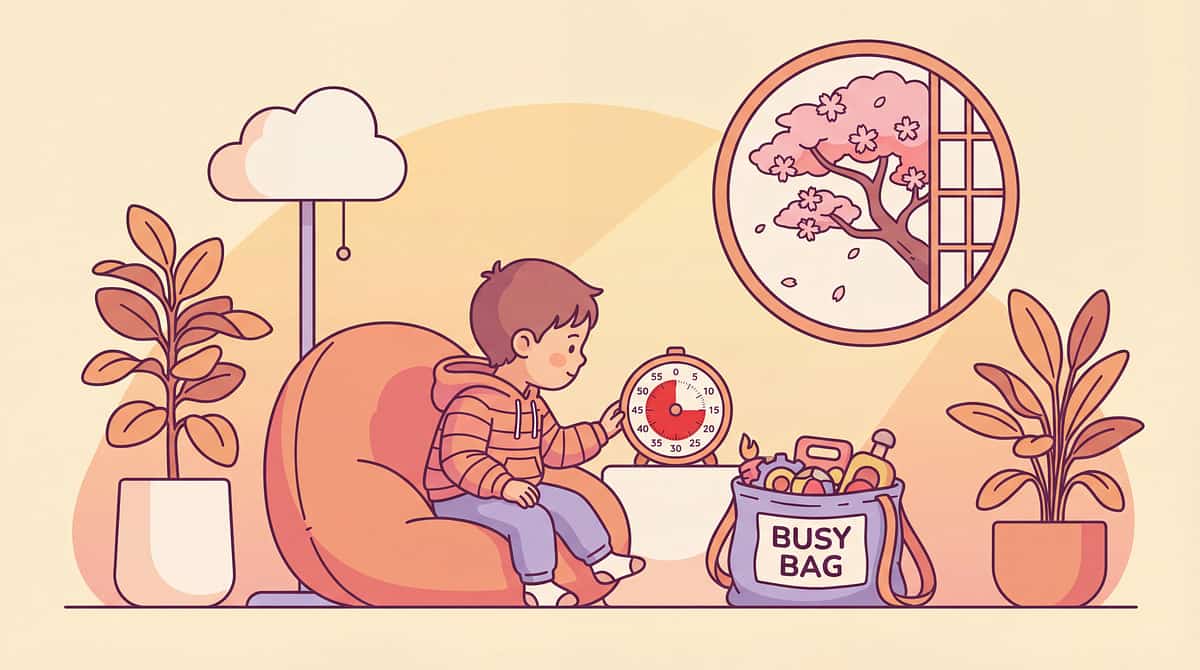
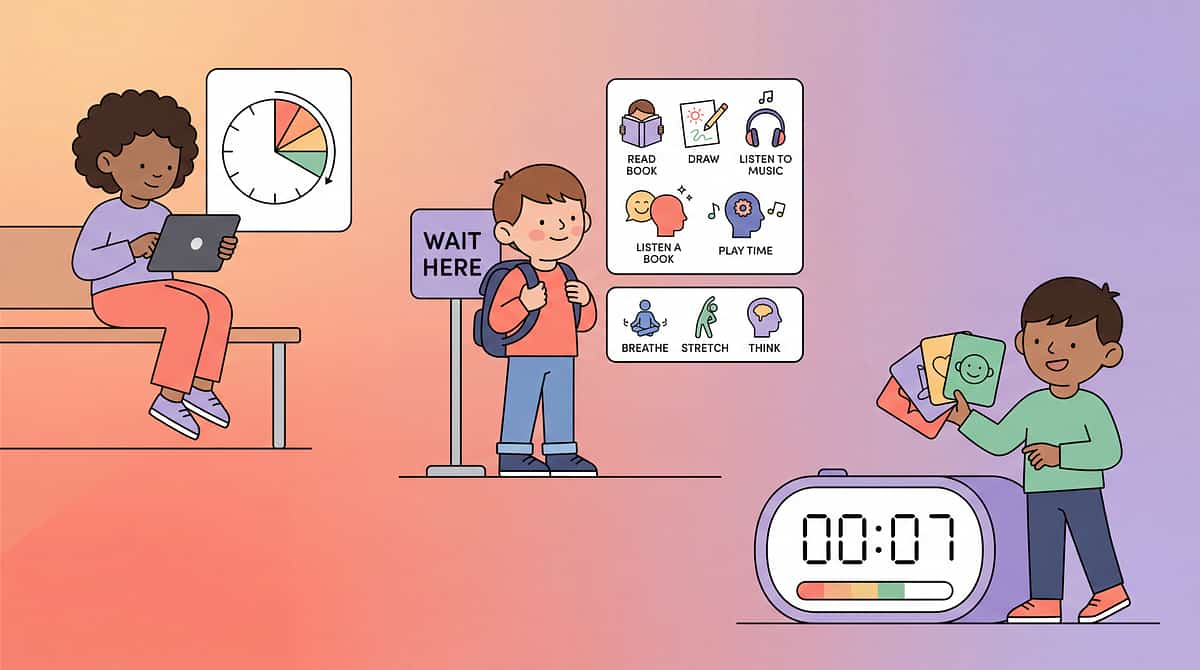
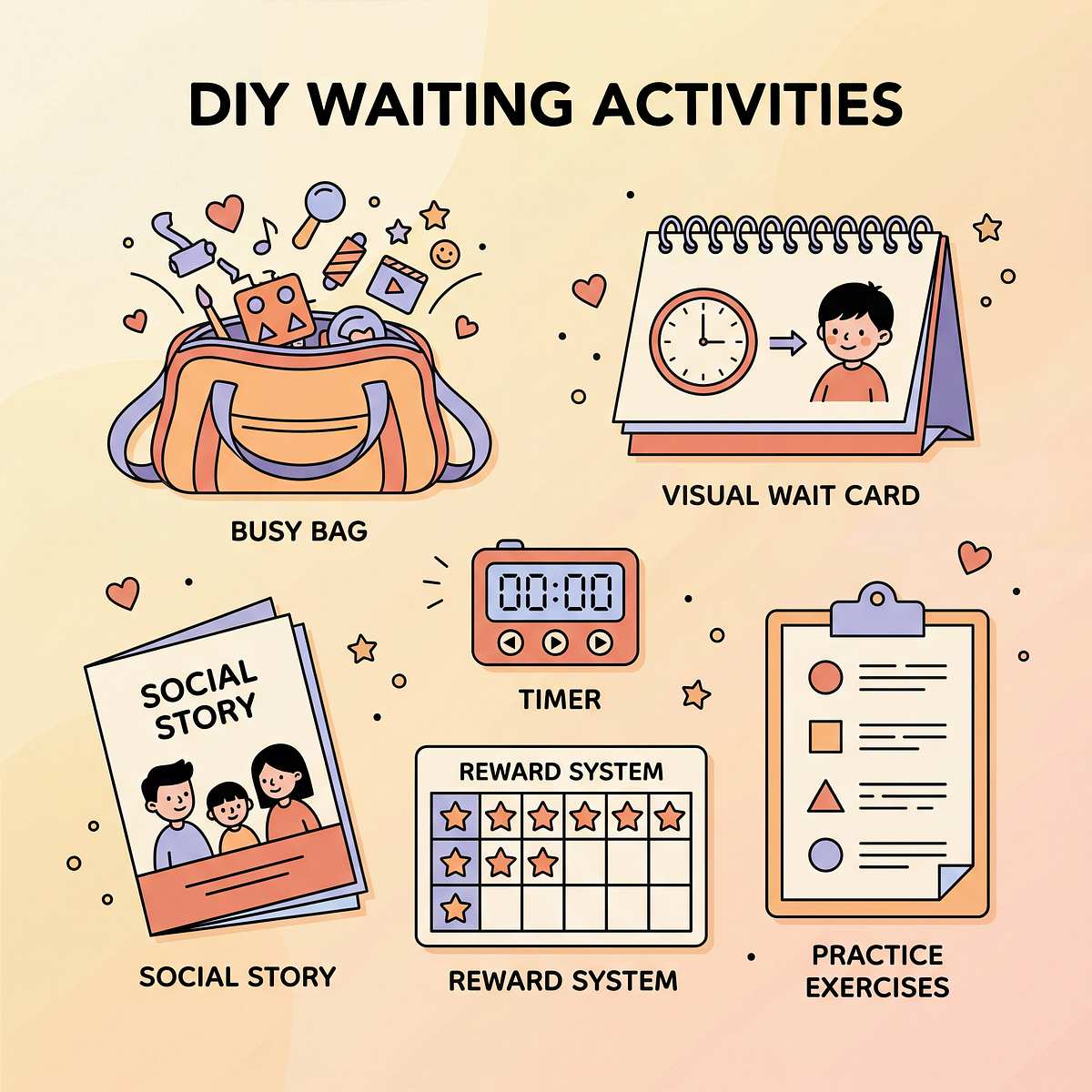
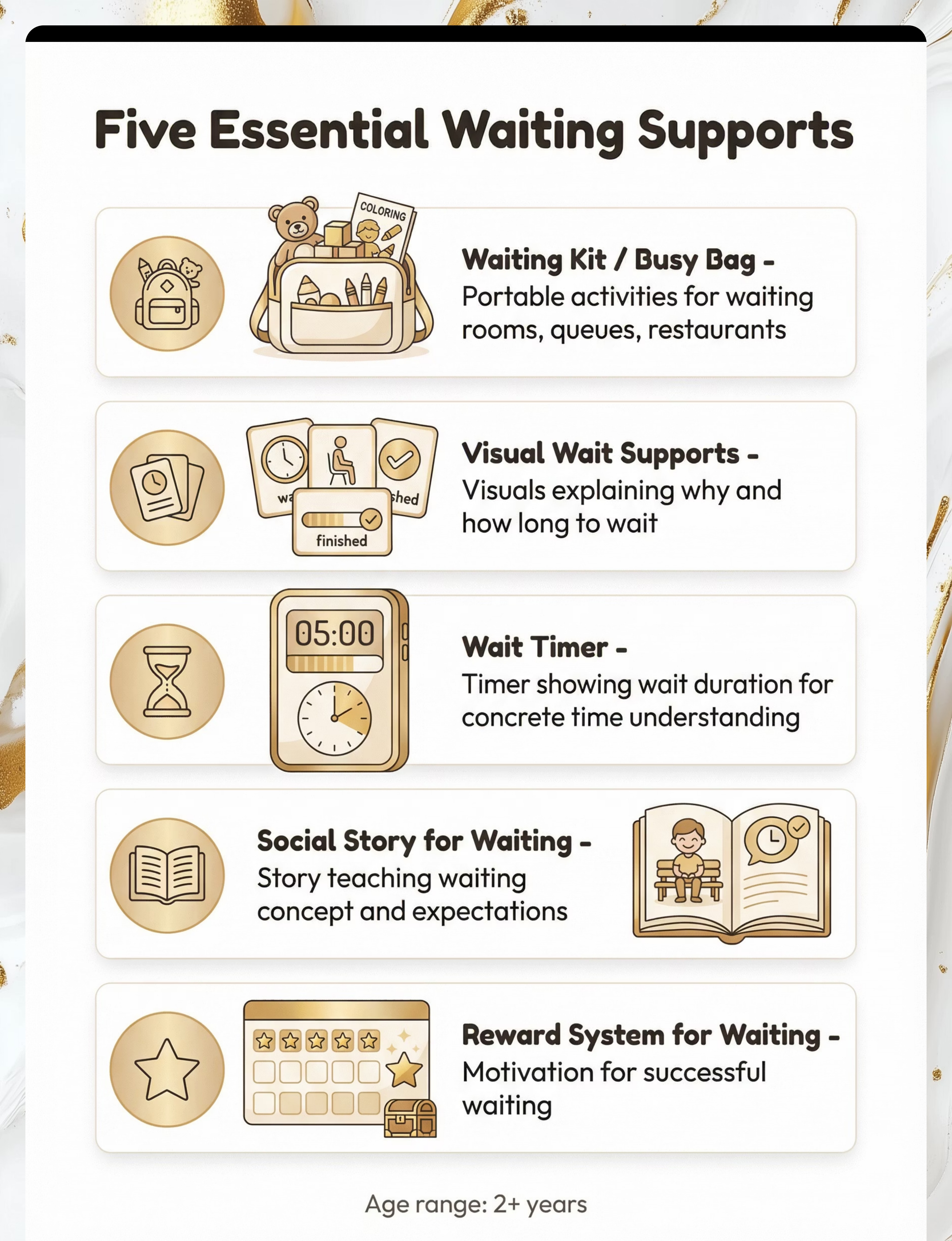
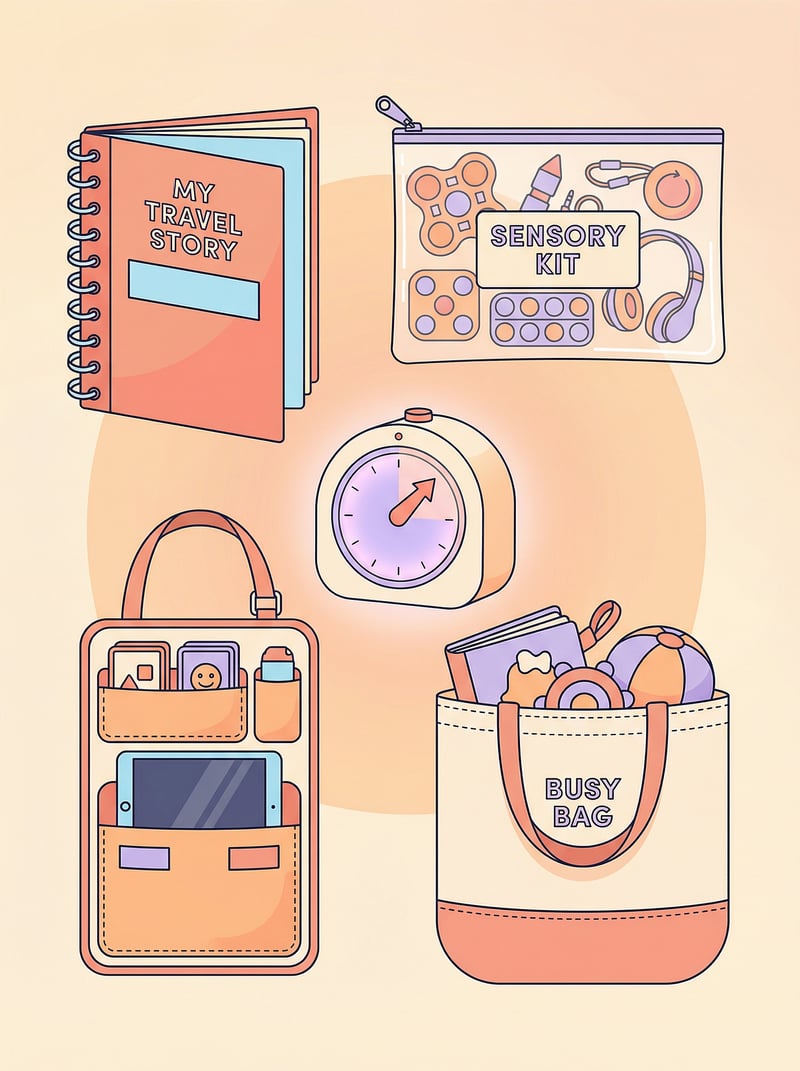
Waiting Kit / Busy Bag
Best for waiting rooms, queues, restaurants. Keeps child engaged with preferred items during wait periods across all settings.
Visual Wait Supports
Best for understanding why/how long waiting. Visuals explain wait, helping child understand concept of waiting and what to expect.
Wait Timer
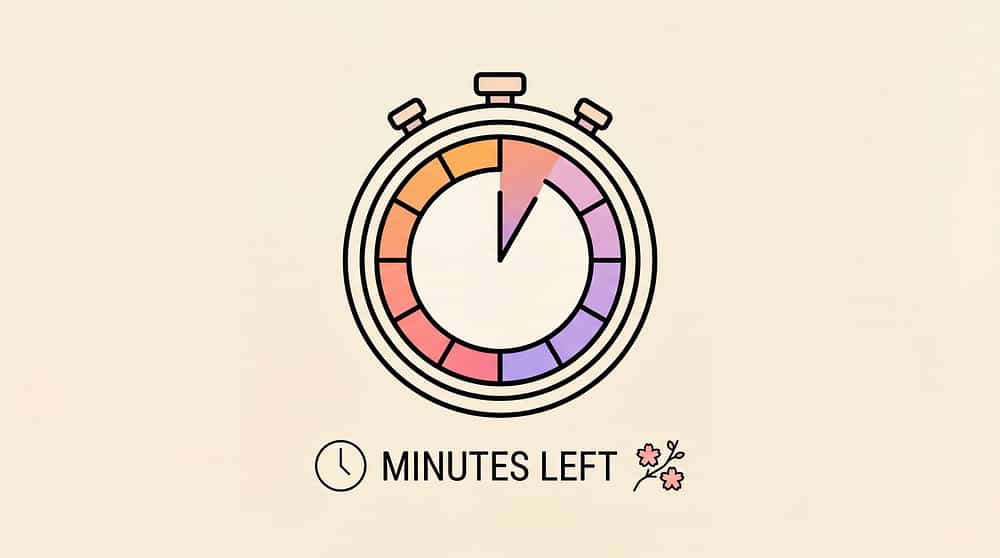
Best for concrete time understanding. Timer shows wait duration, making abstract time concrete with a visual countdown to an endpoint.
Social Story for Waiting
Best for teaching waiting concept/expectations. Prepares child for what waiting means and what will happen in specific situations.
Reward System for Waiting
Best for building wait tolerance. Provides immediate reinforcement to motivate and build tolerance for waiting over time.
Choose Your Option (5 Variants)
Select the right waiting support based on your child's needs, setting, and what aspect of waiting is most challenging. Many families use a combination approach for comprehensive support.

How to Choose:
  • By goal: Engagement (busy bag), Understanding (visuals/story), Time awareness (timer), Motivation (rewards)
  • By setting: All portable for any waiting situation
  • By age: Start simple (busy bag + visuals), add complexity (timer, story) as child develops
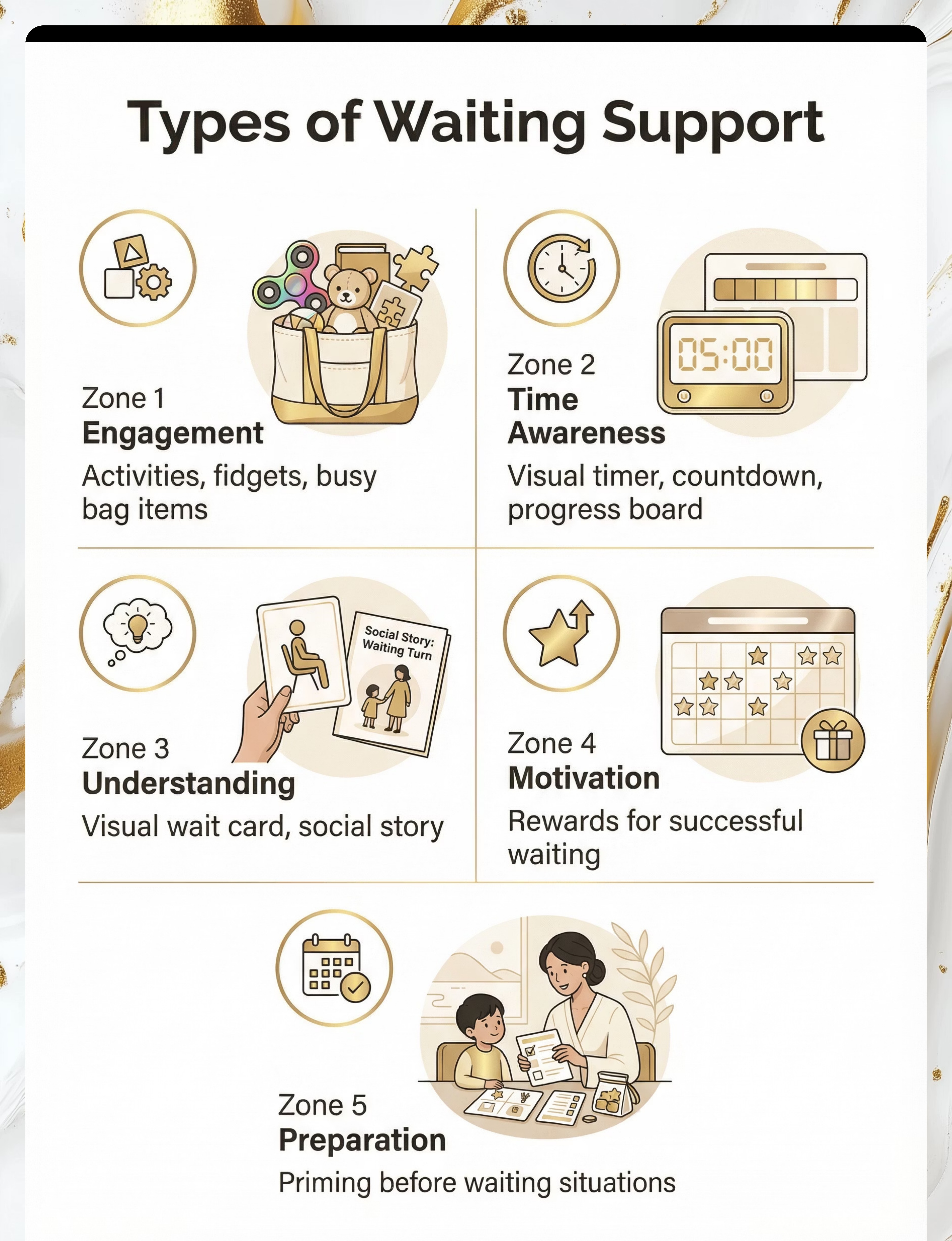
Types of Waiting Support
Engagement
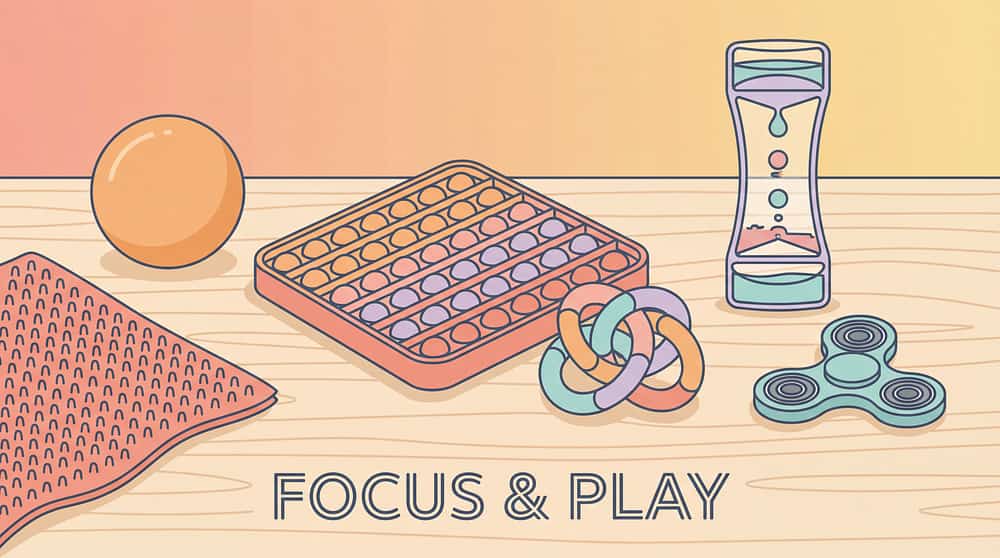
Activities, fidgets, busy bag items that give child something to do during wait.
Time Awareness
Visual timer, countdown, progress board showing time passing and endpoint.
Understanding
Visual wait card, social story explaining what waiting means and why.
Motivation
Rewards for successful waiting that build tolerance over time.
Preparation
Priming before waiting situations to set expectations clearly.
Key Features
  • Portable: Easy to carry and use in any waiting situation
  • Engaging: Activities matched to child's interests and preferences
  • Clear: Visual supports make abstract concepts concrete
  • Effective: Proven strategies that work for the individual child
Materials
Activities/toys, visual cards, timers (physical or app-based), reward materials (stickers, tokens), social story books or cards.
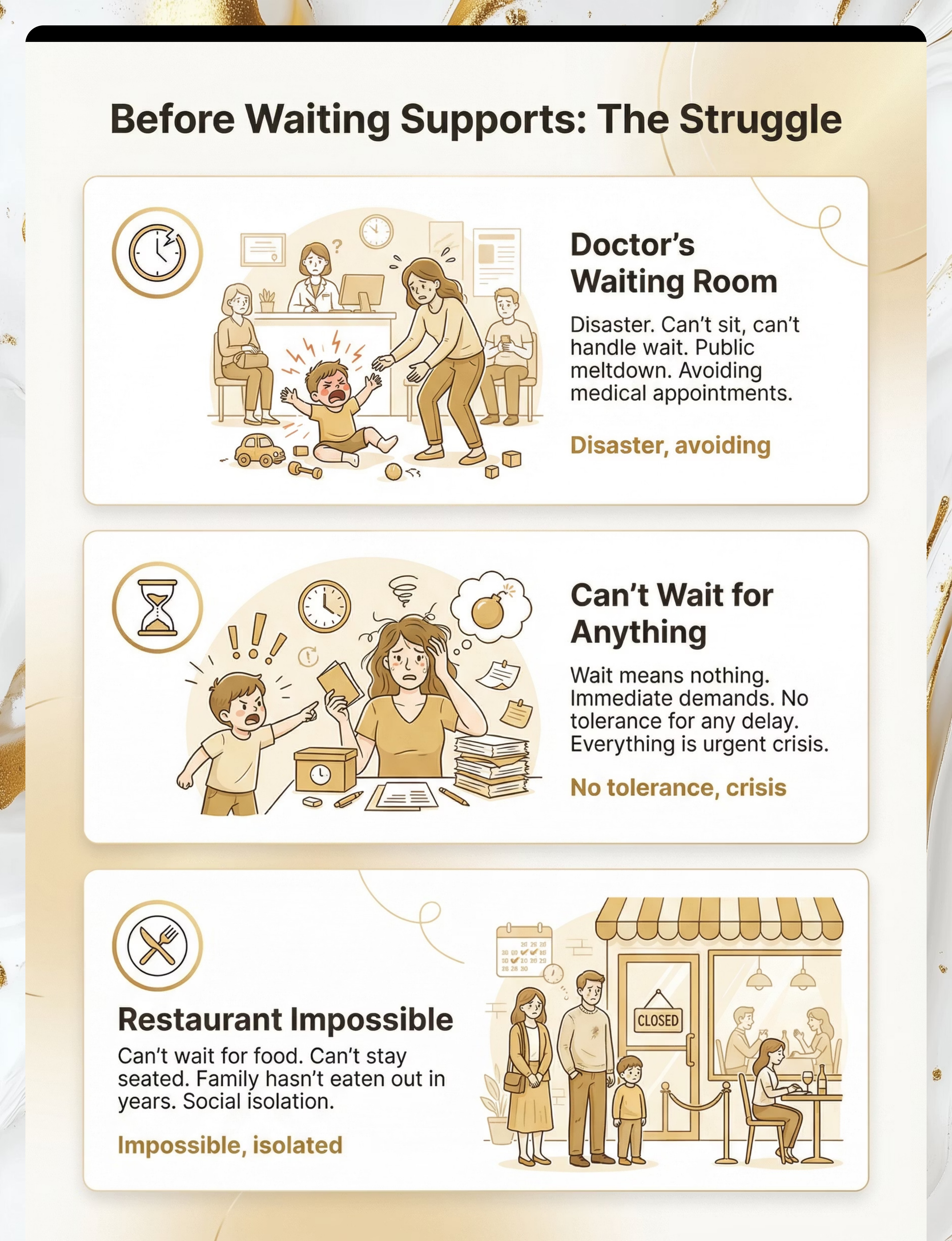
The Struggle (Before)
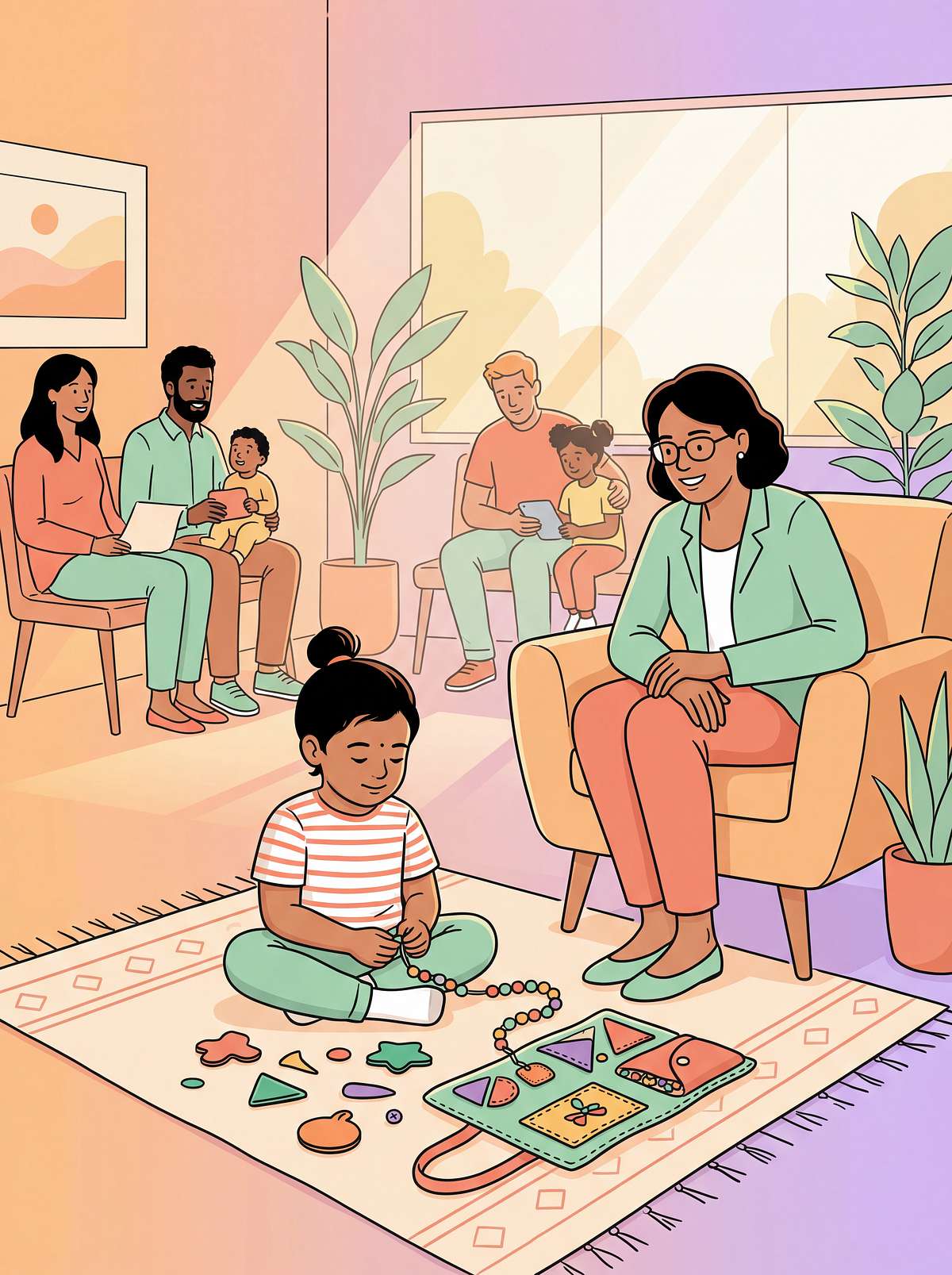
Doctor's Waiting Room
Situation: Doctor's appointment needed
Experience: Waiting room disaster. Child can't sit, can't handle wait. Escalating behavior. Public meltdown. Family avoiding medical appointments.
Emotion:Disaster, avoiding
Can't Wait for Anything
Situation: Any delay or transition
Experience: 'Wait' means nothing. Immediate demands. No tolerance for any delay. Everything is urgent crisis.
Emotion:No tolerance, crisis
Restaurant Impossible
Situation: Family wants to eat out
Experience: Can't wait for food to arrive. Can't stay seated. Family hasn't eaten out in years. Social isolation.
Emotion:Impossible, isolated
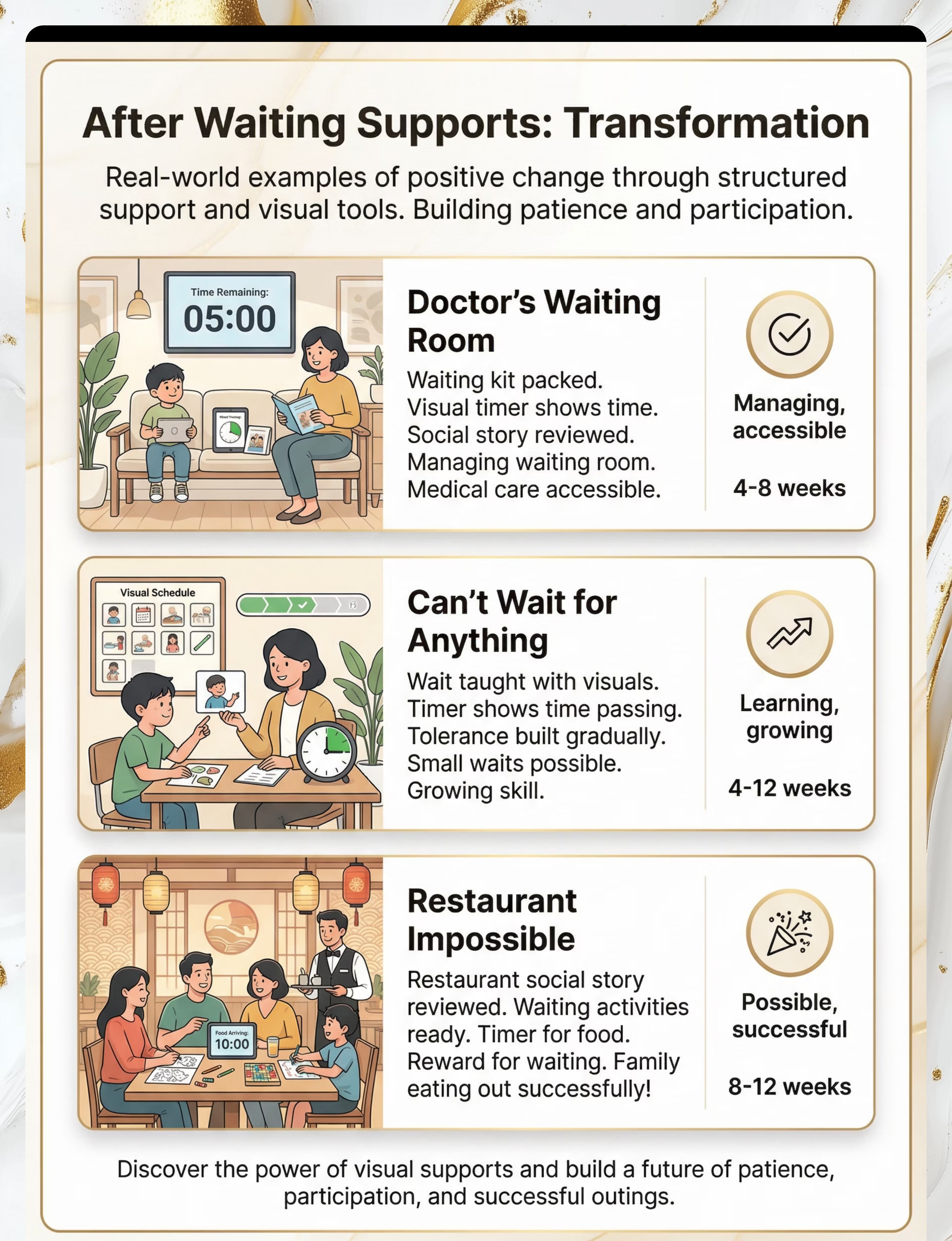
The Breakthrough (After)
Doctor's Waiting Room (4-8 weeks)
Situation: Doctor's appointment
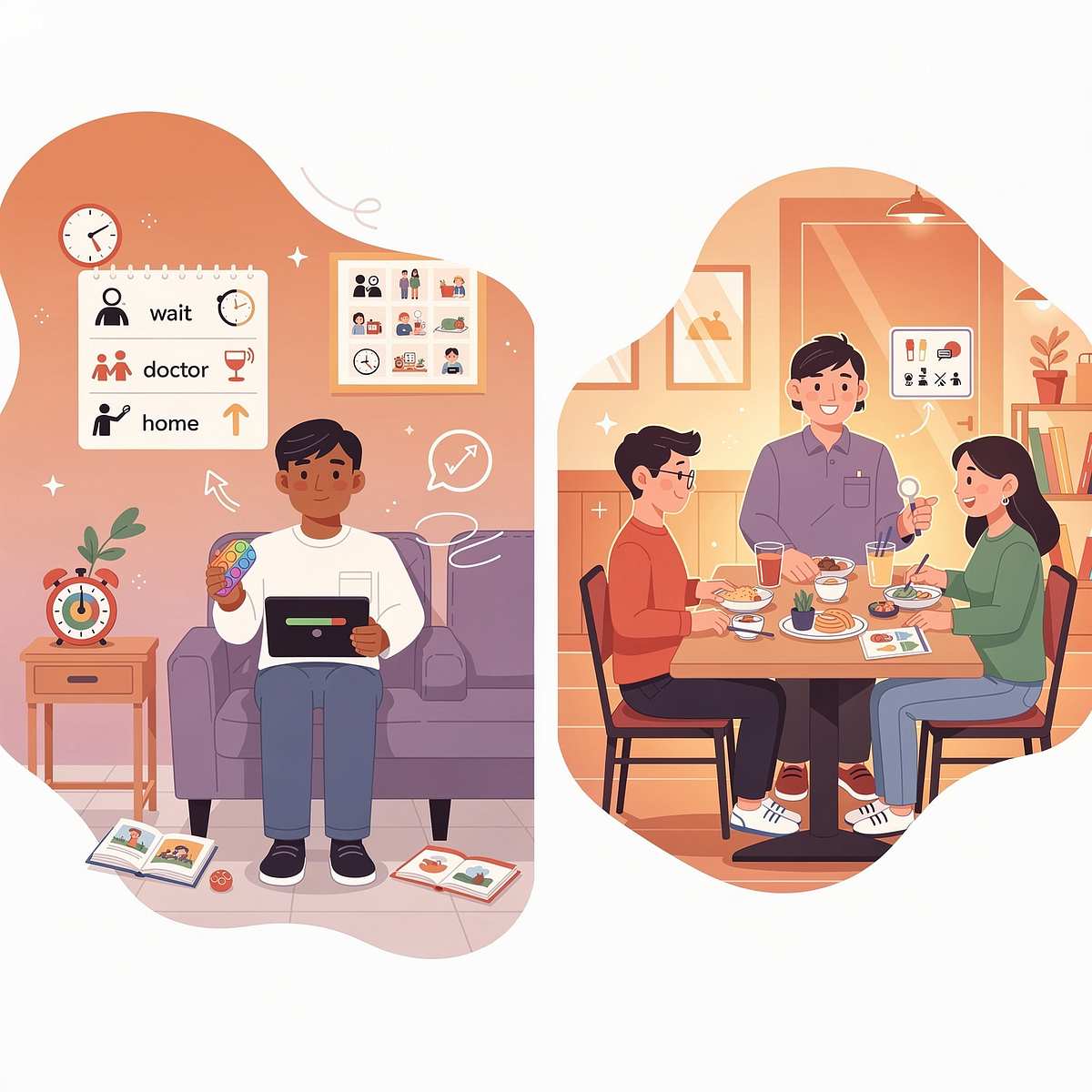
Experience: Waiting kit packed with preferred activities. Visual timer shows time. Social story reviewed beforehand. Managing waiting room. Medical care accessible.
Emotion: Managing, accessible
Can't Wait for Anything (4-12 weeks)
Situation: Daily transitions and delays
Experience: 'Wait' taught with visuals. Timer shows time passing. Wait tolerance built gradually. Small waits possible. Growing skill.
Emotion: Learning, growing
Restaurant Possible (8-12 weeks)
Situation: Family meal out
Experience: Restaurant social story reviewed. Waiting activities ready. Timer for food. Reward for waiting. Family eating out successfully!
Emotion: Possible, successful
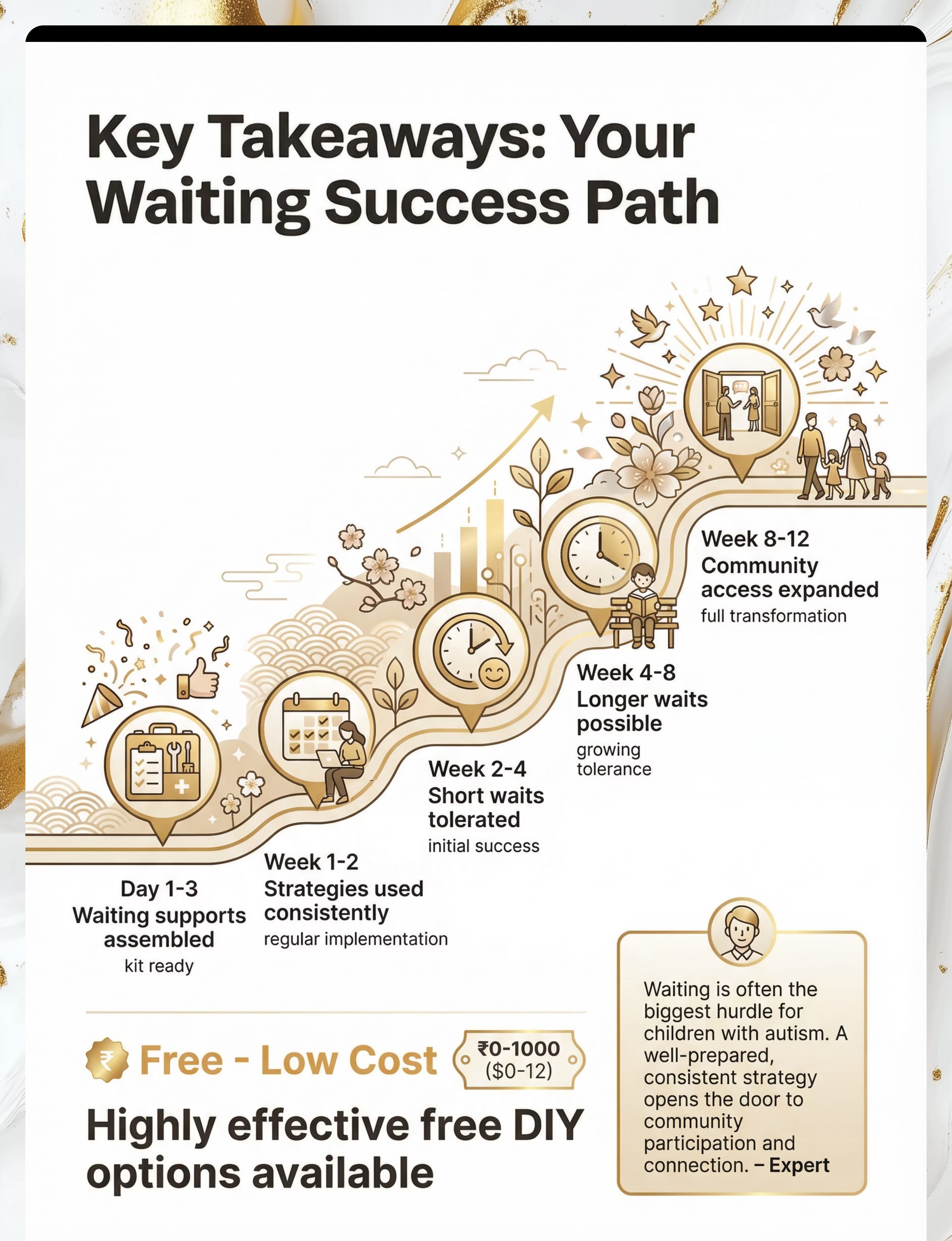
What to Expect (Realistic Timelines)
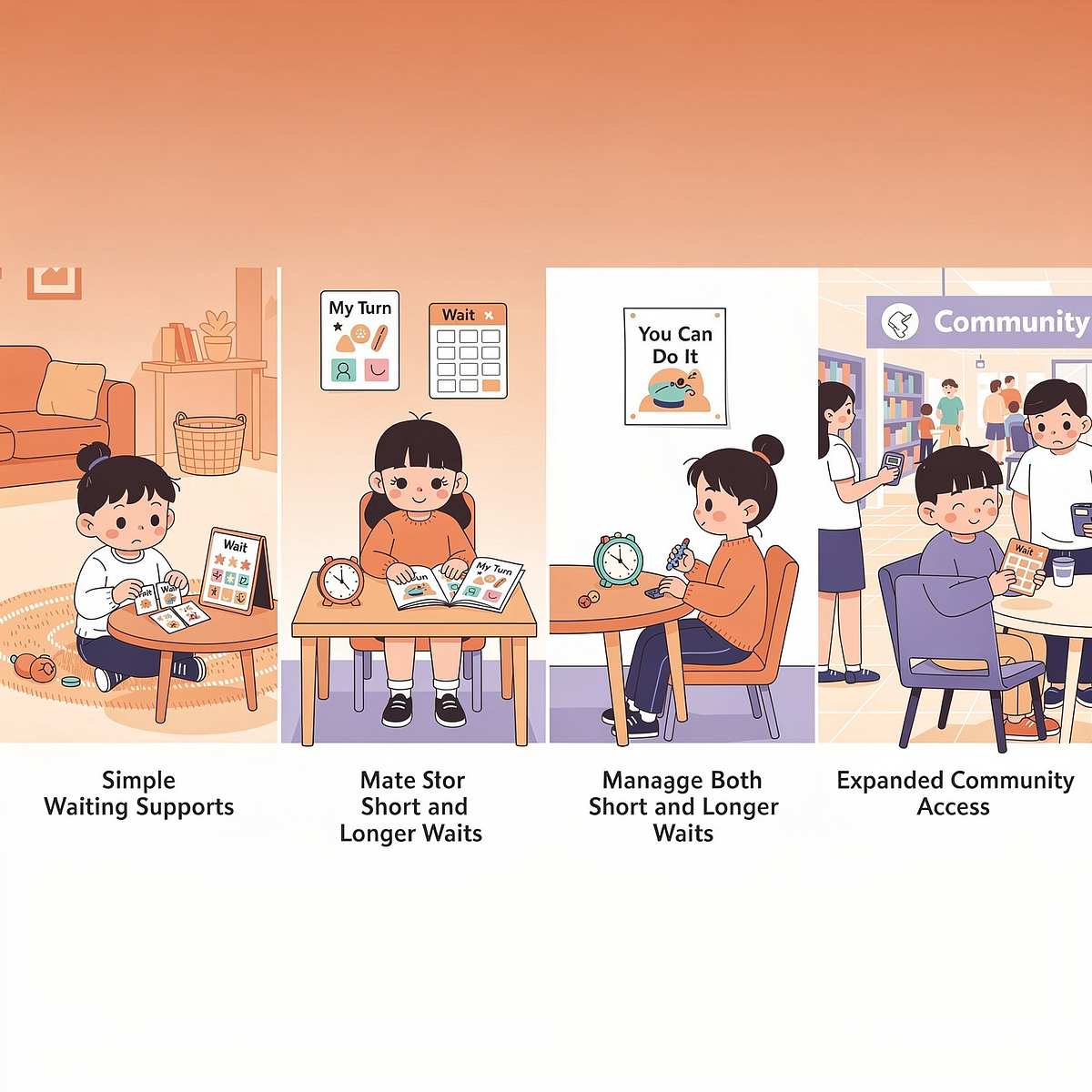
Waiting Supports Assembled
Kit prepared with activities, visuals, timer, and rewards. Ready to use consistently.
1-3 days
Strategies Used Consistently
Family using waiting supports every time. Child becoming familiar with routine and tools.
1-2 weeks
Short Waits Tolerated
Child managing brief waits with support. First successes building confidence and understanding.
2-4 weeks
Longer Waits Possible
Wait tolerance increasing. Managing more challenging waiting situations successfully.
4-8 weeks
Community Access Expanded
Family accessing places previously avoided. Participation in community life increasing significantly.
8-12 weeks
Progress builds gradually with consistent support. Each successful wait strengthens tolerance. Every child's timeline is unique—celebrate all progress along the way.
Is This Right for My Child? (2-Minute Check)
"I worry my child struggles too much with waiting. Is that normal?"
It's incredibly common for children, especially those with autism or developmental differences, to find waiting a significant challenge. If this sounds like your child, it's a strong indicator that waiting supports are essential and can provide much-needed relief.
"We often avoid places or activities because I anticipate meltdowns over waiting."
Avoiding situations due to waiting concerns is a clear sign that tailored support could greatly expand your family's opportunities for community participation. Many previously daunting scenarios can become manageable with the right strategies in place.
"My child understands when I say 'wait,' and has some grasp of time concepts."
That's a fantastic foundation to build upon! Even if your child's understanding of time is still developing, visual time supports are incredibly effective at making abstract concepts concrete for all children, enhancing their ability to wait.
"I've tried different things, but we don't really have consistent waiting strategies in place."
Whether you have some strategies you'd like to optimize or you're starting fresh, developing a comprehensive waiting kit and consistent strategies is key. A structured approach builds these crucial skills most effectively.

3+ 'yes' answers = strong fit for comprehensive waiting supports. Even one 'yes' suggests benefit from targeted strategy.
Usage Guide
When to Use ✓
  • Any waiting situation encountered
  • Prepare before known waits
  • Practice at home regularly
  • Build tolerance gradually with support
When NOT to Use ✗
  • When child is already in crisis (prevent, don't rescue)
Settings
Waiting Rooms
Queues
Restaurants
Stores
Any Waiting Situation
Duration
Throughout waiting period. Use supports consistently every time child faces a wait.
Supervision by Age
Age/Stage
Supervision Level
Notes
Young children (2-5)
Adult manages supports
Parent/caregiver provides activities, sets timer, gives rewards
Developing skills (5-10)
Child uses with prompts
Child selecting activities, watching timer with reminders, earning rewards
Older/more independent
Independent self-management
Child managing own waiting kit, using strategies independently
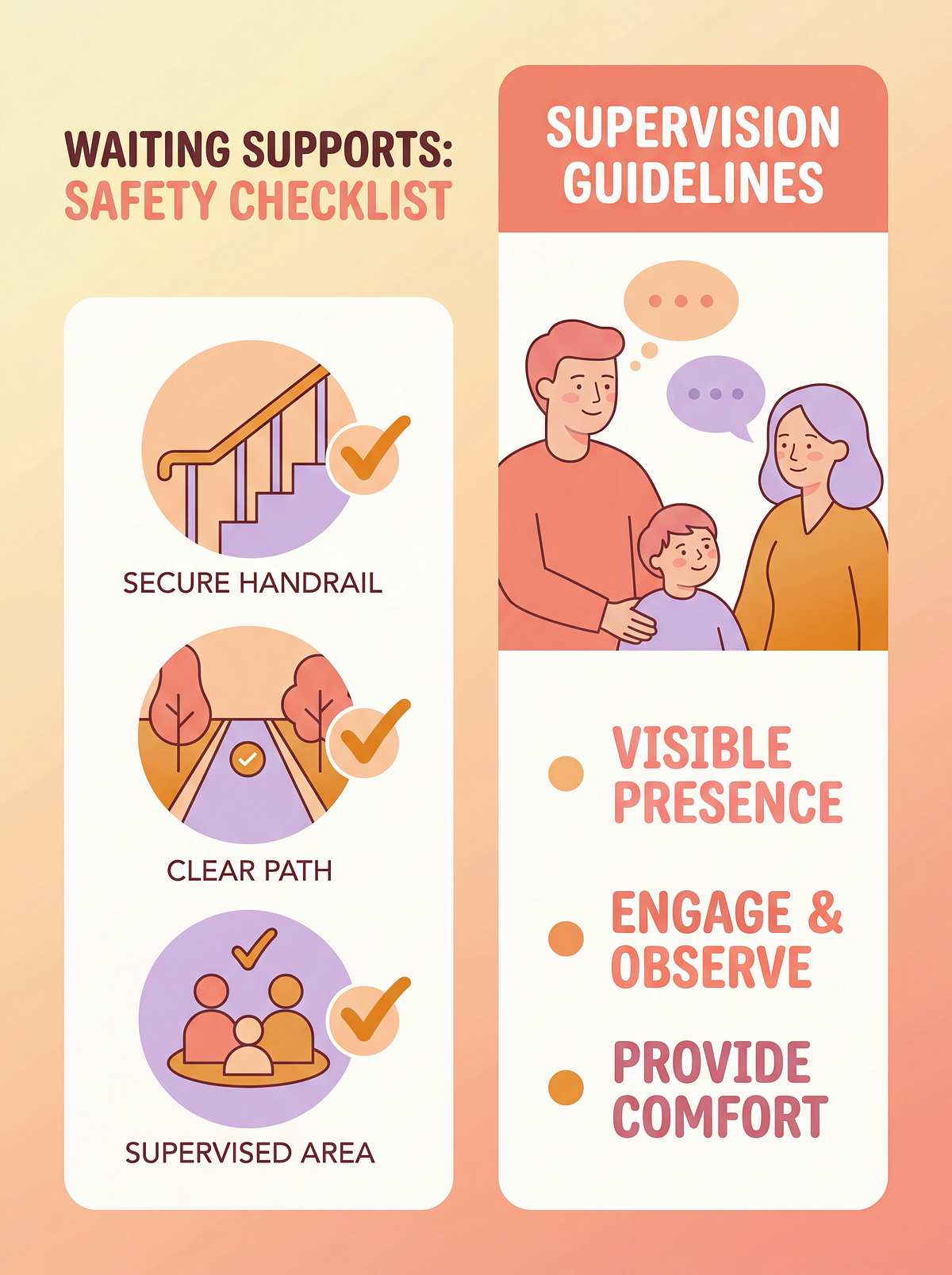
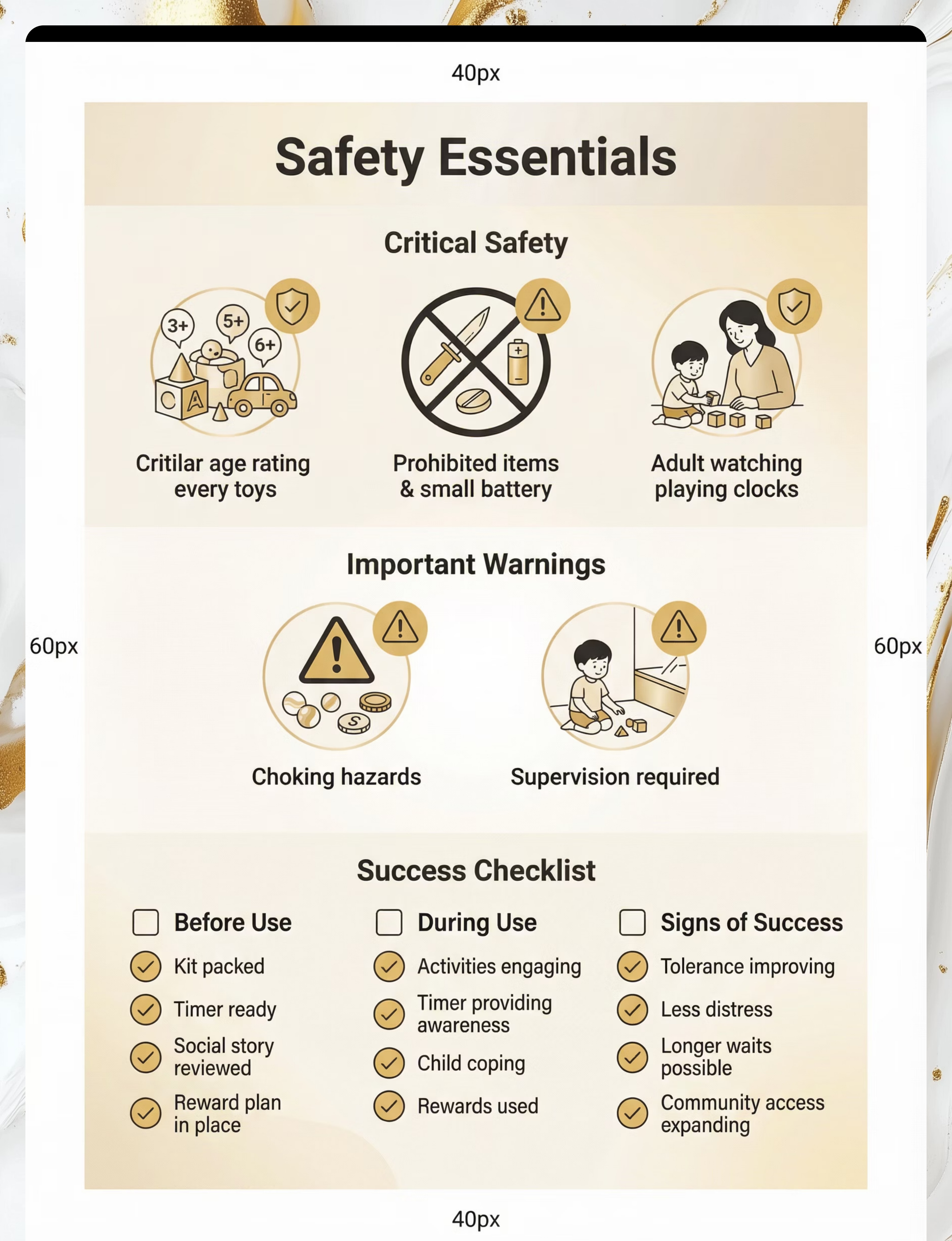
Safety First
Critical Safety ⚠️
  • Age-appropriate activities only
  • Nothing dangerous in kit
  • Supervise small items for young children
Warnings
  • Choking hazards for young children—check all items
  • Don't leave child unattended in waiting situations
Contraindicated
None significant. Waiting supports are safe and appropriate for all children when age-appropriate materials used.
Before Use ✓
  • Kit packed and accessible
  • Timer ready
  • Social story reviewed (if applicable)
  • Reward plan in place
During Use ✓
  • Activities engaging child
  • Timer providing time awareness
  • Child coping with wait
  • Rewards being used
Signs of Success ✓
  • Wait tolerance improving
  • Less distress during waits
  • Longer waits possible
  • Community access expanding
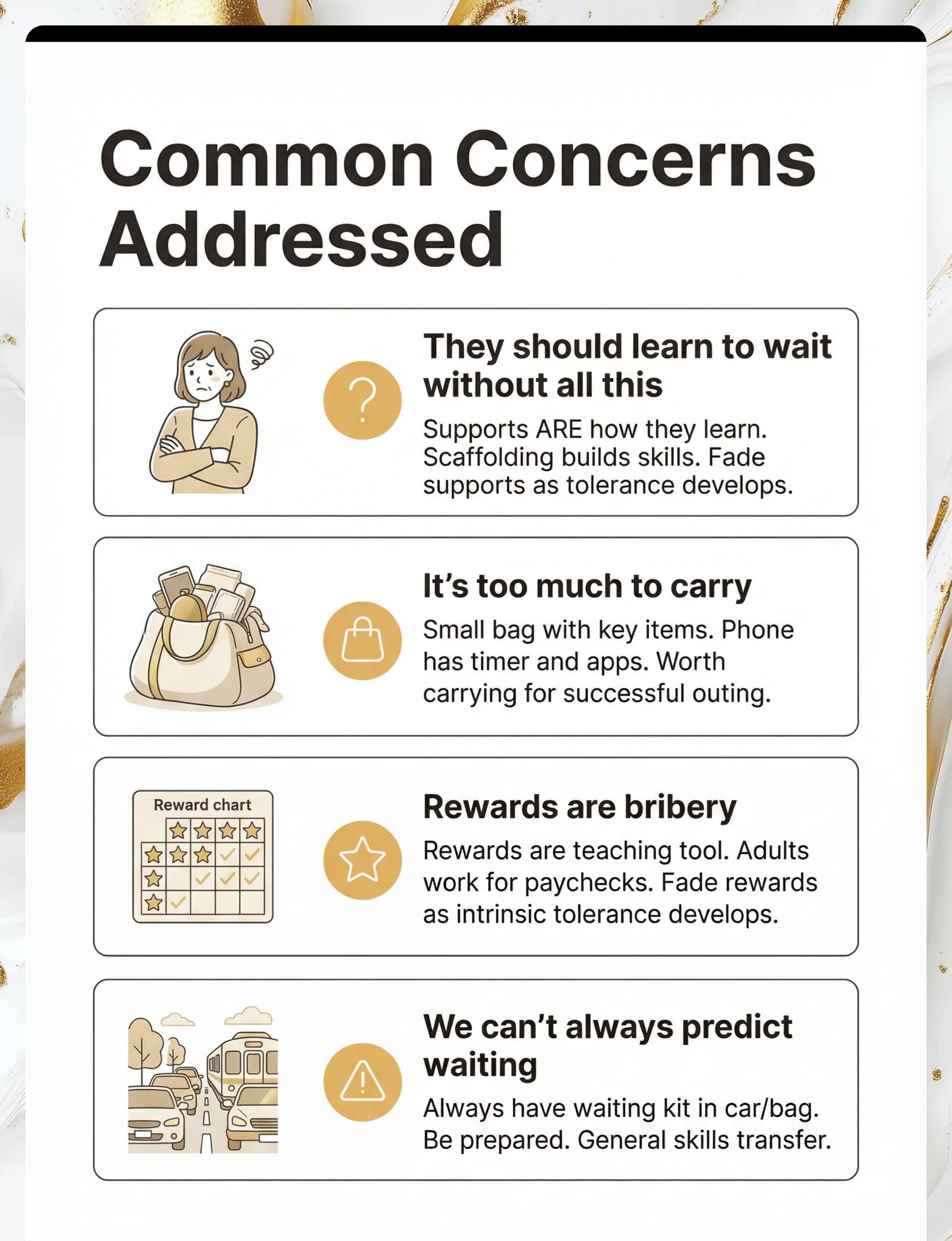
Common Questions (Honest Answers)
Q: They should learn to wait without all this
A: Supports ARE how they learn. Scaffolding builds skills. We fade supports as tolerance develops. Without support, children just fail repeatedly without learning.
Try this: Supports build skills; fade as tolerance grows naturally.
Q: It's too much to carry
A: Small bag with key items. Phone has timer and apps. Minimal items can make big difference. Worth carrying for successful outing.
Try this: Small bag; phone has timer; worth carrying for success.
Q: Rewards are bribery
A: Rewards are teaching tool. Adults work for paychecks. Motivation builds skills. We fade rewards as intrinsic tolerance develops.
Try this: Teaching tool; adults work for pay; fade over time.
Q: We can't always predict waiting
A: Always have waiting kit in car/bag. Be prepared for unexpected waits. Teach general waiting skills. Predictable toolkit even in unpredictable situations.
Try this: Always have kit ready; be prepared; general skills transfer.
Investment Guide
Waiting supports range from completely free DIY options to modest investments in ready-made kits. Most families find highly effective solutions under ₹500.
DIY Busy Bag
0-200
0-2.5
Comprehensive Kit
500-1000
6-12
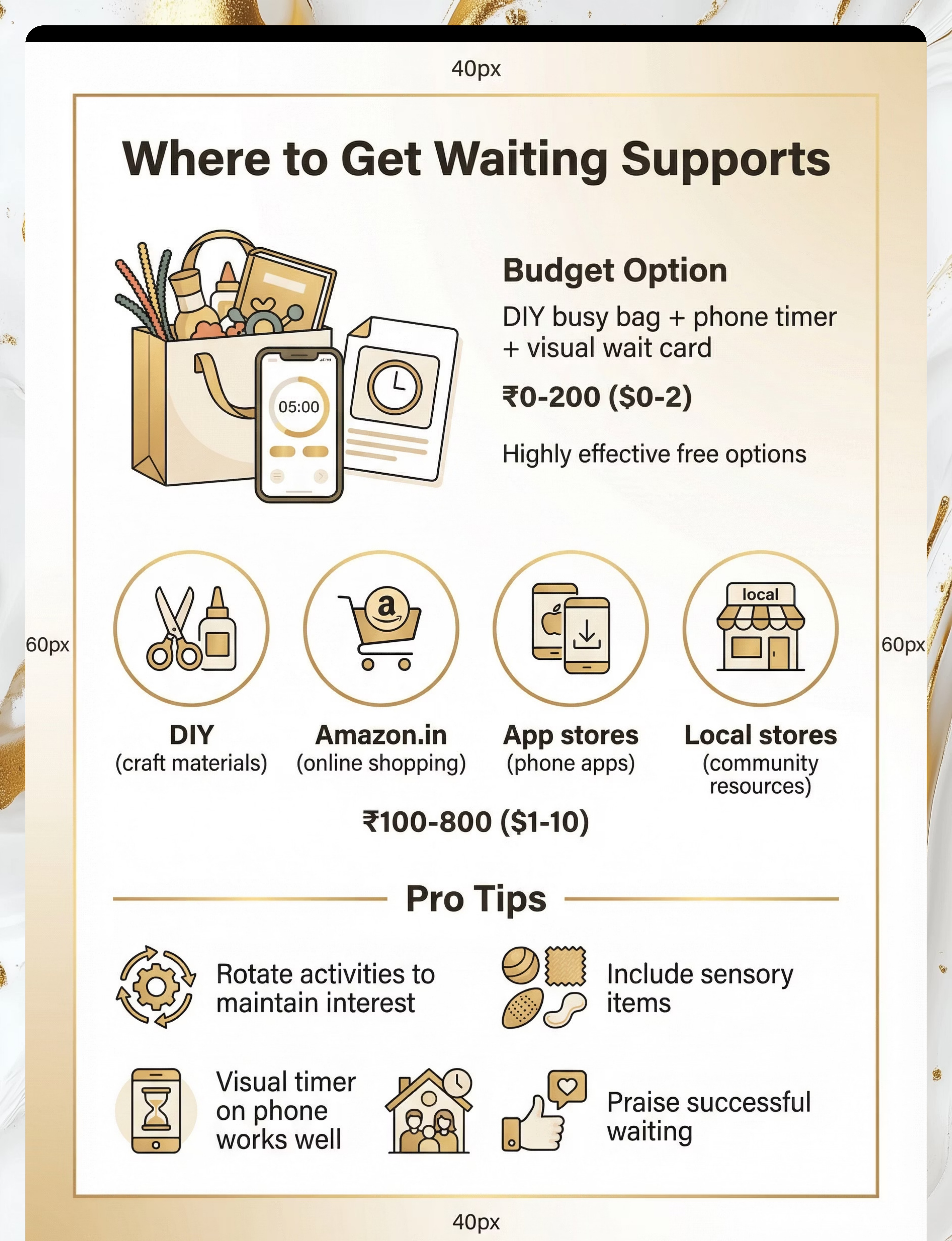
Budget Options
DIY Busy Bag
Gather small toys/activities from home for engagement.
Phone Timer
Utilize free timer apps on your phone for structured waiting.
Visual Wait Card
Print or draw simple visual cards to illustrate waiting times.
DIY Reward System
Create a simple reward system with stickers or small treats.
Investment Progression
Start Simple
Begin with free DIY options to discover what resonates with your child.
Targeted Investment
Based on initial learning, invest in specific, proven tools.
Comprehensive Kit
Consider a purpose-built waiting kit with varied activities as needs evolve.
Advanced Tools
Explore professional social stories and advanced reward systems for continued support.
Overall range: ₹0–1,000 (USD $0–12)

Best starting point: Begin with free DIY options to learn what works for your child, then invest in specific tools that prove most effective.
Where to Buy in India
Availability: DIY/Widely Available—most waiting supports can be created at home or purchased easily online.
DIY Busy Bag Activities
Search: busy bag activities
Price: ₹100–400
Gather from home or purchase small toys, fidgets, activity books, coloring materials matched to child's interests.
Amazon.in
Search: travel activity kit kids
Price: ₹200–800
Ready-made busy bags and travel activity kits with multiple engaging items.
DIY Social Stories
Search: wait social story
Price: Free
Create or download free social stories about waiting from autism resources online.
App Stores
Search: visual timer app
Price: Free
Many excellent free visual timer apps available for iOS and Android devices.
DIY Wait Cards
Search: wait cards
Price: Free
Print or draw simple visual cards showing "wait" with timer symbol or icon.

Buying Tips ✓
  • Rotate busy bag activities to maintain interest
  • Include sensory items + engaging activities
  • Visual timer on phone works well
  • Practice waiting at home first
  • Praise and reward successful waiting

Red Flags ⚠️
  • No waiting supports at all
  • Same items causing boredom
  • Abstract time concepts without visuals
  • No motivation/reinforcement system
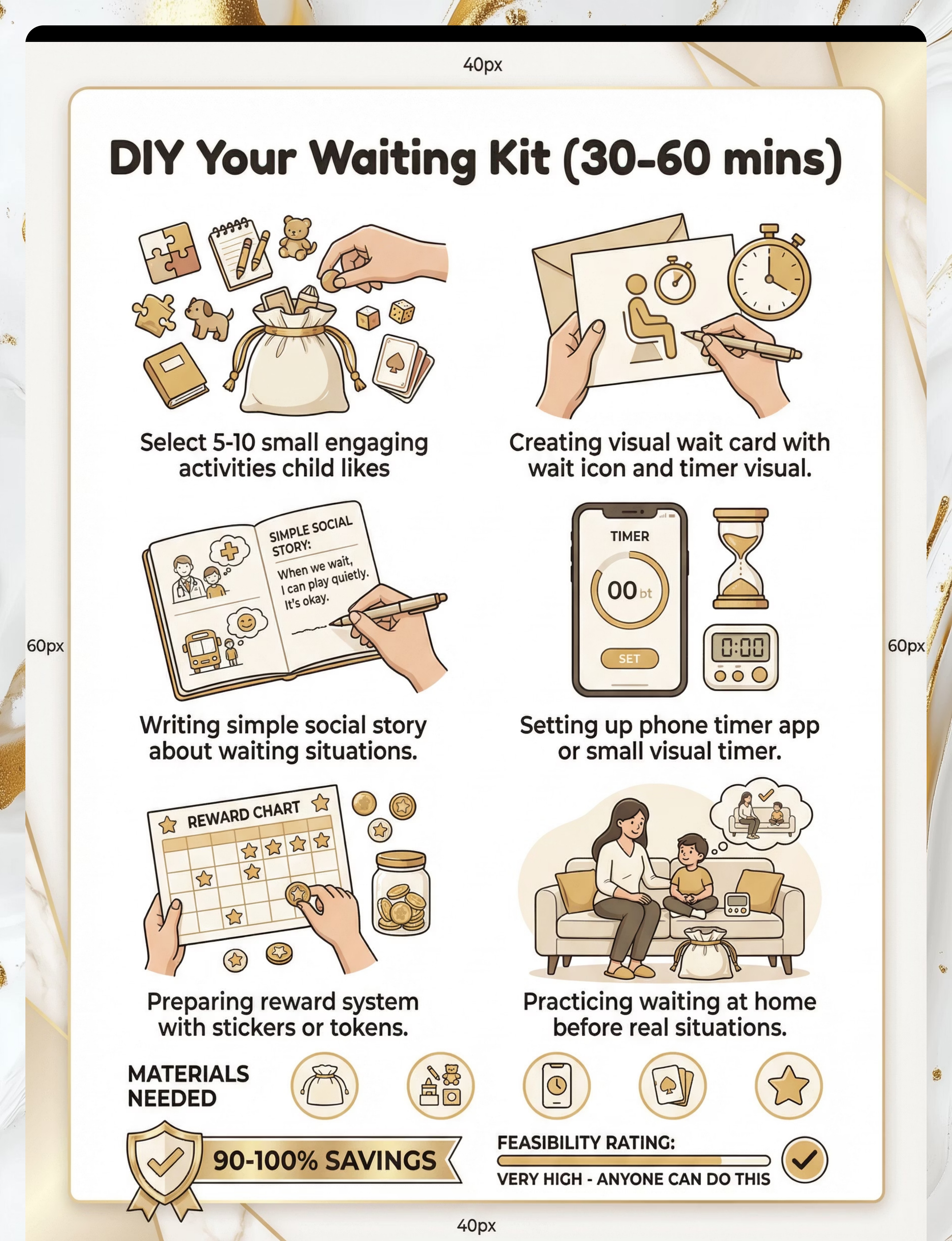
DIY Alternative (Save 90-100%)
Feasibility: Very High | Time: 30–60 minutes | Cost Savings: 90–100%
Busy Bag: Select 5-10 Activities
Choose small, engaging activities your child likes: small toys, fidgets, puzzle books, coloring materials, stickers, playdough, sensory items. Rotate regularly to maintain interest.
Visual Wait Card: Create Simple Visual
Draw or print a 'Wait' icon with timer visual. Laminate or place in plastic sleeve. Show this when waiting is required.
Social Story: Write Simple Story About Waiting
Create 4-6 sentence story: "Sometimes we wait. Waiting means staying calm while time passes. I can use my waiting activities. When waiting is done, we do the next thing." Add simple pictures.
Timer: Use Phone Timer App
Download free visual timer app or use phone's built-in timer. Show child the countdown. Make abstract time concrete and visible.
Reward System: Create Simple Reinforcement
Use stickers, tokens, or chart with checkmarks. After successful waiting, immediate reward or token toward bigger reward. Build motivation.
Practice: Build Skills at Home First
Practice waiting at home before real situations. Start with 30 seconds, gradually increase. Build confidence in safe environment before community use.
DIY vs Commercial
When to DIY
  • Busy bags (customize perfectly to child's interests)
  • Visual wait cards (simple and effective)
  • Social stories (personalized to your situations)
  • Reward systems (tailored motivation)
When to Buy Commercial
  • Visual timer (physical device if preferred over app)
  • Pre-made activity kits (convenience factor)
  • Quality fidgets (durability matters)
Materials needed: Small bag, activities/toys, timer (phone), visual cards, reward materials (stickers, chart)

Tradeoff: DIY is highly effective for waiting supports! Customization to your child's specific interests often works better than commercial options. Time investment is minimal for significant benefit.

Preview of waiting queue supports Therapy Material

Below is a visual preview of waiting queue supports therapy material. The pages shown help educators, therapists, and caregivers understand the structure and content of the resource before use. Materials should be used under appropriate professional guidance.

Page 1
Page 2
Page 3
Page 4
Page 5
Page 6
Page 7
Page 8
Page 9
Page 10
Page 11
Page 12
Page 13
Page 14
Page 15
Page 16
Page 17
Page 18
Page 19
Page 20
Travel Transitions

Category 17: Travel & Transitions

5 MATERIALS

Portable supports for managing transitions, travel, community outings, and new environments. These materials provide comfort, predictability, and sensory support during changes in routine, helping children navigate challenging transitions with greater ease and independence.

Key Materials

  • Transition supports and warnings
  • Travel comfort and sensory kits
  • Car and vehicle supports
  • Waiting and queue supports
  • Travel preparation tools

Target Areas

  • Transition management
  • Travel comfort
  • Community participation
  • Flexibility
  • Predictability
Waiting & Queue SupportsComfort tools supporting prolonged waiting tolerance, postural comfort, and anxiety reduction during queues and travel across community and therapy settings.
Kids Neck Pillow
WQS · 2278Kids Neck Pillow
Waiting
Link copied!
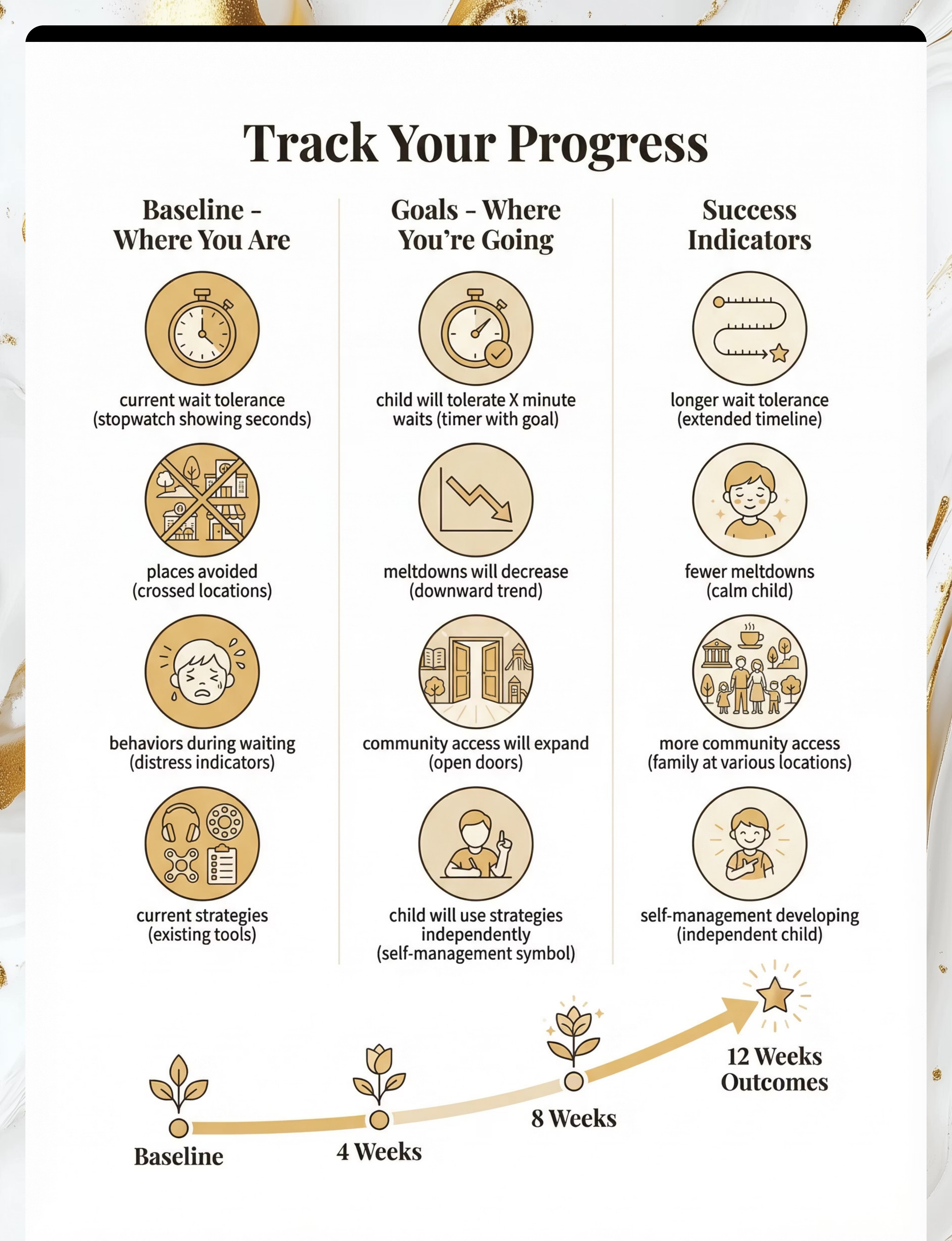
Measuring Success & Complete Support
Track Progress
Measure baseline and track improvement over time to see real growth in wait tolerance and community access.
Measure Baseline
Establish initial wait tolerance duration, identify places avoided due to waiting challenges, document behaviors during waiting, and assess current strategy effectiveness.
Set Achievable Goals
Define specific targets: tolerate [X] minute waits, decrease meltdown frequency, expand community access, and independently use waiting strategies.
Observe Success Indicators
Look for developing wait tolerance, fewer meltdowns, expanded community access, growing self-management, and increased family participation in previously avoided activities.

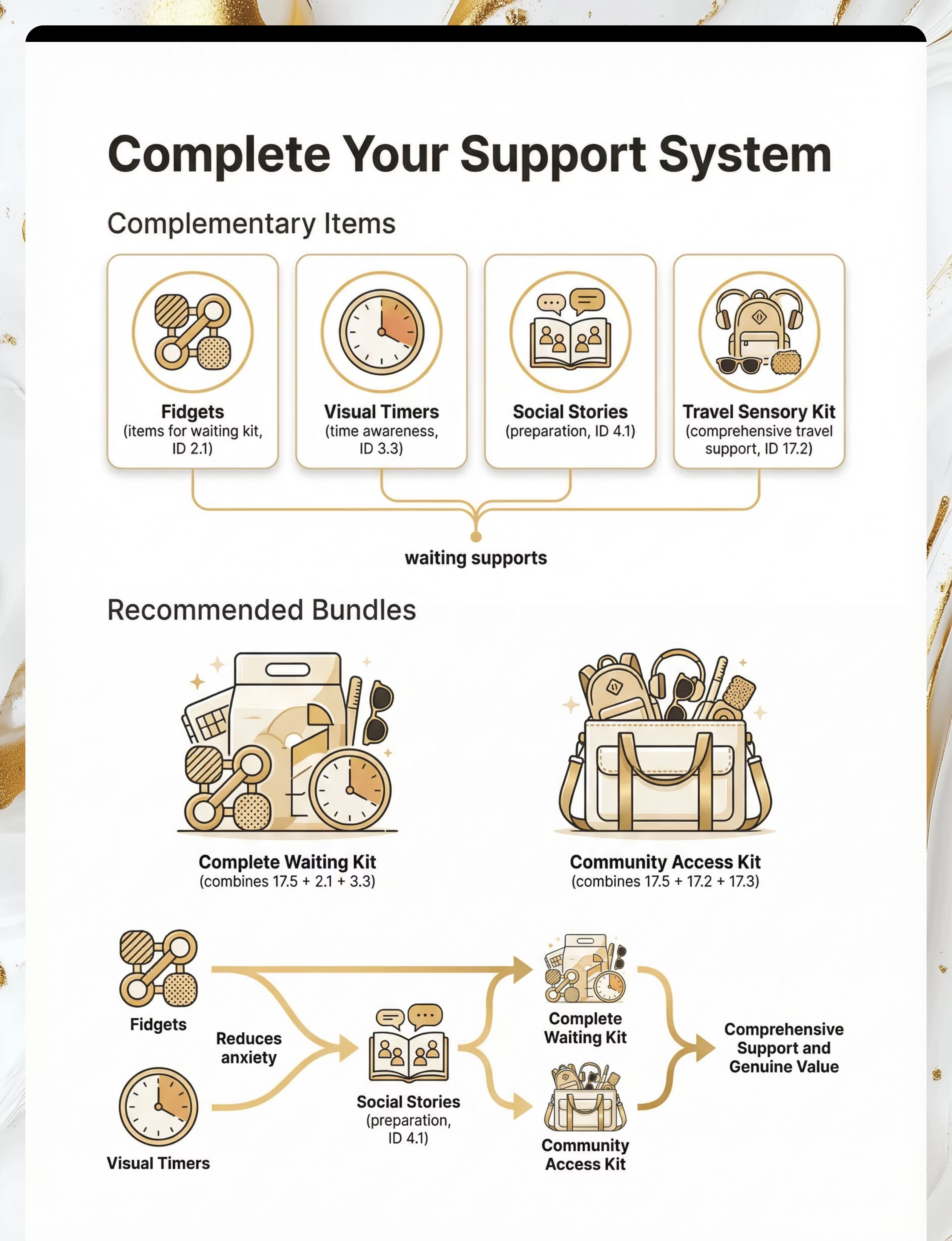
Pair It With...
Complete your waiting support toolkit with these complementary items:
Fidgets (ID: 2.1)
Why pair: Items for waiting kit—essential busy bag contents that engage and regulate.
Visual Timers (ID: 3.3)
Why pair: Time awareness—makes abstract waiting time concrete and predictable.
Social Stories (ID: 4.1)
Why pair: Preparation—teaches concept of waiting before situations occur.
Travel Sensory Kit (ID: 17.2)
Why pair: Comprehensive travel support—broader toolkit for all travel challenges.
Consider These Alternatives
  • Calming Apps (ID: 16.5): Digital waiting support—apps can supplement physical waiting kit.
Recommended Bundles
Complete Waiting Kit
Items: Waiting & Queue Supports (17.5) + Fidgets (2.1) + Visual Timers (3.3)
Use case: Full waiting support system addressing engagement, time awareness, and regulation.
Community Access Kit
Items: Waiting & Queue Supports (17.5) + Travel Sensory Kit (17.2) + Transition Supports (17.3)
Use case: Comprehensive community support for outings, appointments, and public places.

Quick Summary
Waiting and queue supports build wait tolerance through engagement activities, visual time awareness, social preparation, and reinforcement for successful waiting. Core Kit (Rank 1), moderate-strong evidence, essential for community access.
waiting
queue
busy bag
tolerance
community
engagement
SpEd
OT
core-kit
Common Searches
waiting autism, wait tolerance, busy bag kids, waiting activities autism, queue support, waiting room autism, teaching waiting

Get Support
FREE National Autism Helpline
Phone: 9100 181 181
Languages: 16+ Indian languages
Expert guidance available for implementing waiting supports and addressing your specific challenges.
Platform Integration
AbilityScore® identifies wait challenges through comprehensive assessment.
TherapeuticAI® recommends personalized waiting strategies based on your child's profile.
EverydayTherapyProgramme™ includes waiting goals and tracks progress over time.
Community Index measures expanding community access as waiting tolerance builds.

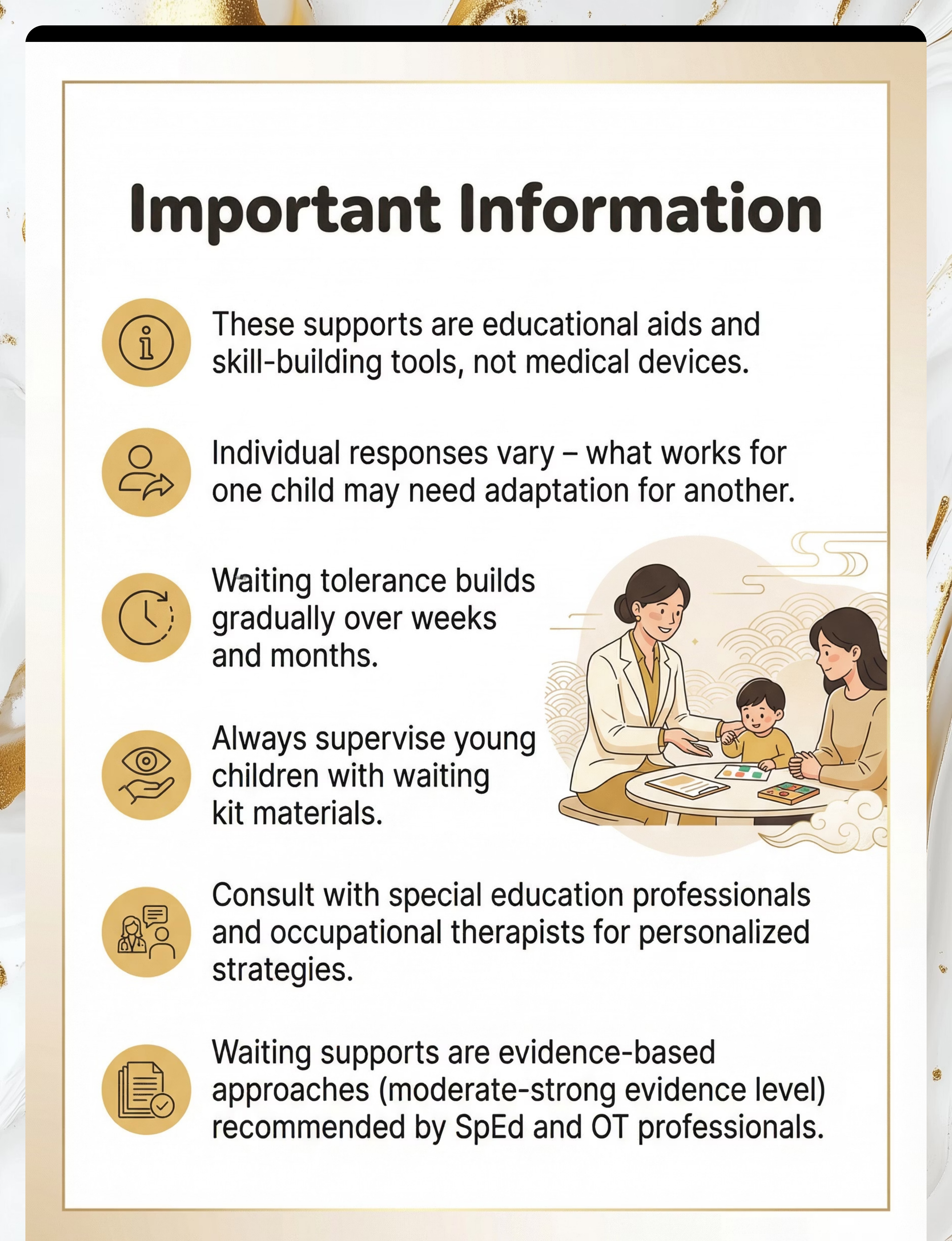
Disclaimer: This is educational information designed to support families and professionals. Always consult qualified occupational therapists, speech-language pathologists, special educators, or pediatricians for personalized guidance. Individual results vary. Waiting supports are tools to build skills—they work best as part of comprehensive support coordinated with your child's therapy team.