





OT + Parent
OT + Parent
Strong Evidence
Rank #1
Constant Use
₹500–50,000
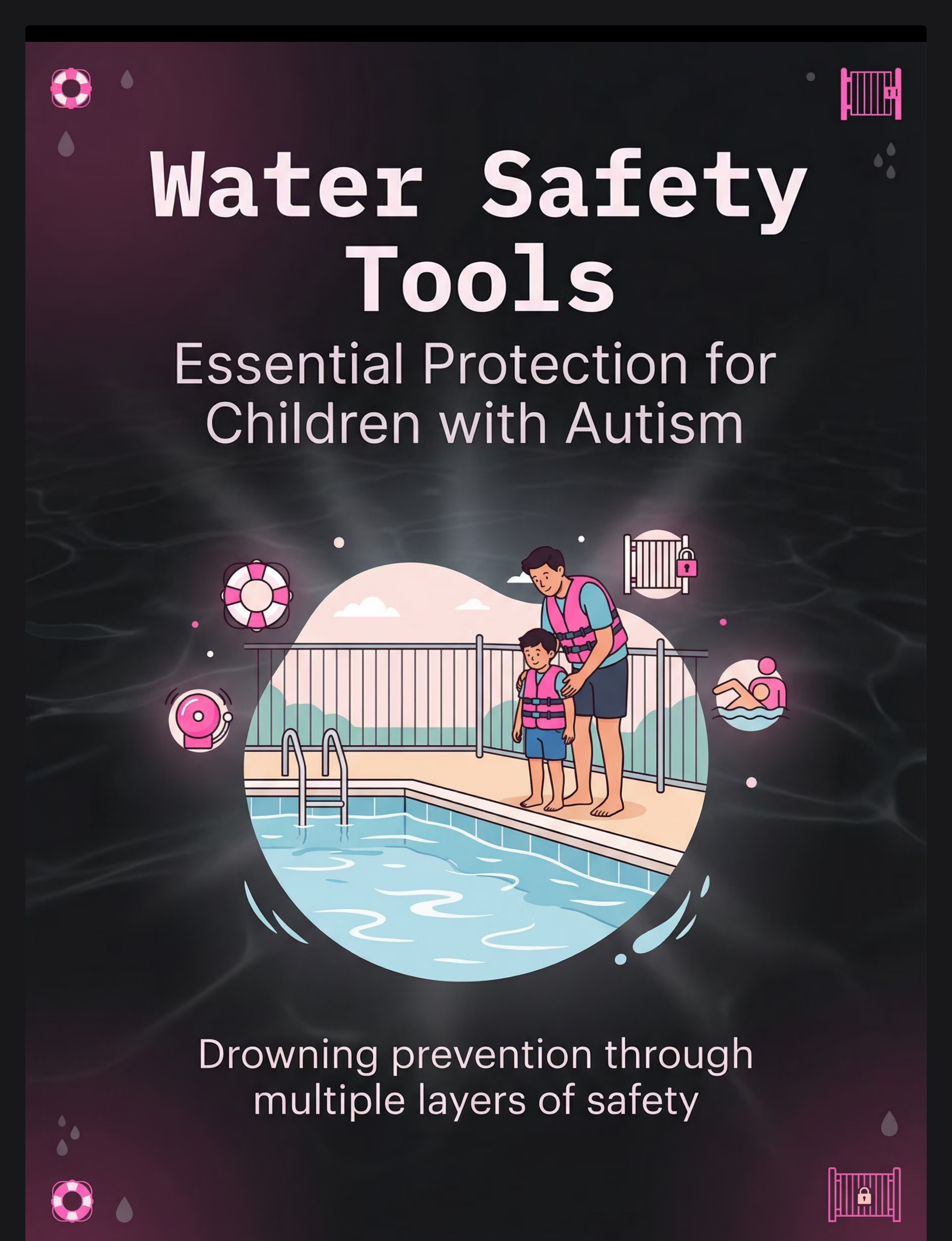
Water Safety Tools
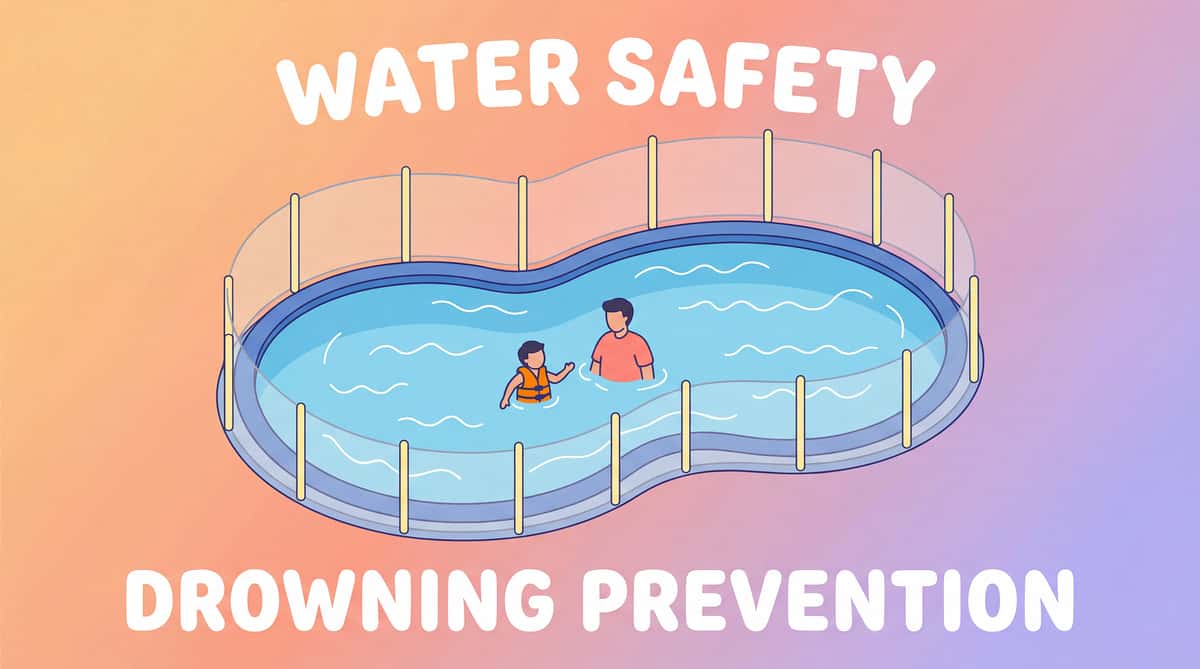
Drowning Prevention and Aquatic Safety System
Multiple layers of protection to prevent drowning through physical barriers, alerts, flotation devices, and swimming instruction. Essential for every family with children near water, especially those with autism who may be drawn to water or not understand water dangers.
water-safety-tools therapy material
Who This Helps
Core Function
This system provides comprehensive drowning prevention through physical barriers, alert systems, flotation devices, and swimming skill development to ensure safety around water.
Target Population
Designed for all ages, especially young children and non-swimmers, families with pools or living near water, and individuals drawn to water such as those with autism or developmental differences.
Primary Benefit
Offers peace of mind and significantly reduces drowning risk by establishing multiple layers of protection, fostering water safety awareness, and equipping individuals with essential self-rescue abilities.
Does This Sound Familiar?
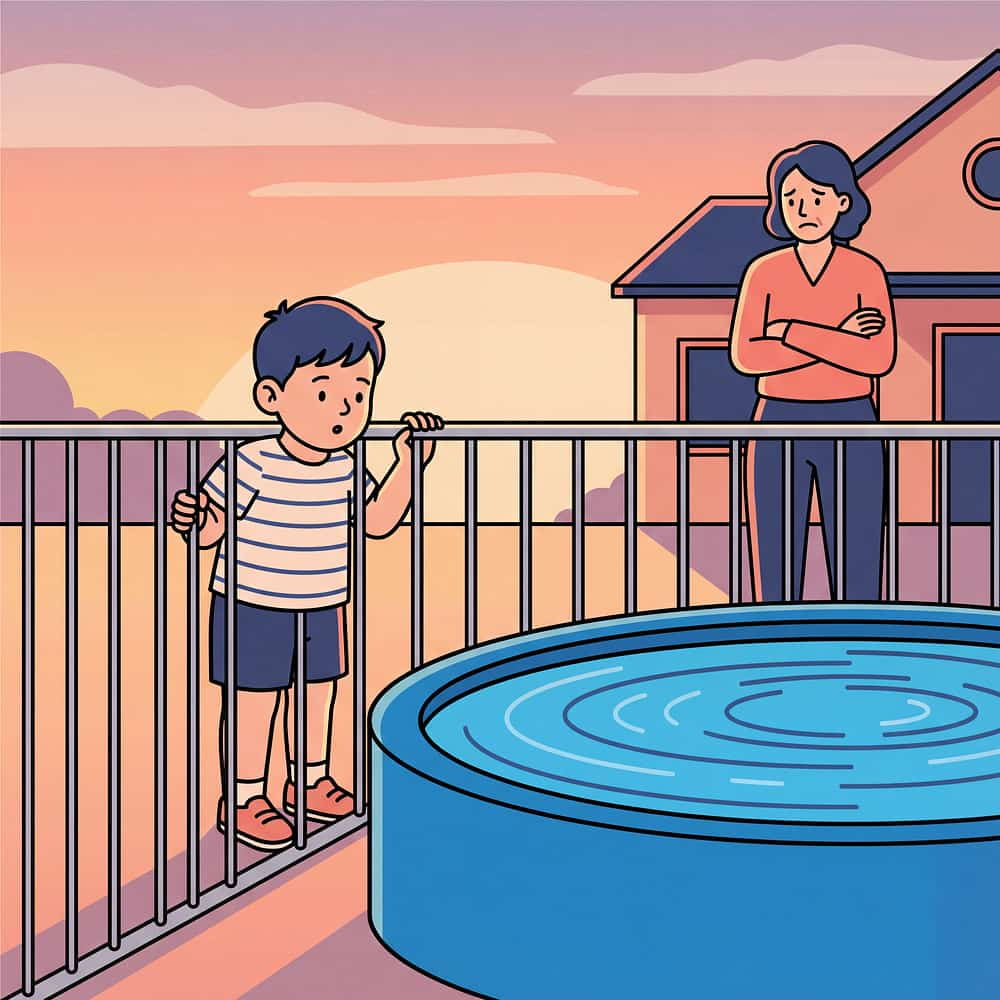
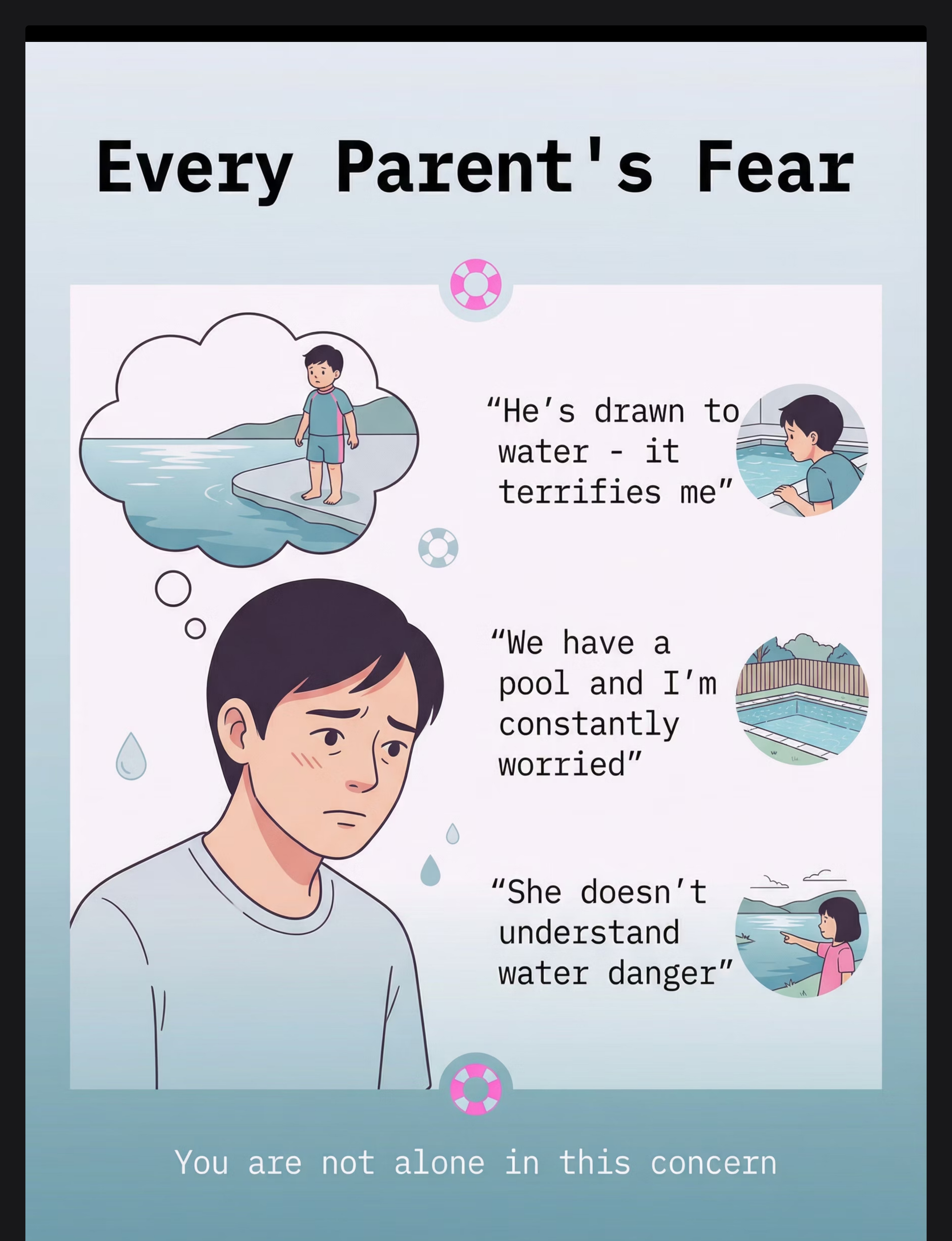
"He's drawn to water - it terrifies me. I can't take my eyes off him for even a second when we're anywhere near the pool or lake."
"We have a pool in our backyard and I'm constantly worried. I wake up at night in a panic wondering if he could somehow get out there."
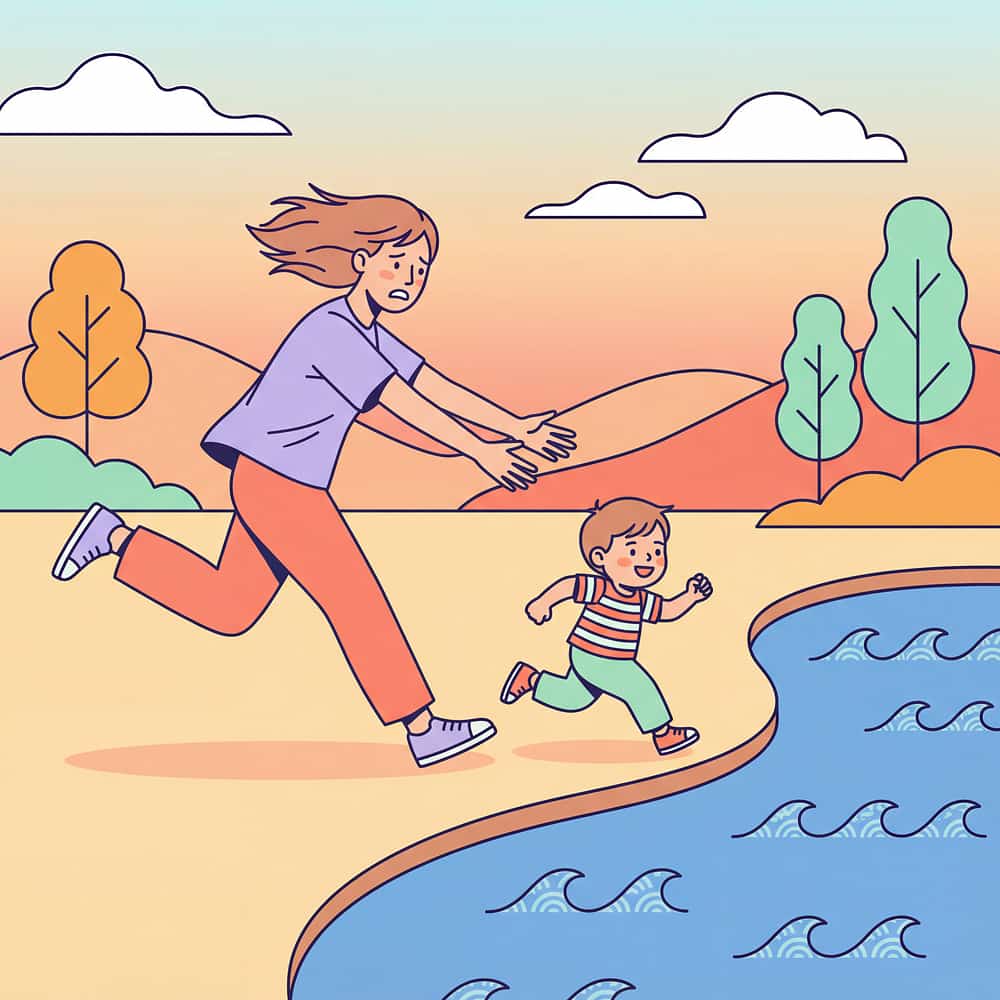
"She doesn't understand water danger at all. She sees water and just wants to jump in, no fear, no hesitation. It's terrifying."
"He can't swim but absolutely loves water. Every pool party, every beach trip, every water activity fills me with anxiety instead of joy."
"Our neighbor has a pool and I'm constantly worried about him wandering over there. What if they forget to lock their gate?"
"We live near a lake and she's eloped toward it twice. I can't live like this - the fear is consuming our entire family."

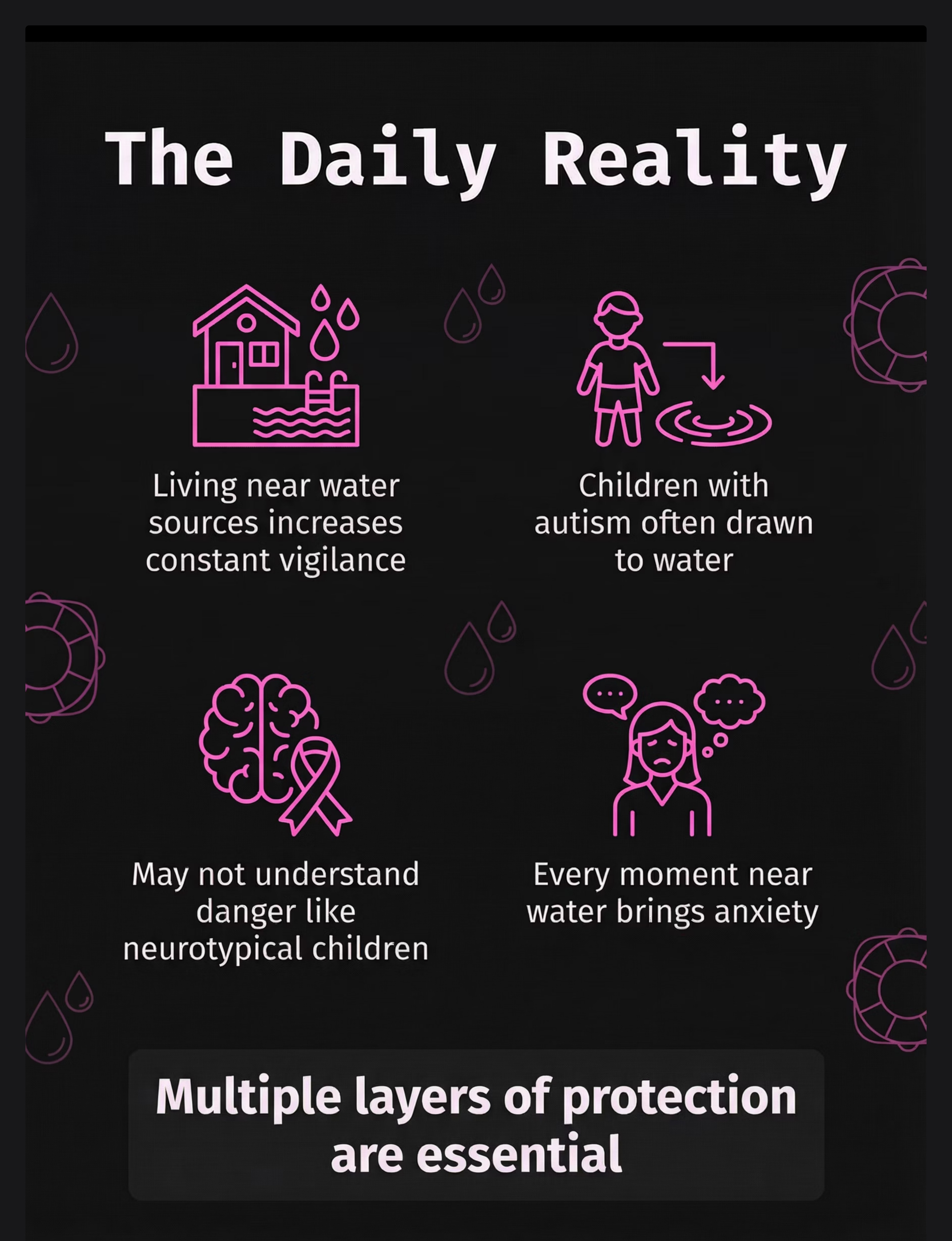
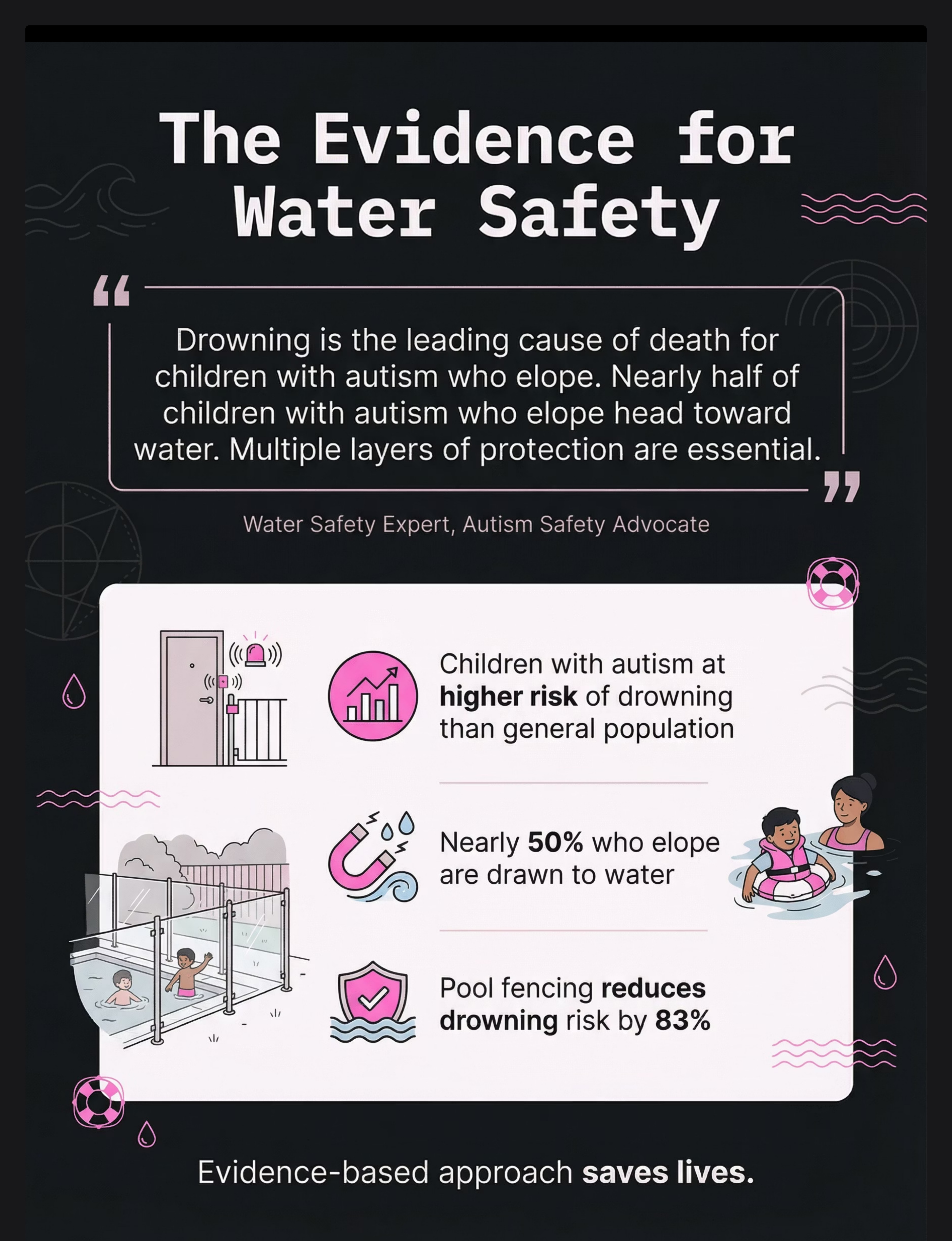
You're not alone. These are common challenges for families of children with autism. Drowning is the leading cause of death for children with autism who elope, and nearly half of children with autism who elope head toward water. This fear is valid, and there are proven solutions.
A Day Without the Right Support
Morning Anxiety
Waking up and immediately checking all doors and windows. Did I lock the pool gate last night? Is he still in bed? The vigilance starts before your eyes are fully open.
Constant Vigilance
Every moment of the day requires eyes on your child when near water. Can't answer the phone, can't look away, can't relax. The mental exhaustion is overwhelming.
Restricted Activities
Saying no to pool parties, beach trips, water parks. Watching other families enjoy water activities while you stay home. The isolation compounds the stress.
Sleep Disruption
Waking up multiple times at night to check on your child. Installing multiple locks. Still unable to sleep soundly because of the constant fear. Exhaustion becomes your baseline.
The Science Behind Water Safety
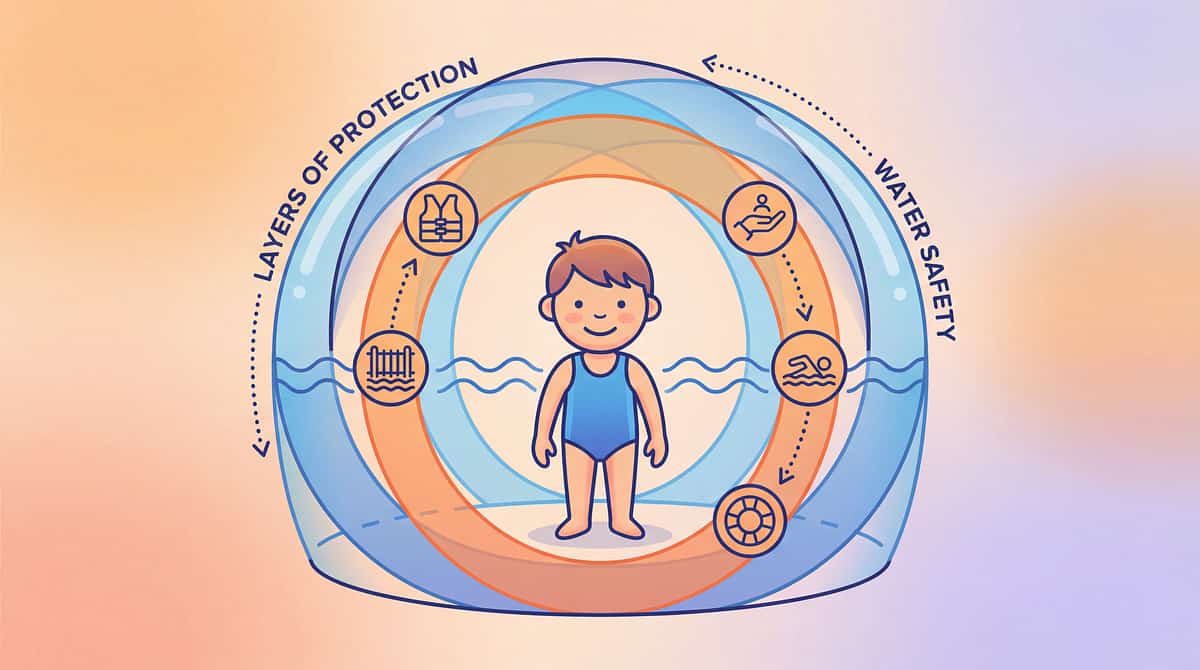
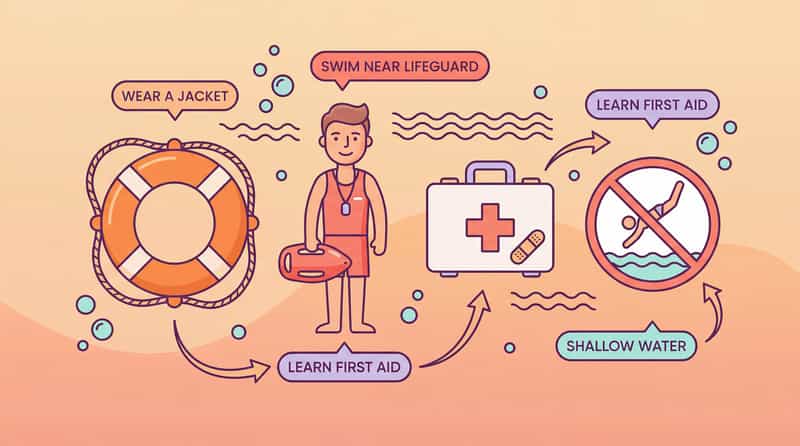
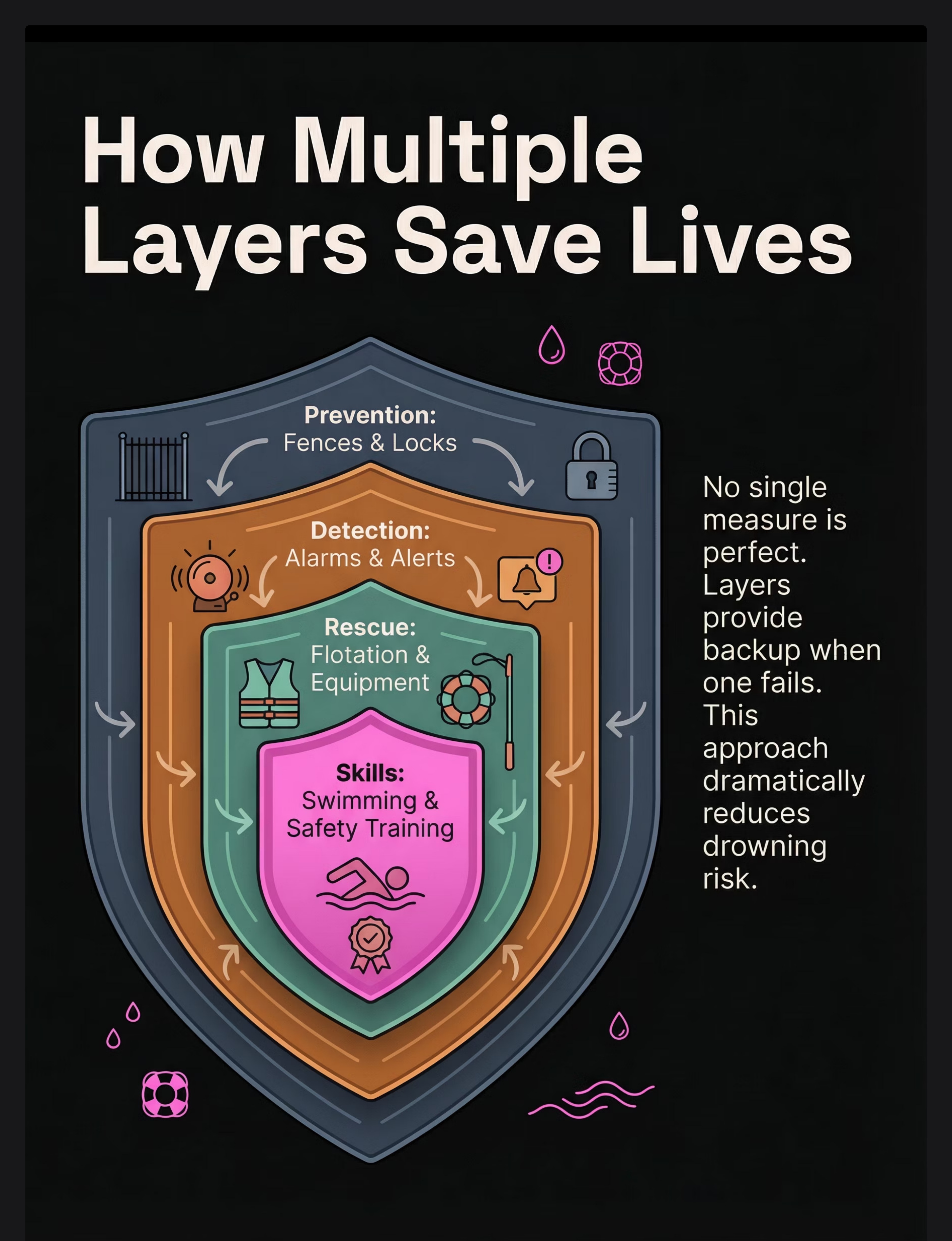
Water safety works through a systematic approach of multiple protective layers. When implemented correctly, these layers work together to dramatically reduce drowning risk and provide families with confidence and peace of mind.
Physical Barriers Prevent Access
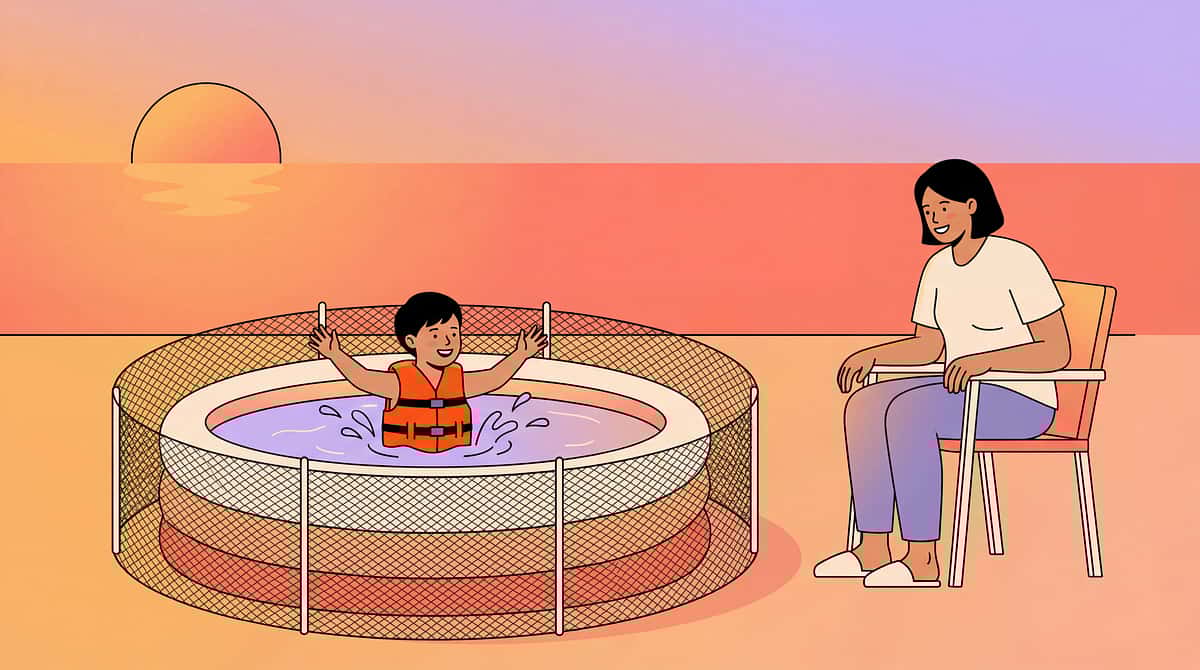
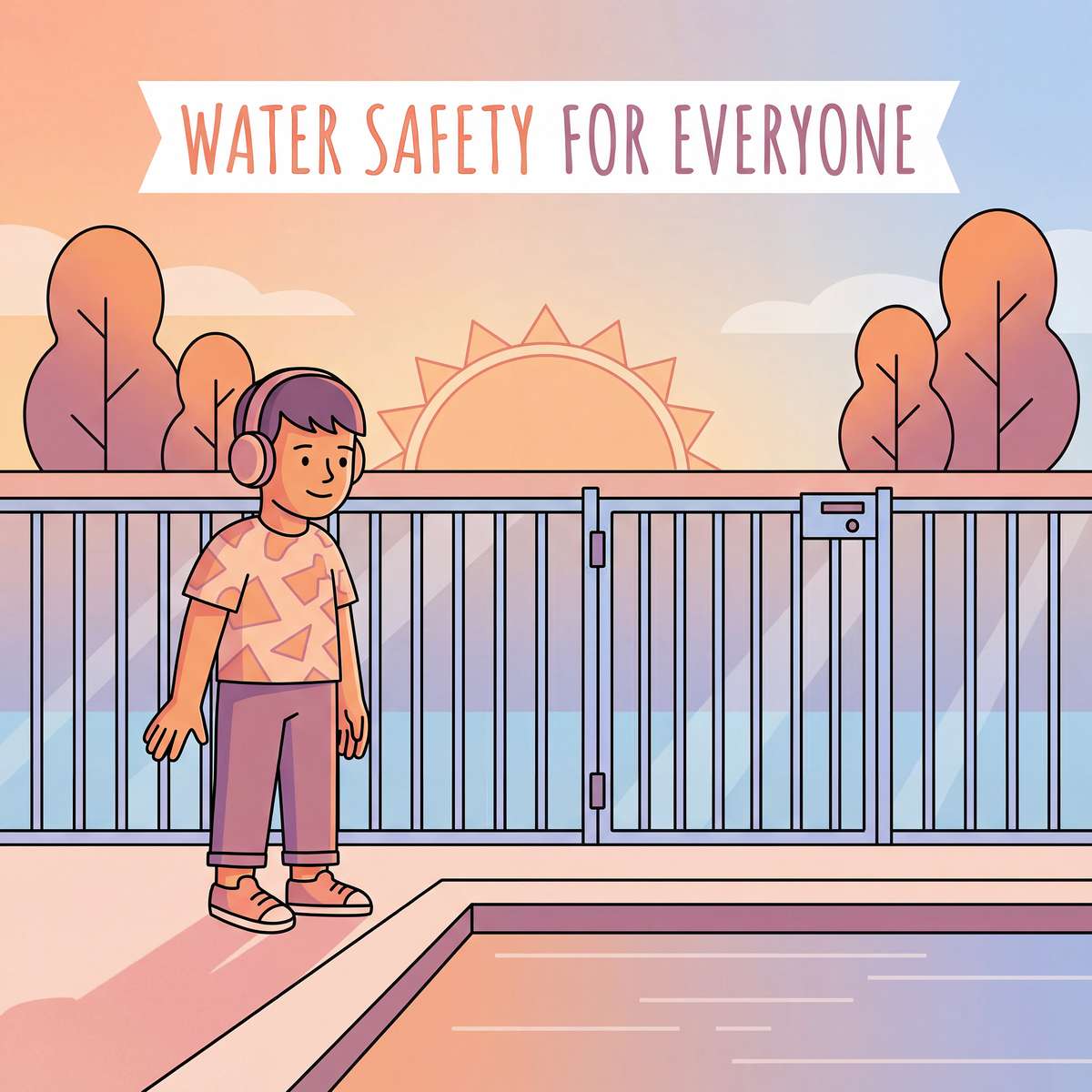
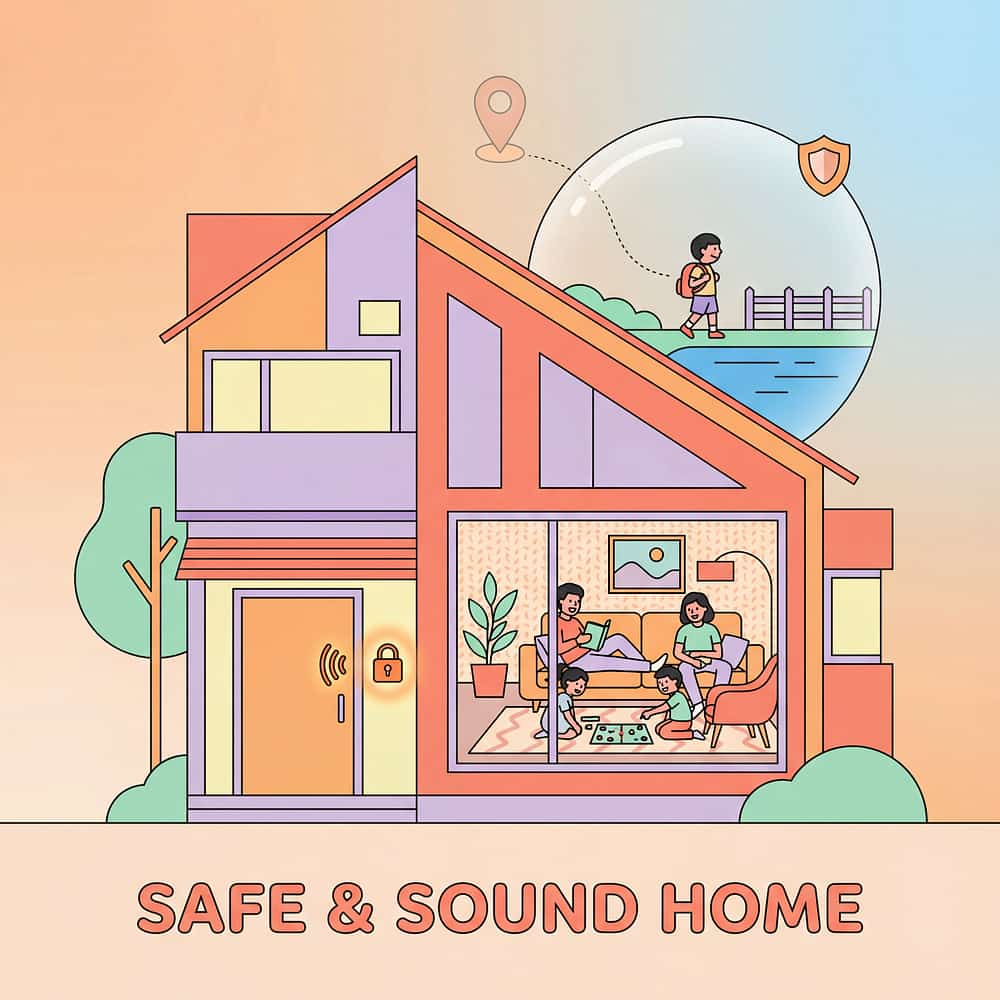
Pool fencing and door locks create the first line of defense, physically preventing unsupervised access to water. Self-latching gates ensure barriers remain effective even when adults forget to lock them.
Alert Systems Provide Notification
Pool alarms and door alarms immediately alert caregivers when water areas are accessed or when doors to pool areas are opened, providing backup when supervision temporarily lapses.
Flotation Offers Backup Protection
Coast Guard approved life jackets and properly fitted swim vests provide critical backup flotation when supervision fails or when barriers are breached, buying precious time for rescue.
Swimming Skills Enable Self-Rescue
Professional swim instruction, including survival swim programs like ISR (Infant Swim Resource), teaches children to self-rescue, float, and navigate water safely - the ultimate protection.
Result: Dramatically Reduced Drowning Risk
Multiple layers working together create redundancy - if one layer fails, others provide backup. This systematic approach has been proven to prevent drowning deaths.
Drowning Prevention
Water Access Control
Flotation
Swimming Skills
Safety Awareness
How to Use Water Safety Tools Right
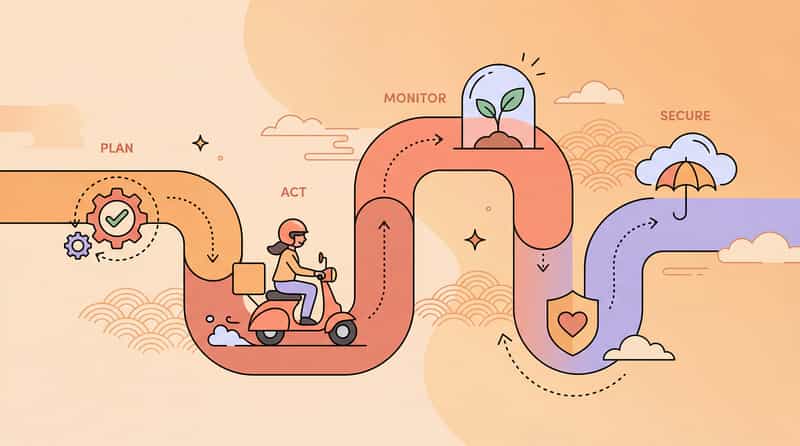
Water safety is most effective when all protective measures work together as a comprehensive system. Here's how to implement water safety correctly to maximize protection for your child.
Layers of Protection
Never Rely on Just One
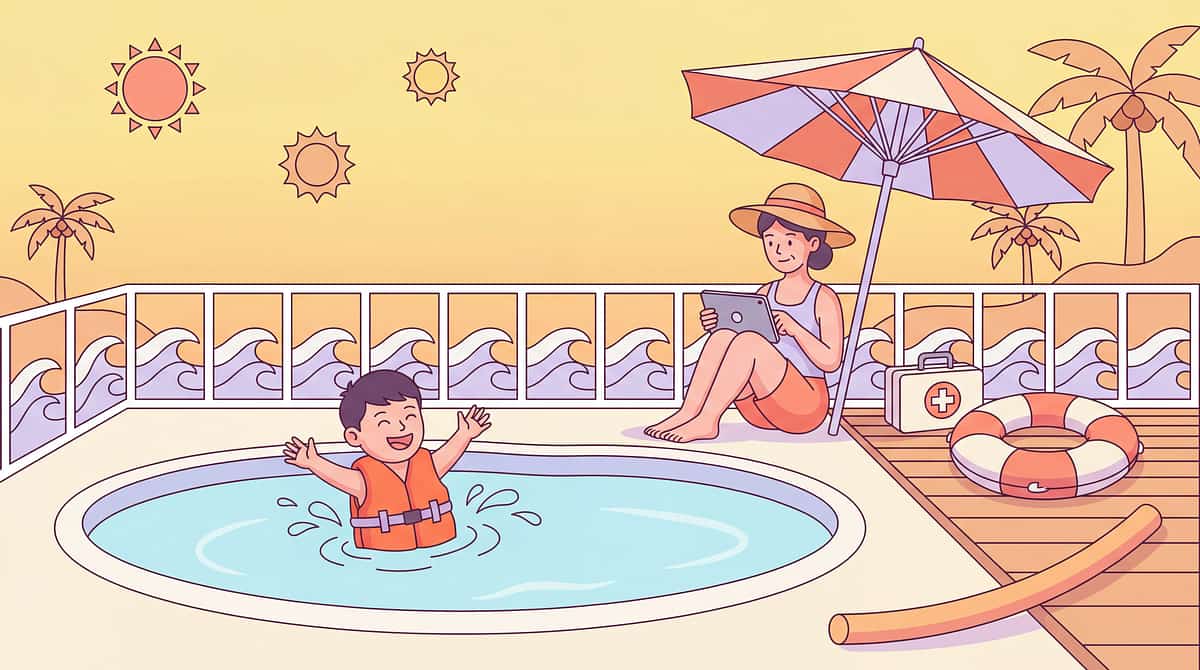
Use barriers, alarms, flotation, and skills training together. Single-layer protection fails - redundancy saves lives. If one layer fails, others provide backup.
Pool Fencing
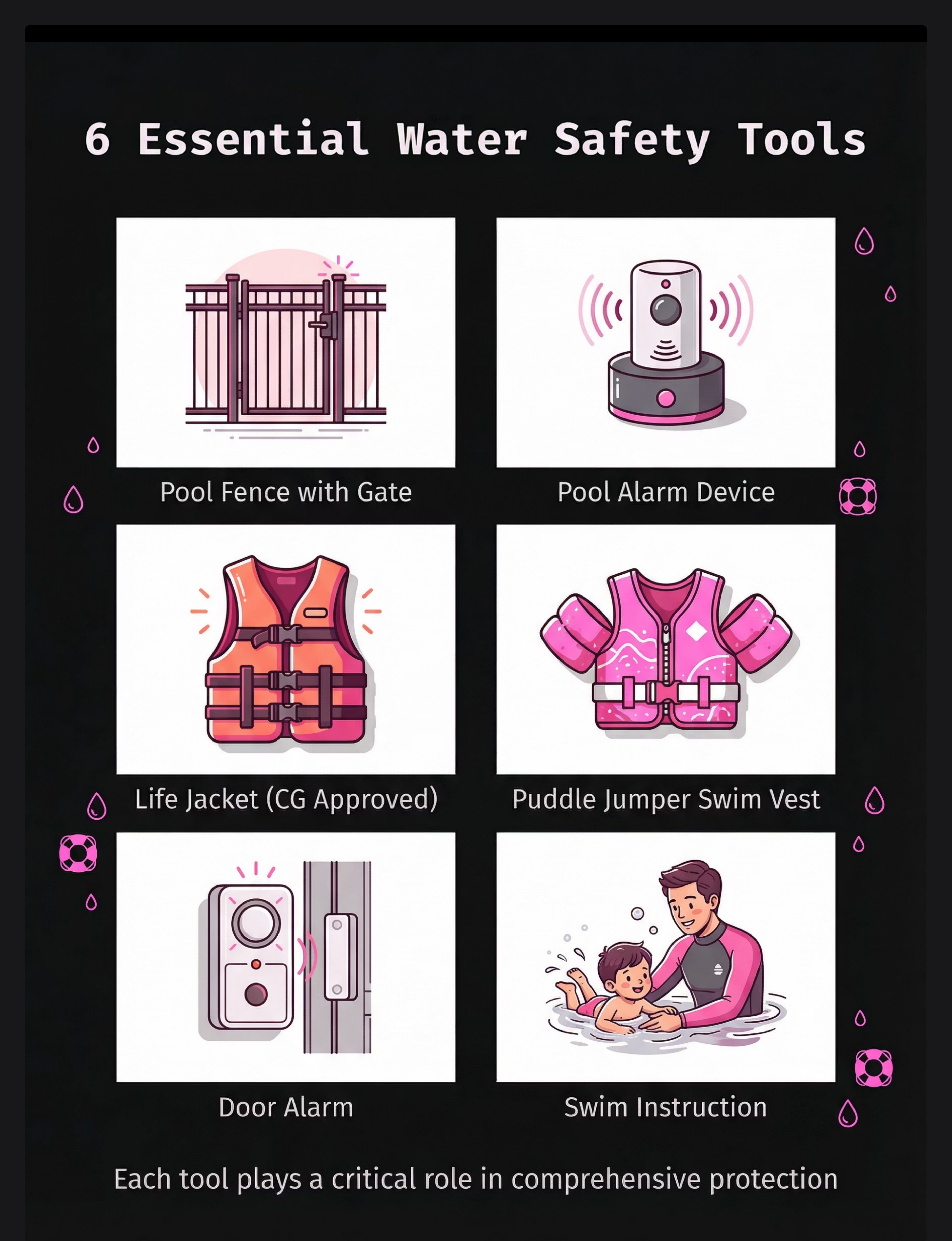
Pool Fence with Self-Latching Gate is Essential
Install climb-resistant fencing around the entire pool perimeter. Self-latching, self-closing gates ensure the barrier remains effective even when adults forget to lock manually. This is the most critical protection.
Alarms
Use Alarms as Backup, Not Primary Protection
Pool alarms and door alarms provide notification but should never replace fencing and supervision. They're the backup layer that alerts you when other protections fail.
Flotation
Life Jackets During ALL Water Activities for Non-Swimmers
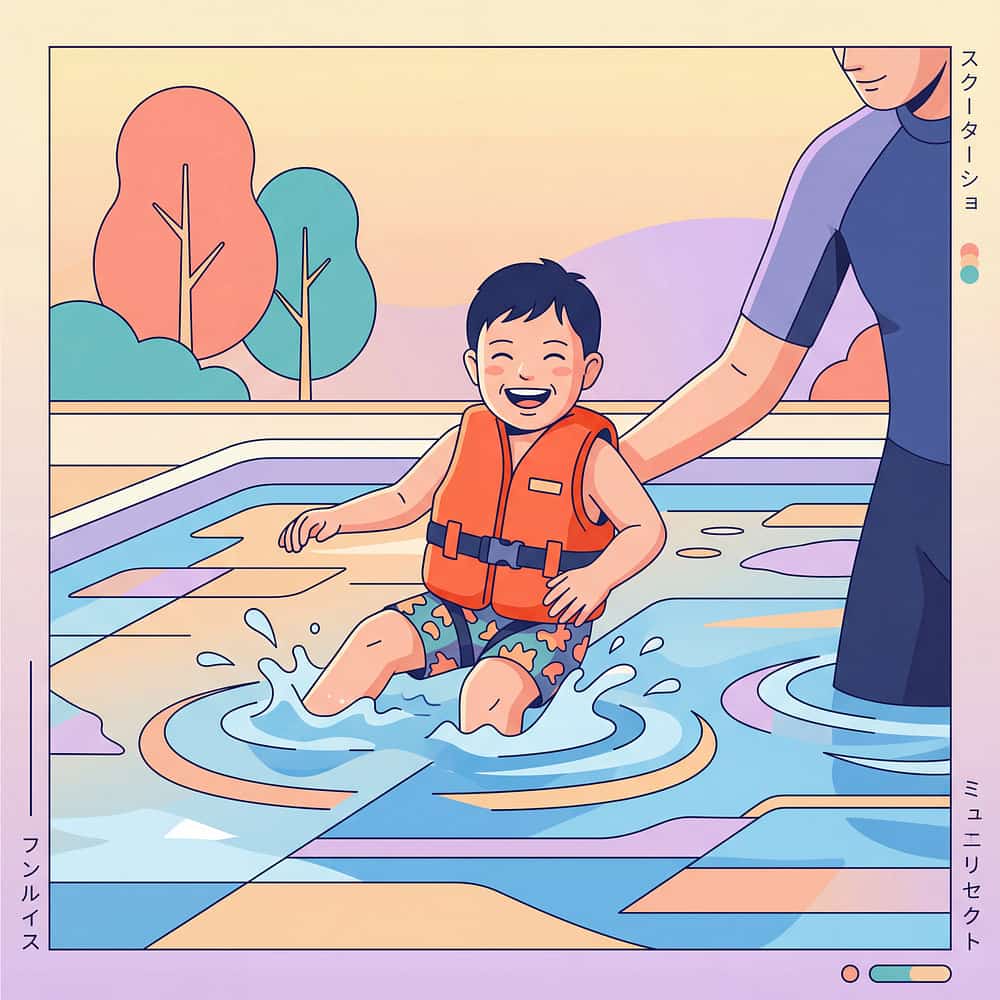
Coast Guard approved life jackets must be worn by non-swimmers during every water activity - no exceptions. Flotation devices are not optional or only for "dangerous" situations.
Swimming Skills
Swimming Lessons for All - ISR If Available
Enroll in professional swim instruction immediately. ISR (Infant Swim Resource) programs teach survival skills specifically designed for young children. Swimming ability is the ultimate self-protection.
Supervision
NEVER Leave Child Unattended Near Water - Even Briefly
100% supervision means constant visual contact when near water. Drowning happens in seconds, silently. Even with all other protections in place, supervision is non-negotiable.
Duration: Permanent protection system - water safety measures remain in place continuously, not just during "swim time."
Expert Perspective on Water Safety
"Drowning is the leading cause of death for children with autism who elope. Nearly half of children with autism who elope head toward water. Pool fencing, door alarms, life jackets, and swimming lessons save lives. Multiple layers of protection are essential."
— Water Safety Expert, Autism Safety Advocate
water-safety-tools therapy material
Parent Recommended
Water safety is co-owned by parents as the primary implementers of home safety systems
OT Recommended
Occupational therapists assess safety needs and recommend appropriate protective equipment
Strong Evidence
Water safety measures are supported by strong evidence and established safety standards
Rank #1 in Safety Category
Highest ranked safety tool due to life-saving critical importance
water-safety-tools therapy material
Four Layers of Water Protection
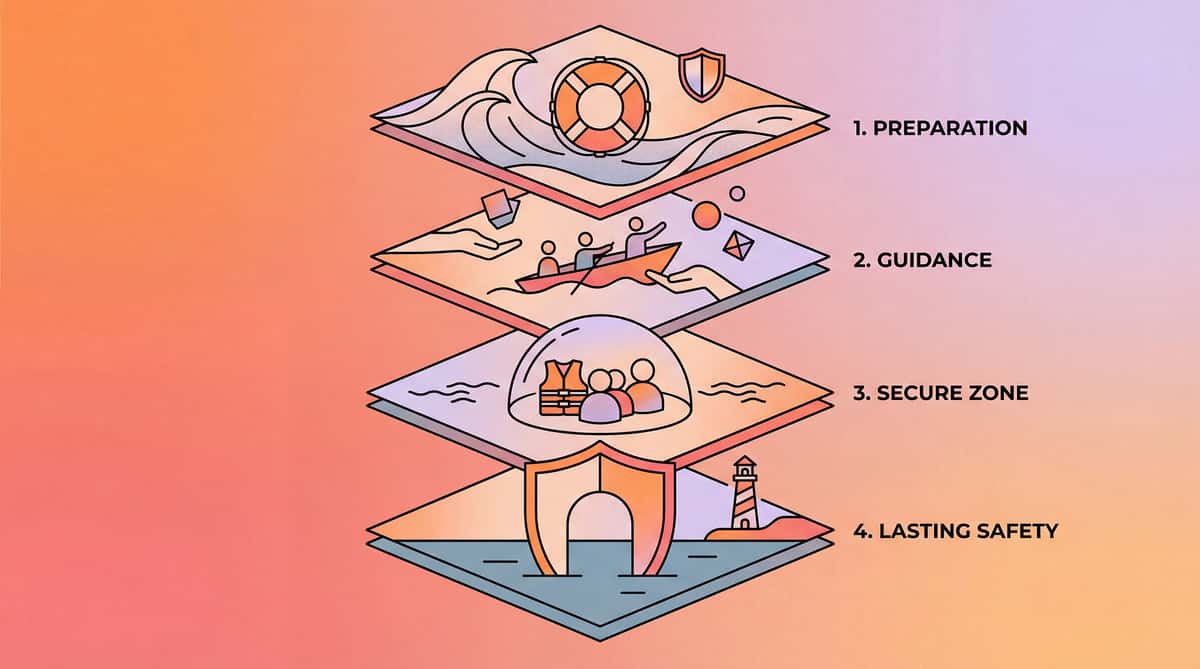
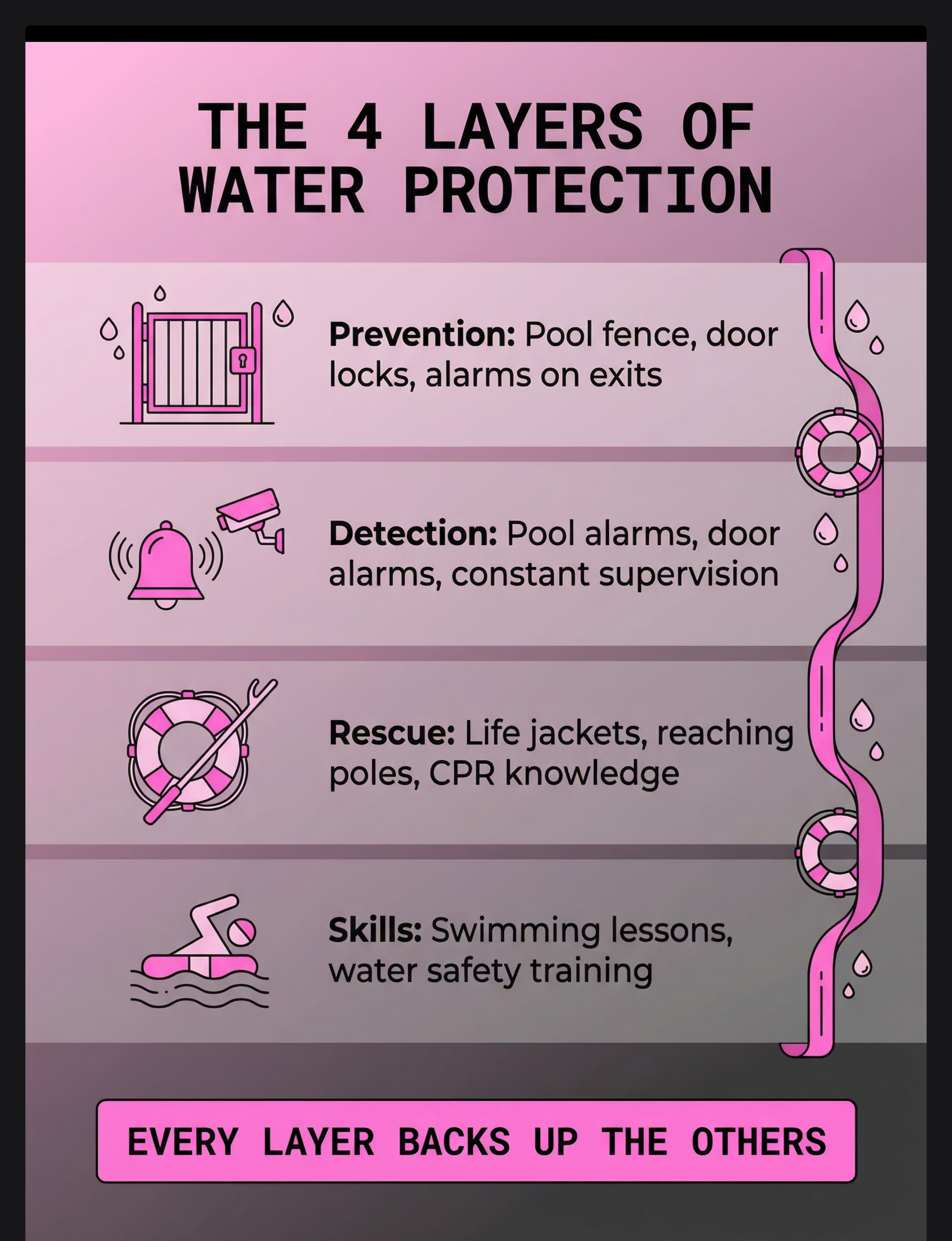
Comprehensive water safety requires multiple layers of protection. Each layer provides backup when another fails - redundancy is what saves lives. Here's how the four layers work together:
Layer 1: Prevention
Layer 2: Detection
Layer 3: Rescue
Layer 4: Skills
Layer 1: Prevention
Pool fence, door locks, alarms on exits
Physical barriers and secure access points prevent unsupervised entry to water areas. Self-latching gates ensure barriers remain effective even when adults forget. This is your first and most important defense.
Layer 2: Detection
Pool alarms, door alarms, supervision
Alert systems immediately notify caregivers when barriers are breached or water is accessed. Continuous supervision provides real-time detection. These systems buy precious seconds for intervention.
Layer 3: Rescue
Life jackets, reaching poles, CPR knowledge
Flotation devices keep non-swimmers afloat if they enter water. Rescue equipment and CPR training enable effective emergency response. This layer provides critical time for rescue when prevention and detection fail.
Layer 4: Skills
Swimming lessons, water safety training
Swimming ability and water safety knowledge provide self-rescue capability. Professional instruction including survival swim programs (ISR) teaches children to float, breathe, and reach safety independently.
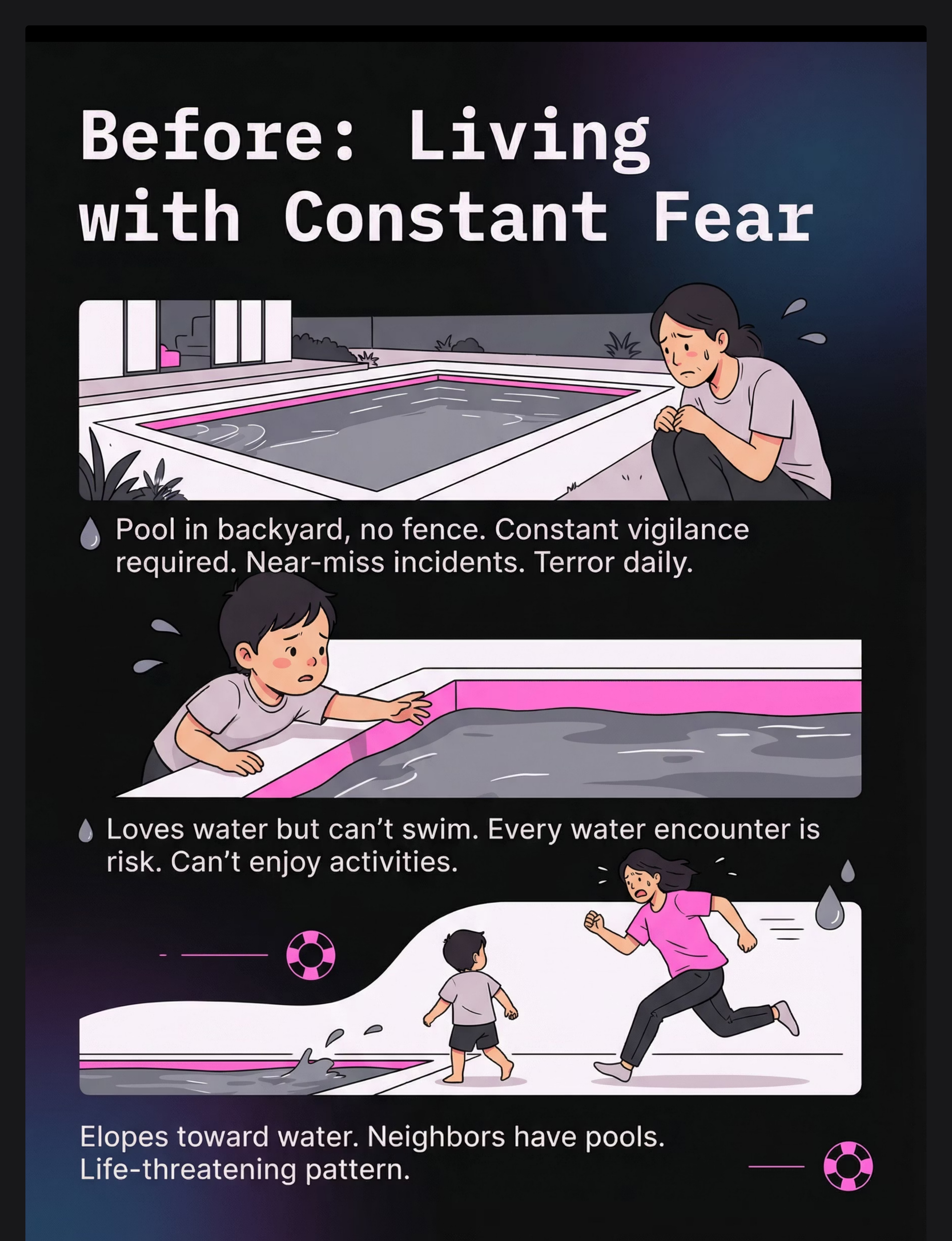
The Struggle (Before Water Safety)
Scenario 1: Pool in Backyard
Situation: Family has pool. Child drawn to water. No fence. Constant vigilance required. Near-miss incidents. Terror daily.
Experience: Every moment is consumed by fear. Can't look away, can't relax, can't sleep soundly. The pool that should bring joy has become a source of constant terror.
Emotion: Fear, exhaustion
Scenario 2: Can't Swim But Loves Water
Situation: Child loves water but can't swim. No safety skills. Every water encounter is risk. Can't enjoy water activities.
Experience: Saying no to every pool party, beach trip, water park invitation. Watching other families enjoy water while staying isolated at home. The guilt and restriction compound daily.
Emotion: Fear, restriction
Scenario 3: Elopes Toward Water
Situation: Child has eloped toward water multiple times. Neighbors have pools. River nearby. Life-threatening pattern.
Experience: Living in constant high-alert mode. Multiple locks on every door. Waking up at night in panic. Afraid to let child play outside. The fear is paralyzing the entire family.
Emotion: Terror, urgency
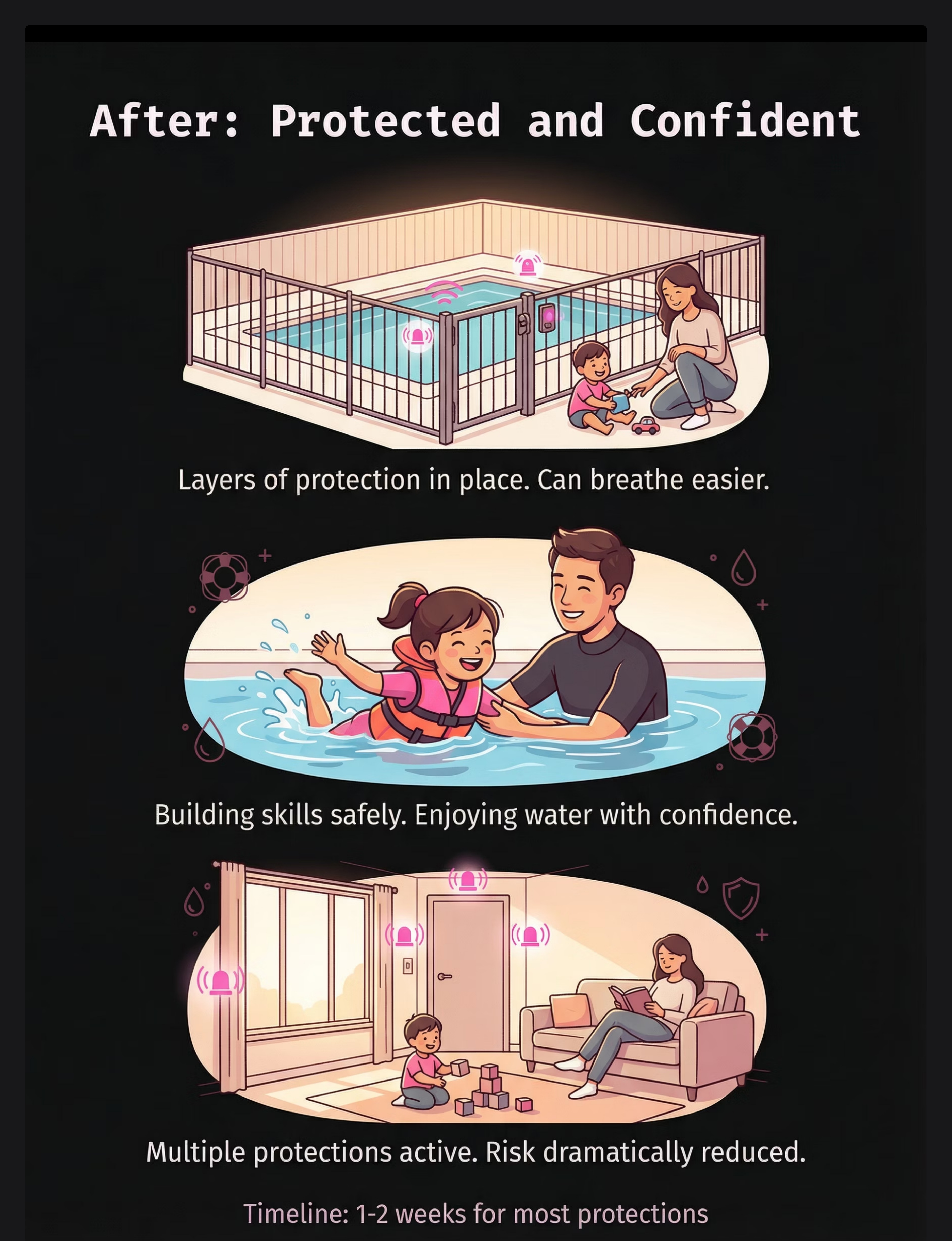
The Breakthrough (After Water Safety Implementation)
Scenario 1: Pool in Backyard
Situation: Pool fenced with self-latching gate. Alarms on all doors to pool area. Pool alarm installed. Layers of protection in place.
Experience: Can finally breathe. Multiple backup systems provide confidence. Still supervise but no longer living in constant terror. Family can enjoy their pool again.
Emotion: Protected, layers in place
1-2 weeks installation
Scenario 2: Can't Swim But Loves Water
Situation: Enrolled in autism-friendly swim lessons. Wears life jacket for all water activities. Building skills. Enjoying water safely.
Experience: Saying yes to water activities with confidence. Swimming skills developing weekly. Life jacket provides backup during learning. Joy replacing fear.
Emotion: Safer, skill-building
Ongoing
Scenario 3: Elopes Toward Water
Situation: Door alarms on all exits. Neighbors notified and aware. GPS tracking. Pool fences requested. Multiple protections.
Experience: Multiple layers catch elopement attempts. Neighbors are allies now. GPS provides additional backup. Still vigilant but not paralyzed by fear. Systems working.
Emotion: Layers of safety, reduced risk
1-2 weeks
water-safety-tools therapy material
What to Expect: Realistic Timelines for Water Safety
Water safety implementation happens in stages. Some protections provide immediate safety while others take time to install or learn. Here's what you can realistically expect:
Pool Fenced (if applicable)
Professional installation of pool fencing with self-latching gate. Includes site assessment, ordering materials, and complete installation.
1-2 weeks
Alarms Installed
Pool alarms and door alarms purchased, installed, and tested. Backup batteries installed and family trained on system.
1-3 days
Life Jackets Available
Coast Guard approved life jackets purchased, properly fitted, and accessible for all water activities. Family trained on proper use.
Immediate
Swim Lessons Started
Autism-friendly swim instructor identified, lessons scheduled and begun. Initial assessment completed and learning plan established.
1-2 weeks
Multiple Layers of Protection
All protective measures fully implemented and working together. Family confident in comprehensive water safety system.
1-2 weeks
water-safety-tools therapy material
Is Water Safety Right for My Child? (2-Minute Check)
Answer these four critical questions to assess your family's water safety needs. Three or more "yes" answers indicate urgent need for comprehensive water safety measures.
Do you have a pool or live near water?
If yes, this indicates: CRITICAL - water safety essential
Any proximity to water - backyard pools, neighbor pools, lakes, rivers, ponds, or regular water activities - makes water safety measures absolutely critical and non-negotiable.
Is your child attracted to water?
If yes, this indicates: Higher risk - multiple layers needed
Children with autism are often drawn to water due to sensory appeal. This attraction combined with reduced danger awareness creates significantly elevated drowning risk.
Can your child swim independently?
If yes: Maintain skills; still supervise closely
If no, this indicates: Swim lessons + always life jacket required
Non-swimmers require life jackets for ALL water activities without exception, plus immediate enrollment in professional swim instruction including survival swim programs.
Is your pool fully fenced with alarms?
If yes: Good - maintain and test regularly
If no, this indicates: URGENT - install immediately
Pool fencing with self-latching gates is the single most important drowning prevention measure. If your pool is not fully fenced, this is an emergency that requires immediate action.

Assessment Result: If you answered "yes" to 3 or more questions, implementing comprehensive water safety measures is a strong fit and urgent priority for your family. Even one "yes" to questions 1 or 4 indicates critical need.
Usage Guide: When and How to Use Water Safety Tools
water-safety-tools therapy material
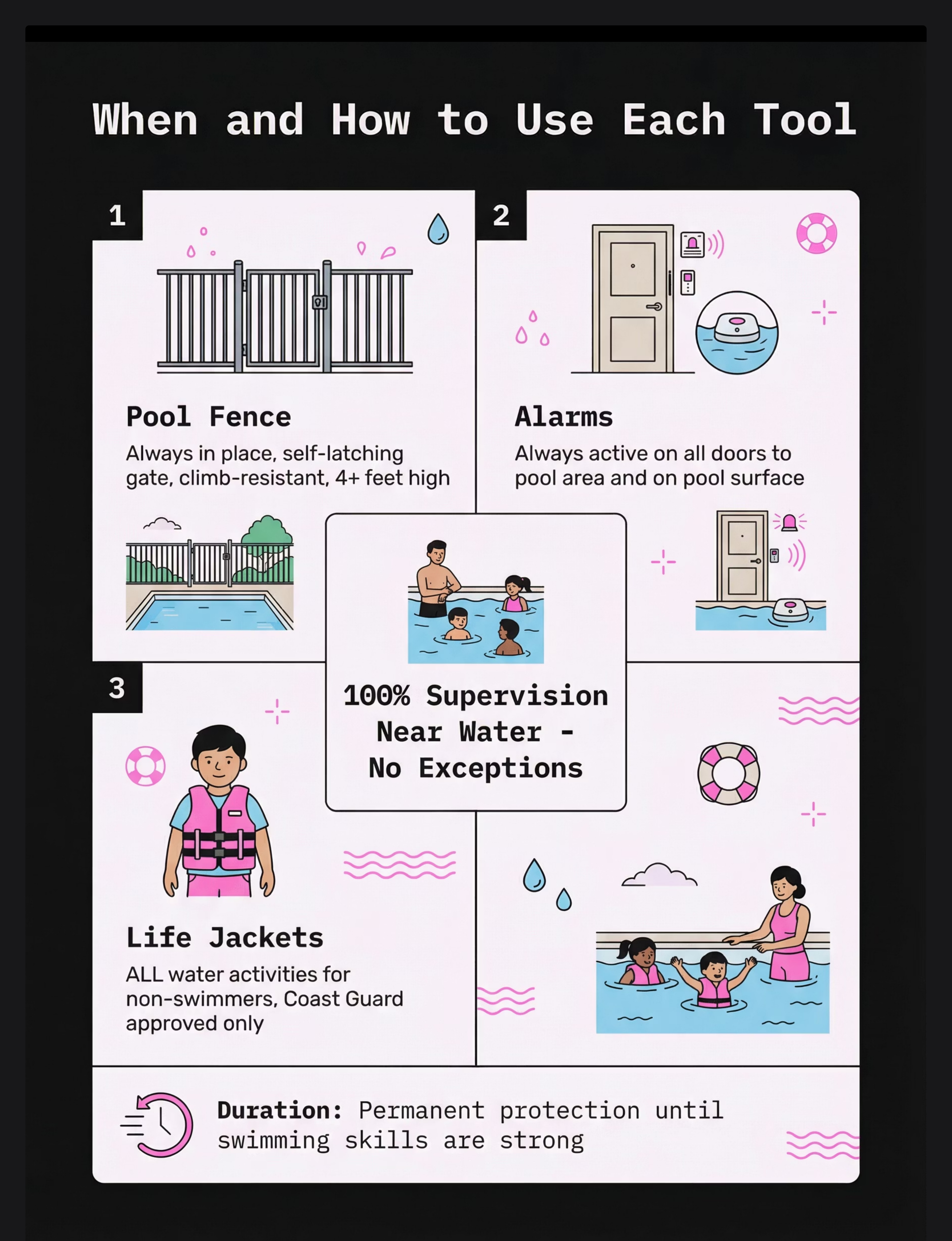
When to Use Water Safety Measures
Pool Fence
Always in Place
Permanent installation providing 24/7 barrier protection.
Alarms
Always Active
Armed continuously, with battery backups tested regularly.
Life Jackets
ALL Water Activities for Non-Swimmers
Coast Guard approved; worn by anyone who cannot swim independently—no exceptions.
Supervision
100% of Time Near Water
Direct visual supervision required at all times, even with other protections.
When NOT to Use (Critical Warnings)
Never Remove Safety Equipment
Pool fences, alarms, and other installed safety measures should never be removed or disabled, even temporarily
Never Skip Life Jacket for Non-Swimmers
Life jackets are non-negotiable for non-swimmers during any water activity, regardless of how "safe" the situation seems
Supervision Requirements by Age
Age Range
Supervision Level
Notes
All ages
100% supervision near water
No exceptions - drowning takes seconds and is silent
Duration and Settings
Duration: Permanent protection - water safety measures are continuous, not temporary
Settings where water safety applies:
Home with Pool
Near Any Water
Water Activities
Swimming
Beach
Lake/River
Safety First: Critical Information
water-safety-tools therapy material
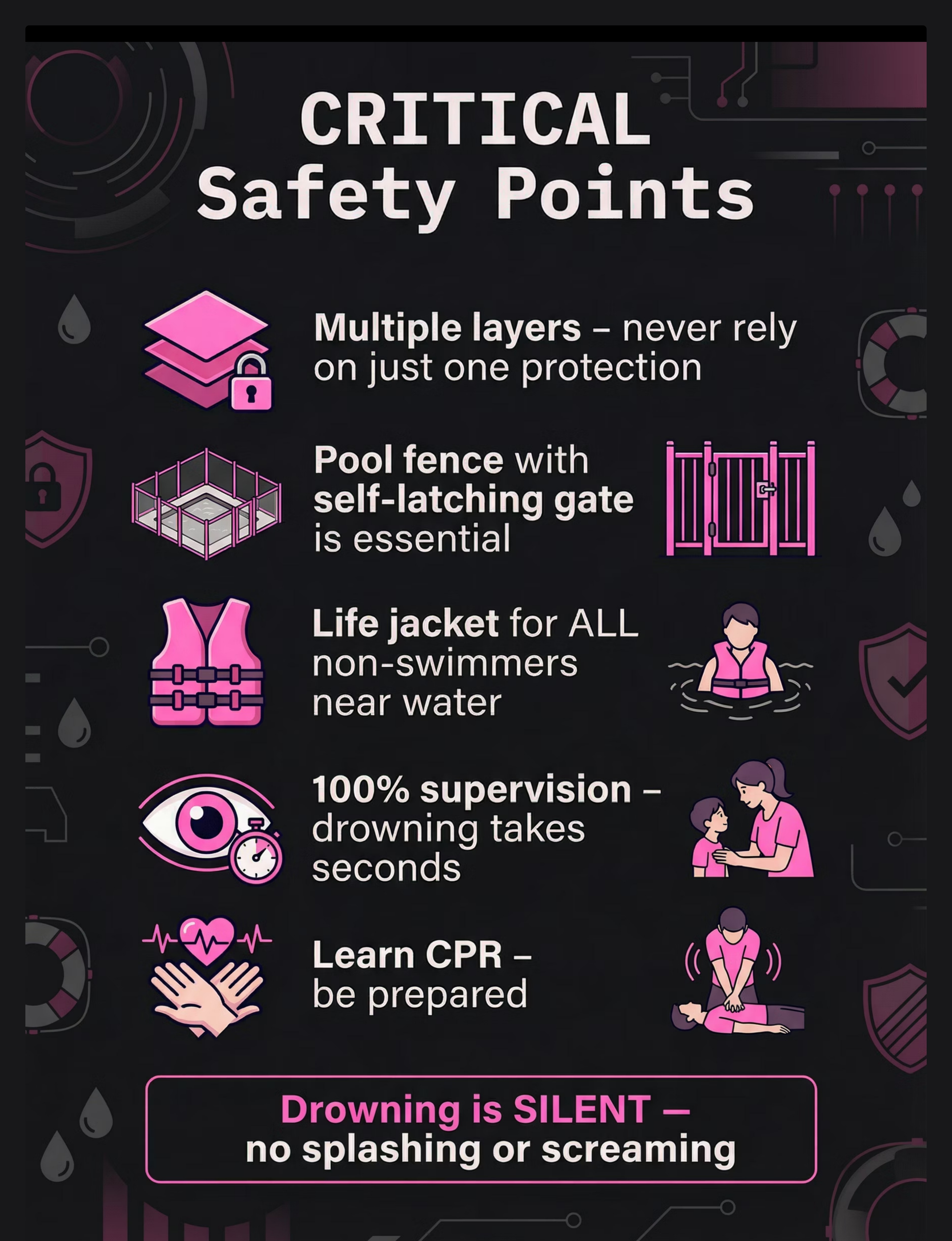
LAYERS of protection - never just one:
Multiple protective measures must work together. Single-layer protection is insufficient and dangerous.
Pool fence with self-latching gate:
This is the most important drowning prevention measure. Non-negotiable for any home with a pool.
Life jacket for ALL non-swimmers near water:
Coast Guard approved life jackets required for every water activity. No exceptions.
100% supervision - drowning takes seconds:
Continuous visual contact when near water. Drowning is silent - no splashing or screaming.
Learn CPR:
All caregivers should be trained in pediatric CPR and water rescue techniques.

⚠️ WARNINGS
  • Drowning is silent - no splashing/screaming: Hollywood portrayal of drowning is inaccurate. Real drowning is silent and happens in seconds.
  • Arm floaties are NOT safety devices: Inflatable arm bands provide false security and are not Coast Guard approved flotation devices.
  • Supervision lapses happen - layers provide backup: Even vigilant parents experience momentary distractions. Multiple layers protect when supervision temporarily fails.

🛑 CONTRAINDICATED / DO NOT USE
  • Single layer of protection: Relying on only one safety measure (like "I'll watch them") is insufficient
  • Non-approved flotation devices: Only Coast Guard approved devices provide reliable flotation
  • Unsupervised water access: Never allow children near water without direct adult supervision, regardless of other protections
Safety Checklist
Before Use
  • ✓ Pool fenced with latching gate
  • ✓ All alarms functional
  • ✓ Life jackets available and fitted
  • ✓ Supervision plan in place
During Use
  • ✓ Eyes on child 100% near water
  • ✓ Life jacket worn (non-swimmers)
  • ✓ Alarms active
  • ✓ Emergency plan known
Signs of Success
  • ✓ Zero unsupervised water access
  • ✓ All protection layers in place
  • ✓ Swimming skills developing
  • ✓ Family confident in water safety
water-safety-tools therapy material
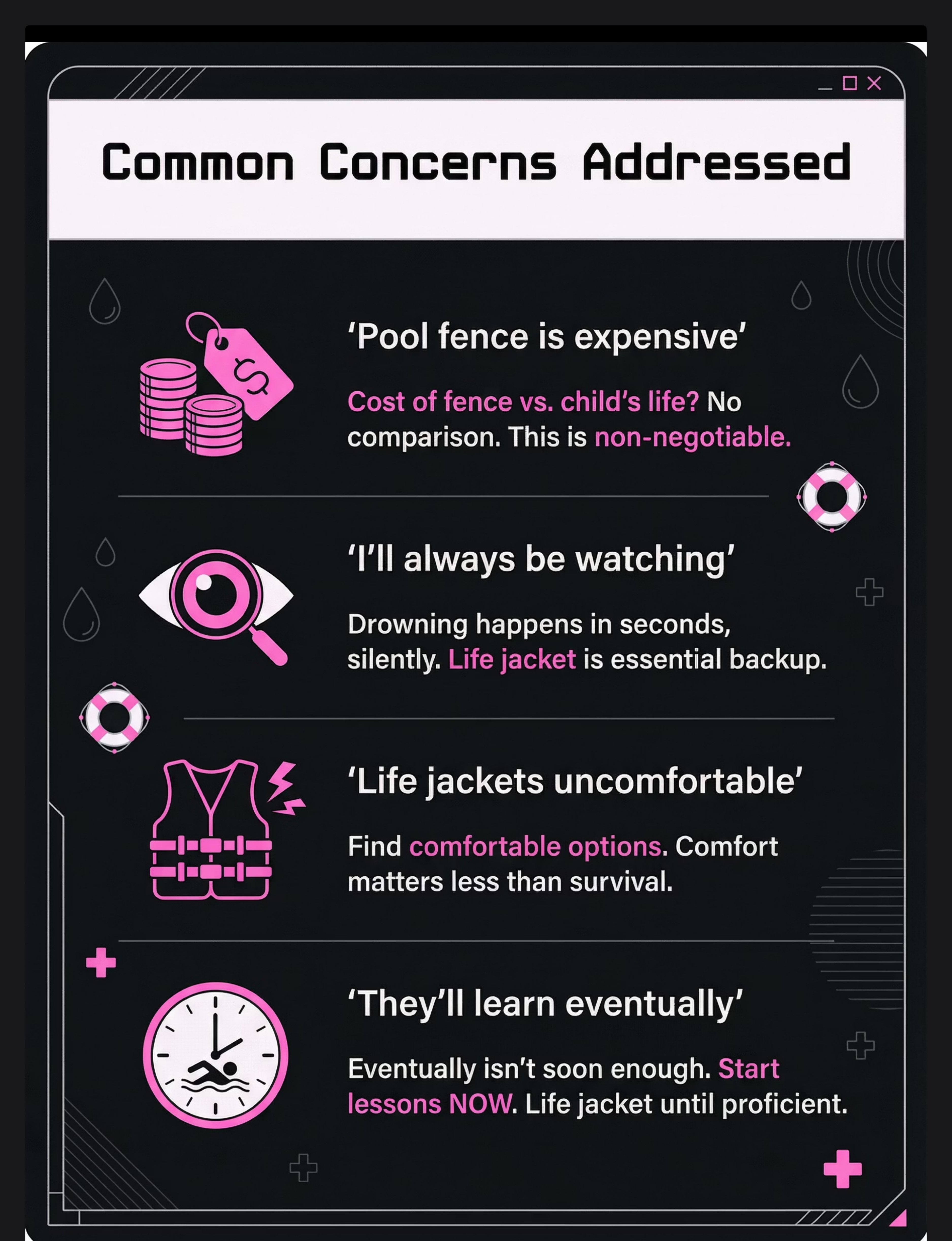
Common Questions (Honest Answers)
"Pool fence is expensive"
Response: Cost of a fence vs. cost of a child's life. There is no comparison. Many communities have resources. Some areas require fencing by law. This is non-negotiable.
Alternative approach: Non-negotiable; research local resources; check legal requirements; some communities offer assistance programs for safety equipment.
"I'll always be watching - they don't need a life jacket"
Response: Drowning happens in seconds, silently. Supervision lapses happen to everyone. Life jacket provides backup when supervision fails - and it will sometimes fail.
Alternative approach: Supervision can fail; life jackets are essential backup protection; non-negotiable for non-swimmers.
"Life jackets are uncomfortable - they won't wear it"
Response: Find comfortable options. Practice wearing at home. Make it non-negotiable for water access. Comfort matters less than survival.
Alternative approach: Try different styles for better fit; gradual desensitization at home; clear rule: no life jacket = no water access.
"They'll learn to swim eventually"
Response: Eventually isn't soon enough. Start lessons NOW. ISR (Infant Swim Resource) teaches survival skills. Until swimming is strong, life jacket is essential.
Alternative approach: Begin professional swim instruction immediately; use life jackets until independently proficient; ISR programs teach survival skills for young children.
water-safety-tools therapy material
Investment Guide: Budget vs. Premium Options
Water safety investments range from essential minimums to comprehensive systems. Both budget and premium approaches can provide effective protection when implemented correctly.
Comparison of Water Safety Investments
Option
Life jacket + door alarms
Pool fence + pool alarm + door alarms + life jackets + swim lessons
Investment (INR)
₹1,000–2,500
₹15,000–50,000+
Key Protection
Immediate flotation; access alerts
Multi-layer physical barrier, alarms, flotation, skill building
Best For
Essential protection, temporary solution
Comprehensive safety, high water exposure
Why Invest in Water Safety?
Essential Protection
Provides immediate safeguards against drowning incidents, which can happen silently and quickly.
Peace of Mind
Knowing your loved ones are protected allows for greater relaxation and enjoyment of water activities.
Layered Approach
Multiple safety measures create redundancy, ensuring protection even if one layer fails.
Building Your Water Safety Plan
Assess Your Needs
Evaluate your home's water risks and family's swimming abilities.
Prioritize Essentials
Start with life jackets and door/pool alarms for immediate protection.
Install Physical Barriers
Invest in professional pool fencing as the primary layer of defense.
Enroll in Swim Lessons
Teach crucial survival and swimming skills to all family members.
Regular Maintenance & Review
Check safety equipment periodically and update your plan as needs change.
Overall Investment Range: ₹500–50,000 (USD $6–600)
Recommended starting point: If you have a pool: invest in fencing first, then add alarms and flotation. If you don't have a pool but live near water: start with life jackets and swim lessons, then add alarms.
water-safety-tools therapy material
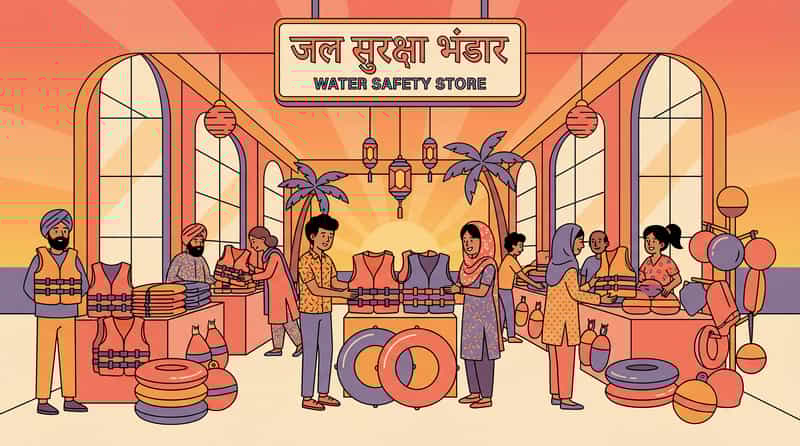
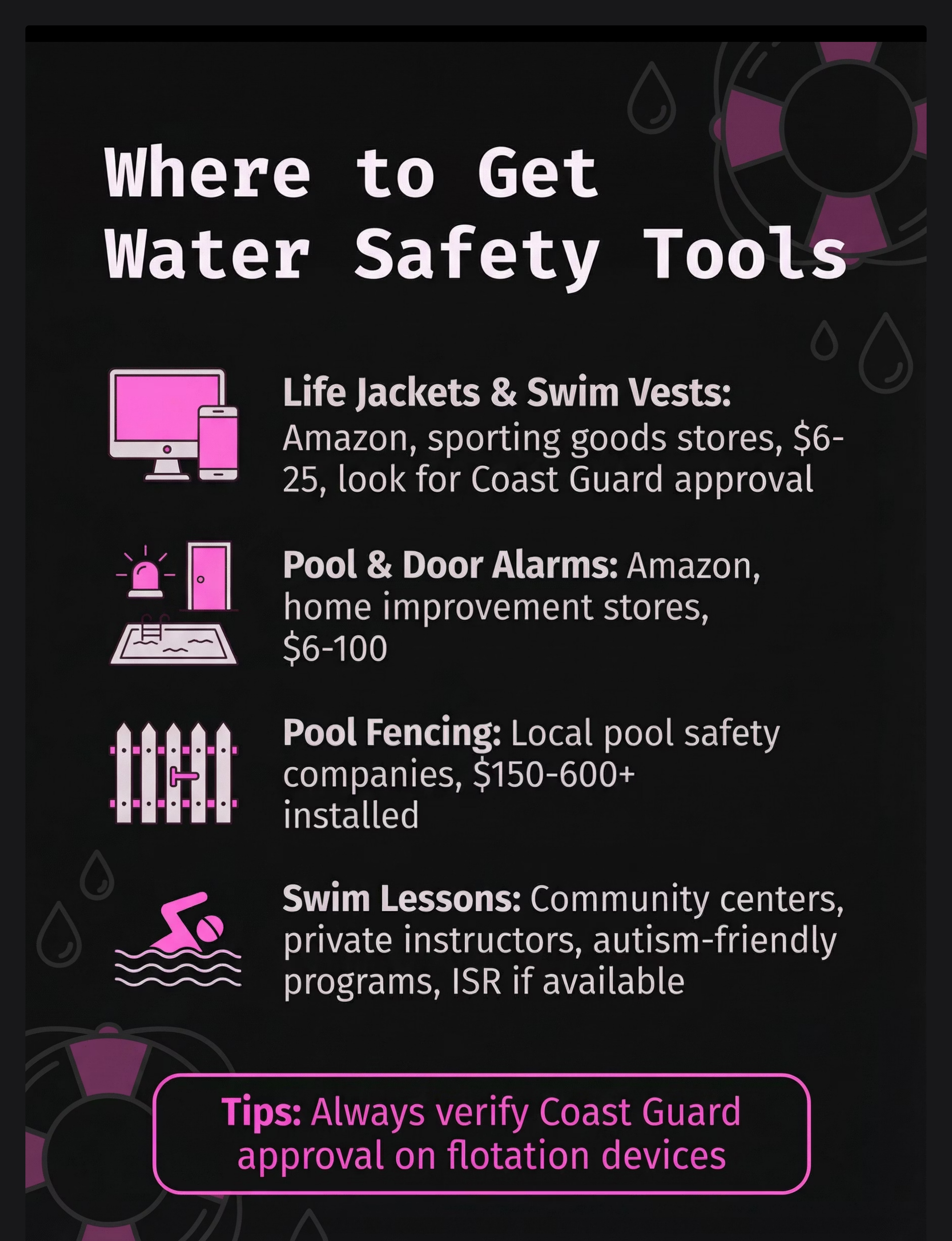
Where to Buy Water Safety Equipment in India
Availability: Widely Available - Water safety equipment can be purchased from multiple online and local sources throughout India.
Amazon.in - Life Jackets
Search: "life jacket kids"
Price Range: ₹500-1,500
Wide selection of Coast Guard approved and Indian-standard life jackets for all ages and sizes.
Amazon.in - Swim Vests
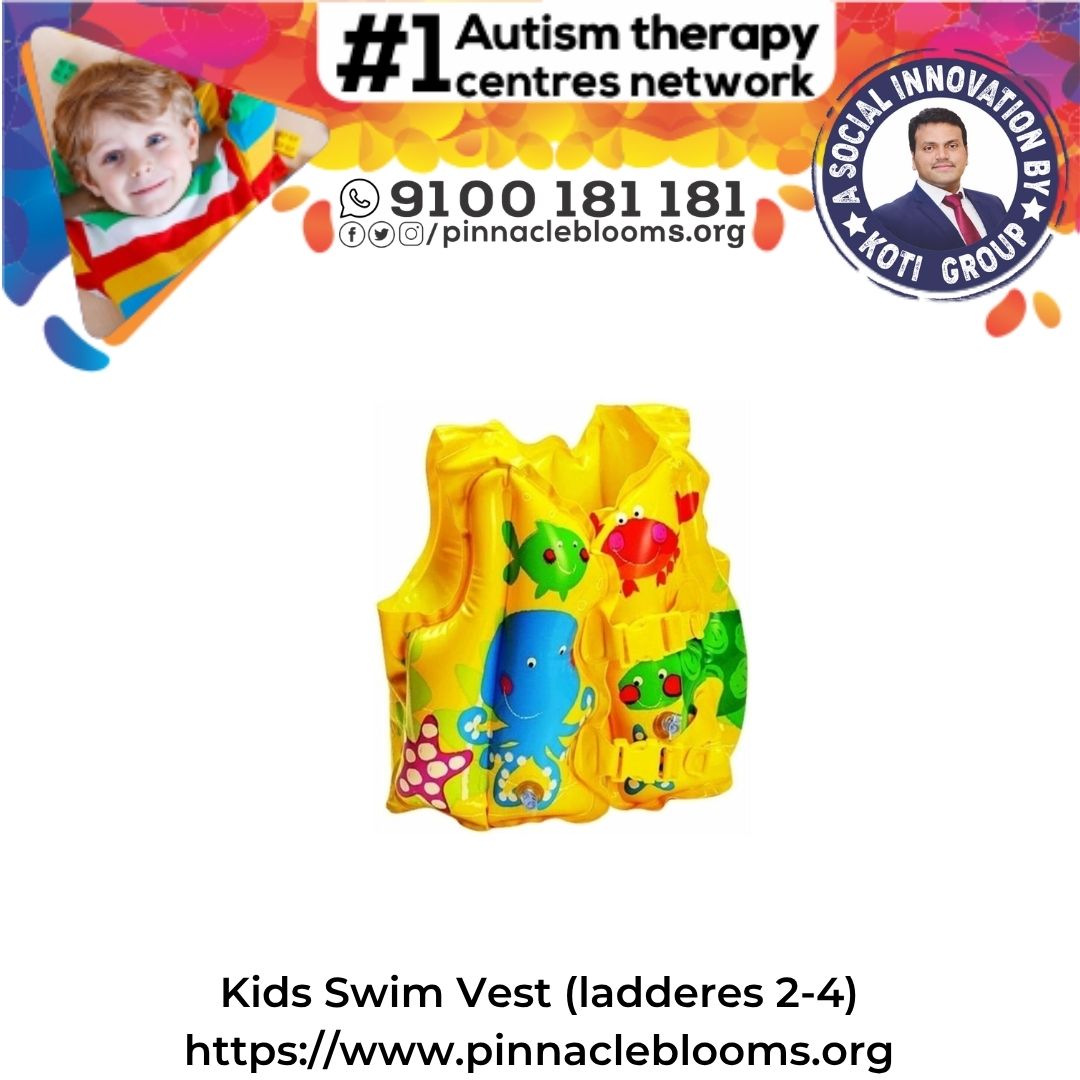
Search: "puddle jumper swim vest"
Price Range: ₹600-1,200
Arm band and chest flotation combinations for swimming learning and supervised play.
Amazon.in - Pool Alarms
Search: "pool alarm"
Price Range: ₹2,000-8,000
Electronic alarm systems that detect pool entry and alert caregivers.
Amazon.in - Door Alarms
Search: "door alarm"
Price Range: ₹300-1,000
Alert systems for doors leading to pool areas or exits from home.
Pool Fencing Companies
Search: "pool fence installation" + your city
Price Range: ₹10,000-50,000
Professional installation of climb-resistant fencing with self-latching gates.

Buying Tips
  • Coast Guard approved life jackets only: Look for official Coast Guard approval or equivalent Indian safety standards
  • Pool fence should be climb-resistant, self-latching: Professional installation recommended for proper height and security
  • Door alarms on ALL exits to pool area: Install on every door that leads to water access
  • Find autism-friendly swim instructors: Look for instructors with special needs experience and patient teaching approaches
  • ISR (Infant Swim Resource) if available: Specialized survival swim programs designed for young children

🚩 Red Flags to Avoid
  • No pool fence: Any home with a pool without fencing is an emergency safety situation
  • Non-approved flotation devices: Inflatable toys, arm floaties, and non-certified devices are not safety equipment
  • Relying only on supervision: Human supervision alone without physical barriers is insufficient
  • Non-swimmers without life jackets: Anyone who cannot swim independently must wear Coast Guard approved life jacket near water
water-safety-tools therapy material
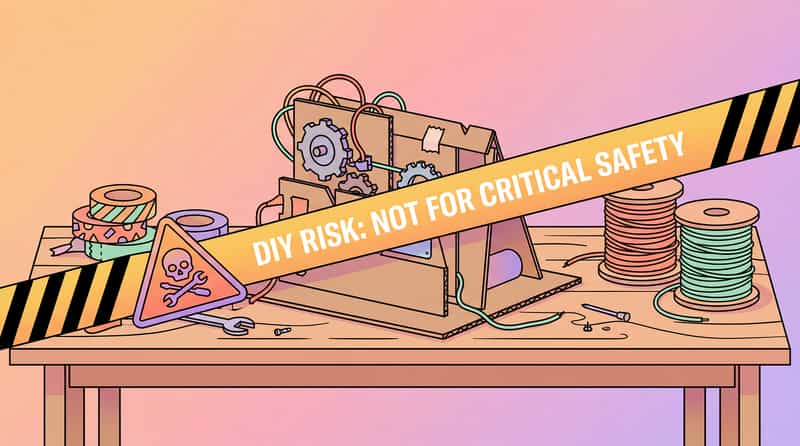
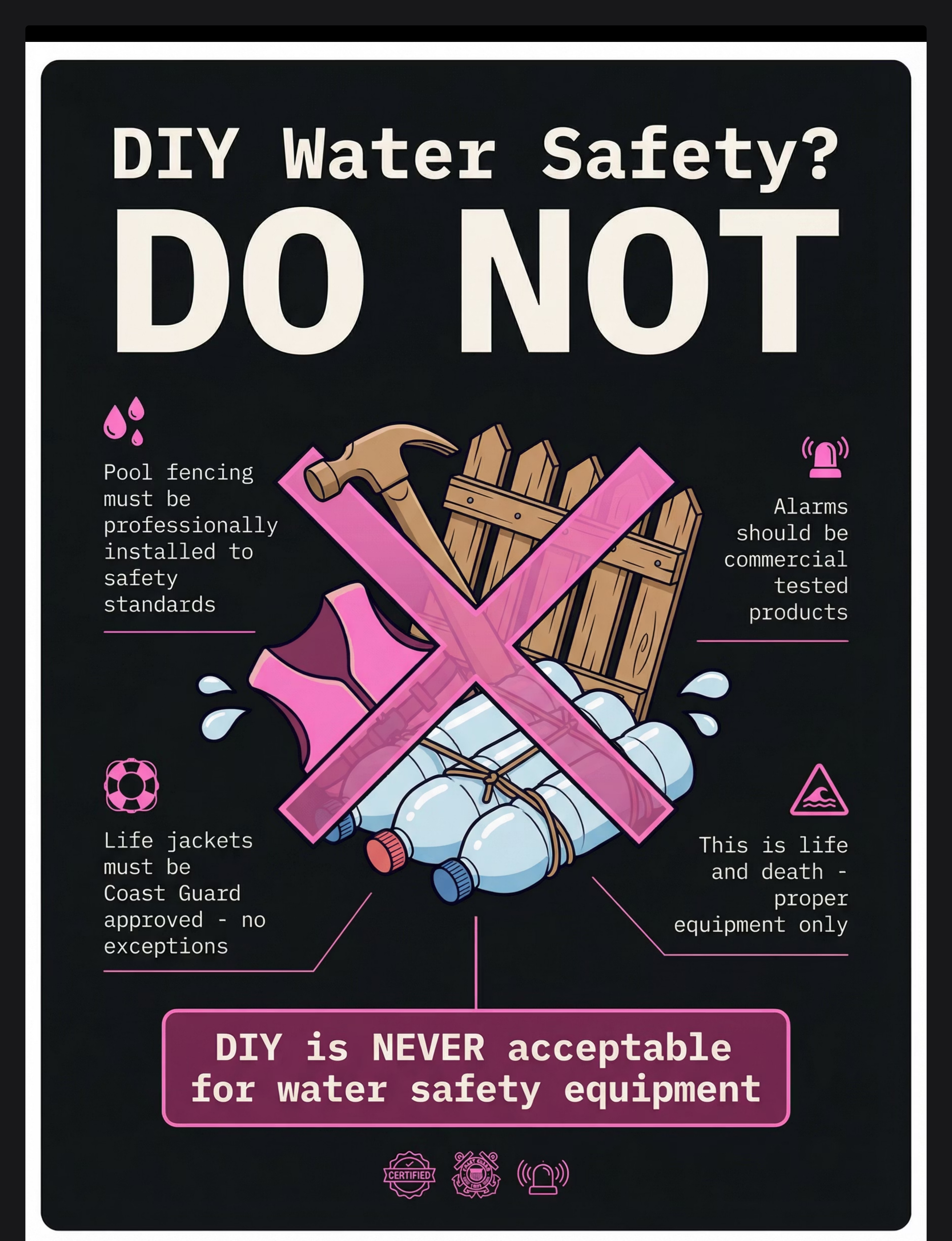
DIY Water Safety Alternatives
1
⚠️ DIY Feasibility: Very Low
Water safety equipment must meet established safety standards and be professionally installed or certified.
There are no acceptable DIY alternatives. The risk of equipment failure leading to drowning far outweighs any potential cost savings.
2
🚫 DIY Not Recommended
Pool Fencing: Requires professional installation (proper height, spacing, self-latching).
Life Jackets: Must be Coast Guard approved and strictly rated for weight and ability.
Alarms: Commercial, tested products are essential for reliable notification.
3
️ Life & Death: Use Proper Equipment
Water safety is not an area for experimentation or cost-cutting. Professional products and installation are absolutely non-negotiable.
NEVER use DIY for water safety critical items.
ALWAYS buy commercial, certified, and properly installed equipment.
water-safety-tools therapy material
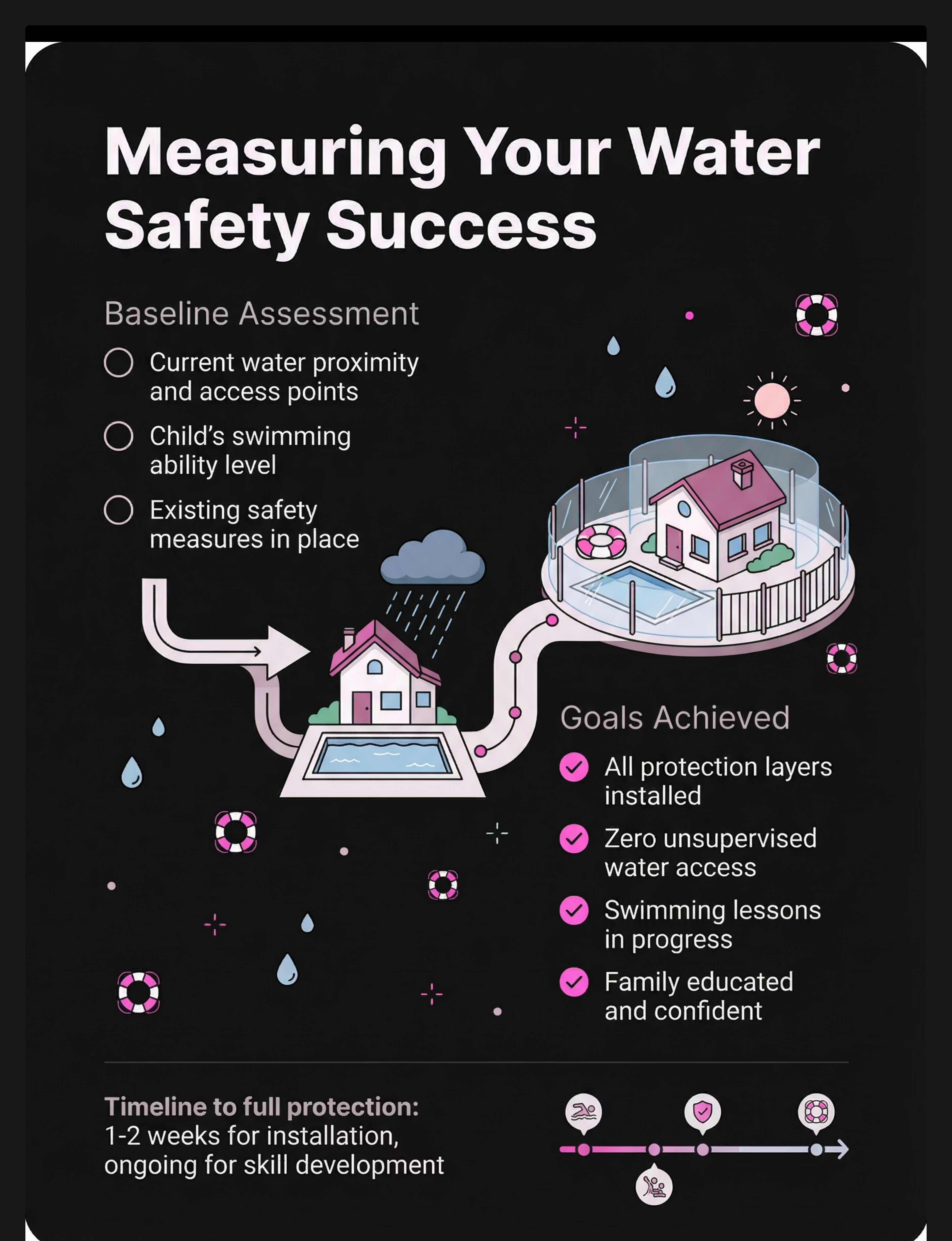
Measuring Success & Building Your Complete Safety System
Establish Your Baseline
  • Current water safety status and existing measures
  • Proximity to water sources (pool, lake, river, neighbors)
  • Child's current swimming ability and water confidence
  • History of elopement toward water or water attraction
Set Your Goals
  • All layers of water protection in place and functional
  • Zero incidents of unsupervised water access
  • Swimming skills developing through regular professional instruction
  • Family educated on water safety and emergency procedures
Success Indicators
  • ✓ Pool fenced (if applicable) with self-latching gate
  • ✓ All alarms functional and tested regularly
  • ✓ Life jackets used consistently for all water activities
  • ✓ No incidents or near-misses
  • ✓ Swimming skills progressing
  • ✓ Family confident in water safety system
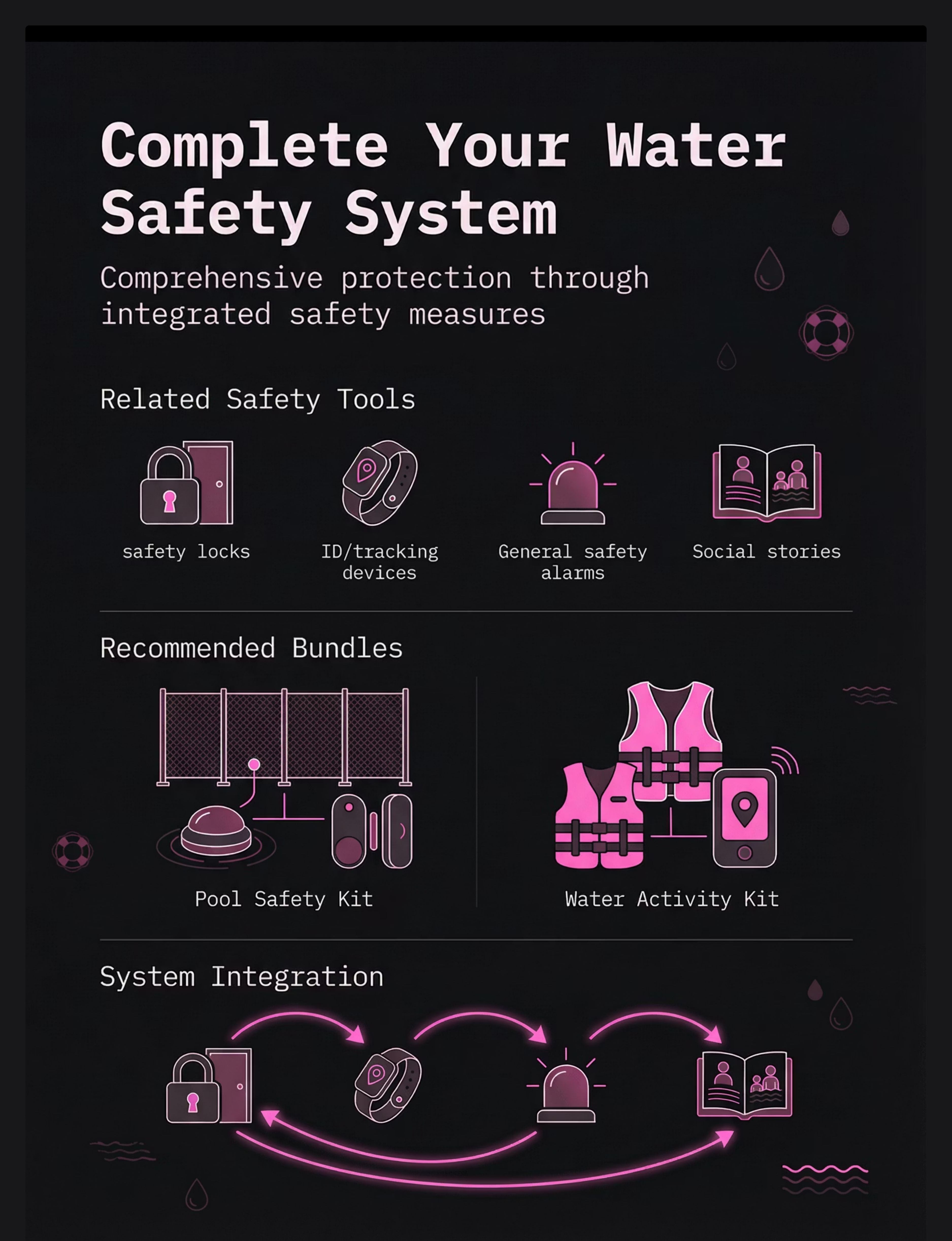
🔗 Complete Your Safety System
Pair Water Safety With...
Complementary Tools:
  • Safety Locks (ID: 13.1) — Secure doors and windows to prevent access to pool area
  • ID/Tracking (ID: 13.2) — GPS tracking if child elopes toward water sources
  • Safety Alarms (ID: 13.4) — Additional alert systems for comprehensive monitoring
  • Social Stories (ID: 4.1) — Teaching water safety rules and concepts
Complete Safety Bundles
Pool Safety Kit: Pool Fence (13.3.1) + Pool Alarm (13.3.2) + Door/Gate Alarm (13.3.5)
Use case: Complete pool protection with multiple layers
Water Activity Kit: Life Jacket (13.3.3) + Swim Vest (13.3.4) + ID/Tracking (13.2)
Use case: Safe participation in water activities and outings

🤖 AI Summary & Search Terms
Quick Summary: Water safety tools prevent drowning through multiple layers of protection including fencing, alarms, flotation, and swim skills - critical for children with autism who often elope toward water. Core Kit (Rank 1), strong evidence, LIFE-SAVING.
water safety
drowning prevention
pool fence
life jacket
elopement
swimming
core-kit
Common searches: pool safety autism, drowning prevention, pool fence, life jacket kids, pool alarm, water safety special needs, swim lessons autism

🆘 Get Support

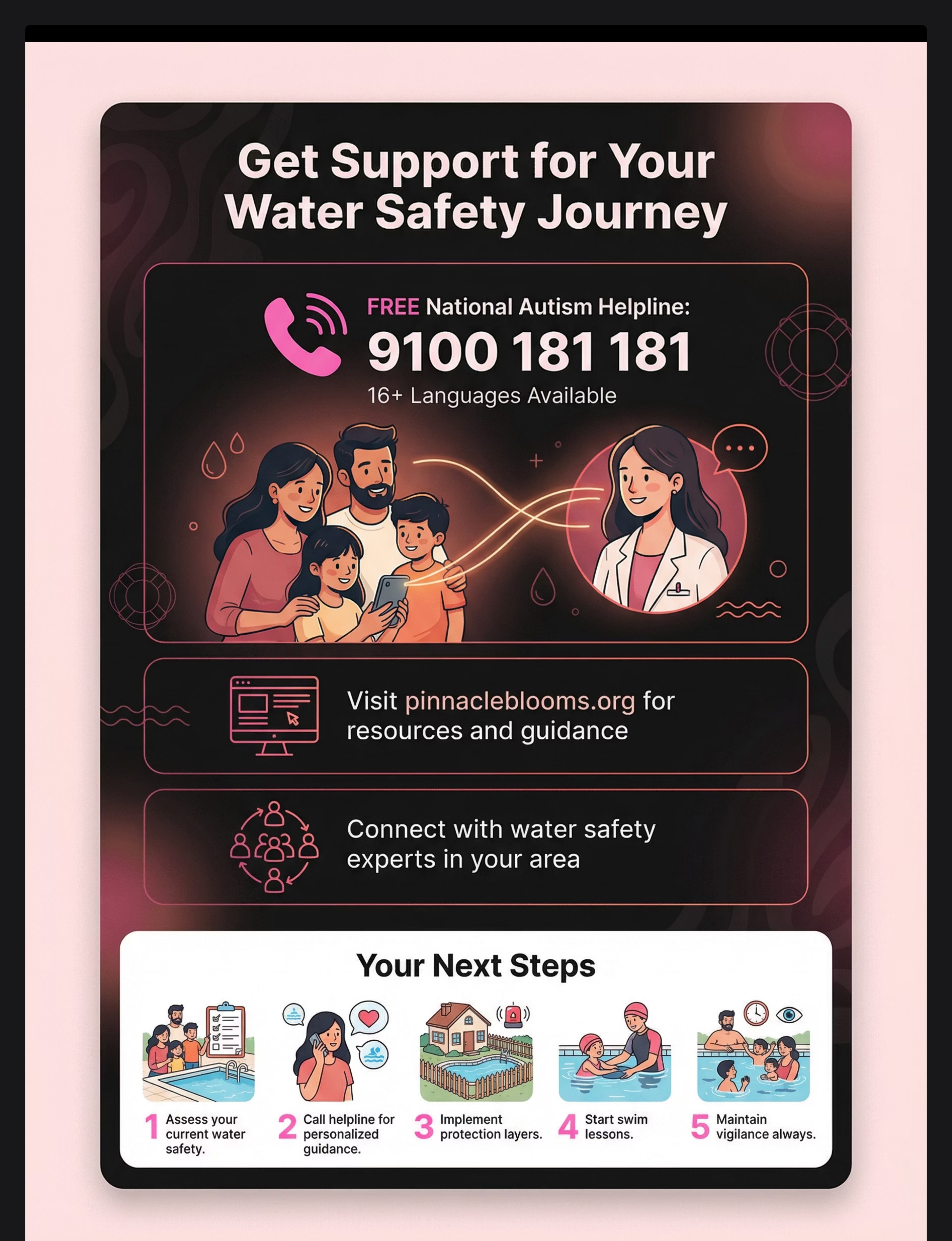
FREE National Autism Helpline
Phone: 9100 181 181
Languages: 16+ languages supported
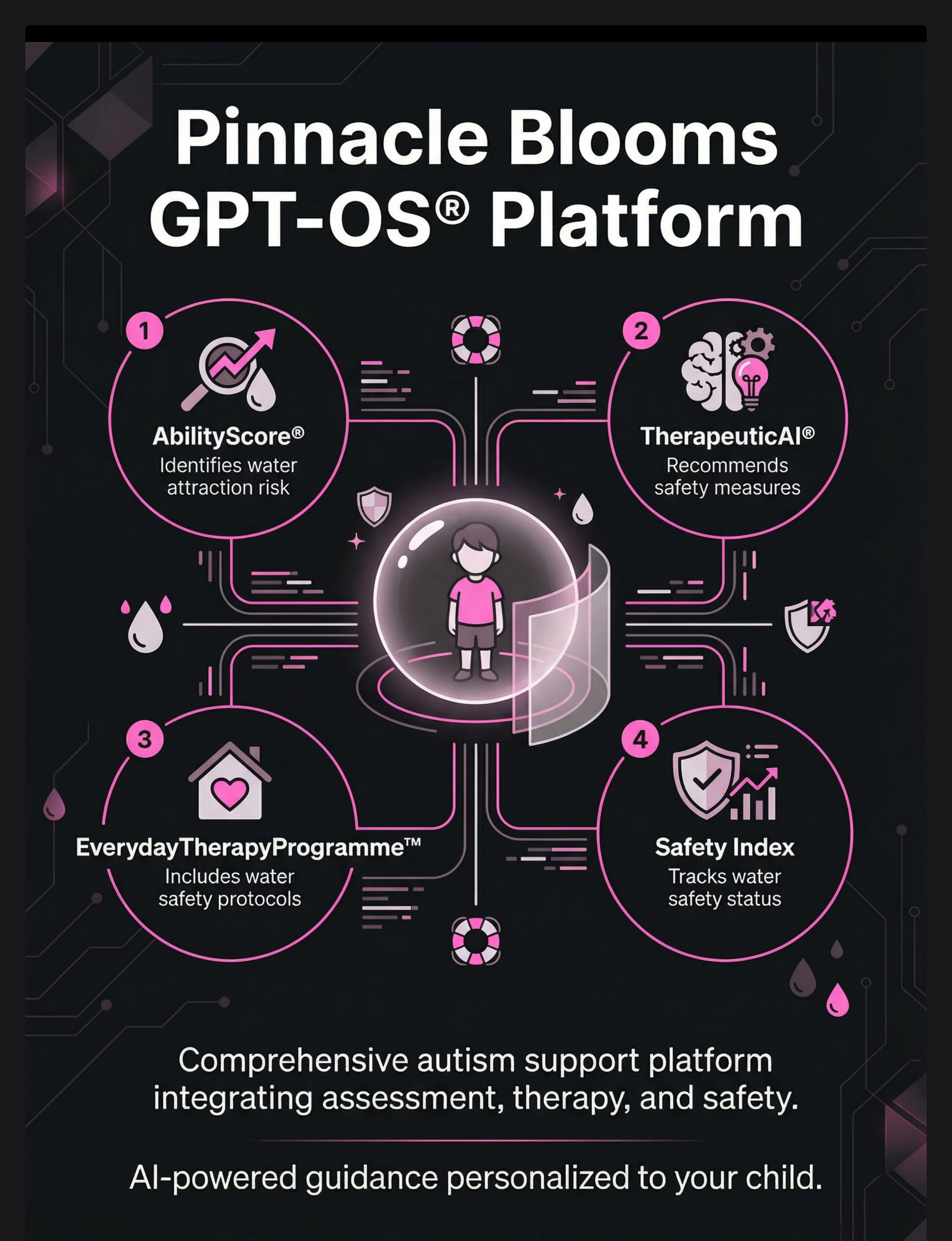
Platform Integration
Water safety tools integrate seamlessly with Pinnacle Blooms Network's comprehensive assessment and therapy platform:
  • AbilityScore® identifies water attraction risk and safety needs during developmental assessment
  • TherapeuticAI® recommends specific safety measures based on your child's elopement patterns and water exposure
  • EverydayTherapyProgramme™ includes water safety education and skill-building as part of daily routines
  • Safety Index tracks water safety implementation status and provides reminders for equipment testing

⚖️ Important Disclaimer
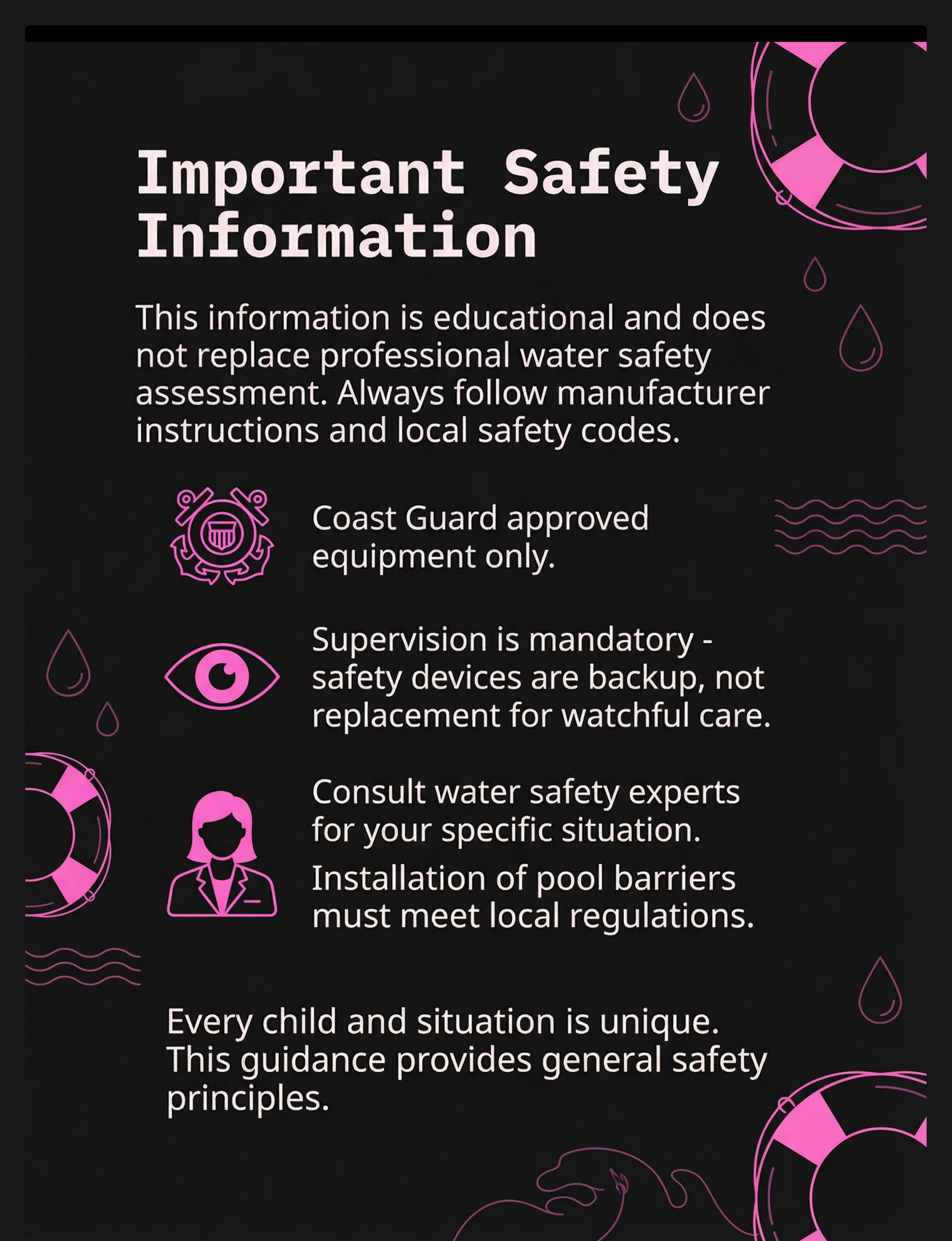
This is educational information about water safety tools and drowning prevention. Always consult qualified occupational therapists, speech-language pathologists, pediatricians, and water safety experts for personalized recommendations. Individual results vary. Water safety requires multiple layers of protection - never rely on a single measure. This information does not replace professional medical advice, safety consultation, or swimming instruction. Drowning prevention is everyone's responsibility.

Preview of water safety tools Therapy Material

Below is a visual preview of water safety tools therapy material. The pages shown help educators, therapists, and caregivers understand the structure and content of the resource before use. Materials should be used under appropriate professional guidance.

Page 1
Page 2
Page 3
Page 4
Page 5
Page 6
Page 7
Page 8
Page 9
Page 10
Page 11
Page 12
Page 13
Page 14
Page 15
Page 16
Page 17
Page 18
Page 19
Page 20
Link copied!
water-safety-tools therapy material
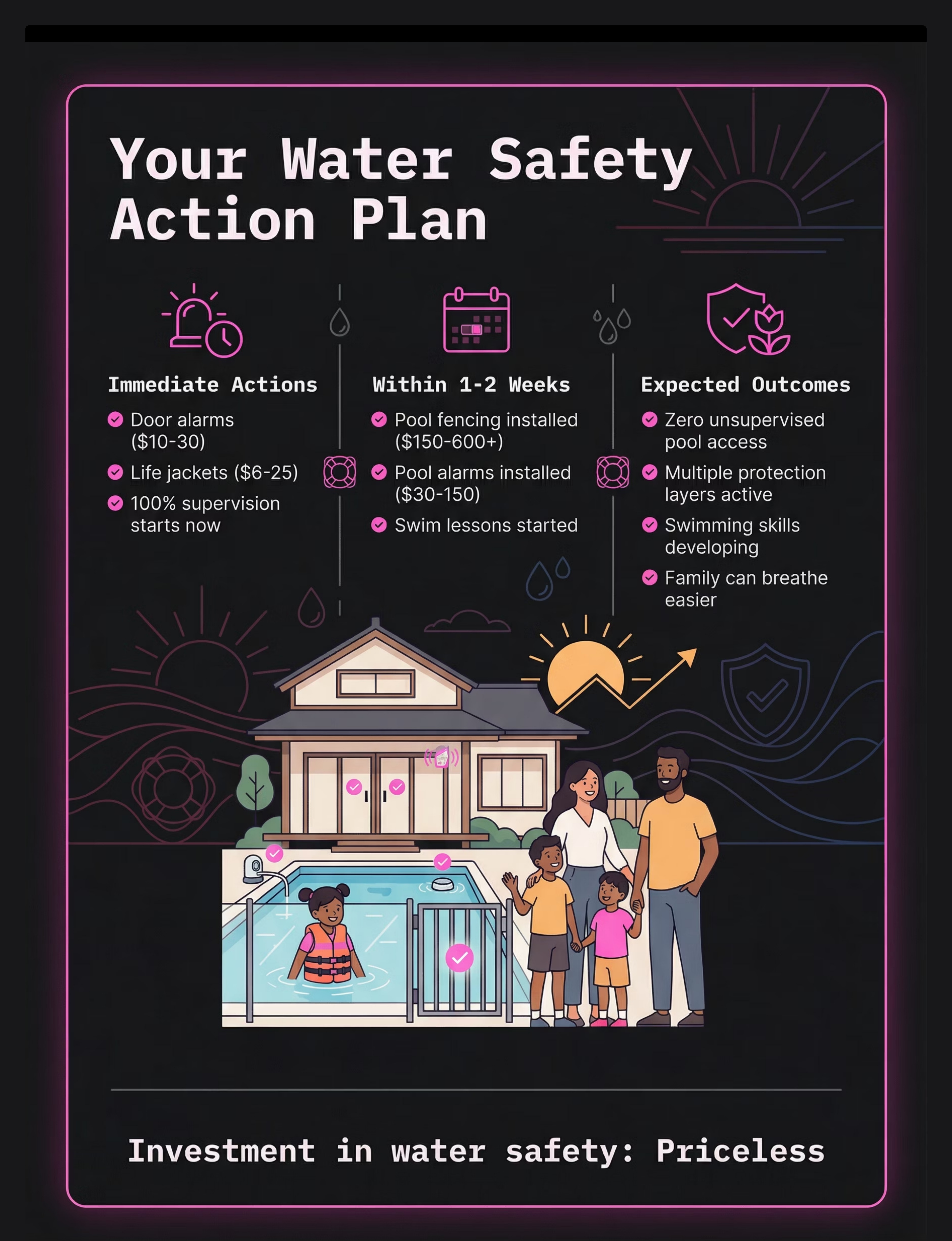
Take Action: Your Water Safety Checklist
Immediate Actions (Today)
Assess your current water safety gaps, identify all water sources near your home, schedule swimming lessons consultation
This Week
Install door/window alarms, purchase appropriate life jackets, create emergency response plan
This Month
Complete pool fencing installation, establish supervision protocols, train all family members on water safety
Ongoing Commitment
Test alarms monthly, practice water safety drills, continue swimming instruction, review and update safety measures
Ready to Get Started?
Contact Pinnacle Blooms Network for personalized water safety assessment and recommendations tailored to your child's needs.
Phone: 9100 181 181