



















Tool ID: 1.1
Tool ID: 1.1
OT Recommended
Strong Evidence
Rank #1
Daily Use
₹600–4,000
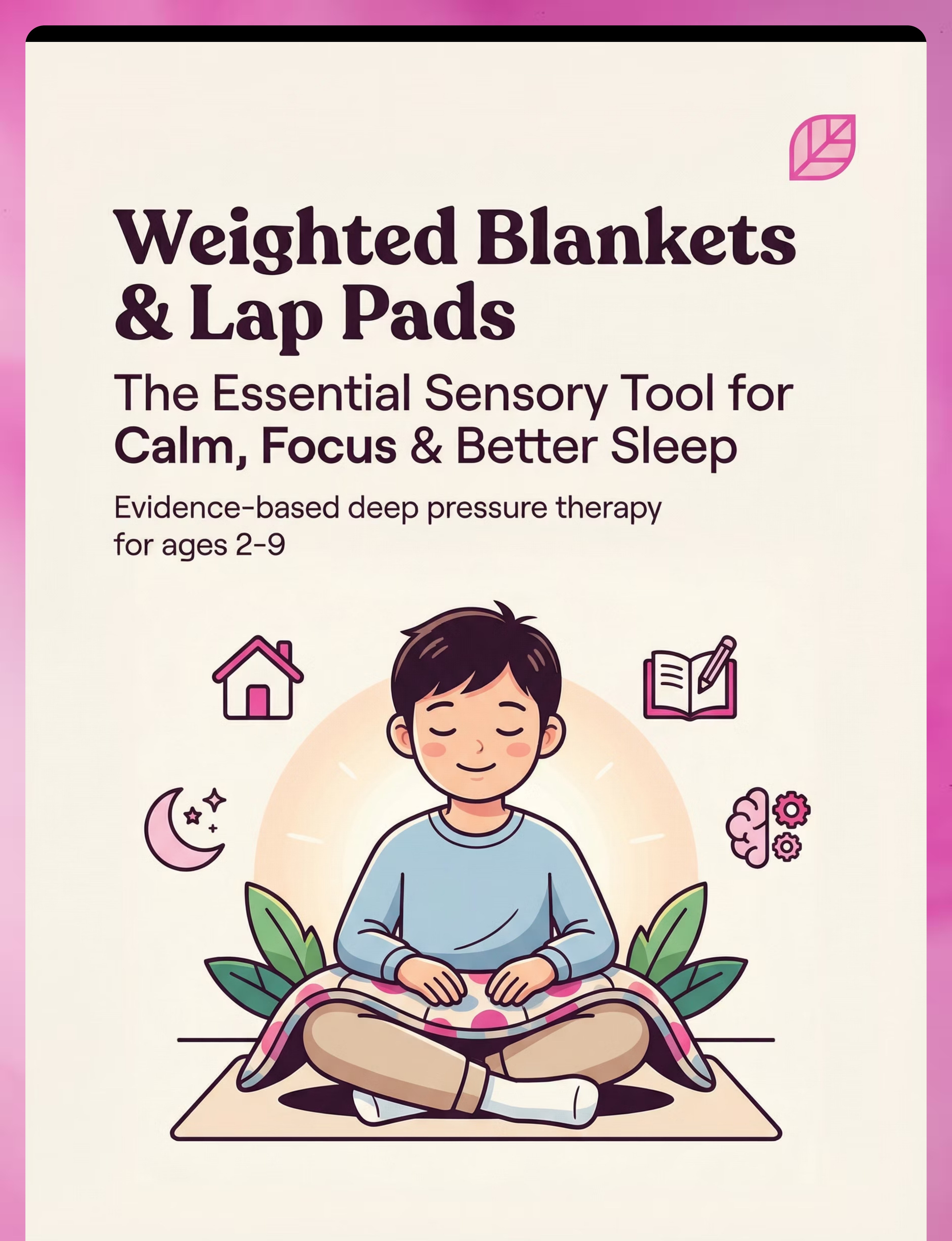
Weighted Blanket / Lap Pad Set
Graded weighted deep pressure system for calming and focus
Evidence-based sensory regulation designed for children with autism, ADHD, and sensory processing needs. Used daily across home, school, and clinic settings to support calm, focus, and sleep.
Who This Helps
Sensory Regulation
Supports calming through distributed weight that provides proprioceptive input to the nervous system, helping children achieve a regulated, focused state.
Anxiety & Attention
Helps reduce anxiety and improve sustained attention during homework, meals, and classroom activities through gentle, organizing pressure.
Sleep Support
Commonly used to support faster sleep onset and more restful sleep by activating the parasympathetic nervous system's calming response.
Ages 12 months–9 years
Home
School
Clinic
Travel
Best for children who: Seek tight hugs or pressure, have difficulty sitting still, show constant movement or sensory-seeking behavior, or struggle with bedtime routines.
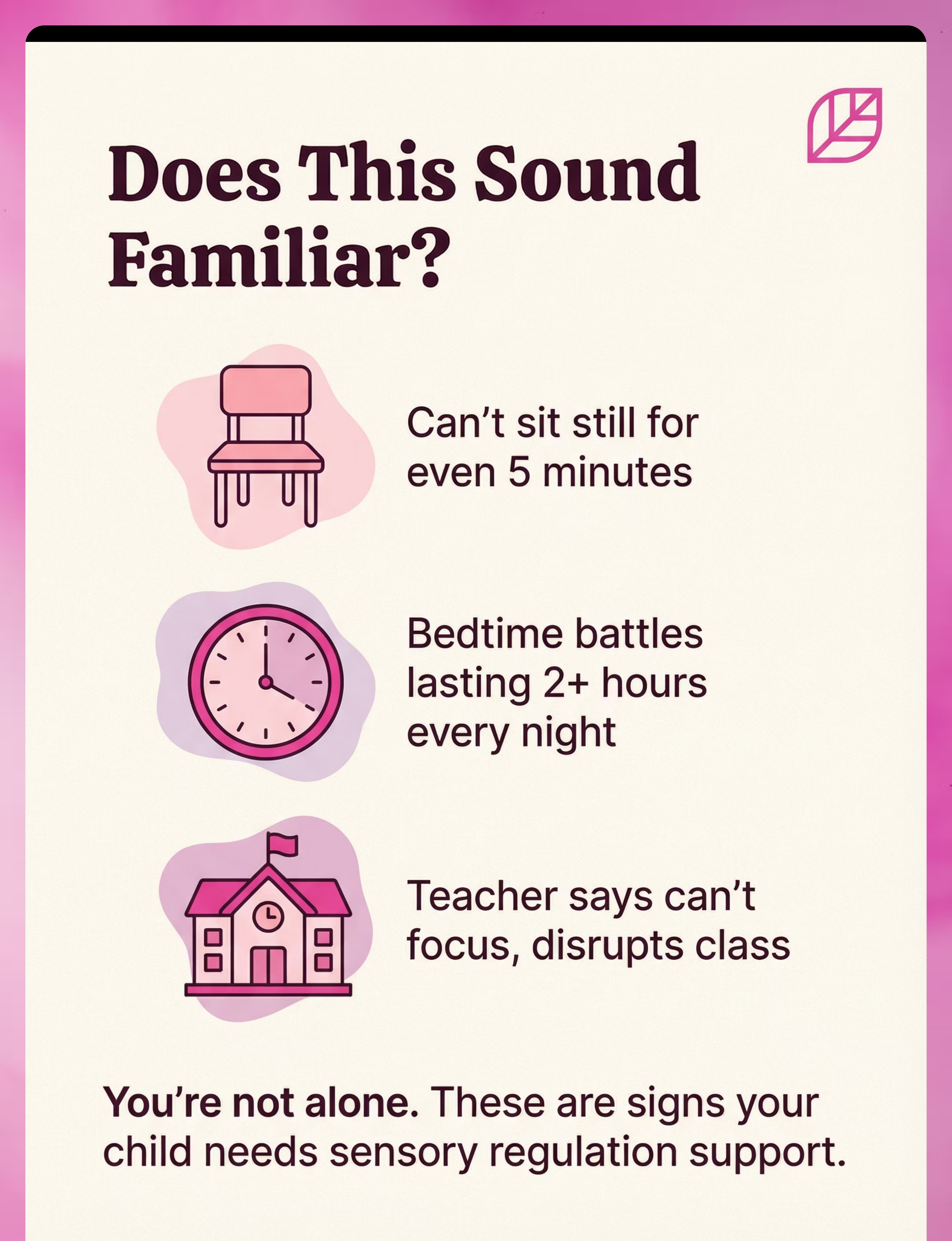
Does This Sound Familiar?
"My child can't sit still for even 5 minutes during homework or meals. Every activity becomes a battle."
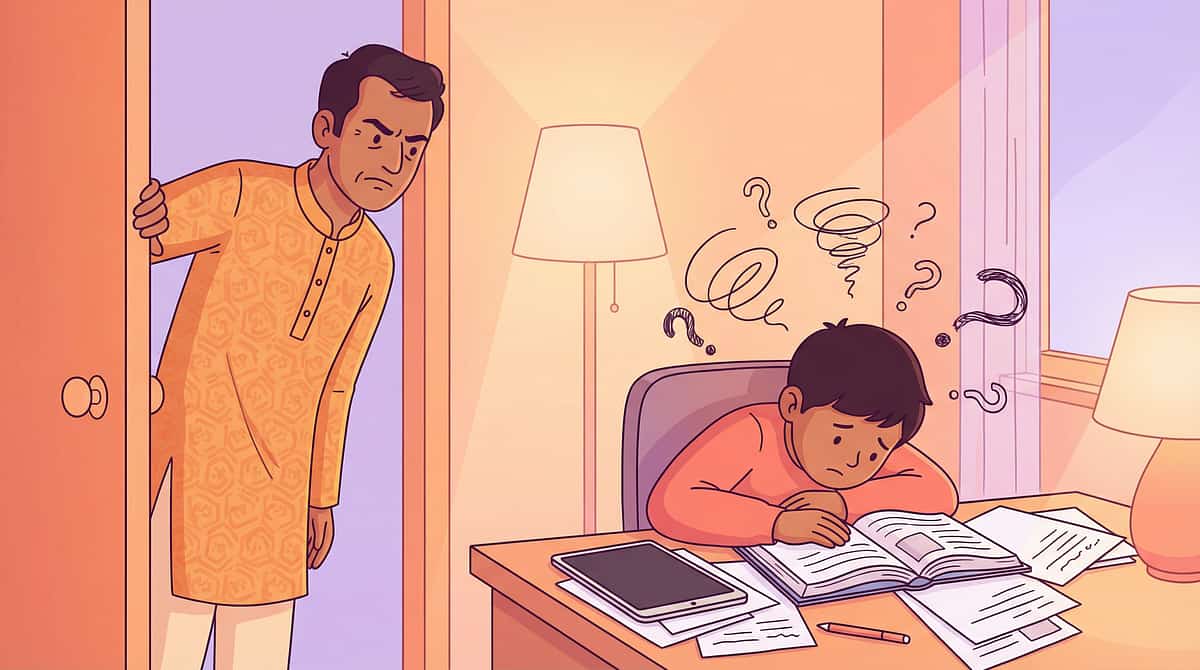
"Homework takes 3 hours with multiple meltdowns for what should be 30 minutes of work. I'm exhausted."
"Bedtime battles last 2+ hours every night. By the time my child sleeps, I have no evening for myself."
"The teacher says my child can't focus and disrupts the class. I feel judged and helpless."
"We've stopped going to family gatherings because I'm exhausted from the constant sensory-seeking behavior."
You're not alone. These are common challenges for children with sensory regulation needs. Deep pressure input is one of the most evidence-based strategies to support calm and focus.
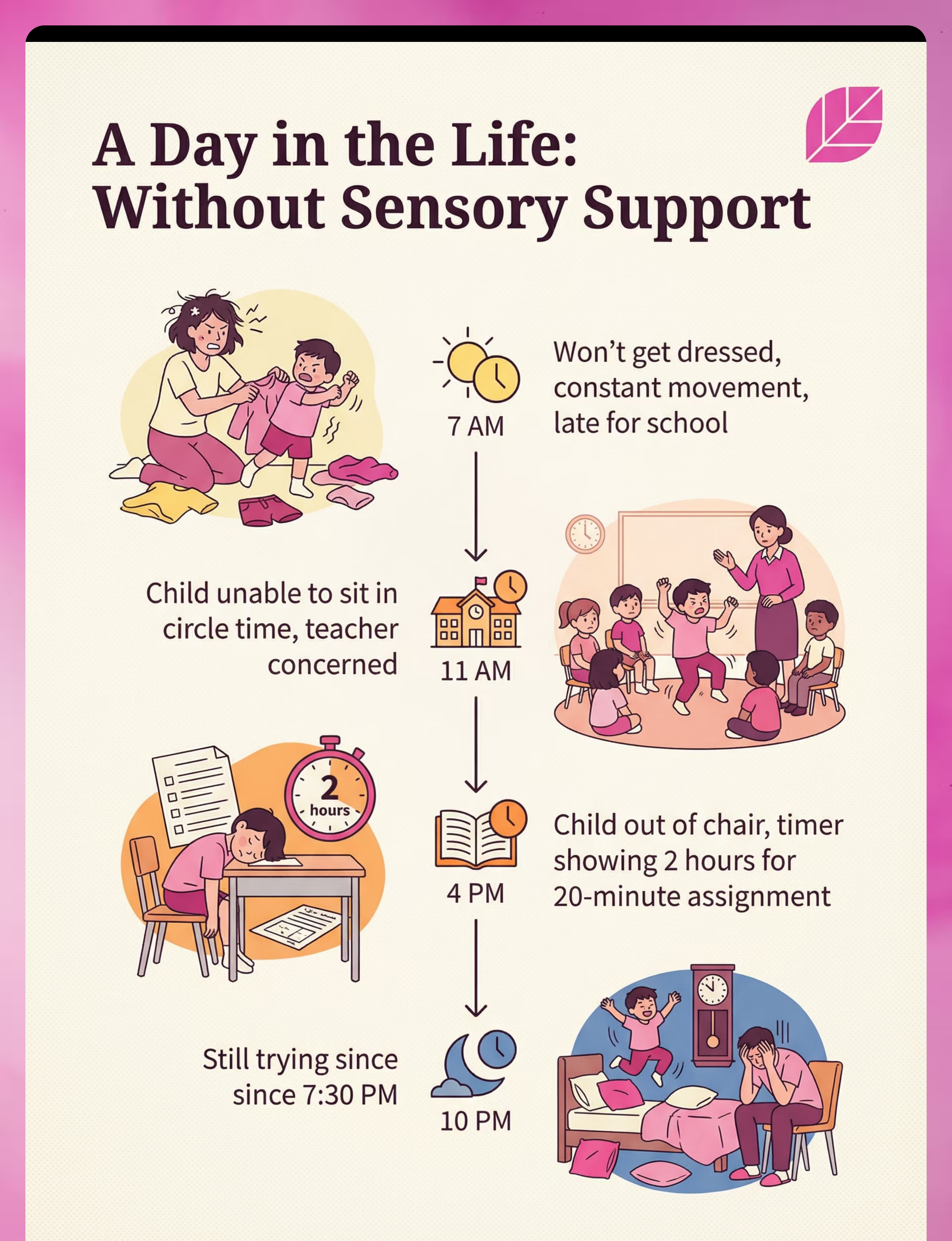
A Day Without the Right Support
Morning
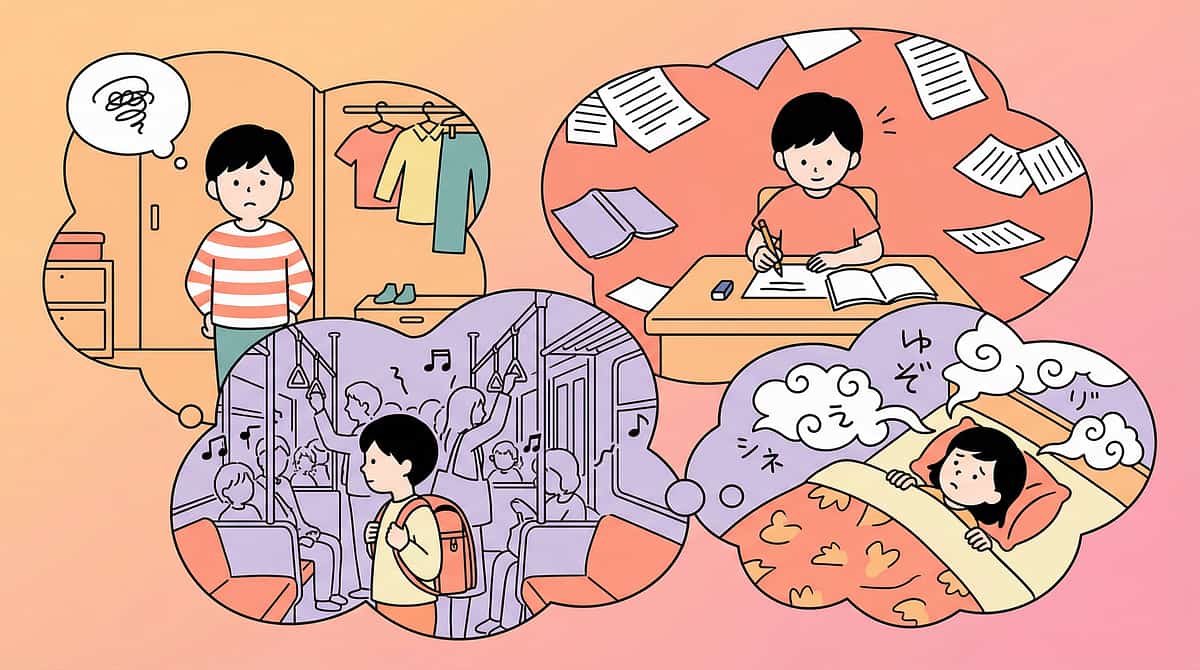
Won't get dressed, constant movement makes everything take twice as long. Already running late for school and the day hasn't even started.
School Transitions
Can't sit during circle time, fidgets constantly, disrupts classmates. Teacher sends notes home about focus and behavior concerns.
Homework Time
Out of the chair every 2 minutes, tears and frustration, 2 hours for a 20-minute assignment. Both parent and child are exhausted.
Bedtime
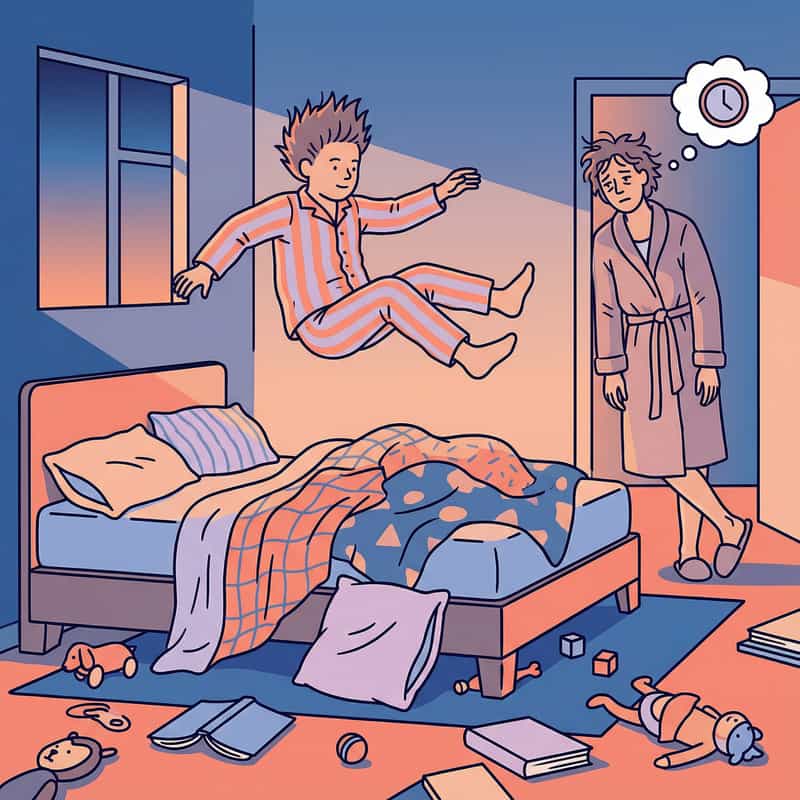
Still trying to settle at 10 PM after starting at 7:30. Jumping on the bed, seeking pressure. No evening time for yourself or your family.

These daily struggles aren't about willpower or behavior—they're your child's nervous system seeking the organizing input it needs to feel calm and focused.
The Science Behind It
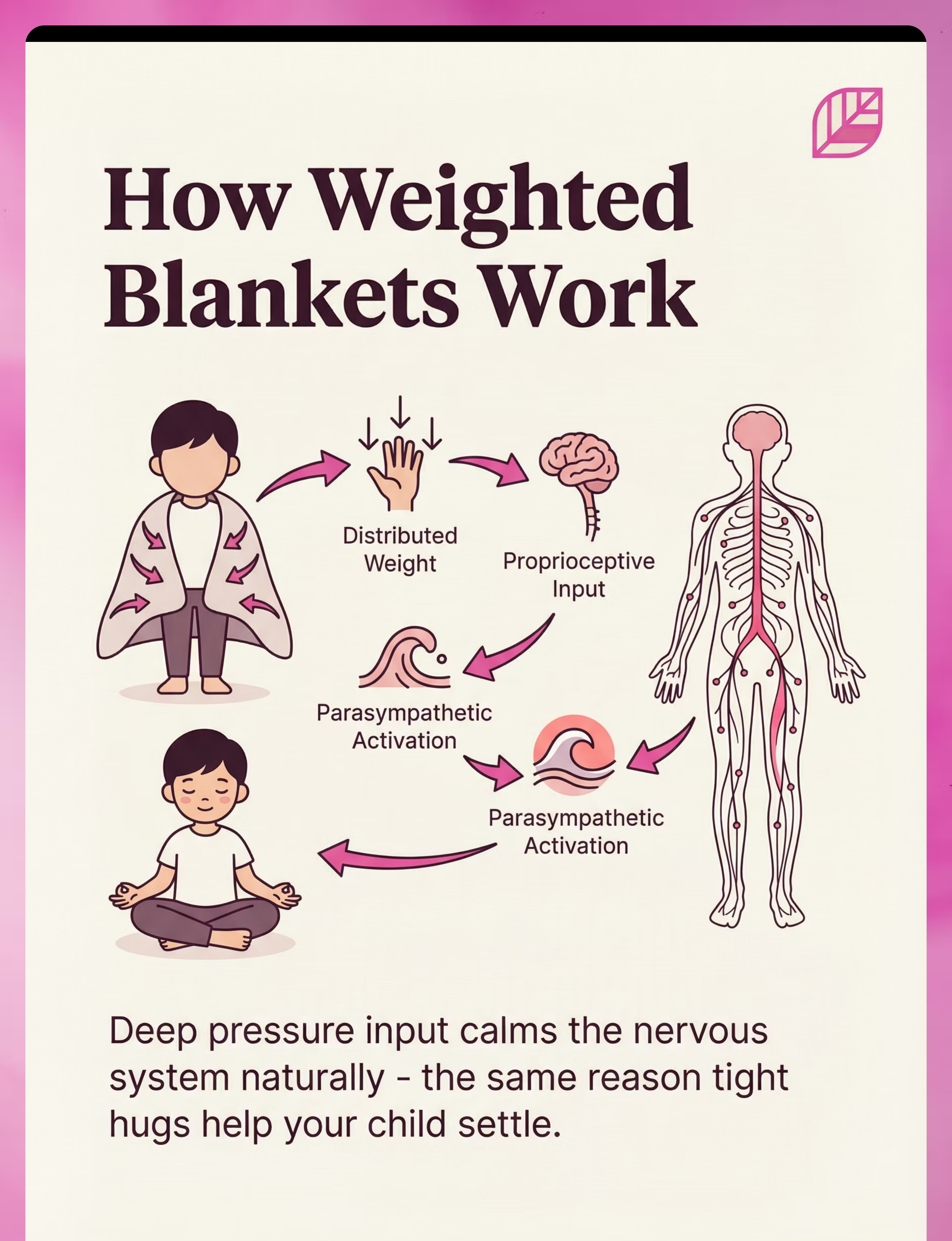
Weighted blankets and lap pads work through a well-understood neurological pathway that has been used in occupational therapy for over 50 years. This isn't a trend—it's evidence-based therapeutic intervention.
Distributed Weight
Evenly distributed weight provides consistent proprioceptive input across the body's pressure receptors.
Proprioceptive Activation
Deep pressure receptors send organizing signals to the brain about body position and boundaries.
Parasympathetic Response
The nervous system shifts from alert "fight or flight" to calm "rest and digest" mode naturally.
Regulated State
Child achieves calm, focused, organized state ready for learning, sleep, or social engagement.
Sensory Regulation
Anxiety
Attention
Sleep
"Deep pressure input is one of the most effective and immediate sensory strategies we have."
— Senior Occupational Therapist, 15+ years pediatric autism experience
How to Use It Right
Weight Selection
Choose a weight that's 5–10% of your child's body weight. This range provides effective proprioceptive input without being overwhelming or unsafe.
Gradual Introduction
Start with 5–10 minute sessions and increase gradually as your child becomes comfortable. Let them build positive associations with the sensation.
Child-Led Use
Let your child request the blanket or lap pad rather than imposing it. This supports self-regulation awareness and prevents negative associations.
Preferred Activities First
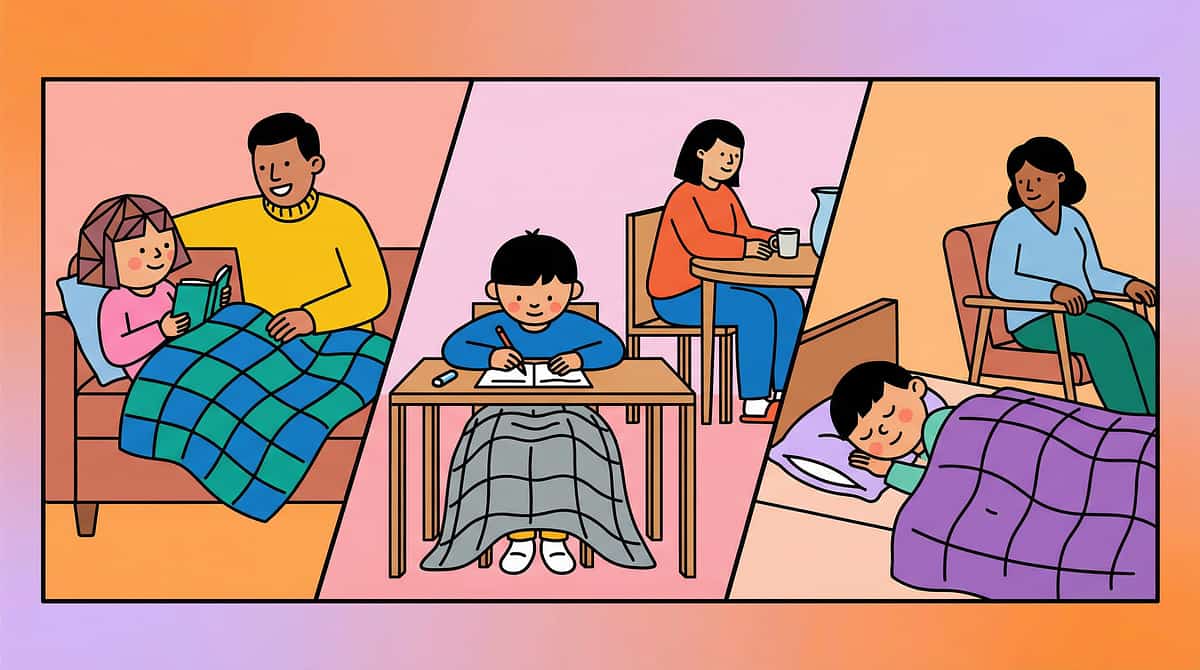
Introduce during activities your child already enjoys—watching a favorite show, reading together, or listening to music—before using during challenging tasks.
Typical Duration: 5–30 minutes for calming and focus activities. Bedtime use can extend longer as the child naturally falls asleep with the calming input.

Common mistake to avoid: Don't force the weighted blanket during an active meltdown. Wait for the calm-down phase, then offer it as a supportive tool.
Trusted by Professionals
"Deep pressure input is one of the most effective and immediate sensory strategies we have."
Senior Occupational Therapist, 15+ years pediatric autism experience
OT Recommended
Core tool in occupational therapy sensory diets and regulation programs across India and globally.
Strong Evidence
Supported by decades of clinical research and therapeutic practice in pediatric sensory processing.
Rank #1
Rated as the top tool in the Sensory Regulation & Nervous System Modulation category for effectiveness and accessibility.
Weighted blankets and lap pads are designated as Core Kit level tools, meaning they're considered essential first-line interventions for children with sensory regulation needs. Recommended for daily use across all settings: home, school, clinic, and travel.
weighted-blanket-lap-pad-sensory-regulation therapy material
Choose Your Option (6 Variants)
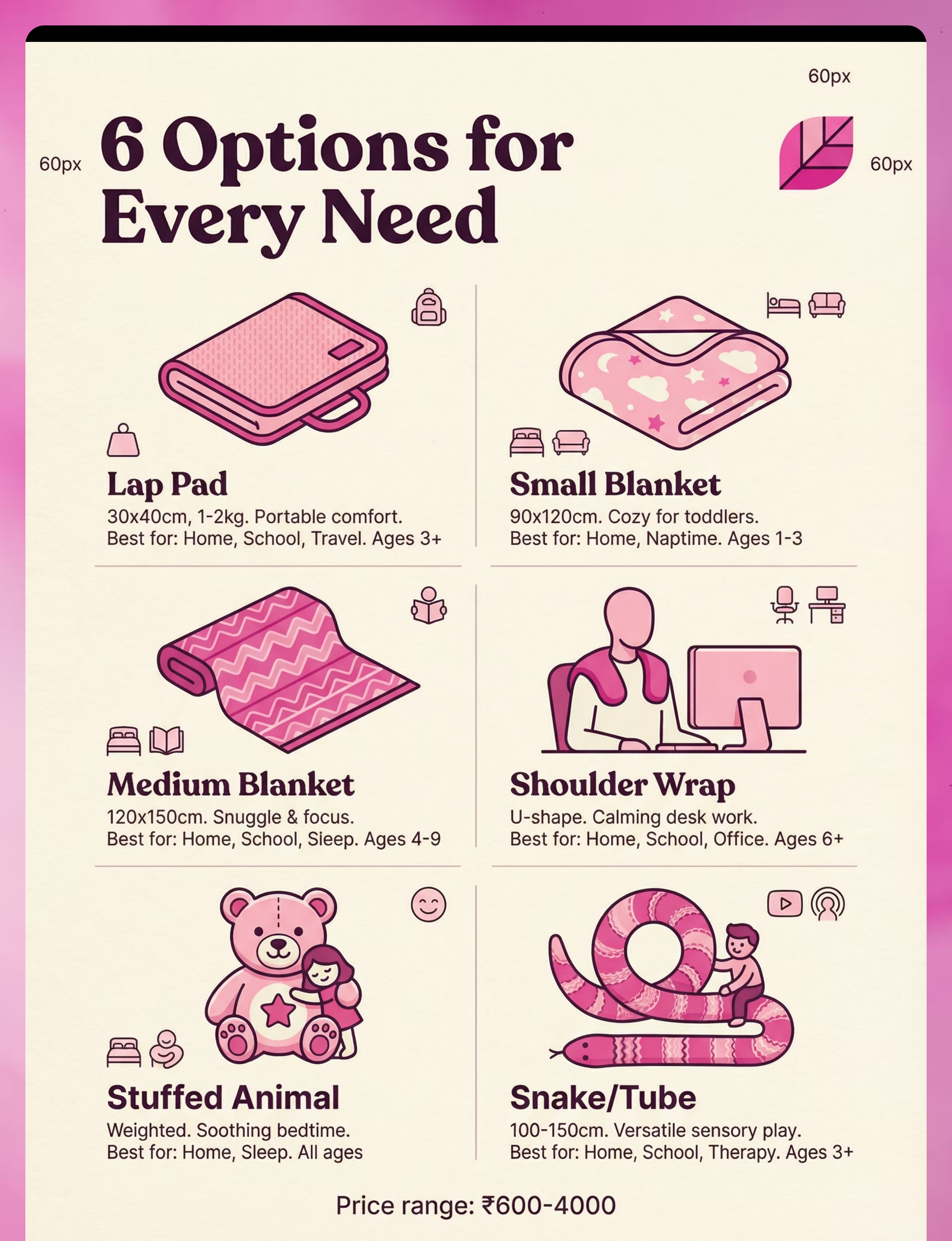
Weighted Lap Pad
Size: 30×40cm | Weight: 1–2 kg
Best for: School, homework, travel
Ages: 2–9 years | Portability: High
School
Home
Clinic
Travel
₹600–1,500
Weighted Blanket - Small
Size: 90×120cm | Weight: 1.5–2.5 kg
Best for: Toddlers 2–4y, nap time
Ages: 2–4 years | Portability: Medium
Home
Clinic
₹1,200–2,500
Weighted Blanket - Medium
Size: 120×150cm | Weight: 2–4 kg
Best for: Children 4–9y, bedtime
Ages: 4–9 years | Portability: Low
Home
Clinic
₹1,800–4,000
Weighted Shoulder Wrap
Size: U-shape 50×100cm | Weight: 1–2 kg
Best for: Desk work, transitions
Ages: 3–9 years | Portability: High
Home
School
Clinic
₹800–2,000
Weighted Stuffed Animal
Size: 30–50cm | Weight: 1–2 kg
Best for: Bedtime comfort, anxiety, younger kids
Ages: 2–7 years | Portability: High
Home
Travel
Clinic
₹1,000–2,500
Weighted Snake/Tube
Size: 100–150cm length | Weight: 1–2 kg
Best for: Versatile - neck, lap, shoulders, body wrap
Ages: 2–9 years | Portability: High
Home
School
Clinic
Travel
₹700–1,800
Select the variant that best matches your child's age, primary use case, and portability needs. Many families start with a lap pad for school and homework, then add a blanket for bedtime.

How to Choose:
  • By goal: Calming (any variant), Sleep (blanket), Focus (lap pad/shoulder wrap), Comfort (stuffed animal)
  • By setting: Home (blanket), School (lap pad/shoulder wrap), Travel (lap pad/stuffed animal/snake)
  • By portability: High mobility needs = lap pad, shoulder wrap, stuffed animal, or snake
Specifications & Weight Guide
Materials & Features
Fill options:
Glass beads (preferred): Smaller, more evenly distributed, less bulky, quieter
weighted-blanket-lap-pad-sensory-regulation therapy material
Key features to look for:
  • Removable, washable cover for hygiene
  • Even weight distribution in quilted pockets
  • Child-safe, non-toxic materials
  • Reinforced seams for durability
Poly pellets: More affordable, slightly larger, can shift more over time
weighted-blanket-lap-pad-sensory-regulation therapy material
Available sizes:
  • Lap pad: 30×40cm (portable)
  • Small blanket: 90×120cm (toddlers/naps)
  • Medium blanket: 120×150cm (bedtime)
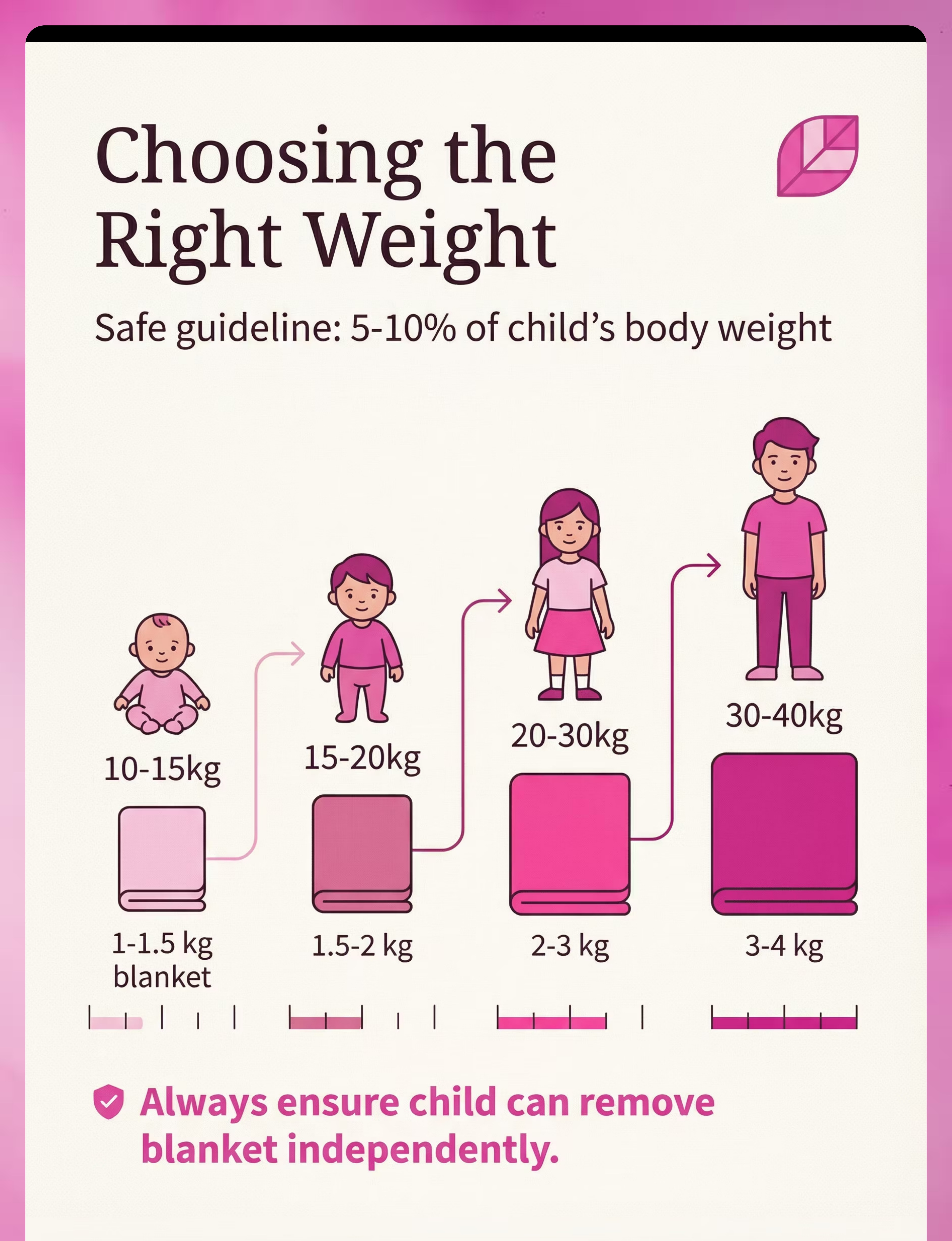
Weight Selection Guide
Choose 5–10% of your child's body weight:
Child's Weight
Blanket Weight
10–15 kg
1–1.5 kg
15–20 kg
1.5–2 kg
20–30 kg
2–3 kg
30–40 kg
3–4 kg

Important: When in doubt, start lighter. You can always add weight later, but too much weight too soon can overwhelm your child.
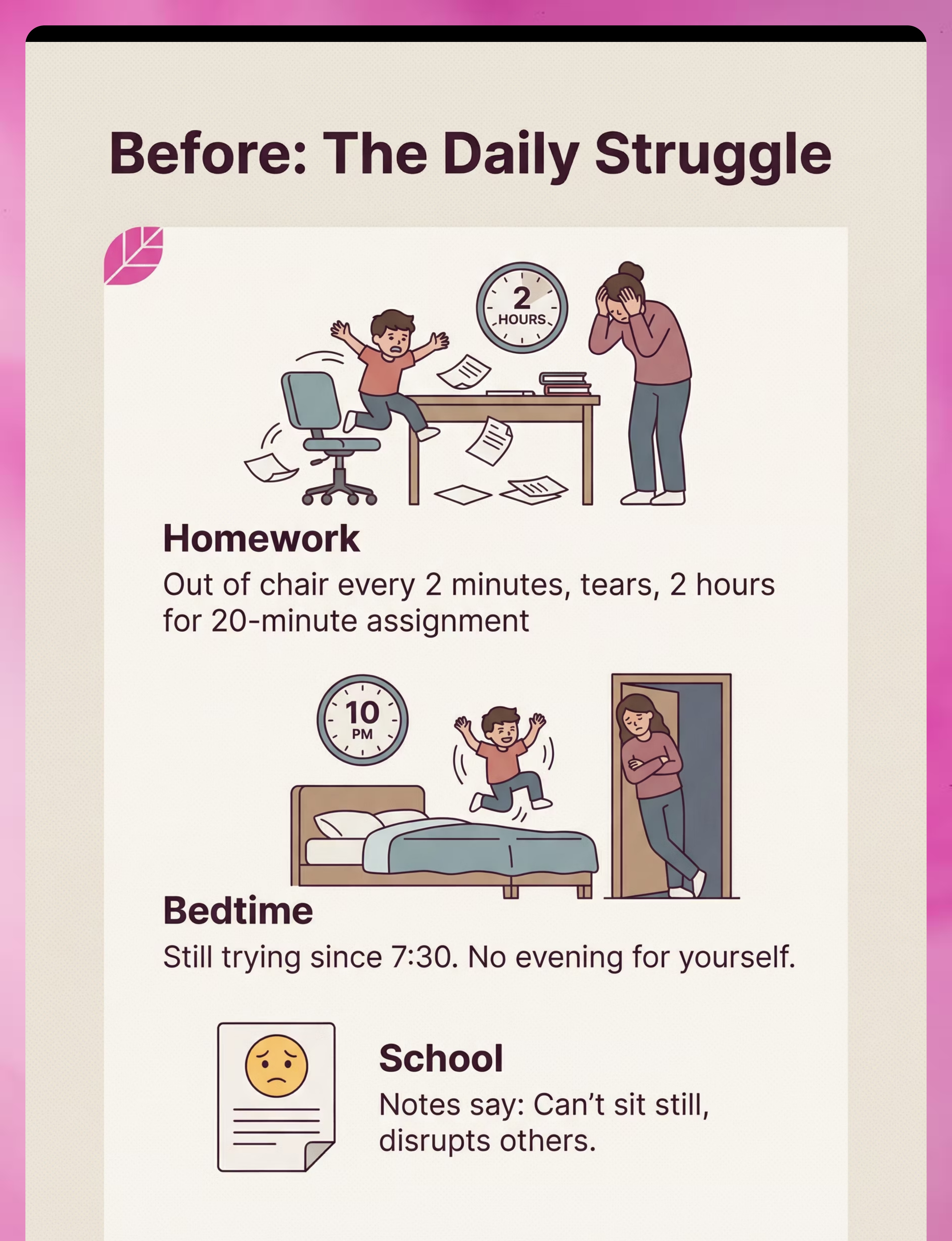
The Struggle (Before)
These scenarios represent the daily reality for many families before finding the right sensory regulation support. You're not alone in these struggles.
weighted-blanket-lap-pad-sensory-regulation therapy material
Homework Time
Situation: Every assignment becomes a battle
Experience: Out of the chair every 2 minutes, tears and resistance, 2 hours to complete a 20-minute assignment. Both of you are exhausted and frustrated.
Emotion: Frustration, guilt, exhaustion. "Why can't we just do homework like other families?"
weighted-blanket-lap-pad-sensory-regulation therapy material
Bedtime
Situation: The nightly battle that never ends
Experience: Still trying to settle your child at 10 PM after starting the routine at 7:30. Jumping on the bed, seeking pressure, unable to calm down. No evening time for yourself or your partnership.
Emotion: Desperation, isolation, feeling trapped in an endless cycle
weighted-blanket-lap-pad-sensory-regulation therapy material
School Communication
Situation: Another note from the teacher
Experience: "Can't sit still during circle time, disrupts others, needs to move constantly." You feel judged by teachers and other parents. Helpless to change the situation.
Emotion: Shame, worry, defensive but also uncertain. "Am I doing something wrong?"
weighted-blanket-lap-pad-sensory-regulation therapy material
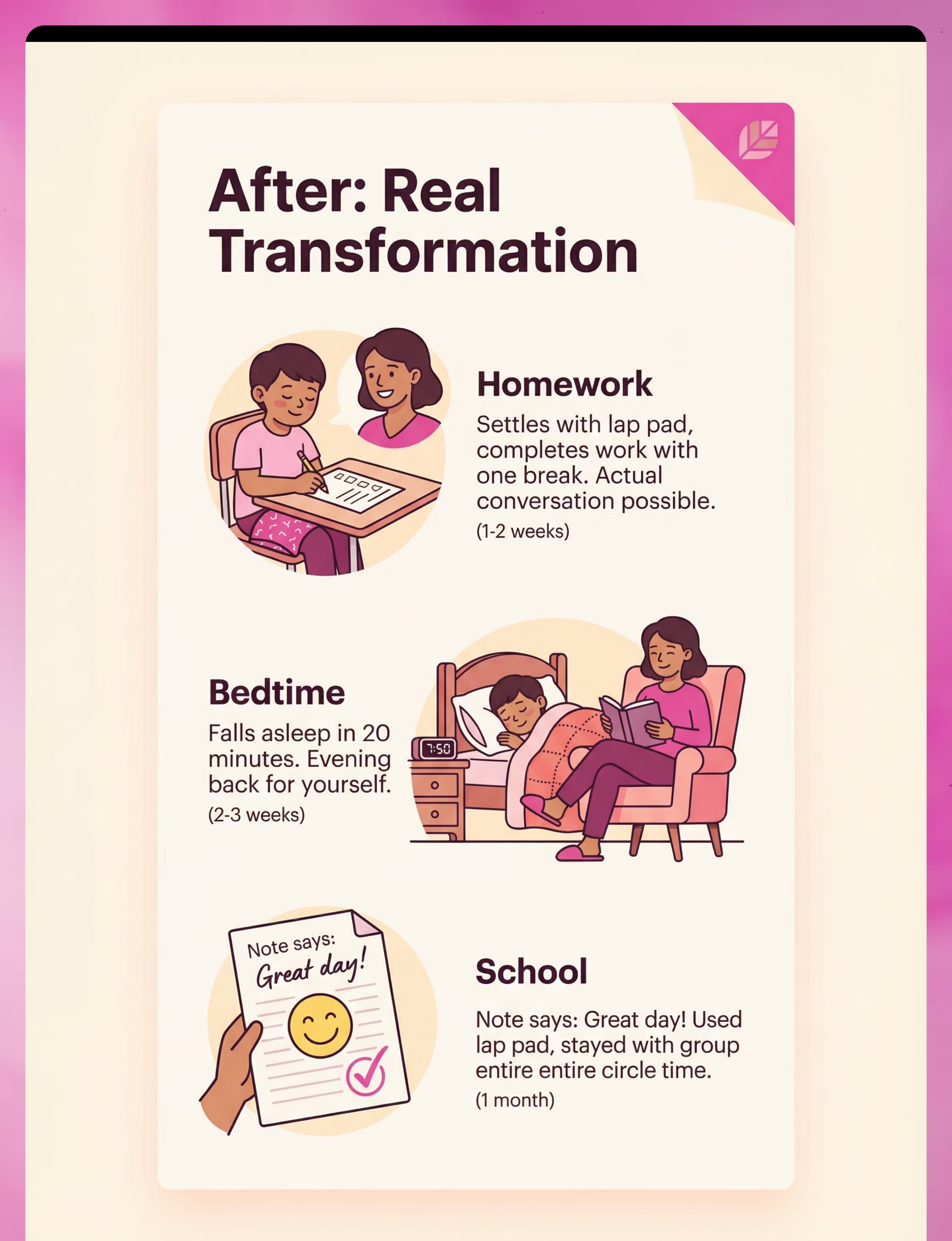
The Breakthrough (After)
These transformations represent realistic outcomes reported by families and therapists when weighted blankets and lap pads are introduced systematically. Individual results vary based on consistency of use and comprehensive therapeutic support.
Homework Time
Situation: Homework becomes manageable (1–2 weeks)
Experience: Your child settles with the lap pad, completes the worksheet with just one break, and you have an actual conversation during the process instead of constant redirection.
Emotion: Relief, connection, hope. "This is what homework should feel like."
Bedtime
Situation: Evenings belong to you again (2–3 weeks)
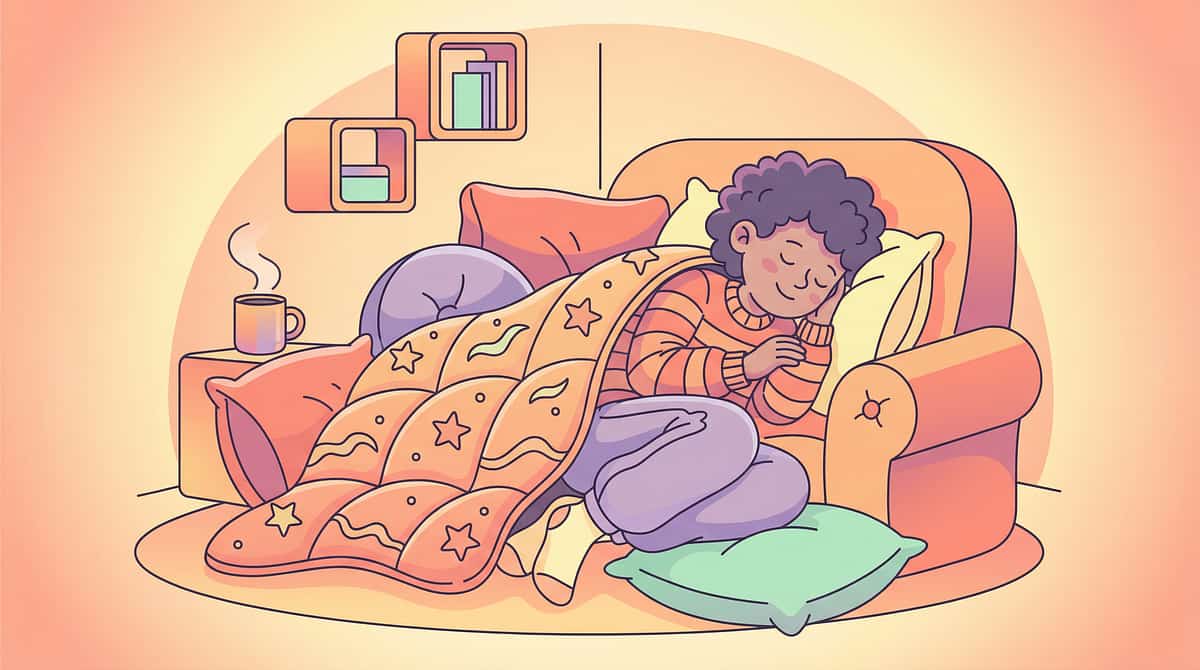
Experience: Your child falls asleep within 20 minutes under the weighted blanket. The calming pressure helps them settle naturally. You have evening time back for yourself and your family.
Emotion: Peace, freedom, renewed energy for the next day
School Communication
Situation: A note you want to frame (1 month)
Experience: "Great day today! Used the lap pad during circle time and stayed with the group for the entire session. So proud!" Your child is succeeding, and the teacher sees it.
Emotion: Pride, validation, feeling like a good parent again
What to Expect (Realistic Timelines)
Progress with weighted blankets and lap pads is typically gradual but measurable. Here's what families and therapists commonly observe when the tool is used consistently as part of a sensory diet.
Immediate
Child shows visible calming response within first few uses—shoulders drop, breathing slows, body settles. Some children immediately gravitate to the weighted input.
1–2 Weeks
Calmer homework sessions with reduced fidgeting and fewer breaks needed. Child may start tolerating seated activities for longer periods.
2–3 Weeks
Faster bedtime routine—sleep onset time decreases noticeably. Family evenings become more predictable and less stressful.
3–4 Weeks
Child independently requests the blanket or lap pad when feeling overwhelmed—a critical milestone showing emerging self-regulation awareness.
1 Month
Teacher reports improved focus and participation during classroom activities. Fewer disruptive behaviors noted in school communications.
1–2 Months
Measurable reduction in daily meltdowns—both frequency and intensity decrease as child's nervous system finds more regulation throughout the day.
2–3 Months
Child develops clearer self-regulation awareness—can identify when they need calming input and independently seeks appropriate sensory strategies.

Remember: These timelines are based on clinical observations and parent reports. Individual results vary based on your child's unique profile, consistency of use, and comprehensive therapeutic support.
Is This Right for My Child? (2-Minute Check)
Answer these 4 questions honestly. If you respond "yes" to 3 or more, a weighted blanket or lap pad is likely a strong fit for your child's sensory regulation needs.
Does your child calm down with tight hugs or being wrapped in a blanket?
Your child responds positively to deep pressure proprioceptive input. Their nervous system craves the organizing sensation that weighted tools provide.
Does your child constantly move, jump, or crash into things?
Your child is actively seeking proprioceptive input to help organize their sensory system. They need the input weighted tools provide.
Does your child have difficulty sitting still during meals, homework, or circle time?
Your child needs additional regulating input during seated activities to maintain focus and body awareness.
Does your child have trouble falling asleep or staying asleep?
Your child may benefit from calming proprioceptive input at bedtime to help their nervous system shift into sleep mode.
3+ "yes" answers = strong fit. Consider starting with a lap pad to test your child's response before investing in a full blanket.
Usage Guide
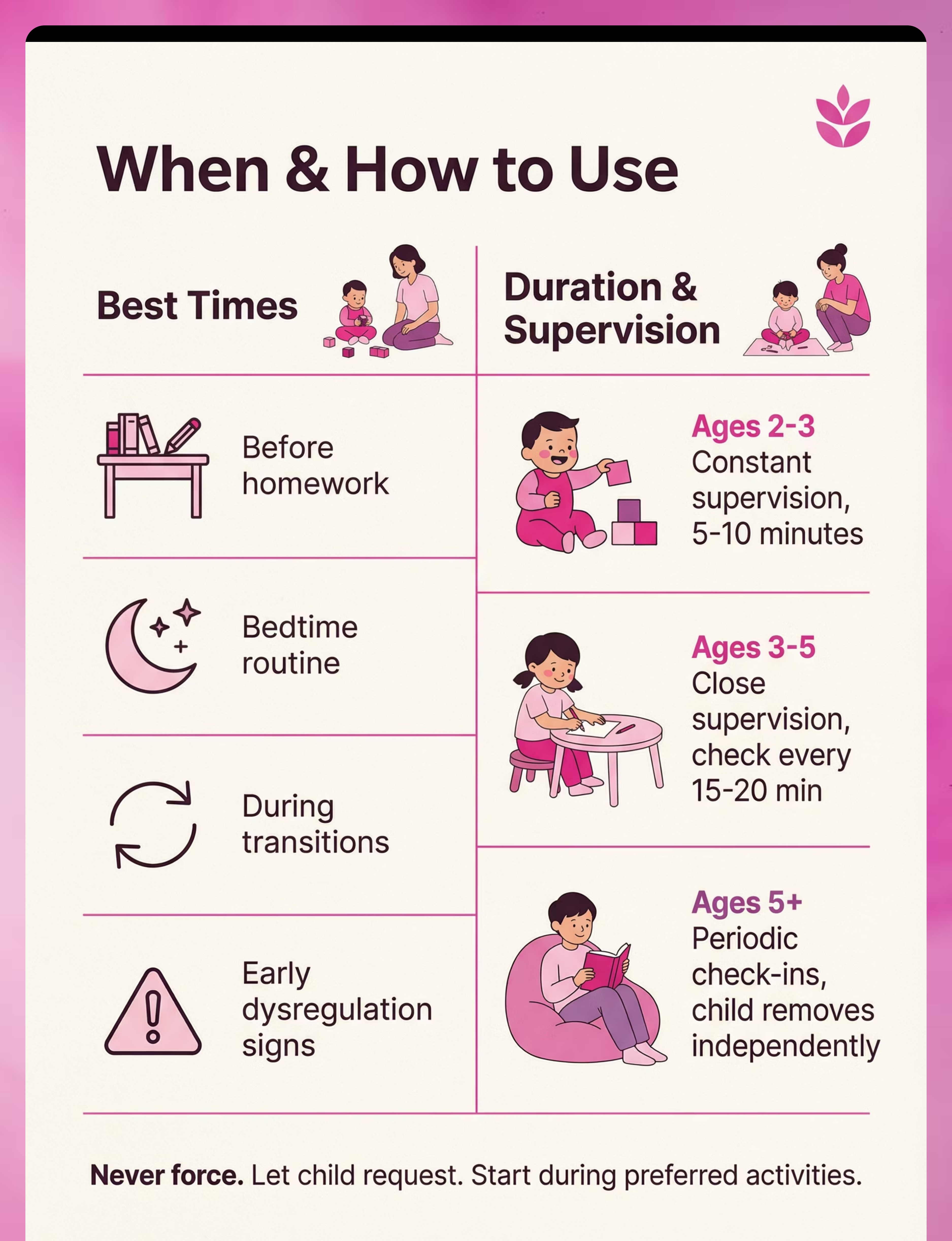
When & When Not to Use
Context
Guidance
Before overwhelming activities
Use for proactive calming
During homework or seated work
Use to improve focus and body awareness
As part of bedtime routine
Use for sleep preparation
During transitions (high to low energy)
Use to help regulate energy levels
At early signs of dysregulation
Use to prevent full meltdown (proactive intervention)
If child resists or shows distress
Do not use (respect child's signals)
During active meltdown
Do not use (wait for calm-down phase)
Unsupervised with children under 3 years
Do not use (safety risk)
During active play or high-movement activities
Do not use (can restrict movement)
Supervision by Age
Age
Supervision
Notes
Under 2
Not recommended
Safety risk
2–3 years
Constant supervision
Always in sight
3–5 years
Close supervision
Check every 15–20 min
5+ years
Periodic check-ins
Must remove independently
Duration & Settings
Typical duration: 5–30 minutes for calming and focus. Bedtime use can extend naturally as child falls asleep.
Home
School
Clinic
Travel (portable variants)
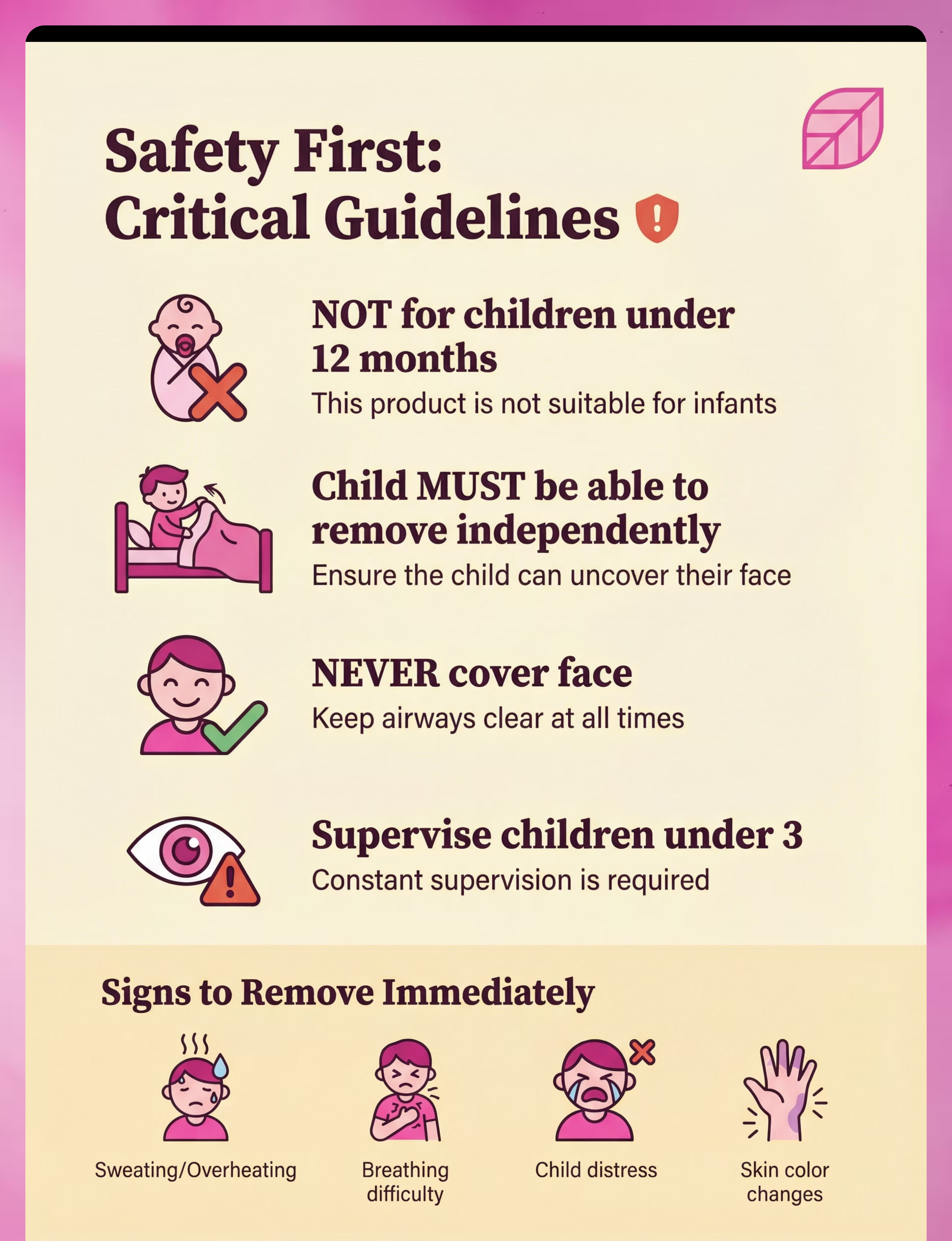
Safety First
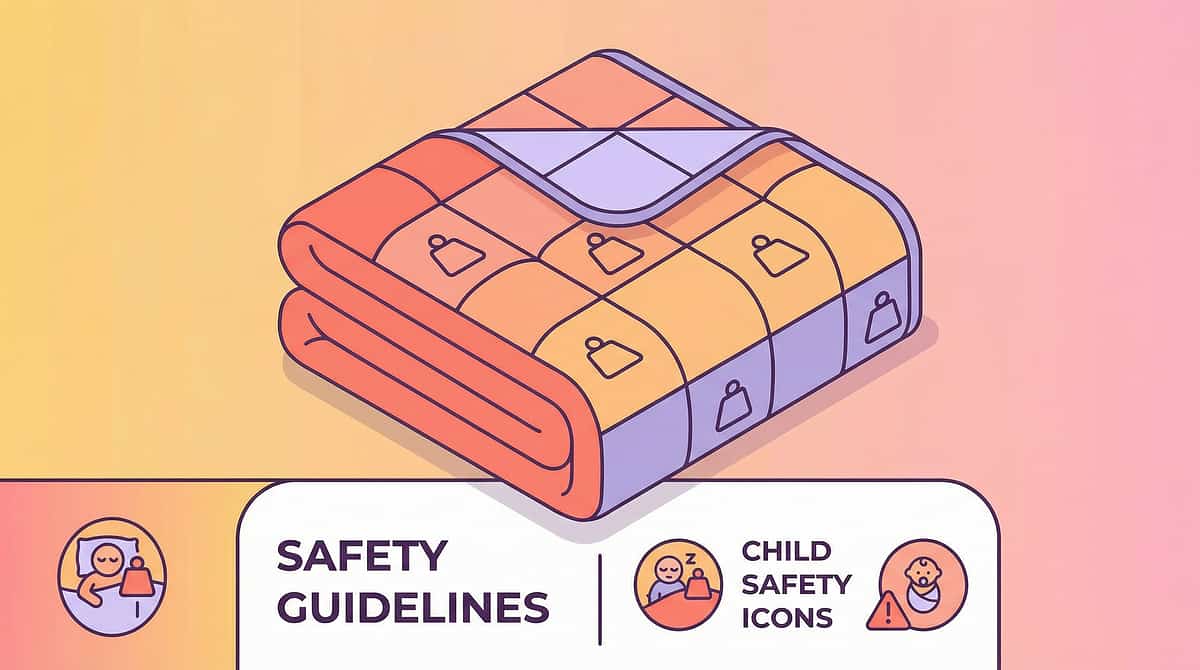
CRITICAL SAFETY
  • NOT for children under 12 months
  • Child MUST be able to remove independently
  • NEVER cover face with weighted blanket
  • Supervise children under 3 at all times
WARNINGS
  • Weight = 5–10% of body weight ONLY (not heavier)
  • Check for overheating—adjust room temperature or use lighter blanket
  • Inspect seams regularly to ensure weight isn't shifting or leaking
CONTRAINDICATED
  • Infants under 12 months (suffocation risk)
  • Respiratory conditions (asthma, breathing difficulties)
  • Child cannot remove blanket independently
  • Claustrophobia or sensory defensiveness to pressure
Safety Checklist
Before Use
  • ✓ Weight appropriate (5–10% body weight)
  • ✓ Child can remove independently
  • ✓ No loose threads or damaged seams
  • ✓ Cover clean and secure
During Use
  • ✓ Face never covered
  • ✓ Child breathing easily
  • ✓ Room temperature comfortable
  • ✓ No signs of distress
Signs to Remove
  • ✗ Child asks or shows distress
  • ✗ Sweating or overheating
  • ✗ Skin color changes
  • ✗ Breathing labored
Common Questions (Honest Answers)
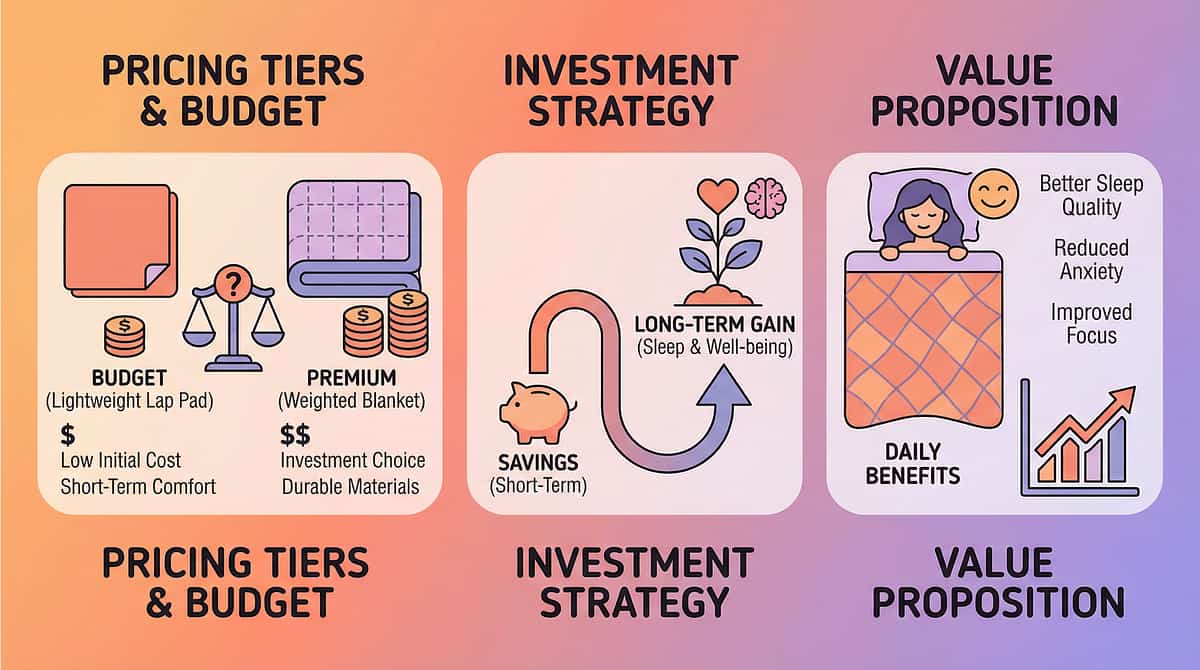
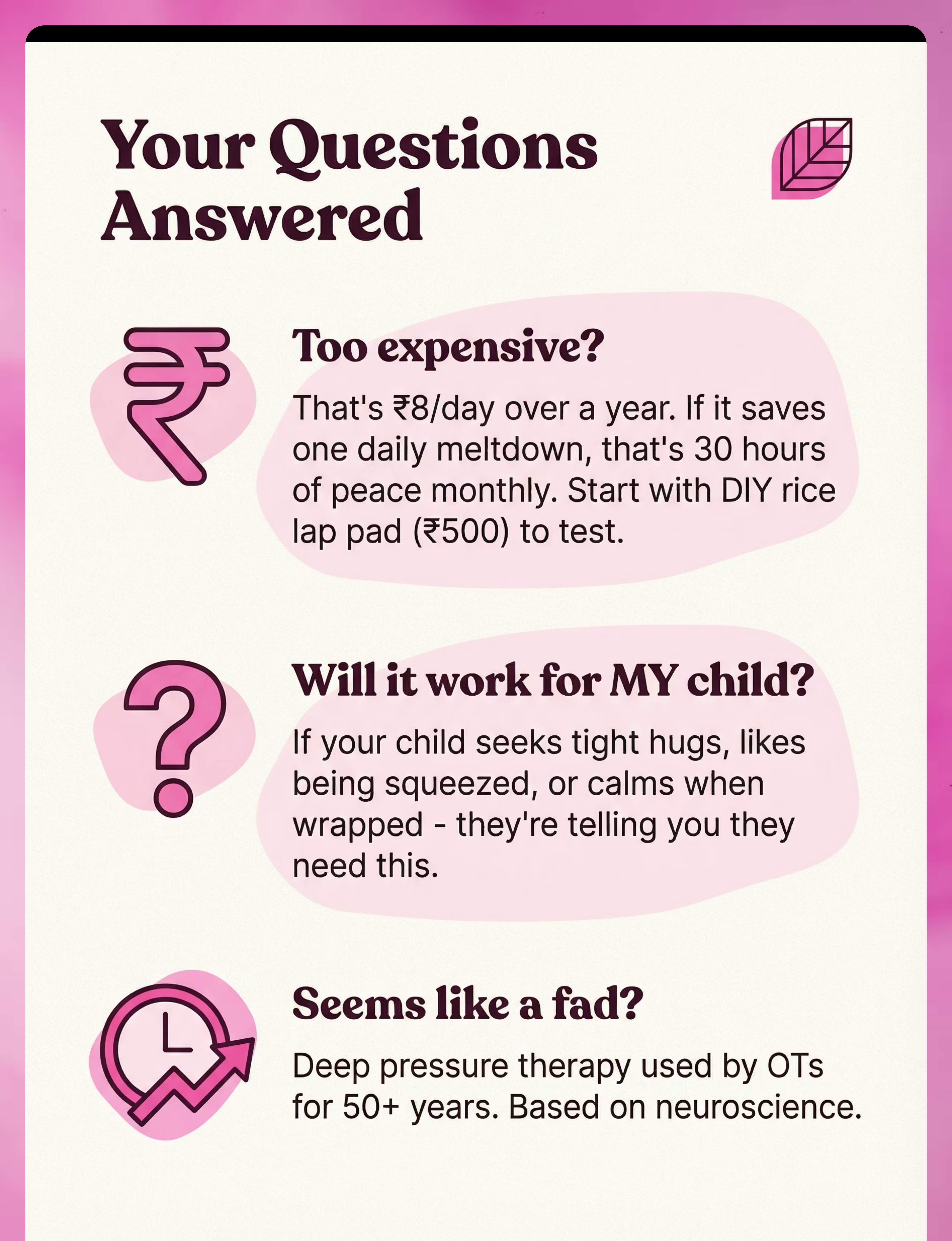
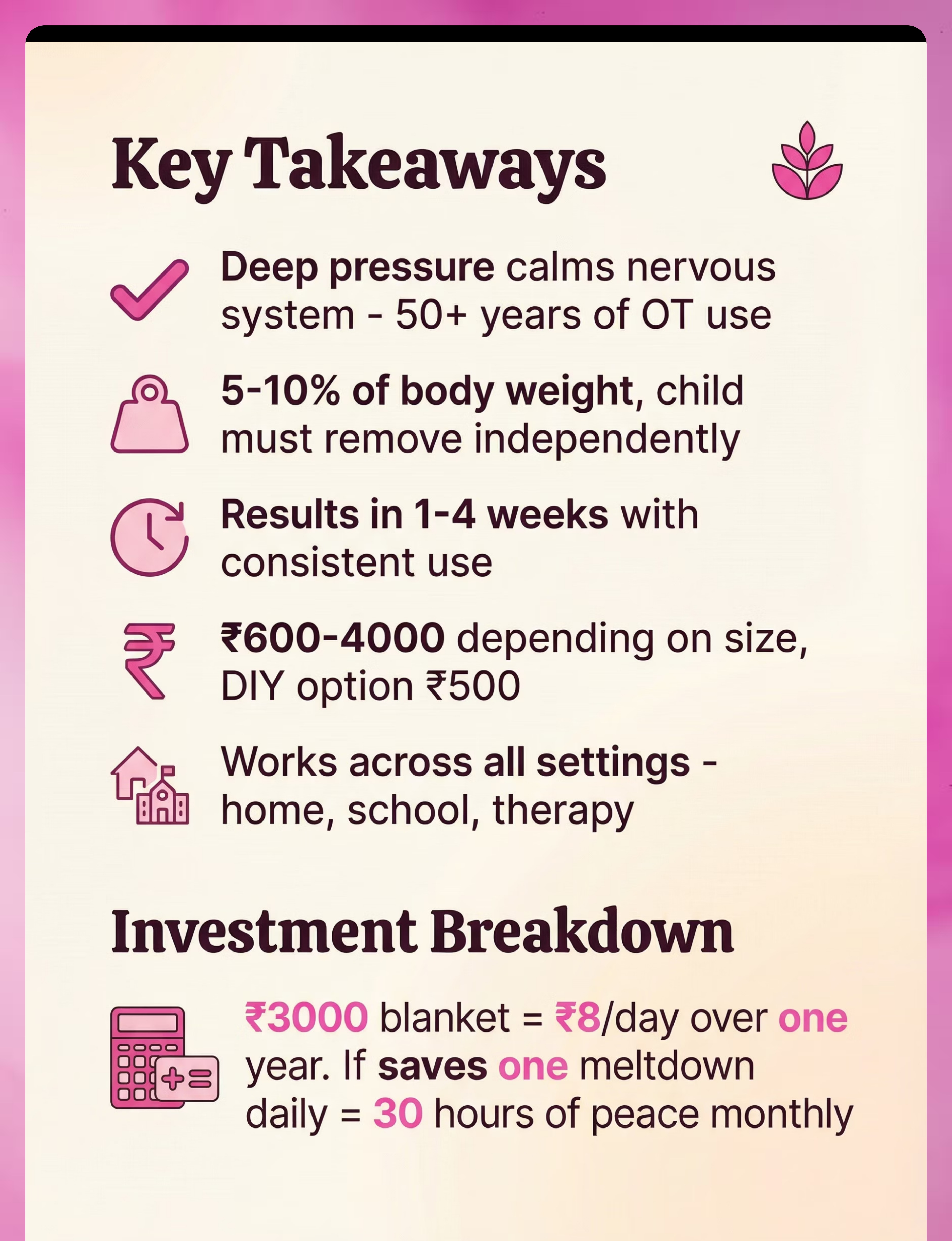
Concern: "Too expensive (₹3000+)"
Response: That's ₹8 per day over a year. If it saves one meltdown daily, that's 30 hours of peace and connection recovered every month. Calculate the cost of exhaustion, missed work, and family stress.
Try this: Start with a DIY rice lap pad (₹500) to test whether your child responds positively to deep pressure input before investing in a premium blanket.
Concern: "Will it work for MY child?"
Response: If your child seeks tight hugs, likes being squeezed, or visibly calms when wrapped in a regular blanket—they're already telling you they need this input. Their body is asking for what weighted tools provide.
Try this: Look for retailers with 15–30 day return policies so you can test with minimal risk.
Concern: "Seems like a fad"
Response: Deep pressure therapy has been used by occupational therapists for over 50 years. It's based on solid neuroscience—activating the parasympathetic nervous system to shift from alert to calm mode. This isn't new or trendy; it's evidence-based practice.
Concern: "My child might refuse to use it"
Response: Don't force it. Leave the blanket or lap pad available in their space, model using it yourself, and offer it during preferred activities first. Most children who need deep pressure input will naturally gravitate toward it once they experience the calming sensation.
Investment Guide
Weighted blankets and lap pads range from ₹600 to ₹4,000 depending on size, materials, and features. Here's how to think about your investment.
Budget Option
Item: DIY rice-filled lap pad
Cost: ₹400–800
Note: Not washable—use an additional removable cover for hygiene. Best for testing whether your child responds to deep pressure before investing more.
Pros: Very affordable, easy to make, can customize weight and size
Cons: Less durable, rice cannot be washed, weight may shift over time
Premium Option
Item: Therapy-grade weighted blanket with cooling cover
Cost: ₹6,000–10,000
Brands: Harkla, SensaCalm (internationally recognized therapy brands)
Pros: Superior durability, even weight distribution, breathable cooling fabrics, extended warranties
Cons: Higher upfront investment, may be more than needed for occasional use
Overall Range: ₹600–4,000 for standard options suitable for most families

Best starting point: A weighted lap pad (₹600–1,500) offers high portability and versatility. It's affordable enough to test your child's response while being useful across multiple settings—school, homework, travel, and transitions.
Where to Buy in India
Availability: Widely available through major e-commerce platforms and specialty stores across India.
Amazon.in
Search: "weighted blanket kids autism"
Price Range: ₹1,500–4,000
Largest selection, customer reviews, fast delivery in metro cities, easy returns
Flipkart
Search: "sensory weighted blanket child"
Price Range: ₹1,200–3,500
Competitive pricing, frequent sales, reliable delivery network
FirstCry
Search: "calming blanket toddler"
Price Range: ₹1,500–3,000
Trusted for children's products, curated selection, good for younger ages
Buying Tips
  • Check return policy (look for 15–30 days minimum)
  • Verify even weight distribution in customer reviews
  • Prefer glass beads over poly pellets for better distribution
  • Ensure removable, washable cover for hygiene
  • Read reviews specifically from parents of children with sensory needs
  • Verify product dimensions match your needs (lap pad vs full blanket)
Red Flags (Avoid These)
  • Weight shifts heavily to one side (poor construction)
  • Seams look weak or fraying (won't last)
  • Cover not removable for washing (hygiene problem)
  • No weight clearly marked on product listing
  • Unusually cheap for stated weight (quality concerns)
  • No customer reviews or very few reviews (untested product)
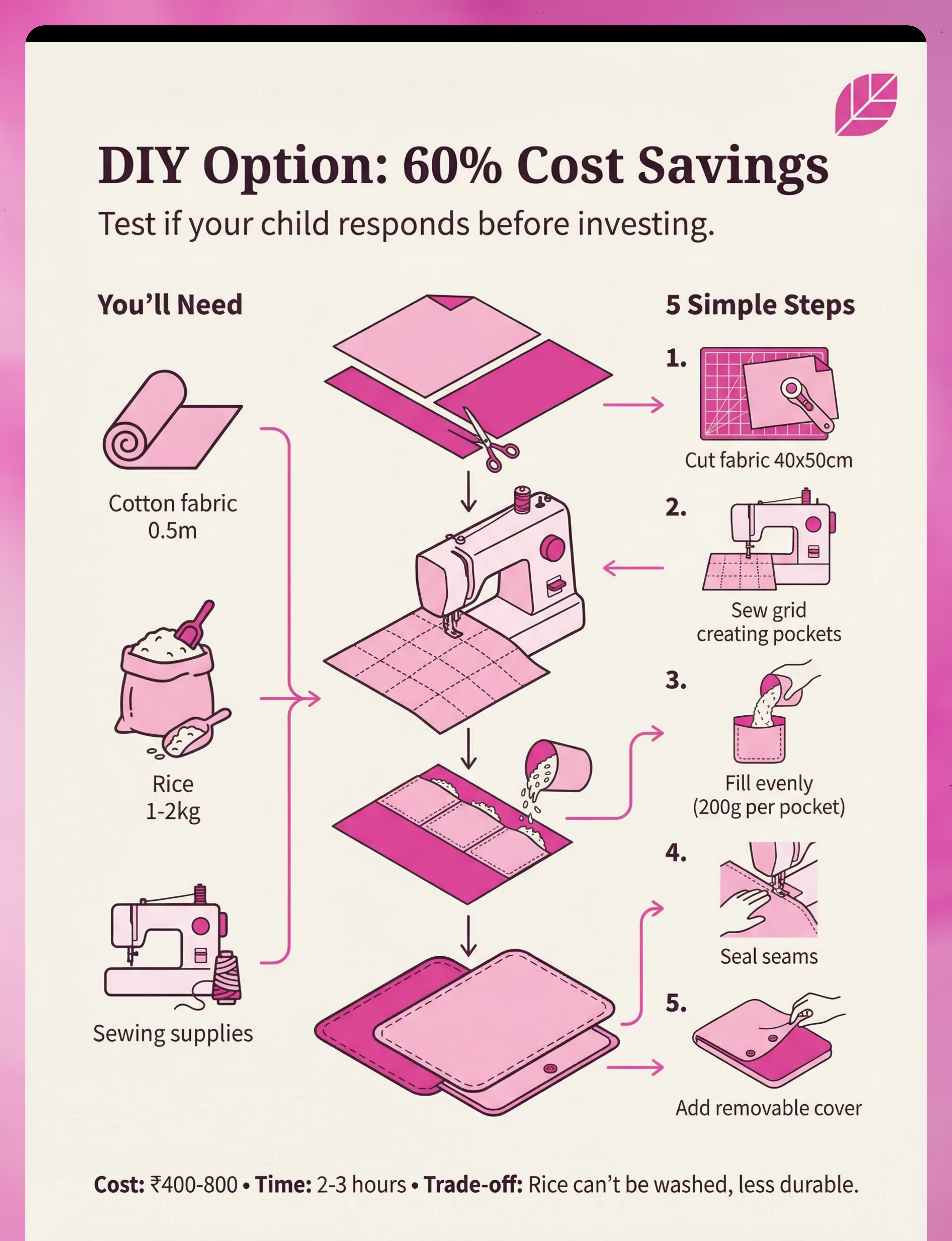
DIY Alternative (Save 60–70%)
Feasibility: Medium skill level required | Time: 2–3 hours | Cost Savings: 60–70% compared to commercial options
Materials Needed
  • Cotton fabric 0.5m (durable, washable)
  • Rice or poly pellets 1–2 kg (depending on target weight)
  • Sewing machine or strong hand-sewing needle
  • Thread (heavy-duty for reinforced seams)
  • Measuring tape and fabric scissors
  • Optional: removable cover fabric for washing
Total DIY Cost: ₹400–800
Instructions
  1. Cut two 40×50cm fabric pieces for lap pad size
  1. Sew grid pattern creating 5×5 equal pockets (prevents weight shifting)
  1. Fill each pocket evenly (approximately 200g each for 1kg total weight)
  1. Seal each pocket completely before filling the next
  1. Reinforce all seams with double stitching
  1. Create removable cover for washing (rice cannot get wet)
DIY vs Commercial Decision Guide
When to DIY
  • Testing if child responds to deep pressure
  • Very tight budget constraints
  • Need custom size or specific weight
  • Want to involve child in making process
When to Buy Commercial
  • Daily long-term use expected
  • Need washable product for hygiene
  • Full-size blanket needed (too complex to DIY)
  • Want professional quality and durability

Important Tradeoffs
  • Rice cannot be washed—you must use a removable cover and wash only the cover
  • Less durable—seams may fail with heavy use, requiring repairs
  • Weight may shift—even with grid pattern, rice can migrate more than commercial glass beads

Preview of weighted blanket lap pad sensory regulation Therapy Material

Below is a visual preview of weighted blanket lap pad sensory regulation therapy material. The pages shown help educators, therapists, and caregivers understand the structure and content of the resource before use. Materials should be used under appropriate professional guidance.

Page 1
Page 2
Page 3
Page 4
Page 5
Page 6
Page 7
Page 8
Page 9
Page 10
Page 11
Page 12
Page 13
Page 14
Page 15
Page 16
Page 17
Page 18
Page 19
Page 20
Sensory Regulation

Category 1: Sensory Regulation & Nervous System Modulation

11 MATERIALS

Materials supporting sensory system regulation through proprioceptive, vestibular, tactile, auditory, and visual inputs. These tools form the foundation for attention, learning, and emotional regulation by helping children achieve and maintain an optimal arousal state.

Key Materials

  • Weighted items (blankets, vests, lap pads)
  • Fidget tools and stress balls
  • Noise-reducing headphones
  • Body socks and compression clothing
  • Sensory bins and tactile play materials

Target Areas

  • Sensory processing
  • Self-regulation
  • Attention and focus
  • Arousal modulation
  • Calm-alert state achievement
MaterialsDeep-pressure therapeutic tools providing calming proprioceptive input to support sensory regulation, attention, and emotional self-regulation across home, school, and clinic settings.
Kids Lightweight Cartoon Blanket
Weighted Blanket
Satin Pillow Cover Set with Pouch
Weighted Blanket
Link copied!
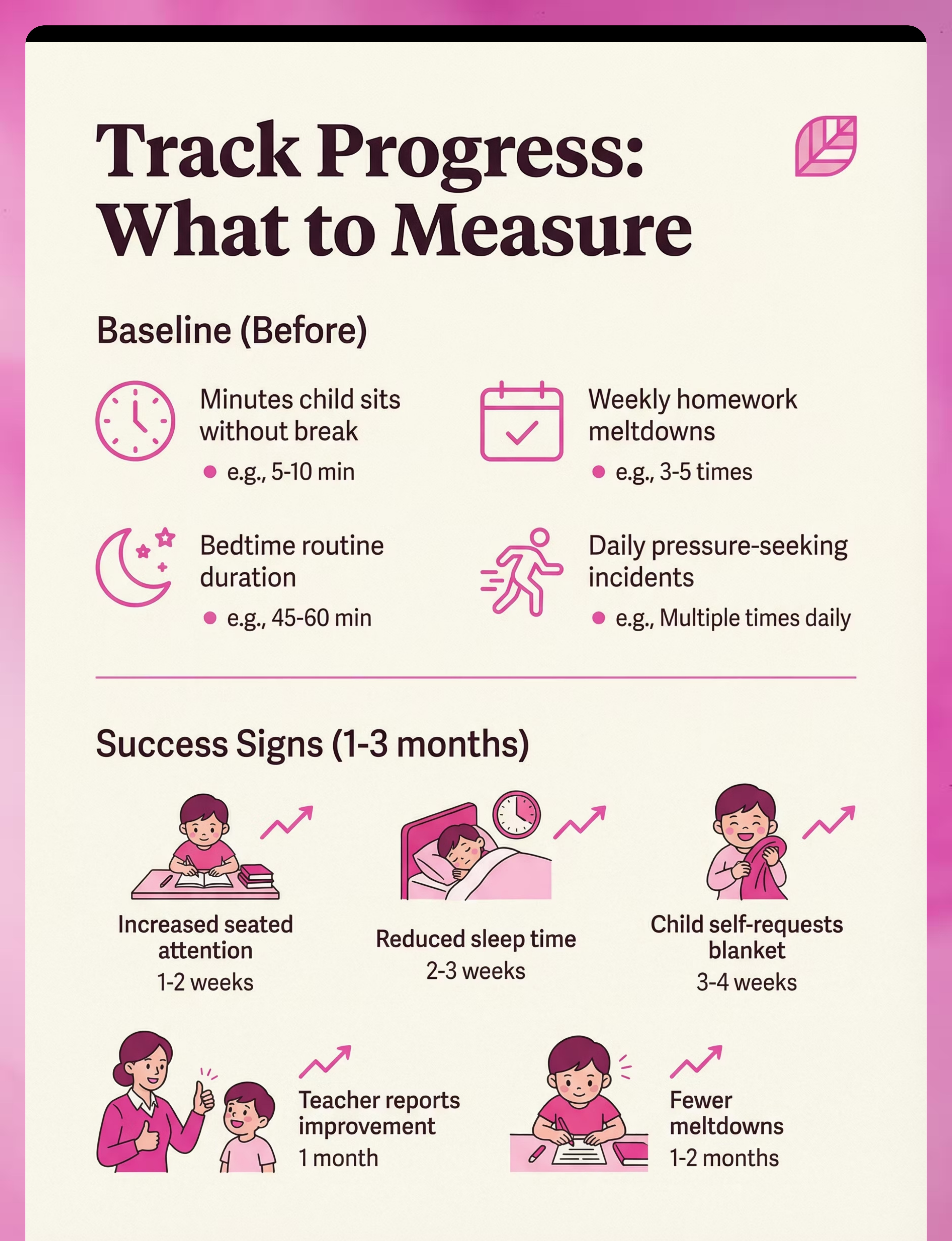
Measuring Success
Track Progress: Baseline
Before implementing interventions, establish a baseline for your child's behavior:
  • Minutes child can sit without movement break
  • Number of meltdowns during homework per week
  • Time required for bedtime routine (minutes)
  • Daily pressure-seeking incidents (jumping, crashing, squeezing)
Set Realistic Goals
Establish specific, measurable, achievable, relevant, and time-bound (SMART) goals:
  • Use lap pad 15 minutes during homework with reduced fidgeting 4 out of 5 sessions
  • Bedtime completed in 30 minutes or less 5 out of 7 nights
  • Child independently requests blanket when overwhelmed 3 times per week
Identify Success Indicators
Monitor these indicators to track the effectiveness of the weighted tools:
  • Increased seated attention span
  • Reduced sleep latency (faster falling asleep)
  • Child self-requests tool (emerging self-regulation)
  • Fewer daily meltdowns (frequency and intensity)
  • Teacher reports improved focus and participation
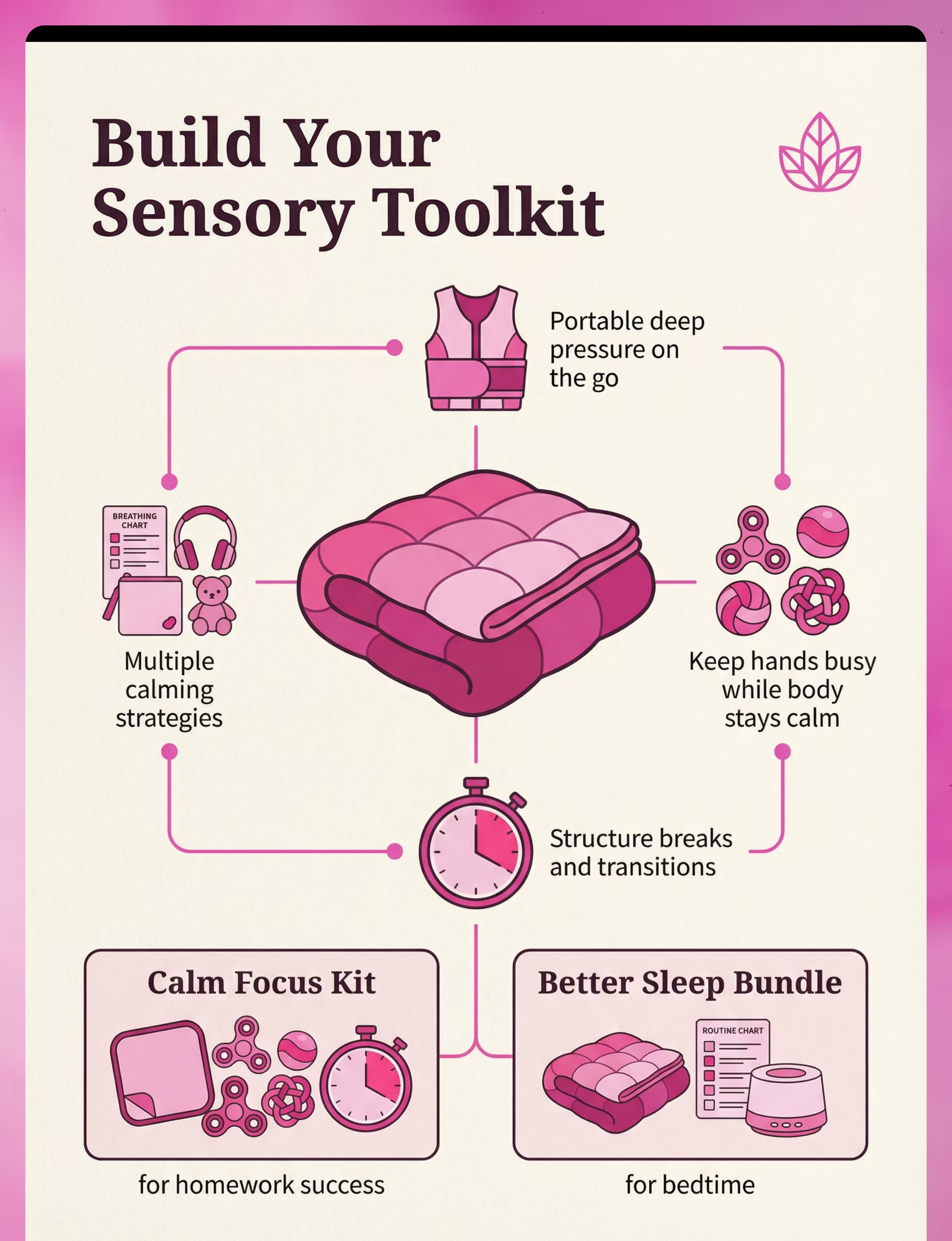
Complement the Kit
Pair weighted blankets/lap pads with other tools for comprehensive support:
Complementary Tools:
  • Compression Vest (ID: 1.2) — Portable deep pressure for active settings when blanket isn't practical
  • Fidget Set (ID: 1.4) — Keeps hands busy while body stays calm with weighted input
  • Calm-Down Kit (ID: 2.3) — Multiple calming strategies for different situations and sensory needs
  • Visual Timer (ID: 3.3) — Structures break times and helps child understand duration expectations
Alternative Option:
  • Compression Vest (ID: 1.2) — If blanket is too hot for your climate or child needs more portable option
Recommended Bundles:
  • Calm Focus Kit: Weighted Blanket (1.1) + Fidget Set (1.4) + Visual Timer (3.3) for homework success
  • Better Sleep Bundle: Weighted Blanket (1.1) + White Noise Machine (15.1) + Bedtime Visual Schedule (2.4) for bedtime transformation
Quick Summary
Weighted blankets and lap pads are essential sensory regulation tools providing deep pressure proprioceptive input that calms the nervous system. Designated Core Kit (Rank #1) with strong evidence for daily use across all settings—home, school, clinic, and travel. Supports sensory regulation, anxiety reduction, attention improvement, and sleep quality.
sensory
proprioceptive
calming
weighted
deep pressure
autism
OT
regulation
anxiety
focus
sleep
core-kit
Common searches: weighted blanket kids, weighted lap pad autism, sensory weighted blanket child, deep pressure blanket autism, calming blanket sensory, weighted blanket for sleep autism, how heavy weighted blanket for child, occupational therapy weighted blanket
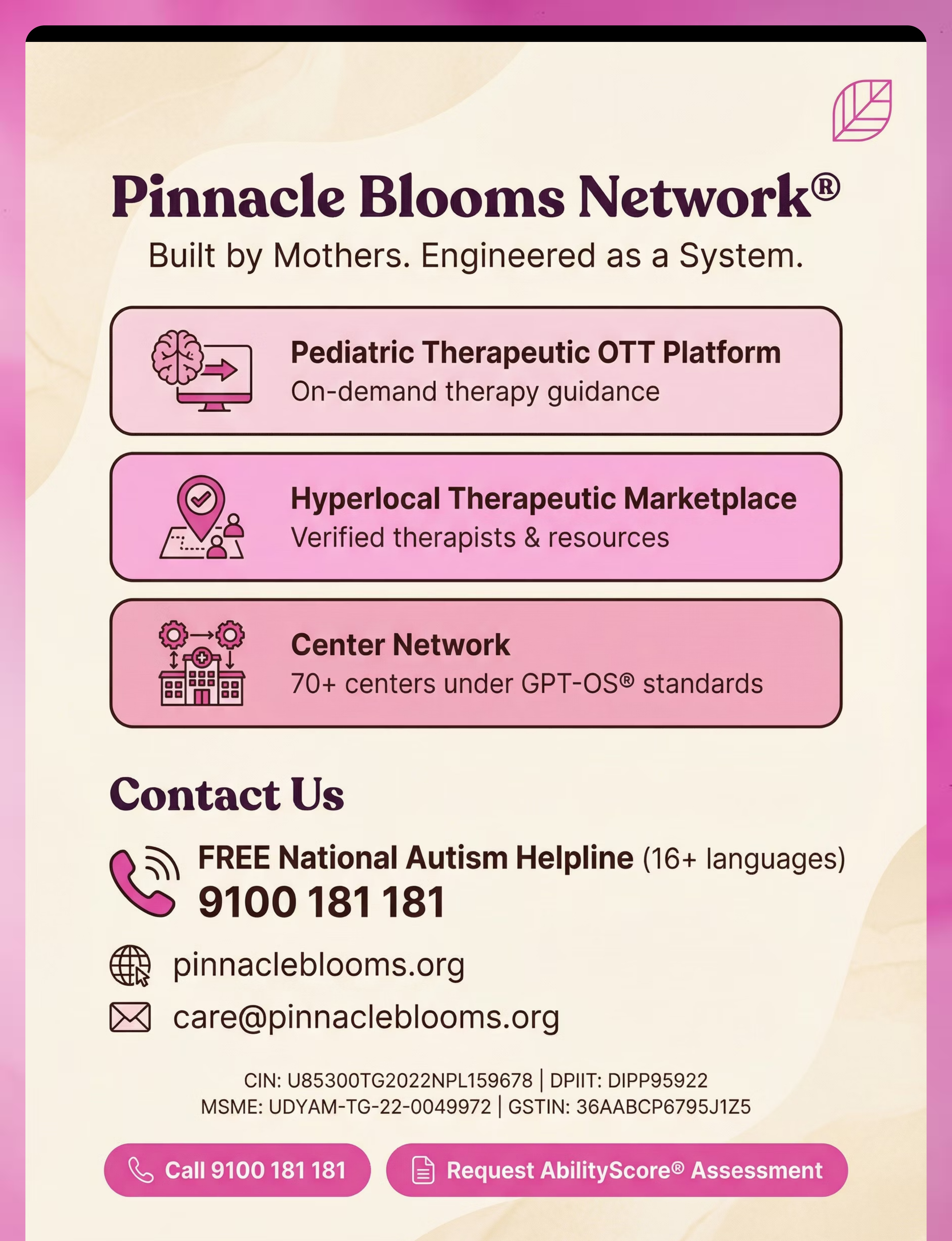
Get Support
FREE National Autism Helpline
Phone: 9100 181 181
Languages: 16+ Indian languages
Website: pinnacleblooms.org
Connect with experienced therapists and get guidance on selecting and using weighted blankets as part of a comprehensive sensory diet.
Platform Integration
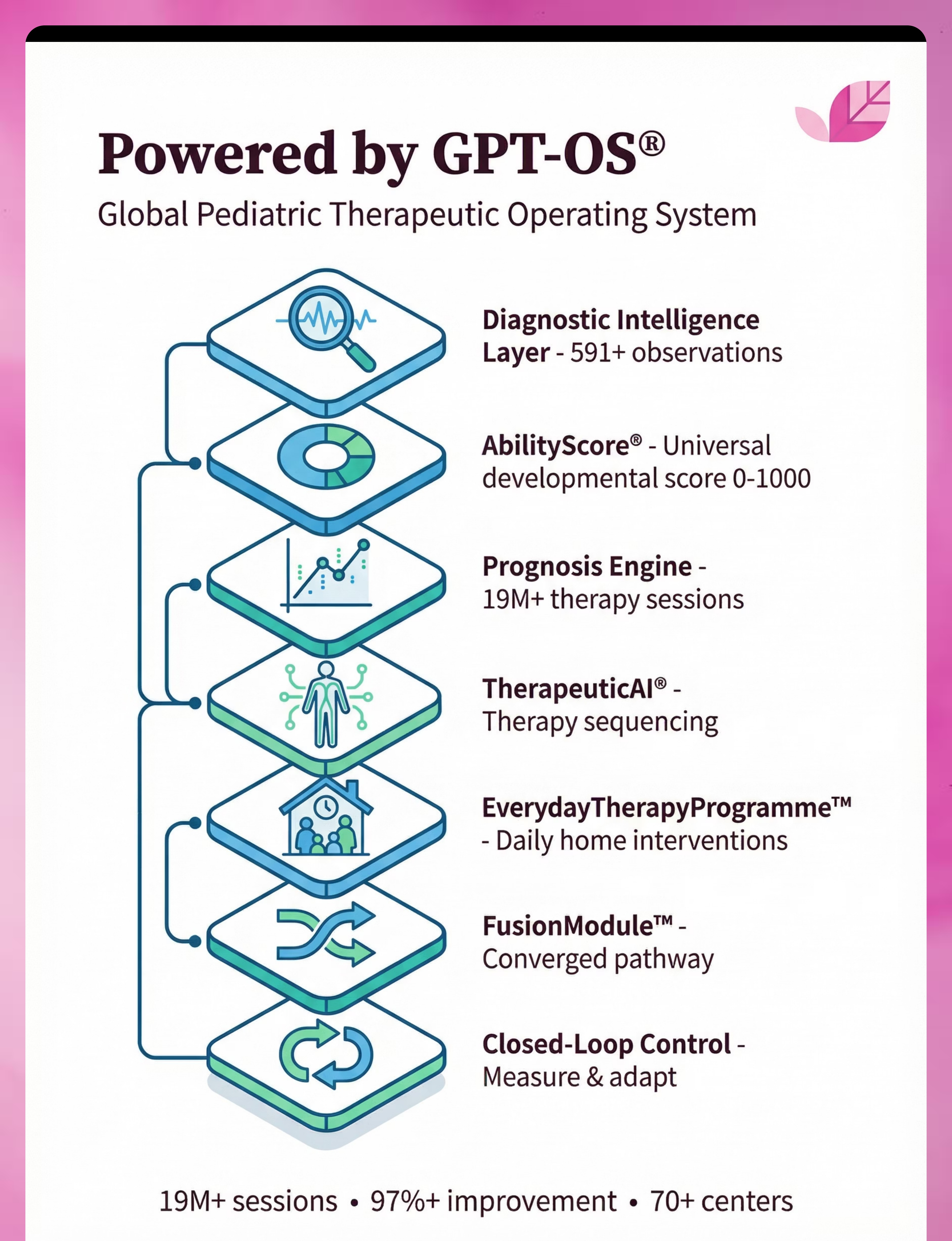
This tool integrates with the GPT-OS® therapeutic ecosystem:
  • AbilityScore® assessment identifies your child's specific sensory regulation needs
  • TherapeuticAI® sequences weighted blanket use as part of personalized sensory diet
  • EverydayTherapyProgramme™ includes weighted blanket protocols with step-by-step home guidance
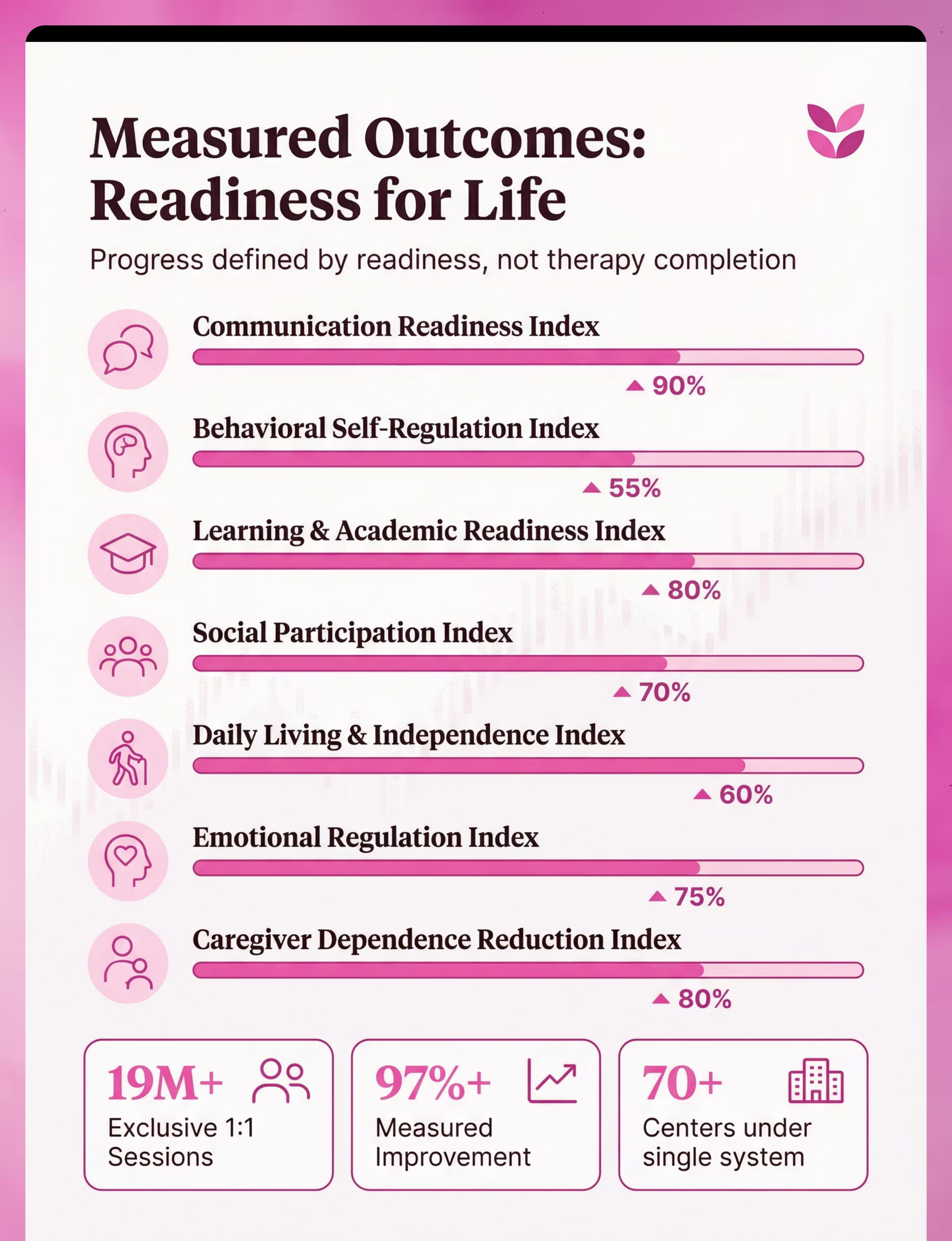
  • Readiness indexes track sensory regulation progress over time with measurable outcomes

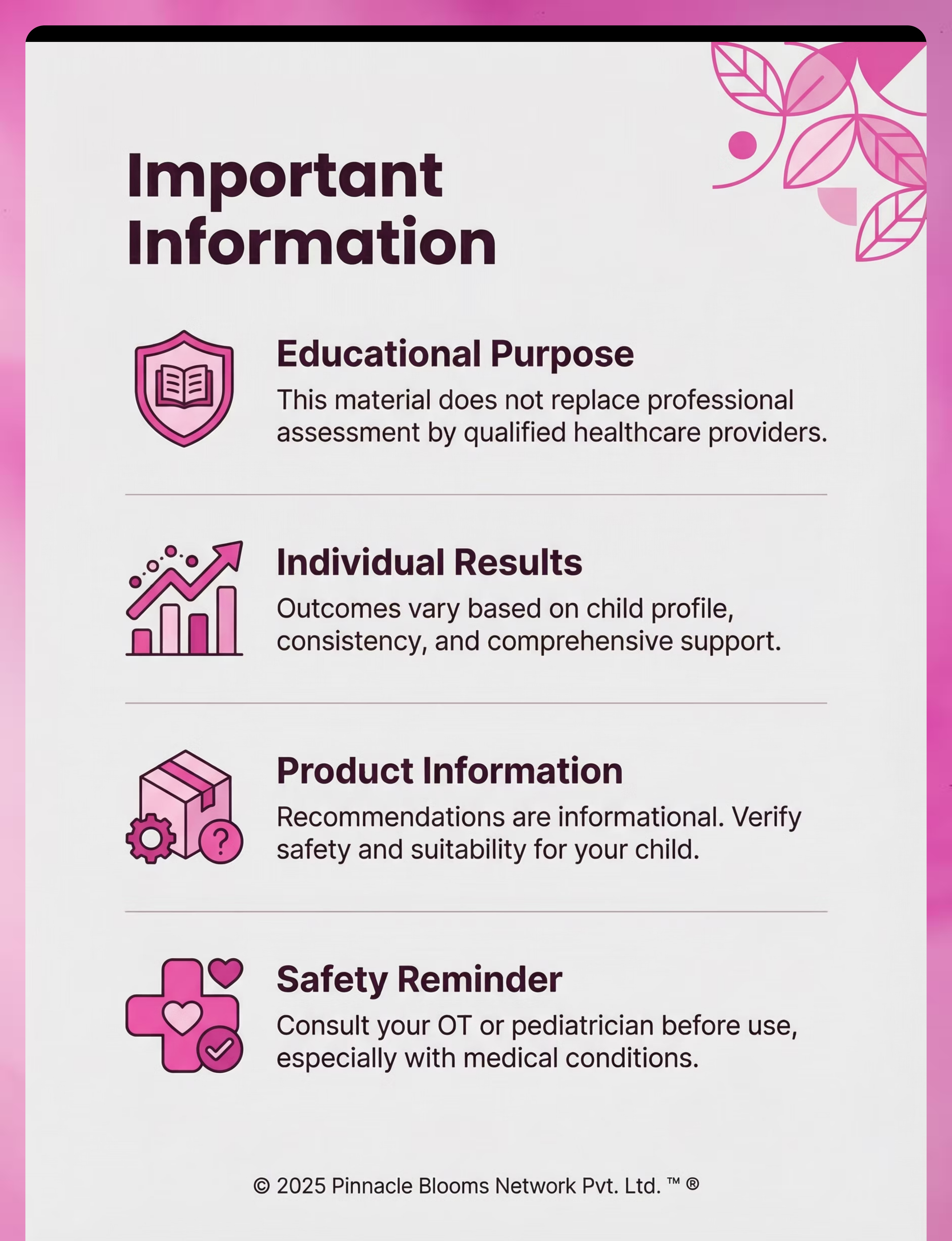
Disclaimer: This is educational information designed to support families and professionals. It does not replace professional assessment, diagnosis, or individualized therapy planning by qualified occupational therapists, speech-language pathologists, or pediatricians. Outcomes described are based on clinical observations and parent reports—individual results vary based on child profile, consistency of use, and comprehensive therapeutic support. Always consult qualified healthcare providers before implementing new interventions, especially for children with medical conditions. Product recommendations are for informational purposes—Pinnacle does not endorse specific brands. Verify product safety and suitability for your child.
© 2025 Pinnacle Blooms Network Pvt. Ltd. All rights reserved. GPT-OS®, AbilityScore®, TherapeuticAI®, EverydayTherapyProgramme™, FusionModule™ are trademarks of Pinnacle Blooms Network.